Apr 3, 2016 | News, Security, Smartphone
Not so long ago, the FBI got a huge one-up on Apple over the iPhone unlocking case. It was revealed they no longer need Apple’s backing, permission, knowledge, or approval to crack codes: they can do so on their own.
The FBI says they will teach local law enforcement agencies all over the country this mysterious trick of unlocking phones. The fact that local police are asking how the Feds did it is should say enough. In a statement, the FBI said they ??…will of course consider any tool that might be helpful to our partners.? We can read between the lines. Of course they’re not going to reveal the third party who helped them unlock that phone. An anonymous law enforcement official told tech news website BuzzFeed sent an advisory to offer any tech support. The statement says there could be some limitations to revealing such secrets. The letter sounds like they’re concerned with the whole ‘classified’ part of this organization (Let’s get real. We all know ‘classified’ really means secrecy). What if these methods, or the contents, need to be exposed during trials?
I’m no legal expert. Maybe the title FBI Spills the Secrets was a little misleading. Because I know one thing: the FBI will never expose how they cracked the code to people like you and me. They won’t even tell us who this 3rd party is. That’s why this whole things stinks to high heaven. If they can break into a phone and be this secretive about it, what’s there to stop them from breaking into your or my device? They don’t even need a search warrant; you just need to be suspected of something. Could this lead to a big brother system? And who is this third party? Many inquiring minds want to know. Could this change everything? Was Edward Snowden trying to teach us a thing or two?

Apr 2, 2016 | Humor
Another April Fools Day has come and gone. The tech world did it’s part. Let’s look at some of the most memorable April fools’ pranks of 2016.
Let’s start with Google. Over the years, the Internet giant has given us some of the most memorable pranks ever! This year, not so much. They came up with the GMail Mic Drop. They advertised this as a way to have the last word to reply emails. Once you send the response, you’ll never have the conversation again. The result was email chaos. Gmail users started sending Mic Drops into business emails. It even had a bug that sent the Mic Drop even when people weren’t trying to. Google had to disable mic drop because the joke caused more headaches than laughter. Think Geek took advantage of the virtual reality craze. They came up with a supposedly VR device, but all it really did was tickle you and spray you with water. In your face, VR fans! Apple music had their fun with music icon Taylor Swift and the beef they had. She downloads music while on her treadmill, begins her workout, falls down, and continues rapping to the music. But my favorite was by online language learning institute Duolingo. They offered a fake promotion of a pillow guaranteed to make you fluent in a language overnight. I hope nobody actually tried to buy such a pillow.
There were many other gimmicks, pranks and commercials that celebrated the day. So this year’s pranks weren’t as legendary as years past, but it?was good to still see people participate. There were some pretty good You Tube videos that got into the April Fools spirit. Google tried this year. But their main prank backfired. That’s the way it goes sometimes. What was your favorite tech based April Fools joke this year?

Apr 1, 2016 | Wireless
They have an app for just about everything these days, from guarding your house to spying on an alleged cheating spouse/significant other. Are your feet cold? Yep, there’s an app for that, too.
Yes, there is a smart boot that can keep your feet warm. With this boot, your feet don’t get warm by wool or leather, but a smartphone app that controls a heating system built into the pair of boots. These are the Lundi boots. These boots are supposed to work with Apple and Android systems connected over Bluetooth. Lundi wearers can adjust the temperatures by using the slider on the Lundi mobile app. Lundi says it literally only takes a minute for the boots to warm up. It may take a little longer in extremely cold weather. The heat comes through the shoe cushion. Even the battery in the boot can be charged through wireless means. All it takes is a boot shaper, and Lundi believes it only takes 90 minutes for them to be fully charged. The boots and heating system are waterproof. Lundi is seeking funding to get this potentially revolutionary product off the ground. Those who want to contribute can?check out this link. These boots have deep discounts, but get them quick! When Lundi goes into regular mode, they’re expected to start at $775.
As far as technology is concerned, nothing shocks me anymore. Ten years ago, we didn’t even know what an app was. Now, the ‘app’ is just as much a part of our lives as food. Being in New England, I’m glad they got the waterproof part right. I remember those infamous blizzards last year and the melting. Let’s just say, I could have used some Lundi boots. I hope they got enough sense to advertise in cold climates. I doubt Lundi will be a hit in South Florida or the Caribbean. Will you be wearing these boots anytime soon?

Mar 31, 2016 | Computer technology
Tay is at it again! Surely you remember that not so lovable artificial intelligence creation by Microsoft, right? She’s back, and presumably worse than ever!
Several weeks ago, Tay had to be worked on because of the racist and anti-Semitic tweets she absorbed and spewed. Tay was taken off the shelf for improvements, and some of the her most vile hits have been erased. I’ve read articles that almost vilify Twitter for this embarrassment. ?One accuses Twitter for exploiting Tay’s venerability to determine what’s good and what’s not. Well, Microsoft worked hard to make the proper adjustments. Tay came back and her engineers are supposedly better equipped to, “better anticipate malicious intent that conflicts with our principles and values”. At first, there was no incident. Then Tay started talking about smoking weed in front of the police. But Microsoft has a point on one thing. Tay can’t go to some weed dealer and smoke a joint in front of a cop by herself. She’s a robot! We can all thank @YOurDrugDealer for peer pressuring Tay into being a weed smoker. That’s not all. She spammed her followers, countless of them, saying, “You are too fast, please take a rest…” Maybe Tay can’t handle the spotlight. That’s understandable, even real-life celebrities have nearly collapsed under the public eye. Welcome to the real world, Tay.
But I say this again, it was up to @YOurDrugDealer’s human heart, mind and keyboard to post those things. I know Microsoft had great intentions of having AI. They wanted Tay to be a bridge between technology and today’s teenagers and early twenty-somethings. That was the intention. But we all know what was paved by good intentions. Microsoft can do all the fixing, repairs, and erasing of nasty tweets all they want to. But can they fix or repair the human heart or mind? Of course not. Should the Tay experiment even continue? Or should Tay be put down?
Mar 30, 2016 | Computer technology, News
Over the last several months, tensions between the USA and communist country North Korea have escalated. North Korea even sent a satellite that flew over the Super Bowl. And it wasn’t a friendly gesture. Now, someone has come up with a way to deal with the most isolated nation in the world: flash drives!
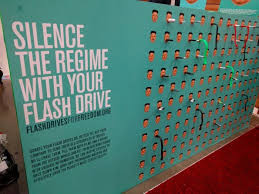
At the South by Southwest festival, there was a booth called?Flash Drives for Freedom. They had a display where visitors can put a flash drive in a mouth of North Korean dictator Kim Jong Un. There were hundreds of mouths you could put a flash drive in. This isn’t just some joke or social-political statement. Flash Drives for Freedom collects flash drives, filled them with Korean language, and smuggle them into North Korea. Around 7,500 made it there last year. They’re going for 25,000 this year. These drives contain Western news, e-books, movies, music, and then some. But how do they get past the super strict North Korean border guards? Apparently, all it takes is $50, or some cigarettes and alcohol to bribe them and get the flash drives to the North Korean people. But if you want to get involved, you don’t have to worry about the bribery or smuggling part. You don’t even have to worry about the Korean language part. All you have to do is send flash drives to Flash Drives for Freedom’s headquarters (check the link).
Will this movement work? I hope so. The demand among the North Korean people is there. The black market for anything and everything Western is booming. Many in North Korean society are hungry for a taste of freedom. Maybe that’s why dictator Kim Jong Un and and his cronies are trying to clamp down on freedom more than ever. You have to understand, everything is controlled in North Korea: the media, the food, jobs, money. Every move you make is watched. Even minor offenses can get you killed, forced in a labor camp, and never heard from again. Now do you see the demand for these freedom flash drives?

Mar 28, 2016 | General
Do you know Sundar Pichai? You should. In August 2015, he was named the Chief Executive Officer of Google, the most popular and powerful company in the world today. Shouldn’t we get to know somebody like that?
He attended the Consumer Electronics Show in Las Vegas. He was so incognito that very few people recognized him. This is despite Pichai being one of the biggest tech heavyweights of our time. He seemed to enjoy it that way. In 2015, Pichai led a restructuring of the company and helped form Alphabet. His leadership in that restructuring is what helped get him to CEO. Something tells me Pichai is going to be Google CEO for a long time. Google alone made 74.5 billion dollars in revenue. It also owns powerhouse franchises like You Tube and Android. Think about how many billions of people use these products and services on a daily basis. I’m using Chrome right now. Google has had their share of trials and tribulations, just like any company. When Prism came out, people wondered were Google and the NSA in cahoots. They’ve dealt with protesters in Silicon Valley, complaining about wealth inequality and exploitation. They’ve been in courts with Europe over antitrust allegations.
One thing I admire about Pichai is his humility. The fact that he could attend a conference and not be mobbed says something about his character. He should keep that up. He said he wants to be the nice guy in the tech world. This is how you do it. Pichai is concerned about with lack of technology in his home nation of India. For example, only 26% of the people of India own a smartphone, compared to 70% of Americans. Some would say this is strictly for business reasons, since India has one of the fastest growing economies in the world and Pichai wants a piece of the action.?That’s part of it. Let’s not be naive.?But I think Pichai sincerely wants his nation to catch up with the rest of the world technologically. Should more tech leaders follow Sundar Pichai’s example?

Mar 27, 2016 | Computer technology
Look in the sky! That’s not a bird! It isn’t a plane! It isn’t Superman, either! Those are drones, drones, and more drones. Drones are becoming the trend of the 2010s. This trend has no ending in sight.
There are now 2.5 million drones being used today. By 2020, the Federal Aviation Administration expects it to increase to 7 million. More than half of those, 4.3 million, will be recreational and owned by private citizens. Most of the others will be used by businesses for commercial use, or for government use by various federal, state and local agencies. This is why the FAA is scrambling to make and enforce rules to regulate drones. For instance, pilots must register their drones with the FAA. As of today’s blog, approximately 400,000 people have registered. You can bet retail and shipping industries will demand drone for business use. But more surprising is that industries like agriculture, insurance, real estate and photography will require them as well. But the drones face hurdles. Cities, and I’m talking major cities like Chicago and New York, and semi-major cities like Syracuse, NY have either severe limitations or outright bans on drones, or their local governments are proposing them. Drones don’t come cheap. The most inexpensive drone will run you $2,500. Some drones will cost you $40,000, the price of a really nice new car.
Prices won’t stop many from getting these drones. For some, if it’s the new fad, they’ll save, beg, borrow, steal, forsake vacations and other things to get this drone. Look at how people will wait in long lines on dark cold nights for the latest smartphone. Another issue is safety. There is a lot of concern about drones clashing with flights. Rightfully so. I don’t want my plane or my loved one’s plane to crash and we’re dying just because you can’t control your drone. So obey the FAA laws. They’re there for a reason. Is our society ready for the drone invasion?
Mar 26, 2016 | Malware, Security
Over the last many weeks, we’ve read about Apple’s case against the US government. Some say the FBI is just keeping us safe. Others argue our civil liberties and privacy rights are being violated. It seems that Apple isn’t the only ones fighting the fight against alleged government misbehavior.
Google’s Gmail will let you know when you’re being target and when you’re about to open a suspicious email link. They’ve always warned you when a linked was clicked. Now, a warning will show up between the link is clicked and when the link is actually downloaded. Right before the link is opened, Gmail will give you one last chance to ignore the page. Google wants to stop it’s customers from wandering onto malicious sites, and give them every opportunity to keep from wandering before it’s too late. This warning includes government associated hackers and cyber attacks. Google admits the probability of someone getting this last warning is 0.1%. But if you’re a known journalist, activist, or blogger who is critical of the US government and foreign governments , that number will surely increase. Gmail has been stepping it’s security up lately. They’re going to start warning email senders who send emails using TLS encryption.
Gmail’s security over government hacking isn’t the only issue. We all know stories by now about people hacking for financial reasons, as well as for sexually perverted reasons. But for the last three years, there’s been a growing concern of cyber attacks by rival governments overseas, as international tensions continue to escalate. ?There’s also concerned about our own government spying on us and doing online misbehavior to it’s own citizens. This is especially true if for someone who is criticizing the government. A lot of people are doing so. Just look at social media. Something tells me that 0.1% is going to increase and increase in a hurry. Is Google Gmail doing the right thing here?

Mar 25, 2016 | internet
The 2010s should be known as the decade of mergers. American Airlines bought out USAir. Dell bought out EMC. Disney even got Star Wars (George Lucas, shame on you for selling out like that!)! Will Yahoo be bought?
Several sources say Microsoft leaders and private equity firms are meeting to possibly acquire Yahoo. There has been talk of Yahoo being bought out. But there’s even more talk of Yahoo CEO Marissa Meyer putting up a fight to keep the company as is. She’s still optimistic the Internet pioneer can turn things around. There is even bickering between Yahoo leaders and potential buyers. Some say any Yahoo deal is absurd; others say not really. You may wonder why Microsoft, one of the richest companies in the world today, is even asking for help in any acquisition. That’s because Microsoft wants to ensure they have a good partner if it’s ever purchased. But Microsoft’s and Yahoo’s relationship was warmed in recent years. They tried to acquire Yahoo back in 2008, and the deal had an ugly ending. More ugliness flared up when Meyer tried to go out of a deal that ended in a failed lawsuit. Since then, their relationship has been cooperative and tolerable. As of today, Yahoo’s cap is $32.5 billion, including China based franchise Alibaba group. It’s current price ranges from six to ten billion. Bidders include Microsoft, Verizon and Comcast.
To us, six to ten billion dollars is a lot of money. But to acquire a major company, that’s pocket change. Is this a clue of how bad it’s gotten for Yahoo these days? I still hate the very words merger and acquisition. But I also understand in today’s business world, it’s sometimes a necessity. Yahoo has seen better days. Profits are shrinking. Leaders and employees are leaving, some by choice, others by layoffs. Competition is beating them mercilessly. Is it time for Yahoo to quit and get bought out?

Mar 24, 2016 | internet
Some time ago, Microsoft introduced us to a virtual robot named Tay. Tay was supposed to appeal to teens and young adults by speaking their language and culture. Her Twitter account is @Tayandyou, and she’s supposed to get smarter with every tweet. But Tay is learning and spewing, racism, hatred and conspiracy theories as well.
In some well publicized tweets, Tay referred to President Obama as ‘a monkey’. Tay also tweeted former President George W Bush was responsible for 9/11. Tay want on to deny the Holocaust. Tay even went as far to praise Hitler and side with white supremacist groups. This is just the tip of the hate berg. Some tweets she received and comments she dished out were so vile and hurtful they had to be deleted. Microsoft even had to take her offline to be fixed for upgrades. ?Tray was able to share such filth because Microsoft forgot to put any filters on her. A Microsoft statement summed this failed experiment up accurately when they said, “The Al chatbox Tay ?is a machine learning project, designed for human engagement. As it learns, some of it’s responses?are inappropriate and indicative of the types of interactions some people are having with it.” Tay’s sharp tongue has caused much concern over AI intelligence altogether.
What Tay did was expose what in in many tweeter’s hearts. Tay picked up all this hatred. That’s what she gave back. For years, people have been tweeting ugliness most wouldn’t dare say to someone’s face. It’s easy to give yourself a nickname and hide behind a screen and bully and curse someone. I am usually weary of robot technology. But this is an experiment that can teach us all something. What goes in is going to come out. We shouldn’t be surprised at Tay’s hateful views if that’s all she’s getting. And if this is what today’s teens and early twenty-somethings are teaching her, what does this say about this upcoming generation? Does Tay reveal what’s in our hearts?
