
Mar 23, 2016 | News
On the morning of March 22, 2016, terrorists struck Brussels, Belgium. Bombs were exploded in Brussels’ Zaventem Airport, the region’s main international airport and Maalbeck Metro Station, the city’s downtown rail hub. As of this writing, 34 people are confirmed dead and over 250 are injured. Terror group ISIS claimed responsibility.
In the wake of this tragedy, Google announced it will offer free calls made to Belgium and Turkey through programs Hangouts, Hangouts Dialer and Google Voice. Landline calls to Belgium and Turkey will be free through Hangouts via desktop or smartphone app. ?Google is updating Google Now cards to provide information about transportation. When the attack happened, all Brussels based flights and rail operations shut down. It could be days, if not weeks, before airports and train stations get back to normal. If necessary, Google’s Now cards will include direct link with Belgium’s Government Crisis Centre. Communication in Brussels is still very crippled, but Google and other social media sites vowed to keep their lines of communication open. Brussels officials and political leaders are asking citizens to limit smartphone use to a minimum, just enough to let next of kin know they’re okay. For example, Facebook, activated it’s safety check app. This app allows you to connect with loved ones through Facebook if disaster strikes near you. It played a critical role during the attacks in Paris back in November 2015. This was especially true in those first chaotic hours, when many didn’t know if their loved ones were even dead or alive.
I give props to Google and Facebook for stepping up to the plate following this horrific attack. Obviously, our world is more connected than ever before. For some, Google and Facebook may be the only way to contact loved ones, especially in a city of crippled communication. We here at Geek Choice send our thoughts, prayers and condolences to victims and their loved ones during this trying time. When will the madness and the meanness and monstrosities ever end?

Mar 22, 2016 | General
Former Intel CEO Andy Grove passed away. He was 79 years old.
He was born Andras Istvan Grof in Hungry, and grew up when during World War 2, when his nation was occupied by the Nazis. His father barely survived a concentration camp. He had dreams of becoming a journalist. But in 1956 Russian Communists leaders took over Hungry and arrested his free thinking journalist uncle. This shattered Grove’s journalist dreams. In 1957, he escaped the Iron Curtain, fleeing first to Austria, then to the United States. Within six years, he would marry his wife of 58 years, study chemistry at City College at New York, obtain his Doctorate at Cal-Berkeley, and landed a research job at Fairchild Semiconductor.
In 1968, his bosses founded Intel. Grove was hired as an overseer. He gained the reputation as a strict law-and-order disciplinarian, even keeping a ‘late list’. But employees respected him for being personable. He was at Intel when they pioneered DRAM (dynamic random access memory). But under Grove’s guidance, they refocused on micro processing, and turned Intel into a tech business powerhouse. In 1979, Grove became Intel’s president and became CEO in 1987. He served as board chairman from 1997 to 2005. During the Grove era, Intel revenue went form $1.9 billion annually to $26 billion annually. Intel beat out dozens of competitors and became the dominant microprocessor company. By 1994, when Intel launched Pentium, Intel wasn’t the leader; it was the dominant one in the field. Grove’s ‘take no prisoners’ attitude caused lots of friction, even massive drawn out lawsuits. But Intel still came out on top.
Andy Grove’s business philosophy can be summed up in his best selling books High Output Management (1983) and Only the Paranoid Survive (1999). It explains a Darwinian mentality of if a business doesn’t constantly evolve and improve, it will eventually fail. That mentality had a huge impact not only on Intel, but all of Silicon Valley. In fact, one could call Grove a founding father of Silicon Valley. Tributes are pouring in. Tim Cook remembers him as an American patriot and tech giant. Venture capitalist John Doerr called him a great mentor and educator. Mark Andreessen said Grove was the best company builder in Silicon Valley history. And he was. Grove rose up from a childhood and adolescence of hardship and dictatorship, and rose to be a tech giant and business revolutionary. He encouraged others to do the same: To rise up from what you were given and strive to where you want to be. This is why Andy Grove has my utmost respect. What would you say about Andy Grove?

Mar 21, 2016 | internet
On March 20, 2016, Twitter celebrated it’s 10th birthday. Jack Dorsey co-founded the social media phenomenon. Now, he’s leading the celebration on the company blog.
Ten years ago, Jack Dorsey himself sent the first tweet, “just setting up my twttr”. ?He’s invited any and all to celebrate the decade of hashtag social media. Nobody can deny the impact Twitter has had on society and language. The maximum amount of letters allowed in a tweet is 140. Over the years, people have gotten really good with communicating a strong word in a short message. We can know what our favorite celebs are thinking and doing. And who doesn’t love hearing mean tweets on Jimmy Kimmel? ?In the last 10 years, a lot has happened in our world. Twitter was one of the social media sites used to broadcast such news. Take last year, the terrorist attacks in Paris. It was the tweets of regular people that first broke the news. So in some ways, Twitter is our Walter Cronkite (I apologize to journalism purist who are offended by that last sentence). Twitter had a slow start. It was founded in 2006, but didn’t really take off publicly until 2008 or 2009. The last few years haven’t been kind to Twitter either. Stocks have hit new lows. Employees and managers have been leaving by the truckloads. Some investors consider pulling out of Twitter. Dorsey runs payment processing company Square as well as Twitter. This forces him to work often times 18 hours a day.
First off, when someone is working 18 hours a day and running two major, major companies, you’re doing too much. I praise Jack Dorsey for giving the world Twitter and Square. Both have changed our lives forever. But Jack Dorsey is just one human being. He can only do so much. If I were to give Dorsey advise, it would be to hire good VPs to help you run these organizations, someone who you can trust and someone who will get the job done. Get some rest and celebrate what you’ve created. So we at Geek Choice say Happy Birthday Twitter! What was your favorite all-time tweet?

Mar 20, 2016 | Computer technology
I’ve talked about hacking a lot on this page, mostly the bad kinds of hacking. But this is the kind of hacking that can improve, repair and even save lives.
This brain hacking technology is called transcranial direct current stimulation (tDCS). England’s Oxford University doctors and scientists are optimistic tDCS can help stroke patients regain arm movement and strength combined with physical therapy. The new treatment places electrodes on the patient’s head. Electrodes run direct currents while the patient is in physical therapy. The positive electrode is attached to the brain’s stroke damaged side. The results weren’t earth shattering miraculous. But there is cause for cautious optimism. Two patients receiving tDCS treatment were significantly better off than before. And MRI scans compare those who had tDCS treatments had more brain activity, particularly the brain area that controlled motor skills, than the patient brains that didn’t go through tDCS. Oxford scientist admit there’s still a long road ahead, especially when it comes to treatment availability. ?For stroke patients, longer and more intensive training leads to greater recovery. However, cost and staff availability limit what can be provided,? said Oxford University neuroscience professor Heidi Johansen-Berg. Other technologies, like the?Microtransponder, has been used in treating strokes.
It should be said tDCS ?is in it’s experimental phase. And success stories are few…for now. It will probably take years for such radical technology to be available and affordable to stroke patients globally. But at least tDCS is a start. And the two success stories…I’ll take those over no success stories. That gives me, and it should give you, hope that tDCS could work. It also gives me hope that people are using technology for good, like fighting illnesses. Too often we read about the evils and social ills of technology. Now, we read how technology can be used to treat one of the leading causes of death in the world. Would you like to hear about good technology more often?
Mar 19, 2016 | Security, Software
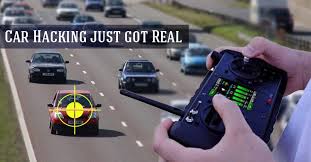
Imagine driving down a highway. Your brakes lock. Your steering wheel locks. Your speed increases, but not of your own power. Your car, not you, makes an aggressive turns and slams into another car going 80 mph. Your accident causes miles of back up. You, your family, and the passengers your car hit need the jaws of life to get out. All of you are fortunate to be alive.
Sounds like a cool TV episode, right? It isn’t. According to the FBI, this threat is real and it’s on the rise. This threat is called vehicular cyber-sabotage. ?This?PSA was put up by the FBI and backed by Dept. of Transportation and NHTSA (National Highway Traffic and Safety Administration) warning drivers of cyber hacking to vehicles in motion. It talks about car sabotage and offers ways to keep your car safe. Such advice includes keeping your auto software up to date with the latest software editions. Avoid any unauthorized changes to your car’s software. Be weary about putting insecure gadgets in your car’s network. Take any vehicular recalls seriously, especially if your model is the one being recalled. Be vary weary of letting strangers control your vehicle. Would you let a stranger get too close to your computer information, bank account, or child? Take that same vigilance with your vehicle. If you feel your vehicle has been hacked, call the FBI or local law enforcement agency immediately.
Why would hackers go after cars? Some could argue it’s just another way for them to get money and/or your personal information. But they can hack a computer or smart device for that. Something way more sinister is going on. The only reason I can think of to cause vehicular cyber-sabotage is to either deliberately hurt or kill the driver and/or passengers, or to show utter contempt and hatred for society. That’s what makes vehicular cyber-sabotage so disturbing and so sick. What can be done about it?

Mar 18, 2016 | internet, Smartphone, Wireless
Do you want to go to Mexico anytime soon? Let ride sharing app Uber take you. Of course, you have to get to San Diego, CA on your own.
Uber is launching Passport. With a push of Uber’s button, they will take you from San Diego, through the San Ysidro border, and to any destination in Mexico’s Baja California. This includes Tijuana, Mexicali, and Ensenada. ?This service will compete with people driving, busing, taking taxis, or even walking across the border. This trip is only one-way and available through Uber’s black option. The Passport service will require a $20 convenience fee. Fares will vary depending on places and mileage lengths. ?A one-way fare from downtown?San Diego to Tijuana’s airport will cost an Uber rider $100. A trip from Pacific Beach to Rosarito will cost $160. You must have your passport to cross the border, Uber or no Uber. Both sides believe Uber Passport will boost tourism for greater San Diego and Baja California, Mexico. Over 70,000 people cross the San Ysidro border daily. Around 50,000 have taken Uber services between San Diego and Mexico, but the trip was far more complicated. The passenger would end one trip at San Ysidro, walk across the border, get their passport stamp, and then hail another Uber after they make it to the Mexican side.
Uber Passport should make it easier than that to cross the border. But it won’t make traffic at the border easier. We can only hope it would make it more comfortable. If this is luxury service, then it better be. I’ve never crossed this border before, but I can see how San Diego citizens cross the border for a weekend out, a day off, or even for work/business purposes. But will this attract people for the price? Should they come up with an Uber Passport service elsewhere, like say, from greater Seattle to greater Vancouver? Will people even prefer Uber,?over a taxi service or their own car across the border?

Mar 17, 2016 | Smartphone
In the last six weeks or so, Apple has been in a legal war with the FBI. It started with the FBI’s request for Apple to unlock an iPhone. It’s not just any iPhone, but the iPhone of a San Bernadino shooter. Apple declined. Now here the words from Apple CEO Tim Cook himself.
Tim Cook recalls when the shooting first happened. Cook understands the other phones were used by the shooters were destroyed, except this one. Apple filled the warrant for that phone’s info. A month later, the FBI asked for more information. Apple advised them to recharge it let it back up. It didn’t work. Apple sent engineers to help law enforcement reset the iCloud password. That didn’t work. That’s when Apple was asked to open the phone, and they refused. Cook talked about civil liberties, the First Amendment and the right to privacy. He mentioned the hat the government is using to insist Apple open the phone. Cook fears it could force millions into actions that would make them venerable. Cook believes the FBI picked this case because they are confident they can win it. Cook said nobody should have a key to turn a billion locks. I can’t report on everything said in this interview. You can read it for yourself in this upcoming week’s issue of Time Magazine.
It’s good to finally here from the CEO about this matter that has the nation’s ear. From Cook’s point of view, Apple did help the FBI. Many in the media want you to believe Apple isn’t cooperating at all. But that’s not the case. Not many probably have heard of the All Wrists Act before this case. This is why knowledge is power. What knowledge you have can’t be taken away. But Cook is right. If they can do this to Apple, one of the biggest, most respected businesses in the world today, then what privacy hopes do we have? Wouldn’t you love to hear the FBI’s side on this debate?
Mar 16, 2016 | Uncategorized
The California US Attorney’s Office made an arrest in an infamous case of hacking that made news in August 2014. Hundreds of nude photos of A-List celebrities such as Jennifer Lawrence and Ariana Grande were released for the world to see.
A 36-year-old named Ryan Collins from Lancaster, Pennsylvania was arrested for felony computer hacking, in severe violation of the Computer Fraud and Abuse Act. Collins is expected to plead guilty. He could face five years in federal prison, but a plea bargain would reduce that to 18 months. According to prosecutors, Collins used ‘phishing’ emails to get celebrity iCloud passwords and email passwords. He sent fake Apple emails to these celebrities asking to reset their passwords. The new passwords went directly to Collins. As many as 50 iCloud and 72 Gmail accounts were compromised, mostly from young celebrity women, dubbing this the ‘Celebgate’ scandal. But there’s still a mystery: did Collins actually release the photos? He’s just charged with hacking the accounts and getting the images. There’s the issue of ‘Original Guy’, whose online name the leaks are under, who claim the photos were paid for using Bitcoin. We don’t know if Collins and ‘Original Guy’ have any connection.
At least the hacker who got the photos has been apprehended. If Collins hadn’t obtained the photos, this Original Guy character, or characters, wouldn’t have leaked them, and Celebgate would have never happened. I’m just upset that he’s only going to spend 18 months in prison while a group of teachers in Atlanta spend 20 years just for fixing test scores of underprivileged teenagers. FBI Agent David Bowdich urge all email users, celebs or not, to be skeptical about giving personal information online. I advise, no, I strongly advise for hackers not to steal personal information. You’re going to get caught eventually. You may get away with it for awhile, but people of all walks of life are sick and tired of getting victimized. People are saying no more. Consumers are getting smarter and hipper to the game. So don’t even play it. If you like looking at celebrities, go buy a magazine or something. Who and what do you think ‘Original Guy’ is?

Mar 15, 2016 | Computer technology
When I say Google wins, I don’t mean winning in revenue, profit growth, and cultural necessity. We already know they’re winning in that. Now they have artificial intelligence that’s beating humanity’s best and brightest at their own game.
Google’s Alpha Go faced a Korean board game genius named Lee Sedol. They played a board game called Go. Alpha won, 4 games to 1. Keep in mind Go isn’t some tech game craze. Go is a 2,500 year old Asian based board game that’s even harder to play than chess. This was a step helping Alpha Go be put successful in real world applications. In the first three games, Sedol was outsmarted by Alpha Go at nearly every turn. Sedol caught on and won game four in a close dramatic game. Game five started Sedol’s way. In the beginning of that game, Sedol took advantage of a mistake made by Alpha Go. Game five was the most exciting of the series. But in the end, Sedol couldn’t deal with the pressure. Despite losing the series, Sedol is a hailed a hero in his native Korea. Even Sedol appreciates the experience and the Korean people’s support and cheers. Very rarely does being beaten, especially by a machine, makes you a celebrity and hero.
This has happened before. Remember when Watson was on Jeopardy? We learn that these machines don’t get flustered and frustrated. The don’t feel emotion at all. They can’t. That’s the danger behind machines. Yes, they can do things better than most humans can. But machines can’t fell empathy. If you lose your job to some computer or robot, do you think the robot is going to console you? Or even worse, if robots were to destroy humanity, do you think they’re going to feel sorry for us? They can’t. So when a robot, computer, or machine beats a human in a game, is that really a triumph? Or is it a tragedy just waiting to happen?

Mar 14, 2016 | Computer technology, General
It’s that time of year again. In the next two or three weeks, people who haven’t watched a college basketball game all year are suddenly basketball aficionados. Welcome to March Madness. There’s an app for that. There are several of them.
The obvious two are CBS Sports and ESPN Tournament Challenge. Since the early 1980s, CBS Sports has given us the NCAA tournament. This year is little exception. Catch the games, view the schedule and see which game you’ll see. The ESPN Tournament Challenge app has what it suggests: a bracket challenge and a great prize for the winner. But it also has deep information and statistics on all teams, whether they be Duke and Kansas, or more obscure teams like CSU Bakersfield or Middle Tennessee State. There are apps you probably know little, if anything about. There is Bracket the Madness. It helps create pools and brackets through Facebook and emails. There’s FanCake, which will reward you with tickets and prizes if you get enough points through them. With theScore, you can personalize your tournament chase by choosing scores that matter strictly to you. If a 2-secede is going to upset a 15-secede, theScore will alert you. Not all apps are free. Tuneln Pro will cost you $10, but you can get for free just about anything this one charges you for.
In the old days, if you didn’t have a TV, you missed out on the tournament. Now, thanks to smartphone apps, you can watch on the phone when you’re working (not giving anyone ideas) or listen on your device. You can do so much more than watch. You can fill out brackets, challenge others, and win great prizes. Most of these apps are either free or very inexpensive. Did you know March Madness is the second biggest sporting event in America, next to the Super Bowl? Who is in your Final Four bracket?
