
Oct 8, 2015 | General
Amazon has been very busy as of late. First off, Amazon‘s cloud service AWS celebrates a milestone. Amazon’s AWS has over a million active customers.
Not only that, but AWS has grown 81% in one year. At this time in 2014, this cloud service was worth $4 billion. Now, it’s worth $7.3 billion. You can add an additional billion from their database business. Then they’re other ventures. Amazon wants their own online pay-TV service. This would add to their video based service. Amazon is asking CBS and NBC to cater to their channels. This information is according to anonymous insiders. These alleged negotiations are in the early stages. Nobody from CBS or NBC is saying a word. Neither is Amazon spokesperson Craig Bergman. But here’s another clue Amazon really wants pay-TV service: Amazon recently acquired Elemenetal Technologies for $500 million, one of Amazon’s biggest purchases in their history. Elemental specializes in software enabling different channels and content to be delivered across many devices. They have many customers, like ESPN, ABC, and BBC. So last month, they acquire a company that will help them deliver many TV channels to many devices. According to anonymous sources, negotiations between Amazon and CBS and NBC have been going on for months. Coincidence? I think not.
For years, Amazon has been the most successful online retail site of all-time. Their grocery delivery service is doing well. Smaller, more local delivery services aren’t liking that. Now they’re expanding. Amazon’s AWS is on their way to becoming one of the most respected cloud services in the game. Microsoft and Apple aren’t going to like that. Now they may or may not be getting in the online pay-TV service. All signs say they are. How are Netflix and Hulu going to respond? I believe in capitalism as much as anybody. But how many toes are Amazon going to step on here?

Oct 7, 2015 | Computer technology
Last month, the city of London, England they celebrated The London Design Festival. This festival honors innovative and creative achievement. Their was one phone at the festival that did particularly well and spoke to an ever increasing growing market.
That cell phone is called the MPO1. All it does it take and receive telephone calls and text messages. There are no apps. There are no cameras. There are no slick features. This isn’t back to the 1990s. This isn’t a phone for the poor and marginalized either; the MPO1 will cost you around $300. They’re just catering to a market sick and tired of 2010s technology and trying to keep up with it all. It’s technology for the anti-tech crowd. The company that makes MPO1, Punkt, runs with this trend. They also sell old school alarm clocks (the MPO1 doesn’t even have that), basic USB desktop chargers and cordless landline phones. Are you tired of iPods and playlists and downloading songs? Vinyls and record players are selling like hot cakes. One of the biggest selling vinyls seems to be Pink Floyd’s Dark Side of the Moon, first released in 1973. ?Don’t like the complexity of today’s video games or gaming systems? Old school gaming systems like Atari and Nintendo are making a quiet comeback. You can even play old school video games like Pac-Man and Legend of Zelda on your smartphone. Tired of the Kindle/eBook craze? Independent bookstores are popping up all over America.
Some may say this trend is just a nostalgic trip. I think something deeper is going on. Some people are tired of having the latest technology forced down their throats. I don’t blame them. I pity people waiting in line all day and night for the latest iPhone, Android, or Xbox. Some people prefer the feel or a hardback or paperback book and the turn of a page. Some people even prefer writing letters or making a telephone call than emailing, texting, and using social media. Today’s technology is supposed to make life simpler. But obviously, it hasn’t for everyone. For example, thanks to today’s technology, many employees can’t even take a vacation without being forwarded work through their laptop or smartphone. Some experts even say this fast-pace technology is making us less empathetic towards our fellow human beings. Is the anti-tech crowd onto something?
Oct 6, 2015 | Malware, News, scam, Security
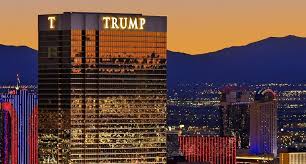
Seven of Donald Trump’s hotels are hacked! The billionaire/real estate mogul/presidential candidate’s Trump Hotel Collection confirmed certain hotels were hit by cyber attacks. Now, customers’ information could be at risk.
These hotels include Trump SoHo New York City, Trump International New York, Trump International Chicago, and Trump International Hotel and Tower Las Vegas. Seven of the 14 hotels Trump manages have been hit. Trump Hotel Collection stated unauthorized malware access may be the blame. In layman’s terms, hotel guest’s and customer’s credit card numbers, security codes and expiration dates may have been compromised. The breached has reportedly happened between May 2014 and early June 2015. ?Trump Hotel Collection confirmed no person’s information was taken, to the best of their knowledge. But they’re taking major precautions and urging customers to do what they can to protect themselves. The company said that during these months, hackers attacked hotel check-in desks, hotel restaurants, gift shops, and other hotel points where credit cards are often used. The attacks have been reported to the FBI, and hackers involved can face severe prosecution and prison time. Trump Hotel Collection is offering a year of free fraud protection and restoration to any customers whose information was compromised.
Yes, I’m reporting another hacking. But the timing of this one is eerie to me. Someone chose to hack Donald Trump’s hotel franchise at a time when Trump is still leading in the Republican polls. His lead has decreased over the last couple of weeks, but he’s still a political force to be reckon with. So who hacked it and why? Something tells this is more than a just a typical hacking. Maybe I’m sounding paranoid, and no, I don’t have any proof of it, but I smell a mystery in the making. Trump haters have come out the woodwork, especially since his presidential candidacy. Could somebody could have done this to disrupt Trump’s campaign? Could somebody have done this to make Trump look incompetent, something like, “If Trump can’t even run his hotels, how can he run the country?”? Is that the cyber attackers’ spin on this? ?Was this cyber attack politically motivated? Did an anti-Trump person do this?

Oct 5, 2015 | General, News
As you know, South Carolina is under a massive flooding crisis. As of Monday morning October 5, nine people have died. As much as 25 inches of rain has fallen in some neighborhoods and towns. According to Governor Nikki Haley, her state is at a 1,000 year level of rain. That’s no understatement, and social media is capturing these floods.
Twitter has been instrumental in reporting this weather phenomena. Meteorologist Jim Cantore tweeted about a low pressure system that’s causing the massive rains. One of the hardest hit areas is Columbia, the state capital and largest city. The University of South Carolina, located in downtown Columbia, tweeted about open health centers to tend to the sick and port-a-pottys available just in case power and plumbing were out. Ordinary citizens have taken pictures of homes and neighborhoods being flooded. There’s even a picture tweet of deer swimming toward higher ground. A drone captured the devastation of one eastern South Carolina town and the bad choices people can make in floods, like driving into lots of still water. In Lugoff, South Carolina, a video captures a wall of water emptying into neighborhood. In Summerville, South Carolina, another social media video captures local firefighters rescuing a women, her three children and their pet. In Charleston, people are seen wading through flooded waters. And on You Tube, the National Weather Service put out a video urging driving safety in such conditions, telling motorists to, “Turn around, don’t drown”.
On Facebook, family and friends in affected areas are communicating their safety and well being to others. And government officials are using social media urging people not to even be on the roads. Social media is also being used by non-profits and charities informing people of how they can help. What modern technology and social media are doing is bringing the story home through personal experience. It’s also a powerful tool in bringing critical information and safety precautions. How can social media help you?
Oct 4, 2015 | Computer technology
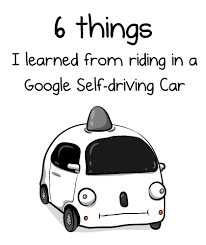
I read an interesting article today. The writer proposed the rise of the Google car will put an end to human driving. Is he right? Will Google cars end driving?
Whether you like it or not, the self-driving car is here. Buzz Feed Bureau Chief Matt Honan test rode in a Google prototype car. He compares these cars to clown cars built for the ground up. While Honan didn’t seem very impressed with the car’s look, he was impressed that Google really did build it from the ground up. It has to be this way in order to create a self-driving car. All one has to do to start the car is push a button and watch it go. There is no steering wheel, gas pedal, brake pedal, or a dashboard. According to Honan, it rides comfortably, but still feels like riding in a gondola, kinda like the ones you ride in Venice, Italy or Las Vegas’ Venetian Hotel. A New York Times reporter compared his Google car experience to a haunted house ride. Yet Honan was very impressed with how the car handled itself in traffic, dodging pedestrians and other cars. He claims the Google car can drive better than any human being can.
That remains to be seen. But I admit, we as humans shouldn’t be bragging about our driving. In the US, a car accident happens every five seconds. Around the world, car accidents kill, injure, or disabled nearly 50 million every year. The automobile accident is the number one killer of young people between ages 15-29. They cost Americans over $230 billion a year in insurance claims, medical bills, lost wages and production, and other hindrances. Isn’t the world ready for a self-driving car? From what I‘ve read, few if any accidents have been recorded. Some may say self-operating cars are unsafe. But are human operating cars much better?
Oct 3, 2015 | Malware, Security
Back in July 2015, a venerability was discovered in Android phones around the world. This threat was called Stagefright. It’s a potential exploit that lurks within the Android global system. Today, just a few months later, it has an even bigger and badder counterpart.
This is an alert: Android vs Stagefright. Or maybe I should say Stagefright 2.0. According to a tech security company called Zimperium, Stagefright 2.0 can be even more potent to even more Android smartphones. Such vulnerabilities allow hackers to encode bad viruses and malware for up to 950 million Android users, those running 2.2 and up. However, Stagefright 2.0 can target Androids running 1.0 and up, which can affect as many as 1.4 billion people worldwide. Let’s put that in perspective: That’s about 20% of the world’s population. Unlike the original Stagefright, the 2.0 version can creep through your phone through a web browser. Then it can still lurk within the Droid global system. Partnering companies Google and Samsung are offering monthly security updates to keep customers safe. Unfortunately, this doesn’t apply to all Android devices. They’re articles saying these valiant efforts aren’t even going to be enough. The next security measure is scheduled for Monday, October 5. But even that is strictly for Google’s Nexus devices, which run a pure version of Android.
First and foremost: Do not panic! We at Geek Choice, and other bloggers, don’t write such articles to cause paranoia. Alerts like this are written to raise awareness. It’s better to be told you’re at risk and have nothing happen then to be told nothing’s going to happen and then calamity strikes. With this knowledge comes power. Go to your nearest Android dealer and ask questions to see if your device is at risk. If they don’t have the answer, call Android customer service directly. But wouldn’t you think this next security measure would be available for all Android machines?
Oct 2, 2015 | News
As you know, computer maker Hewlett Packard‘s former CEO Carly Fiorina is a Republican candidate for US President, running for 2016. At first, her campaign got nowhere. What does Silicon Valley think about her presidential campaign?
It depends on who you ask. Some at HP and in Silicon Valley support her. Others criticize her of being the stereotypical super rich CEO who is out of touch with the 99 percent. The Washington Post printed an article about a contractual clause to have her yacht shipped from New York to San Francisco. A Wall Street executive criticized her lack of public service. That was nothing compared to the choice words of Yale professor Jeffrey Sonnenfield, who called Fiorina, “one of the worst technology CEOs in history.” And the fact Hewlett Packard cut up to 30,000 jobs won’t help any. But those in Silicon Valley know this could be history in the making. It’s the first time a start-up tech boss has ever run for US president. And Silicon Valley urges her to use her campaign to bring up tech issues, such as net neutrality. For example, she’s against illegal immigration. But hasn’t said anything about the grueling process of foreign workers getting permits in Silicon Valley. One Silicon Valley insider said watching the last debates reminded him of a 1990s debate. There was hardly mention of 21st century technology issues.
Despite these criticisms, Fiorina is making tremendous progress in the race. Many polls have her in third place, out of 17 candidates, behind only Donald Trump and Dr. Ben Carson. But when you’re the first Silicon Valley start-up CEO to run for US President, Silicon Valley expects a lot of you. Many in her own neighborhood don’t think she’s living up to that. I think she really needs Silicon Valley to be successful in this race. How are you going to get respect all around the country, expect in your hometown, own neighborhood, or own community? How does that work?
Oct 1, 2015 | Computer technology, internet
When I was 11 years old, I flew from California to North Carolina. My checked luggage ended up in Florida. It took several days and lots of weeping (remember, I was 11) before I got it back. If only they had the tracking baggage system back then.
American Airlines is launching a tracking baggage service. They started a free real-time online luggage tracking service in August. They’re just letting the public hear about it now because American Airline employees weren’t yet used to this kind of scanning system. This is available only when you fly American Airlines and their newly acquired US Airways. You go on their website. Click the ‘track your bags’ button. Give your name, locator, or bag tag number (the number they give you when you check your bag). The site will give you info like whether the baggage is loaded on your right aircraft or not. In the event checked baggage is misplaced, the tracking service will let you know your baggage is lost. Instead of wasting time and freaking out at the baggage claim, you can report your baggage loss to customer service immediately. This tracking service is free of charge.
Thankfully, it’s getting better. In 2007, airline workers mishandled the bags of nearly 19 of every 1,000 customers, an all-time worst. By 2013, the number fell to 6.96 per 1,000 customers. But during that time, the TSA [Transportation Security Administration] has shelled out over $3 million to disgruntle customers over mishandled baggage. This new tracking service was part of the deal in the American/US Airways merge. Usually, I’m not a fan of tracking or merging, but I think this is a good call. The numbers are going in the right direction. So if tracking is what it takes to give people their sanity, their luggage and peace of mind, then so be it. But please use this system for what it’s intended for, and don’t abuse it to infringe on customer’s privacy rights. That’s my only concern here. Will the American Airlines track baggage system help prevent more baggage mishandling?
Sep 30, 2015 | General
The new Forbes 400 list is out. This list shows the 400 richest people in the US. The rich are getting richer. In order to make this list, you have to be worth at least $1.7 billion. Techies dominate this billionaire’s list…again.
Microsoft founder Bill Gates takes the top spot for the twenty-second year in a row. He’s worth an unbelievable $76 billion. Investor Warren Buffet came in second. The third biggest billionaire in the US is Larry Ellison. He’s the executive chairman, CEO, and co-founder of computer hardware and software giant Oracle. Ellison comes in at 47.5 billion dollars. Slightly behind him is Internet retail Amazon kingpin Jeff Bezos at $47 billion. Facebook CEO Mark Zuckerberg comes in seventh. He’s worth slightly over $40 billion and counting. Year after year, search engine and all-around tech giant Google is voted one of the most valuable and respected companies around today. Maybe that’s why it’s leader Larry Page is the 10th richest man in America. He’s worth an estimated 33 and a third billion dollars. Page’s co-founder, Sergey Brin, comes behind him at #11, worth $32.6 billion. Snapchat CEO Evan Speigal is the youngest person on Fortune 400 list. At 25 years of age, he’s worth 2.1 billion dollars. Needless to say, techies make a huge chunk in the billionaire’s list.
If you ever doubted how important computer technology is to our world today, take a look at this list. Most of these are innovators who saw a need and went with it. Look at where their hard work and innovation took them. So for every person in the computer tech industry, there’s hope that you and I can make this list one day. Just ask Even Speigal. So if there’s anyone in jr. high, high school or college reading this, Bill Gates is right. Be careful of how you treat nerds and geeks; you might be working for us one day. Who would you like to see make the Forbes billionaires list?
Sep 29, 2015 | internet
Yesterday, one of the most powerful social media entities went down. The lesson learned was more social than technological.
At around 3pm Eastern Time, 2pm Central, noon Pacific Facebook went down for users all across the country, even becoming inaccessible for many people. All that would come up is an error message. It didn’t take long for disgruntle Facebook users to take to twitter and trend about this annoyance. One lady joked that she had to resort to talking to her family again. Another person tweeted they can finally go eat lunch instead of starving themselves looking at Facebook. Facebook went back up around 5pm Eastern Time. This was the third time Facebook went down in as many weeks. A Facebook spokesperson told tech news site Mashable the shutdown cause was due to a configuration issue. Facebook’s platform status said they were experiencing a major power outage. And that’s not all. Rumors were posted claiming Facebook was now charging $5.99 a month and greater just for people to keep their account. I saw at least five people post this on my page. This rumor is false. Facebook is as free as it ever was.
But there are lessons learned here. First off, we can’t believe everything we read on Facebook. So many people were freaking out that they may have to pay for something that’s been free for years. That’s just not the case. Think of all the celebrity death hoaxes people put on Facebook over the years. People freaked out when Facebook shut down altogether. This shows you how dependent we are on social media. I see it all around me. From coffee shops to bars to diners, ?I’ve seen incidents where people don’t even look up at each other; just down on their smartphones. Between you and me, I’m thankful there weren’t riots and violence. I fear a day like that coming; I hope I’m wrong. I saw a poll in which 83% of Americans say they can live for a day without today’s technology. Why are we lying to ourselves?
