Sep 28, 2015 | Smartphone
I saw long lines and security at every Apple store in my area. I’m sure this scene played out in much of the world. The iPhone6/6s Plus craze is more powerful than any of us even know.
The iPhone 6 and 6s Plus sold over 13 million devices worldwide last weekend. That’s a new record for any device Apple has ever sold. Ironically, the old record was set last year. That old record broke the one set the year before. See a pattern here? Let’s break Apple’s record breaking weekend down. Apple sold 50 iPhone 6 or iPhone 6 Plus devices a second. That’s 3,000 devices sold a minute. Sales in Asia did especially well. In fact, China and Japan were the main reasons for the record. This is just the beginning. On October 9, these devices make their debut in 40 more nations, including economic powerhouses Russia, Switzerland, and Taiwan. I’m sure Mexico’s numbers will be off the charts, too. By Christmas 2015, Apple iPhone 6s and Plus will debut in 130 nations around the world. That’s about 2/3 of all the nations of the Earth. So what’s the fuss about? Maybe it’s the better camera. Maybe it’s the fingerprint and other upped security measures. Maybe it’s the faster chip or 3D Touch. But between you and me, I think it’s the advertising and the name Apple.
A few days ago, I asked “How would Apple do this weekend?” Now I have my answer. I saw police and heavy security at every Apple store I passed by. Lines were often long. It wasn’t just Apple stores. It was like this at every phone shop were Apple iPhone 6 and 6 Plus are sold. For those who got the new one, I hope it was a good investment. I was never one to be the first to get any smartphone. I guess I’m too stubborn and lazy. Will somebody let me know how iPhone 6 is at this time next year?
Sep 27, 2015 | Entertainment
You’ve seen the shows: Orange Is The New Black, House of Cards, Narcos. Netflix isn’t only the world’s most successful streaming service, but on it’s way to becoming an overall entertainment powerhouse. Netflix may be already there.
Maybe this is why Netflix builds it’s own studio, instead of dealing with others. Their productions are so hot it must be this way. Rumor has it they’ve already leased a Hollywood lot. Not only that, they want comedian/talk show host Chelsea Handler to host a show exclusively for Netflix on that lot. They’re also filming upcoming comedy shows Flaked and Lady Dynamite on that lot. Netflix leaders want to end their dependence on mega media companies like Time Warner, Disney, or 21st Century Fox. Netflix started in the late 1990s as a DVD by mail delivery service. In the late 2000s, with the social media revolution going on, Netflix reinvented itself as a streaming service. By the mid 2010s, Netflix was producing it’s own shows and winning critical acclaim and Emmy’s. But with that comes great competition. Rival Hulu is also expanding. Hulu is also co-owned by Fox, NBCUniversal/Comcast, and Disney Corporation.
But with this kind of expanding comes more challenges, especially financial. How are they going to pay for the lot? How are they going to keep paying for the big stars everyone wants to see? Making high ranking and high quality and award winning TV shows and movies doesn’t come cheap. There’s another reason I want Netflix to win. It’s the same reason I won’t be streaming with Hulu anytime soon. Hulu is owned by not one, but three different mega media conglomerates. The last time I checked, Netflix was still virtually independent. For those of you that have followed my blogs, you know how I feel about corporate mergers. So yes, I hope Netflix have all the success in the world with this lot. How will Netflix do?
Sep 26, 2015 | News
Apple iPhone 6 is wildly successful around the world. It’s Apple’s most successful creation yet. This should be a peaceful, celebratory, non-controversial time right? Wrong! As the old Scarface song said, “You’ve reached the top but you still gotta learn to keep it.”
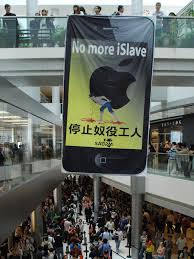
Despite this success, Apple is under fire from human rights and labor rights groups throughout Asia. Students out of Hong Kong and an?organization called Students Against Corporate Misbehavior (SACOM) accuse Lens Technology of exploiting their factory workers. Lens Technology is the company that manufactures Apple’s touchscreen glass. These organizations claim Lens Technology force employees to work overtime without compensation, withholding wages, and providing unsafe working conditions. These accusations come after a three month investigation at three factories. Lens Technology is also accused of making employees work a month without a day off and failing to pay social security. As the new iPhone 6 debuted in Japan and China (which has included Hong Kong since 1997) SACOM urged Apple to take immediate action to make this situation right. At one Hong Kong Apple Store, a handful of protesters carried pickets and giant phones saying, “Down with the bad apple”. Lens Technology denies any and all wrongdoings. They insist employees have at least one day off a week, overtime is optional and regulated, pays social security regularly, and regularly inspects factories to ensure clean and safe working conditions.
This definitely sounds like a case of one word against another’s. But have you looked at China‘s human, labor and environmental rights records lately? They’re among the worst in the world. So when accusations like this emerge, it makes it easier to believe them. It’s not just about one company in the hot seat. The whole corporate culture has to change if it wants this stigma gone. I don’t know whose right or wrong in this case. Who do you side with?

Sep 25, 2015 | internet, Security
You know what I learned today? I learned as early as 2008, government agencies all over the world plotted to spy on ordinary citizens. I learned of Great Britain’s disturbing name and spy system.
It’s called the Karma Police. This mass surveillance project began in 2008 by British government spies without the knowledge, approval or debate of the British people. The UK people can thank Government Communication Headquarters, or GCHQ, for this one. For years, they recorded the online activities of every British Internet user. This include their visits to adult websites, news websites, blogs, search engines, social media sites, you name it. The GCHQ’s doings were exposed by Edward Snowden‘s The Intercept article. Not only that, these revelations come when the UK government pushes for even more surveillance. The Karma Police comes in compartments. One compartment builds profiles displaying web users’ habits. Another compartment analyses?all, and I do mean all, aspects of online communication, from emails to texting to social media postings. One compartment kept tabs on…ahem…suspicious search engine inquiries. And the GCHQ can do all this spying without any legal ramifications or accountability. By the end of 2012 (The Intercept article came out in 2014), they had about 100 billion metadata records. There is some good news to this. According to this metadata, the content of calls or emails weren’t recorded, just the senders and recipients of that call.
Well, I can take that as good news. But it still doesn’t excuse the fact this organization has countless documents of innocent people. And now they have the audacity to ask for even more surveillance? ?Yeah, I’m sure the British people will love that one. I don’t know much about their Magna Carta, but I’m sure it wouldn’t condone this any more than our Constitution would condone it. I‘m sure many British legislatures will say, “But we need it to fight terrorism and other serious crimes.” How many terrorist and serious crimes have the Karma Police caught so far?
Sep 24, 2015 | scam
Several weeks ago, it was discovered that many profiles on adulterous website Ashley Madison were fake. It was discovered women were hired to create fake accounts to lure men seeking extramarital affairs. Apparently, Ashley Madison isn’t the only ones using fake trafficking.
As it turns out, more and more digital ad viewers are bots. Less and less are human beings. One study done by Association of National Advertisers showed many ads were viewed by software. One Chrysler computer ad that aired on Saveur.tv revealed only two percent of ad views were human. When Chrysler found this out, they stopped buying ad time and space from Saveur. Chrysler isn’t the only ones in this predicament. Researchers say fake ads and fraudulent advertising will cost businesses over $6.3 billion a year. In fact, fake traffic is big business and has been for years. Malware is involved, brokers sell it, and some companies even deliberately pay for it. Others do so accidentally, not knowing or not even caring where the traffic comes from. The traffic market is highly unregulated. As often the case, anything that’s too good to be true probably is.
Beware of offers selling you 1,000 visits for a dollar. Chances are, none of those are human beings. Real human web traffic will likely cost between 20 and 90 cents a visitor. Never settle for paying one or two cents per click. At best, you’ll get pop-up ads. That could lead to sales. Big emphasis on could. You’ll probably get botnet traffic, which isn’t human. Last time I checked, botnet hasn’t bought a good, service, or product online yet.? Ten cents per click, you’ll get traffic from major publishers, but most of it will be to basic sites and blogs, reviews, and listings. But at least the traffic you invest in will be human. For over a dollar a click, you can go Google Adwords and get real humans who specifically want your good or service. But who has the money to pay over a dollar per click? How many small and struggling businesses starting out have that kind of budget? Do you see a cycle here?
Sep 23, 2015 | News, Smartphone
As most of you know, Pope Francis will spend the next several days visiting the United States. Pope Francis will be visiting President Obama and Congress in Washington DC, then the United Nations in New York City. He will then hold mass in Philadelphia, PA. Social media will capture it all.
Thanks to new social medium Periscope, you can catch Pope Francis’ first trip to the US as it unfolds. The White House is helping broadcast this historic occasion to Periscope users live. This Periscope footage began yesterday. It started from the very beginning, as Pope Francis’ plane touched down at Joint Base Andrews airfield in Maryland. The footage isn’t exactly a close-up, but what do you expect? You can see the plane landing. You can see Pope Francis stepping on US soil for the first time. You can hear the cheers and screams of the fans. You can see President Obama, Vice President Biden, their families and other dignitaries greet him on the tarmac. They’re at least 10,000 Periscope users hoping to catch a glance of this historic occasion. This video will remain on Periscope until 4pm ET today. This Periscope was produced by the White House. Will the UN have Periscope ready when Pope Francis visits their headquarters?
Periscope isn’t the only social media outlet getting in on this moment. You Tube has footage of Pope Francis’ arrival. Facebook talks about it a lot. Pope Francis is the first social media Pope. Social media was in it’s infancy when Pope John Paul died. It grew up when Pope Benedict reigned. During this visit, Pope Francis’ visit will be captured by social media. What does Pope Francis and social media have in common? Lots! In the days to come, you‘ll probably see social media be used to capture every step of this historic occasion. Will you be between New York, Philadelphia, and Washington, DC in the coming days? ?Will you be taking your smartphone with you?
Sep 22, 2015 | Backup, Computer technology
Since the early 1990s, Microsoft Office has revolutionized, changed, and dominated office spaces and workplaces around the world. Today, with the new Microsoft Office 2016, they’re changing the game…again.
Microsoft Office 2016 will offer Office’s 1.2 billion users an offer they can’t refuse: cloud-based service. But despite the new Office cloud, this new updated version will run and look just like it always had. New features include a ‘share’ button, new file sharing field, an email window to share that file, and an inclusive list of people who can work on that file. However, this can only be done through Microsoft cloud service One Drive. A lot of offices have meetings through Skype these days. Through this new file sharing style, a pop-up occurs telling you about Skype and other ways to contact the person. It may be a subtle way to push Skype on us, but it’s effective. Multiple people can work on these files and use these tools at once (sounds like Google Docs, doesn’t it?). Even edits can appear on the app. Microsoft Office is available on Windows and Mac. The reasoning of this software price is debatable. Microsoft Office 2016 will cost you $6.99 a month through Office 365. Or you can pay $149 for the student version or $229 for the business version.
For a business, $229 may bot seem like much. But for a struggling student, $149 seems like a lot. But I noticed Microsoft Office 2016 are using a lot of tactics Google Docs already use. Is this their way of competing with them? Then there are the cloud and file sharing features. While the Skype option would work for conferences, when someone is out of the country, would the rest of the office embrace this file sharing? At best, Office 2016 would work if a handful of workers are sharing a super secretive project. Other than that, I don’t think the new Microsoft Office offering too much that’s worth $229. Would you make the upgrade?
Sep 21, 2015 | News, Security, Uncategorized
The US and China has had a turbulent history, especially when it comes to cyber and hacking issues. It’s been one accusation and one incident after another. Now, the US and China make a cyber deal.
Both governments are negotiating a modern day arms race deal. But instead of traditional military weapons, this arms deal has to do with computer hacking. The US and China formally promise each other not to take each other’s government down by cyber attacks or hacking. These intense negotiations have been going on for weeks, just in time for Chinese President Xi Jimping’ visit?later this week. Not to mention the United Nations are having their 70th general assembly at this time. Yes, the UN is expected to address cyber security, especially when it comes to international security. One UN principal is that no nation shall engage in activities, “that intentionally damages critical infrastructure or otherwise impairs the use and operation of critical infrastructure to provide services to the public.” US officials want China to embrace such principals. Most attacks have been about theft and ID hacking, like the 22 million Office of Personal Management files that were compromised.
There’s been other attacks too, though China has either denied or played off. I’m still wondering if they had anything to do with the infamous Sony Pictures hacking of December 2014. The more I read into this, the more this reads like a lecture from the US and UN to China. This almost sounds like they’re wagging their finger and telling China, “This is bad. You should be ashamed. Don’t let me catch you doing this anymore.” But history shows us this has happened before. How many times has the opponent said, “Okay. I’m sorry. It won’t happen again,” only to have all hell break loose? Will China honor this UN code and US deal? Come to think of it, will the US honor this UN code and this potential deal?
Sep 20, 2015 | internet
Some people just don’t like ads. There are apps out there who cater to this dislike. One top selling app has been blocked from providing this service.
The Peace App and Apple Store are parting ways. You can thank Peace App’s developer Marco Arment for this one. It was one of the top selling pay-for apps in Apple’s arsenal. It’s known for blocking ads and other unwanted content. They help strip websites of ads and tracking (when an ad follows you from one website to the next one). Arment notices the ad blocking wars. These wars are too out of control for his taste. He complains Apple’s way of dealing with ad blocking is too blunt and one-sided. The Peace app’s services are more complex. Meanwhile, advertisers and publishers are worried such ad blockers will strip them of profits and revenue. Independent and small publishers are especially concerned. Some are taking action. Media website CNET are insisting web blockers disable their blocks so ads can get through. So has historic newspaper medium The Washington Post. It wasn’t always this contentious between publishers and ad blockers. Then Apple pretty much enabled the blockers. Now many are worried. The ad blocking wars show no signs of ending anytime soon.
I don’t mind ads. I would rather watch through ads and see them on my screen than have to pay for certain websites and services out of my own pocket. How do you think social media sites like You Tube, Facebook, and Twitter remain free for consumers? Somebody’s got to be paying for it. These sites sure don’t run on charity, and money doesn’t grow on trees. Better advertisers pay for it than consumers. I can see how tracking ads and ads following people around can make people uncomfortable. That? gives an Orwellian feel to online ads. Do tracking ads really entice the consumer in purchasing anything? Is there any solution to solve the ad blocking wars?
Sep 19, 2015 | Security, Smartphone
The cell phone is the technology piece hardly anybody can leave home without these days. But what about those incidents where you forget or misplace your phone? That just ruins your whole day.
These cell phone carrying alternatives could help. I would suggest Purse and Boots by Elizabeth Anne Shoes. These boots have a sub-compartment that can hold any cell phone. You’ll always know where it is. And undesirables like phone thieves and pickpockets never know where it is. Sounds good, right? But Purse and Boots have two strikes against them. One, most of these boots cost around $300. Two, they’ve received many complaints about shoes not getting shipped. Though their Facebook page is up, their website isn’t. Let’s move onto the festival belt. Well, that’s just one word for it. These leather accessories aren’t just meant to hold your cell phone. They’re meant to make a fashion statement. While these are great to make a statement and keep your phone safe, there’s a conflict here. You have to be aware of what you where. What if your outfit doesn’t match your festival belt? Then there’s the Porta Pocket. You can strap it on any part of your body. It’s perfect for your workouts, and going out. And here’s a plus: if you use the Porta Pocket on a more intimate body part, it’s less likely you’ll be robbed of it. Just hope nobody’s calling or texting while it’s there. And it’s the cheaper way to go. Many Porta Pockets can go for under $20.
Yes, there is the old fashioned way, like the pocket or purse. But with that comes risk. Hacking and cell phone thefts are two of the fastest growing crimes today. It’s good to have options and alternative to curb and prevent this criminal trend. What are some of your cell phone carrying alternatives?
