
Oct 18, 2015 | internet
So much is talked about of the Millennial Generation, those born between 1981 and 1997. But what about those that are coming after them? What about those born after 1997? What about Gen Z and social media?
As it turns out, Instagram is the most popular website among today’s teenagers. As of fall 2015, 33% of teens use Instagram. That’s triple the percentage of teens who used it back in fall 2012, only three years ago. The second and third most popular social media sites among Gen Z’ers are Twitter and Snapchat. Twitter has been steady over the past three years, but Snapchat usage has skyrocketed. But one statistic really caught my eye. In fall 2012, the percentage of teens who don’t social network at all was seven percent. Guess what that number is in fall 2015? Zero percent! Then there’s Facebook. In the fall of 2012, Facebook was the most popular social media site among teenagers. Over half logged on Facebook on a daily basis. By 2015, Facebook is ranked fourth among teens. Only 15% use it on a regular basis today. Other social media sites getting lower scores are Tumblr, Pinterest, and Google/YouTube. The ‘other’ category got eight percent.
What is most shocking is Facebook’s decline among teenagers. I think I know why the numbers are so low among Gen Zers. It’s because Facebook is getting so popular among their parents. Facebook usage among adults 18-49 has skyrocketed lately. And the kids today can’t have that, can they? ?But Gen Z is our future. Facebook needs to do something to get this demographic back. In fact, it’s obvious all social media need to cater to this demographic. These statistics prove that nobody under 18 is refusing to use social media. In school, they’re even teaching elementary school children the Internet and social media to get them comfortable in using it. My elementary school days consisted of Oregon Trail. So this is a demographic social media firms can’t ignore, if they want to stay in business for the long run. What can they do to make that happen?

Oct 17, 2015 | youtube
I hate to say it. I even hate to type it. Pretty soon, we’ll have to pay for some of YouTube’s videos.
As I write this, YouTube CEO Susan Wojcicki and other You Tube leaders are preparing the way for paid subscription only programming. On October 21, they will announce some of this programming at their studio in Los Angeles. They really are going Hollywood with this one. Don’t think you can slap some mediocre video of your backyard wrestling or singing really bad karaoke and expect to make it on their You Tube subscription page. They’re looking for new content from top creators. They may not use major A-list celebrities like they tried to back in 2011. They invested $100 million on that venture, which turned out to be a miserable failure. Some sources say YouTube will use their own stars who attract a young audience. Don’t worry! YouTube will still offer it’s free advertising backed service. Nonetheless, all videos on the free site will be available on the paid site. And video makers need to listen good to this one. You Tube wants all video producers making money from ads to participate in subscription services. Nobody knows when the You Tube pay service will be available, but the best guess sometime in 2016.
First and foremost, we should all be breathing collective sighs of relief that the free YouTube service will still be going strong. Never again will I take for granted ads before YouTube videos, no matter how pesky they may get. But I anticipate what will be offered on their pay site. If they want to compete with Netflix and Hulu, they better make it good. I’d say they should try to get some TV shows to stream. But don’t get too crazy with that. They should still stick to their bread and butter, which is everyday people creating quality videos for everyone to enjoy. How do they walk that fine line?

Oct 16, 2015 | Smartphone
What are your weekend plans? Do they involve Uber transportation? If they do, you should alter those plans right now.
Uber drivers are going on strike. The strike is scheduled to start at 5pm EDT Friday and last until 10pm EDT Sunday. This is the busiest time of the week for Uber service. The strike is organized by former Uber driver Abe Husein. But Abe Husein isn’t stopping at asking drivers not to work this weekend. He’s asking supporters to make fake Uber accounts, request rides they don’t intend to use, and deliberately cause mass confusion and frustration for non-striking Uber drivers this weekend. Their demands are many, and most involve money. Uber drivers take home on average 75 cents a mile, a pay most drivers can’t bare. Strikers want Uber X fares raised by 60%. They also want a tip option for customers. As for now, tipping is a no-no in the Uber world, something that attracts customers. They want the minimum fare raised to seven dollars and the cancellation fee raised to seven dollars. So far, around 20,000 Uber drivers have joined Husein. Some Uber drivers aren’t taking part. Some think it’s a waste of their time and a waste of good business that can be had on a weekend.
I support the right to strike and the right to peaceful protest as much as any good American. Many great movements throughout our rich history were born out of strikes and protest. And it’s an effective way to get the public’s attention. But one thing I don’t support is deliberate deception. There is no need for faking accounts and faking Uber request just to prove something. This kind of behavior is unnecessary and uncalled for. Attorneys say this is at least a civil offense, if not a criminal one. Is this strike, or any other strike, worth deception, or the consequences it could bring?

Oct 15, 2015 | Uncategorized
Do you think Uber is causing havoc among the global taxi service industry? If you’re in the delivery serice, then you might be next!
Today, I’m here to introduce Uber Rush. Well, it came out last year, but that was just a test. Now, Uber Rush becomes official. The Uber Rush app will give you courier service, whether it be for an item left home or if you need lunch delivered to your desk. But soon and very soon, it could become the premier delivery service for small businesses across America. Uber Rush has just been in New York City, but they’re expanding to Chicago and San Francisco. Their couriers can rush small packages. They can bring lunch. They can even bring small business supplies, like books, clothes, and some raw materials. It’s just as easy as checking out on the app and getting the track link and status of arrival. It will cost five to seven dollars per Uber Rush delivery service. Most of that will go to the Uber driver/courier/bike messenger. Customers/businesses can either pay delivery costs up front or add it to a bill to be paid later. Uber Rush couriers will be specially trained.
So if Uber Rush is successful in these busy and thriving cities, it’ll take off across the US like wildfire. If I were FedEx, UPS, USPS, or running a food delivery service, I would be very concerned. The holiday shopping and delivery season isn’t that far away (don’t shoot the messenger). From stories I’ve read, some delivery services don’t have that good a reputation. This link is from one story that really made me sick. Is it a coincidence Uber is expanding it’s Rush service at this time of year? Do you see Uber Rush being competitive against major delivery services? How do you think the big boys will respond? I‘m not here to take sides either way, but how interesting could this get?

Oct 14, 2015 | General, Wireless
It’s the smartwatch. It’s one of the fastest rising tech devices today. But what if you could build your own smartwatch? Soon, you’ll be able to.
Thanks to a crowdfunding?firm called Kickstarter, you can. Kickstarter helps fund creative products and services, especially in the fields of entertainment and technology. They’ve funded everything from stage plays to video games. Now, it’s backing Blocks Wearable’s first modular smartwatch. This Blocks smartwatch kit includes a round watch face that is the main module. You can clip in other modules that will make up the watch band. This kit offers the same things an already made smartwatch does, like a physical fitness tracker, voice control, and various notifications. It isn’t a one size fits all kind of watch. This watch can be constructed and crafted to fit the needs of the individual building it. This Blocks build-it-yourself smartwatch is backed by Qualcomm and ARM. It’s their processors that most likely power your smart devices. It will run on mobile operating system Android Lollipop. It’s compatible with many Android and Apple products. This smartphone kit contains an extra battery module, GPS module, heart rate monitor, pay at the register availability, and a module that offers everything from temperatures to air pressure. There are two versions of this Block Kickstarter phone.
The core module will cost you $195, or five modules for $80 more. Kickstarter will offer discounts to early buyers. But pack the patience. These kits don’t ship out until May 2016. While the prices are competitive, I’ve seen smartwatches that are $100 or less, and you don’t even have to assemble them. Nonetheless, building your own smartwatch can be fun and educational. I can see parents doing this with their kids to get their handy and creative talents flowing. This can be a tool of learning how today’s technology works and learning different factors of technology. And it does offer the things a regular smartphone does. The people at Kickstarter pride themselves on investing in products that produce creativity. Have they succeeded here?
Oct 13, 2015 | Computer technology
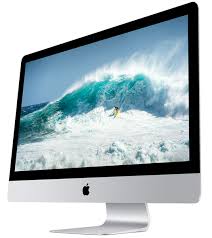
Apple’s iMac, which is already shrinking, keeps getting smaller. It’ s going 4K.
The 21.5-inch iMac is getting a lift. It’s getting a faster processor, faster RAM, and better graphics, and of course, 4K display. They’re using new display technology showing 25% deeper color, especially red, yellow and green. This helps make colors more realistic. Imagine seeing a wave come towards the screen. You’ll be able to see all colors in the wave, not just the blue. Or if there’s a scene where white light is involved. You’ll be able to see more yellow in the light. So anything you’ll be streaming off Netflix or Hulu will look real. With some of these shows coming out today (like Walking Dead), maybe this color can come off a little too real.
It’s been two years since the iMac has improved processors. This 21.5 inch iMac has Intel Broadwell processors. These are the new processors. They just came out in June 2015, which is still considered new in today’s fast pace technology world. These upgrades include Iris Pro graphics, perfect for better pixels. The RAM has not only improved, but one can upgrade it to 16GB. So you want more to store more stuff on your new iMac? The larger Thunderbolt 2 will accommodate you.
With all these upgrades and new cool features, don’t expect this 21.5-inch iMac to come cheap. The 4K models will start around $1,499. You can still get the 1080p versions for $1,099. All models will ship as I write this today. If you need more time, this new iMac will be available. I already see the financial set up here. They’re making the far better 4K model just 27% higher because they really want you to buy the 4K model. But are these upgrades and new features enough? Is it enough for you to buy or upgrade to the new 4K iMac?

Oct 12, 2015 | Computer technology, News
Computer maker Dell buys out computer data and storage firm EMC Corp. for $67 billion. Dell’s acquisition of EMC makes this the biggest deal in technology history.
Dell hopes this acquisition makes them more competitive in an ever changing and more competitive field. They hope EMC will help them expand Dell’s product lineup to get more customers. Dell will pay $24.05 a share in cash. This deal includes shares in VMare Inc. That’s nine dollars per EMC share. EMC shares are rising in the wake of this historic news. Both companies will be under the leadership of CEO Micheal Dell. This will combine EMC’s expertise in storage data devices and Dell’s expertise in servers. EMC was founded in 1979, and went public in 1986. It’s headquarters are in Hopkinton, MA, a town about 30 miles west of Boston, and where the annual Boston Marathon begins. But in recent years, EMC has hit challenging times. Their storage model demand has been in decline. They’ve tried to focus on newer products and materials. But apparently, the focus isn’t enough since it’s hardly increased profit growth. Before this merger, their growth? increased 3%, their lowest growth margins since 2009, the height of the Great Recession.
Despite being one of the leading computer makers in the world, they’ve also seen better days. Demand for PCs has fallen. That is Dell’s bread and butter. In Q3 2015, their PC shipments declined 7.7 percent; that’s just in one quarter! The only reason they were able to make a profit and stay ahead of the PC game is because other PC firms are enduring the same struggle. The merger between Dell and EMC should be finalized by summer 2016. What will this merge mean for data storage? What will it mean for PCs? What will it mean for newer projects Dell is working on? But the biggest question of all is what does this mean for EMC jobs? Are they in danger?

Oct 11, 2015 | News, Software
Believe it or not, there are some battles even the mighty tech giant Apple can’t win. In China, it’s Apple vs censorship. It seems like censorship is winning in China.
Apple has disabled it’s news app in China. It’s believed regulations regarding strict online rules is the reason. The Apple News App is already available in the US, and being tested and promoted in international markets. It’s currently being tested in Great Britain and Australia. But Great Britain and Australia don’t have the intense government rules China has. That’s why Apple News App doesn’t work in China. When Apple users in China try to utilize the news app, all they get for their troubles is the following message: Can’t refresh right now. News isn’t supported in your current region. This could be a problem because China is Apple’s second biggest market. That nation made Apple $13 billion in Q3 2015 alone. But Chinese government leaders in Beijing pass the censorship blame to foreign companies. When the fact of the matter is, Chinese companies use software and employees to get rid of articles deemed sensitive or inappropriate. But rather than follow other Chinese media and technology companies, Apple decided to cut off the app altogether. As expected, Apple leaders and spokespersons aren’t commenting.
One of the most powerful companies in the world can’t break censorship in one of the most censored nations in the world. If China wants to remain one of the biggest economic powerhouses in the world, then it needs to loosen it’s grip on censorship. And then they want to blame private corporations. Maybe if Beijing loosened their laws, then these private companies wouldn’t have to bend over backward to accommodate such rules and regulations. Look at China’s record when it comes to issues like the environment and human rights. What does the Chinese government have to hide?

Oct 10, 2015 | internet
Twitter is one of the most successful social media sites out there. But even they have to make tough choices.
Back on Monday, October 5, Jack Dorsey was named Twitter‘s permanent CEO. Dorsey’s honeymoon period was very short. He went right to work, and Twitter expects layoffs starting next week. Multiple sources don’t know how many jobs will be sacrificed, or in what departments. But Twitter is bracing for many layoffs across the board. Engineering expects to being hit the hardest. This would be a double whammy because the engineering department makes around half of Twitter’s entire staff. You see, the company is going through a restructuring phase. Unfortunately, that often means sacrifices…aka jobs lost. In the last couple of years, Twitter’s employment roster has more than doubled, from 2,000 to 4,100. Many in Twitter’s front office say this is too much too soon. But Twitter’s consumer usage has grown 50% over that same time. To add to company growth, they’ve made several acquisitions. But for months now, Jack Dorsey has been saying Twitter needs to be refocused. Well, stockholders heard about this refocusing and they responded alright. As soon as this layoff news hit the trading block, they lost 3% of their share in one day.
Do you think it’s good for your business to grow too much too fast? Learn a lesson from Twitter: it’s not. In two years, they hired double the workers. Yet, their growth was only 50%. Do you see the discrepancy there? Looking at this situation, it’s easy to call Dorsey names and blame him for these layoffs that are allegedly about to take place. I say allegedly because Twitter isn’t confirming, or even commenting on this matter. But this is what happens when businesses grow too fast. Now hard choices have to be made. The party has been had. Now it’s time to clean up after the hangover. So is this restructuring worth it?
Oct 9, 2015 | Security, Smartphone, Software
For the last couple of years, technology and the Obama administration has had quite the relationship. Recently, it’s flared up again over the encryption issue.
Intense deliberation about encryption has taken months. The Obama administration decided it won’t push legislation requiring communication technology companies to decode messages for law enforcement whenever law enforcement wants. That’s a small victory for privacy rights advocates and Constitution advocates, but don’t pop the champagne yet. The White House still wants telecommunication companies to create ways for government to go into people’s data, but only for criminal and terrorist investigations. This is basically government agencies trying to walk the tightrope between public safety and ensuring privacy rights. However, FBI officials complain encryption makes it harder and harder to catch the bad guys. Take any smart device. Only the device owner has access to such data. So basically, in the case of smartphones, companies would be of little if any help even with a search warrant. National Security Council spokesman Mark Stroh addressed this dilemma. He said, “As part of those efforts, we are actively engaged with private companies to ensure they understand the public safety and national security risks that result from malicious actors? use of their encrypted products and services.? ?Privacy rights advocates don’t trust the administration’s definition of strong encryption.
After months of quarreling over the encryption issue, little progress has been made. Don’t expect this issue to be solved or resolved anytime soon. Some of these complaints might be valiant. What if the guy with the smartphone is a terrorist, sociopath, psychopath, or career criminal? It might take more effort to catch him. But the point is, 99% of smartphone users don’t fit in such categories. So what about us? How long will they walk this tightrope? And can the handful of criminals be punished without taking it out on the rest of us?
