Oct 28, 2015 | Security
For over two years, cybersecurity and surveillance have been hot button issues. In the midst of all the debates and controversy, US Senators introduce the Cybersercurity Information Sharing Act.
For privacy advocates, this act is nothing good. What is does is protect government surveillance activities and programs and make it look like they’re protecting our right to privacy. Despite outcry over it’s most controversial aspects, and pleas to change them, the US Senate didn’t listen. They voted 74-21 in favor of the old CISA. CISA is supposed to allow companies to share cyber threats with Dept. of Homeland Security, FBI, NSA and other federal agencies. It’s believed we can thank the landslide Senate vote to major hacks over the last year or two, like Target and Sony Pictures. So what’s the problem? According to civil libertarians and privacy rights groups, CISA allows companies to spy on their customers and report any misinterpreted posts, comment, or joke to the federal authorities, no matter how innocent the post may be. Privacy advocates criticized how vague CISA’s definition of ‘cybersecurity threat’ is. As it turns out, the majority of Silicon Valley is against CISA, citing the same concerns. But supporters of CISA say company information sharing is voluntary and peoples’ personal information must be left out of it. Of course, this is according to Senate Intelligence Committee chair Richard Burr.
I already find something wrong with this. Senator Burr said peoples’ personal information must be left out. What if that person really is a dangerous threat to society? How are you going to bring them to justice if you don’t know who they are? That’s a warning sign. And what’s up with this superficial definition of cybersecurity? Could that really mean a terrorist threat or hacker threat? ?Or could that mean anything that could be ‘offensive’ or ‘obscene’ could be subject to federal scrutiny? How far can this go?

Oct 27, 2015 | Computer technology
Wal-Mart, the largest retail chain store in the world today, asked the federal government for permission to test drones. Wal-Mart wants these drones for tasks like home delivery and curbside pickup. Though they’re not saying it, they want to challenge Amazon’s drone service.
They’ve been conducting indoor tests with small aircraft for months. These tests don’t have to be federally regulated. But outdoor tests with regular drones do. Wal-Mart wants to use Chinese drones supplied by SD DJI Technology Co Ltd. How appropriate. The majority, if not most, of Wal-Mart’s products are made in China. They’re asking the FAA (Federal Aviation Administration) for permission to use drones for delivery services as well as warehouse distribution. This means they want to test drone home delivery service in neighborhoods throughout the USA. ?The FAA will review and process Wal-Mart’s application. It could either be rapidly approved, dragged out for long term scrutiny, or rapidly denied. The FAA application process takes around 120 days. If approved, a Wal-Mart spokesperson said they’d be ready to dispatch drone services immediately. They know what’s on the line. They know how big of an impact drones can be. There is a Wal-Mart within five miles of 70% of the US population. Think about how many people that could serve.
I’m sure Amazon and Google have thought about it. They’re testing drones in hopes the FAA will approve commercial drone services. Obviously, this won’t be ready by this upcoming Christmas shopping season. But is should make for a very interesting 2016, not just the shopping season, but the whole year as far as retail and technology are concerned. Will Wal-Mart customers rush to take advantage of drone service? Will Amazon customers take advantage of drone service? Can you imagine drones flying all over your neighborhoods, especially during shopping seasons like Christmas? Let’s not forget the way Amazon was humiliated last summer. Do you think Wal-Mart can humiliate them again with superior drone service (assuming it gets approved)?
Oct 26, 2015 | Computer technology, News
Are Internet cables in danger? Some US Government agencies and officials are very concerned. Their concerned isn’t over a natural disaster, hacker, or merger. This concern is born of an old international rivalry we thought ended a quarter century ago.
The concern is over Russia and their submarine and spy ships. If they come close enough to Internet cables working undersea, they could cut critical communication lines. Don’t get paranoid just yet. There is no hard evidence the Russian military has or plan on tampering with these cables. But US military leaders are increasingly concerned with Russian ships, especially coming closer and closer to American shores. And some fear they’re deliberately targeting deeper cables because they’re harder to fix and watch, especially in times of conflict. They believe Russia’s Navy could be looking at military cables. Undersea cables have played a paramount part in intelligence gathering. Let’s talk about how important these sea cables are. These fiber optic cables contribute $10 trillion dollars in global business. That’s $10 trillion a day in global business! These cables facilitate around 95% of all global communications. A nuclear US submarine checks on these wires often. Russia may not be trying to tamper these cables, but they’re coming too close for comfort. Last month, their ship called Yantar came awfully close to the US East coast.
Tensions between the US and Russia are the most strained since tail end of the Cold War back in the 1980s. Issues from the Syrian Civil War to handling ISIS to the Ukraine crisis to the same-sex marriage debate have torn the Putin and Obama administrations far apart. There may not be any room for reconciliation on either side. Russia isn’t the only one testing these waters either. I’ve read stories of Chinese ships coming eerily close to US territory, especially on the sea. Why are these world governments doing this? Are they sending a message? Or is something even more sinister at play?
Oct 25, 2015 | internet
By 2012, Yahoo was in trouble. Increased competition from Google and dysfunction within the office caused the online pioneer to slip. In July 2012, Marissa Meyer was hired as Yahoo’s CEO. There were high hopes Meyer’s leadership would get Yahoo back on the right track. For a while, things seem to be turning around.
But starting a few months ago, the Yahoo exodus began. The Yahoo exodus is becoming so frequent and so intense that employees are worried if company growth will continue at all. Last week alone, there has been resignations of women top executives Lisa Licht and Jackie Reces. Yahoo’s Chief Marketing Officer Kathy Savitt abruptly left. Was it to chase a Hollywood dream or was it to get away from Meyer? Depends on who you ask. Their homepage creation VP Mike Kerns is gone. So is technology architect expert Bruno Fernandez-Ruiz. In June 2015, Yahoo security officer leader Alex Stamos left and went to Facebook. Engineering VP?Jim Everingham left in June and is now employed at Instagram. Scott Burke, the former Senior VP of advertising, left Yahoo to help a genetics startup. Dawn Airey was so frustrated with lack of progress she packed her bags. She’s now CEO of Getty Images. Top ad exec Peter Foster sang ‘Bye Bye Bye’ to Yahoo. He’s now helping a startup company called Wrap Media. There are other big names that have left Yahoo that time won’t allow me to permit.
This year, Yahoo’s market shares have fallen 34%. Good leaders are evacuating Yahoo like women and children evacuated the Titanic. What is Marissa Meyer doing about it? She’s putting up cute pictures of kittens and spinning the situation like nothing’s wrong. But for this many top execs to leave in a short period of time should indicate to a 3rd grader that something is terribly wrong. They’re leaving to join Yahoo’s rivals. They’re leaving out of frustration. Shouldn’t the alarms be going off? Shouldn’t something be done about this?
Oct 25, 2015 | General
Google is the most successful company today, maybe the most successful of all-time. Much of that should be credited to the near perfect technical skills and innovation of Google leadership. But some say there’s something lacking.
Bruno Bowden is a former Google employee. He’s currently a partner at Data Collective. In a statement, Bowden complained despite their massive success, Google leadership often comes short in empathy and what he calls ’emotional intelligence’. He criticizes them for not having good people skills. But he compliments new Google CEO Sundar Pichai for helping turn the tide. Others agree. Pichai is known for being hard only when he has to, but has the soft skills needed for production and management. A few weeks ago, he promoted his colleagues not just on longevity or talent. Qualities like loyalty, humility and congeniality were huge factors. One Google exec put it in layman’s terms: “All the [expletive] have left.” This is a contrast to former Google CEO Larry Page, whose now running Google Alphabet. Page is known for being tough, harsh and abrasive. Pichai is changing the culture and wants his fellow Google leaders to do the same. Maybe that’s why he picked?Hiroshi Lockheimer to lead Android. Lockheimer is known for being likable, approachable and merciful. He’s been with Android since 2006 and helped launch Android 1.0. So he’s experienced and knowledgeable too.
Sundar Pichai and Hiroshi Lockheimer may be onto something. Their reputation of empathetic leaders will certainly change the culture at Google headquarters. Maybe, just maybe, it could start a revolution and change the entire Silicon Valley culture. From certain stories I’ve read, Silicon Valley bosses can be tough. Let’s see how successful Pichai’s nice guy approach works. I hope his reign is very successful. I hope he inspires others to have the same care for their people. Can’t the nice guy finish first sometimes?
Oct 23, 2015 | Smartphone
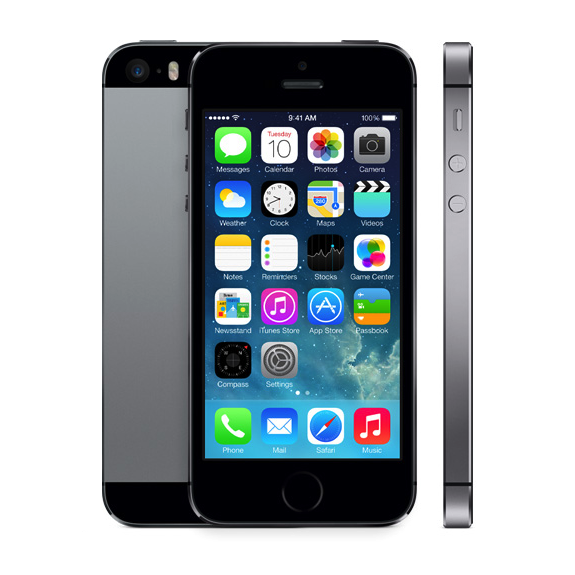
Have you ever logged on Facebook with an iPhone or other Apple smart device? Ever watch the battery life signal go from full to empty in literally a few minutes? There’s a reason for it, and something is being done about it.
According to Facebook’s lead engineer Ari Grant, there are bugs that eat up CPU cycles, leading to the eating up of battery energy. Grant said the issues aren’t caused by Facebook‘s Location History feature, as some suspected. But there is a second issue. Facebook unintentionally ran a silent audio stream in the background. He vowed to correct this audio issue and cut out background audio altogether. The audio keeps the app awake. But it also drains battery power. They’re not the first ones to use background audio to keep their app awake. But Apple absolutely hates this practice, and I can see why. Grant ended his statement with an apology and promised to quickly fix the problem. Mobile Facebook iPhone users should see results soon and very soon.
I’m glad Facebook is addressing this. Battery problems can be more than a nuisance. It can cost more than time. Battery problems can get down right dangerous. When one sees battery power go so fast in such a short time, don’t take it too casually. It can lead to overheating, which can destroy a device beyond repair. Overheating can even lead to physical injuries. Imagine a device sitting there. The battery life is going crazy, but you ignore it. You pick up the device. You burn your hand so severely you must be treated by a doctor for first and second degree burns. This can happen, folks. So I give props to Ari Grand for telling the truth about this battery situation. I give him props for trying to do something about it. I’ll give him more props when it’s fixed. What else can poor smartphone battery life lead to?
Oct 22, 2015 | Entertainment
Everyone knows what a flop Ashton Kutcher‘s ‘Jobs’ was back in 2013. This Friday, October 23, 2015, director Aaron Sorkin will release the movie Steve Jobs. Already, a tech journalist criticizes this movie. And it’s not positive criticism.
A technology journalist named Walt Mossburg was there during Apple’s boom of the 2000s and right up to Steve Jobs‘ death in 2011. Mossburg says Sorkin got the Steve Jobs character all wrong. In one quote, Mossburg takes a jab at Sorkin, claiming he’s the one who’s known the real Steve Jobs for years, not Sorkin. Walt Mossburg didn’t appreciate how Sorkin focused on the negative aspects of Jobs’ life. This is true of the coverage of Apple’s turbulent start, when he was young and naive. But the movie goes really hard on Steve Jobs as a family man, or lack thereof. Much of the film is about Jobs’ long denial of his own daughter, Lisa Brennan-Jobs. Mossburg claims some of the movie was totally made up. The end credits back Mossburg’s claims. There are two ironies here. The first is Mossburg was a big Sorkin fan…up to this point. The other irony is the movie ends in 1998, right before Apple entered it’s golden age that continues today. Oh, there’s a third irony here. The movie ended before Mossburg and Jobs’ camaraderie had begun.
I’m partially siding with Aaron Sorkin on this one. We all know of Jobs’ amazing, wonderful contributions to the computer technology world. That should be honored and praised. If there’s one point Mossburg has, it’s that Sorkin could have covered Jobs’ accomplishments better. But keep in mind Steve Jobs was a human being. He had flaws and challenges. He made bad choices, just like we all have. In order to tell the whole story about the whole man, you have to tell about his failures as well as his accomplishments. Denying his own daughter just happened to be one of Jobs’ failures as a family man. And about lacking wisdom: Who doesn’t lack wisdom when they’re in their twenties, especially early-mid 20s? Your twenties is a time when you’re just figuring the world out. Of course you’re going to lack wisdom. Nobody bats 1.000 in the game of life. Do Mossburg’s complaints deter you from watching this upcoming movie?
Oct 21, 2015 | internet
Today, the tech world is officially introducing Twitter polls. Twitter has been perfecting this venture for a last month or so. Now, it’s time for Twitter polls’ debut.
In the days and weeks to come, Twitter subscribers should prepare to be flooded with polls. For now, many of these polls will simply be ‘yes’ or ‘no’ options. For example: Do you like polls, yes or no. Those that aren’t that simple are two question options. For example, there’s a Twitter poll out saying if Election Day were tomorrow, who would win: Hilary Clinton or Donald Trump (Hilary Clinton won 70-30 percent). Another polls says Watch me: whip/nae-nae or stanky leg (how about neither!?). ?I know these sound like the simplest, dullest, most superficial polls there are, but give it time. Knowing Twitter, we’ll see deeper, more thought provoking, and more engaging polls in no time. At least I hope so. When you vote on a Twitter poll, you won’t be followed. That means your fellow tweeters can’t track your voting habits. That also means marketers won’t be able to push ads on you. This debut comes when Twitter is under changing times. Jack Dorsey is restructuring the company. Twitter is launching other projects like Twitter Moments. Will Twitter polls help the rebuilding process?
We’ll see. But I do hope they come up with more thought provoking Twitter questions though. These yes-no and two choice questions aren’t going to last that long. Twitter users are going to want something more eventually. I can already see advertisers putting up poll questions. They’ll do this because they won’t be able to exploit data for advertising purposes. How addictive will these Twitter polls be? Will you answer one a week? Will you answer one a day? Or will you probably be like the majority of people, and answer several a day and get in heated debates? Isn’t that what Twitter wants?
Oct 20, 2015 | News, Security, Uncategorized
In yesterday’s blog, I talked about Facebook’s warning of potential hacks from international governments. Facebook, and others, may have a reason to be concerned.
According to a cyber security company named CrowdStrike, a close ally of the US government, Chinese hackers have gone after American corporate interest for weeks. In fact, this cyber security agency employs former NSA and FBI experts in their war against cyber attacks. This would violate the most recent agreement between United States and China which says in layman’s terms, “We won’t hack you if you don’t hack us”. CrowdStrike says it’s really bad against US technology companies and the pharmaceutical industry. In fact, CrowdStrike says the first of these attacks came on September 26. That’s the very day after US President Barak Obama and Chinese President Xi Jiniping made the anti-hack pact. We don’t know which company was hit because of confidentiality. But they take credit for finding and thwarting the attacks before it got too serious. In other words, no corporate secrets were leaked and nobody’s personal information was compromised. CrowdStrike chose not to discuss how they knew it was China, since hackers are so good at hiding their IP and disguising themselves. But they did say Deep Panda was a main suspect. That’s a hacking group believed to be close to the Chinese military.
Okay, if they’re not going to tell the public which companies were hit, I hope they told everybody in the respective company that was attacked, from the CEO to the custodian. If they’re told, at least they’ll look out and protect themselves. I believe it’s better to warn people than let people believe nothing is happening or that nothing will ever happen. I also believe there are two sides to every story. We heard one side. Of course, China insists their hands are clean, and it was the threat of US sanctions that got their attention. What is China‘s side of this story?
Oct 19, 2015 | Security, Uncategorized
Look at the news today. Look at the war in Syria. Look at the violence between Israel and Palestine. Look at tensions in Asia, and mass shootings in the United States. The world is becoming a dangerous place.
Is this why Facebook warns of state attacks, attacks sponsored by foreign governments? Last Friday, October 16, Facebook’s Chief Security Officer Alex Stamos put a notice out. The notice said if they believe your page was targeted by a government hacker, they will pop-up a message urging you to secure your account. One thing you’ll be instructed to do is turn on ‘Login Approvals’. This prevents others from logging in your account. For mobile Facebook users, Login Approvals will send a security code to your phone. Only those who enter the code, aka the smartphone’s owner, can login. Stamos didn’t mention a credible threat, but noticed state sponsored and government hacks are more dangerous than other hacks. So if you see a message of this severity, chances are a lot more than your Facebook account was hit. Chances are your whole computer was hit by malware or some other dangerous virus. Facebook advises that if you see this pop-up message on your system, you should either rebuild or replace your whole entire system.
I appreciate Facebook warning us of such a serious threat. I even appreciate them telling us how venerable we are to international government hackers. But why are they telling about this now? I’m especially inquisitive when I read that Chinese cyber attacks are happening to US companies, and these hacks have been intensifying for weeks. Is this a coincidence? And I notice Facebook didn’t say which specific nationalities or states. This may sound crazy, but could they have included even US entities like the NSA? Are we to be that concerned with the foreign enemy? Or are our enemies right beside us?
