
Mar 13, 2016 | Computer technology, Entertainment
In Central California, there is a town called Indio. In Indio, there is a festival called Coachella, one of the most celebrated music festivals of the year. Can you make it to Indio and Coachella this year? If not, virtual reality may be able to help.
Thanks to an alliance between Vantage.tv and Coachella, you can stream this music festival on a VR (virtual reality) device. You will need to download the Coachella VR app. This app gives you a tour of the festival grounds and guarantees features that will put you close to the action without the raucous crowds. The app has libraries of performers on the card. It has live stream of Coachella’s top performers in 3D VR with a 360 degree panoramic format. The app can be used and viewed through Google Cardboard, Samsung Gear VR and other major VR headset entities. Vantage.tv wants to be a leader in VR technology. They believe partnering with a popular music festival will help them stand out in the competition. But other major events are cashing in on the VR movement. The NFL and NCAA has enabled game watching through VR. Amusement park giant Six Flags also has a virtual reality roller coaster.
But Coachella is the first major music venue to broadcast through VR. So Vantage.tv will be at the forefront in this area. Personally, I’m still a little weary of VR, because I believe it could be so addictive it can separate you from RR (real reality). But if you’re going to promote VR, Vantage.tv has a great way of doing it. Obviously, not everyone has the time, money, or energy to go to a festival like Coachella. So using VR to bring Coachella to them is good for the two companies, good for the performers and good for the fans. Would you choose to watch on your couch in peace or be around a rowdy crowd?
Mar 12, 2016 | Computer technology, News
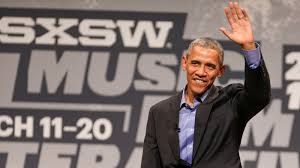
President Barak Obama was the main event speaker at the SXSW South by Southwest conference in Austin, Texas this week. President Obama urged the attendants to use technology to make America a better place and to face America’s greatest challenges today.
Such challenges include online terrorism, cyber security and education. He told the 2,000 plus attendees he’s recruiting them to find new ways to solve our greatest challenges. The event was held at Palmer Events Center downtown. This is part of a week long White House initiative to build tech-government relations. Topics included citizen access to government tools, alliances with private tech companies, and other issues, even those not being dominated by headlines. The Apple vs FBI case was brought up…somewhat. President Obama didn’t go in the specifics of the case, but he encouraged middle ground in this debate. But he did talk about finding ways to crack encryption codes to expose terror plots and cyber sociopaths like child predators. ?Obama talked about his meeting with tech leaders and filmmakers to combat the lure of online radical extremism. ?In a Medium article, digital service administrator Mikey Dickerson challenged techies to do more than build apps for food sharing and socializing. He says each of them are needed in government.
If I didn’t know any better, I think there’s a love-hate relationship between tech companies and the US government. Back in 2013, it was thought they were in cahoots in the NSA surveillance scandals.But most tech leaders came out saying they were forced to hand over customer information to the NSA. Last year, elected officials and Silicon Valley execs met to fight terrorism. Now, Apple and the FBI are in an epic battle of safety vs privacy. President Obama wants to end his presidency his relationship with the tech industry on a good note. Depending on who wins the election, do you see tech-government relations getting better or worse in the future?
Mar 11, 2016 | Computer technology
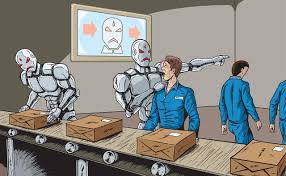
Twenty-five years ago, my teachers used to say to me, “You better get these grades up, go to college and get a good job. One day, robots are going to come after your jobs.” Me and my peers would just laugh. We’re not laughing now.
Most Americans aren’t laughing either. There’s a poll out saying most Americans believe robots will take jobs in the near future, just not their jobs. According to?The Pew Research Center backed survey, 65% think robots and computers will eventually take human jobs. But 89% of those same people thought their own jobs were secure from this threat. Those in government, education, and non-profit are less likely to believe robots will take their jobs. Those in corporate America and small business are most likely to believe their robots will take their jobs. Those under 50 and with higher educations are less concerned with the potential robot takeover. Back in 2013, an Oxford University study in England concluded 47% of jobs are at risk of being taken over by robots and computers. The next year, a Pew study said continued advancement in computer technology and robotics will have have big implications on the workplace and society. The survey proved what I knew all along.
Americans are more concerned with poor management and jobs being shipped overseas then they are with any robot. But the concept isn’t so far fetched. We know about self-driving cars.We know about robots running hotels. We know about computers that can think better than humans. And if I were in the medical or non-profit field, I wouldn’t get too comfortable. Robots and computers are conducting surgeries. They’re even serving meals, making beds, and delivering medicine at hospitals. We’ve even seen footage of robots doing military training. What used to be a plot for movies and sitcoms quickly becomes today’s reality, almost as real as American jobs being shipped to China and Mexico. Do you still think your job is secure?

Mar 10, 2016 | Wireless
Since 2002, Sonos has led the way in wireless electronics. They’ve given us wireless cameras, speaker systems and other goodies. One thing they won’t be giving away anytime soon is jobs.
Sonos is just the latest tech based company to announce layoffs. According to a blog, Sonos is letting go of some people and restructuring the company. Their CEO John Macfarlane doesn’t yet know how many jobs will be sacrificed. Changes in way people access music, like streaming services, are to blame. Macfarlane says the change is bound to happen. From here on out, Sonos wants to focus on streaming customers more than those who use ‘old school’ methods of getting their music. Nobody is saying how, but Sonos guarantees this experience will be so incredible and it will be something the company never dreamed of back in the early 2000s. Here’s a hint of what they might have up their sleeves: They just added Apple Music to their services. Sonos also wants to invest resources in voice recognition. He mentioned?Amazon’s Echo. It is not known when these layoffs are going to take place.
If Sonos want to restructure the company, they need to do a better job of restructuring their plans. They don’t know how many jobs are going to be lost. They don’t know when the layoffs will start. Yes, they have a vision of streaming and voice recognition, but I don’t see how they’re going to do so, except depending and modeling on other companies. I understand these things take time. I understand company reconstruction doesn’t come quick or easy. But we should understand that it takes organization, and I don’t see too much of that yet. I agree, music consumption is changing. But ‘old school’ methods of music consumption are making a slow but sure comeback. I suggest Sonos invest in both streaming and the ‘old school’ way. What do you suggest?

Mar 9, 2016 | General
For years, Amazon entity Blue Origin has pushed the limits with space travel. Founded in 2000, they have successfully launched two ships. Now they’re ready to take on the ultimate in space travel.
Yesterday, Amazon founder Jeff Bezos announced Blue Origin will be ready to send humans into space in 2017. He stated thousands have expressed interest and even willing to shell out big bucks for this space trip. The trips would be on a suborbital craft. He’s investing billions of dollars and using over 600 employees and a former Boeing facility in Greater Seattle to make this dream a reality. Some money can be made in selling tickets to go outer space. Nobody is saying how much these tickets will be. They’re not even taking down payments yet. The real money maker should come selling rocket engines to launch satellites and spaceships. A company called United Launch Alliance has already contracted Blue Origin’s services. They want Blue Origin to build them engines so they can be less dependent on Russia. Bezos is deeply involved in the project, as he’s been obsessed with space travel since he was a small child. Other companies, like Elon Musk’s Space X and Sir Richard Branson’s Virgin Galactic?, are racing to put civilians in space.
But Jeff Bezos doesn’t seem worried about competition. And he shouldn’t be. Travel in space is a fascination with many people. Some have paid over $200,000 to travel in space. In some cases, applications for space travel have filled up quickly. So there’s plenty of competition to go around. This is a good thing. This will keep prices down, quality up and these guys accountable. While it’s good to have hands on experience with this project, Bezos should realize these are experts in the space craft. Will he get humans into space in 2017? Who will win the race of civilian space travel?
Mar 8, 2016 | Malware, Security
As far as viruses are concerned, Apple computers have always been the safer bet. It’s often Android and Windows products that have been targeted. In the last few days, that changed.
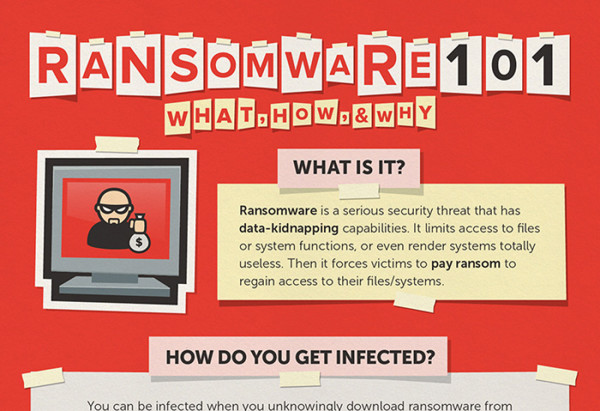
Apple Mac computers were targeted by hackers. The culprits used ransomaware. This is the first attack of it’s kind in Apple history. Ransomware is malware that blocks access to your own computer. Hackers remotely take control and will demand a ransom be paid before they give control back to the machine’s owner. This time, the ‘KeRanger’ virus was used. It was born through a tainted copy of data transfer program called Transmission. This piece of ransomware was downloaded over 6,000 times. That’s a very small dent compared to the 8.8 million cyber attacks that happened in 2014 alone. ?The good news is that Apple’s top developers thwarted and stopped the attacks from getting worse. The bad news, according to cyber experts, is more ‘KeRanger’ ransomware attacks should be expected.?”It’s a small number but these things always start small and ramp up huge,” said a?Fidelis Cybersecurity manager, claiming there’s a lot of money to be made. Apple rep said it will prevent further attacks by revoking certificates that enable rouge software. Transmission is doing it’s part as well. They removed the tainted 2.90 software and replaced it with 2.92, which fights ransomware.
We shouldn’t be surprised that hackers tried to go after Macs. And the experts are right. They will try again. Remember the FBI virus, when they made the virus look like the FBI put a hold on the screen. It was really ransomware hackers. I’m glad Apple developers stop KeRanger before it spread like wildfire. But this proves Apple isn’t immune. It seems almost daily, hackers are getting smarter, more clever, and more deceitful. Don’t let this stop you from buying a Mac. They’re going after any device they can. So if the bad guys are getting smarter, shouldn’t we be?

Mar 7, 2016 | News
Ray Tomlinson passed away ?Saturday at age 74. Some of you may have never heard of this man or his accomplishments. That needs to change.
Ray Tomlinson invented the email. He was the first to choose the @ symbol for electronic messaging. He accomplished this before many of us were even born. In 1971, he was the first to use a direct electronic message, at a time when messages were conducted only on limited networks. Decades later, Tomlinson recalled the first message between two machines. The first message was QWERTYUIOP, the first letter row on a keyboard. When he saw the message got through to the other machine, he messaged his colleagues explaining how to send them over the network. At the same time, Tomlinson invented the user@host email standard. ?The email concept was born. Even in the early ’70s, he envisioned the email being used around the world by all people. His vision didn’t really come true until the 1990s, when the Internet exploded globally, first used for a US government network. Tomlinson’s innovations won him a spot in the Internet Hall of Fame in 2012. Tributes are pouring out from former employers and Twitter feeds. He’s being remembered as a technology pioneer. More importantly, Tomlinson is being remembered as being humble, kind and generous.
Ray Tomilson’s cause of death is unknown. We at Geek Choice sent our condolences to Ray Tomlinson’s family, friends and other loved ones. We thank Mr. Tomilson’s for his innovations and contributions to the tech world. Just about everybody uses emails today. That wouldn’t have happened if not for Ray Tomlinson. It’s amazing how one man’s invention changed the course of the world forever, though it took over 25 years to change it. We should not only remember Ray Tomlinson, but other tech heroes whose names aren’t known about. I think of people calling Tomilson humble and kind. Those adjectives are hard to come by in the tech world today. So let’s pay honor to all tech heroes, preferably while they’re still alive. Who is a tech innovator whose story needs to be told?

Mar 6, 2016 | Computer technology, Humor
Smartphone uses love Siri and other phone voices. We Americans are fascinated with accents, whether it be from other parts of the country or foreign nations. There’s technology to combine both.
Eventually, that robotic smartphone voice is going to get tired. For some, it already may be tiresome. Now, your phone can speak in a British accent. This works for both Apple and Android based devices. For iPhone, open Settings, the Siri, then Siri voice, and choose the accent option. So far, there’s male, female, American, Australian, and British. For Android devices, tap the menu icon on the Google Now screen. Then tap Voice, then tap Language. They have many languages to choose from, including several English languages. Choose English UK. There you have your British accents. Don’t expect Paul McCartney, Julie Andrews, or any spectacular, breathtaking British accent with this option, anymore than you should expect James Earl Jones or Morgan Freemen when you choose the male and American options. The British voice is just as generic and almost as robotic as the American option. I haven’t heard the Australian option yet, but I wouldn’t expect Hugh Jackman or Olivia Newton-John to direct your GPS, either.
But the phone accents they have now is a great start. But it’s just a start. I’d like them to add more accents. How about the French, German, Italian, Mexican, Brazilian, or Jamaican accents. While Android offers different languages, and that’s great, but I’m talking about English language with these accents. Let’s take it even further. How would you like different access from different regions of the US? Obviously, not all Americans sound the same. We could have a Boston accent. We could have a Brooklyn accent. We could have a Southern accent. We could have a California Valley Girl accent. What accent would you like your smartphone voice to have?
Mar 5, 2016 | Uncategorized
You may have noticed some changes of Facebook lately. You probably noticed a new emoji set you can choose from, such as laughter, happy, sad, or angry. People have used them on my posts. This is just a handful of new emojis coming to a computer or device near you.
Instead of just liking a Facebook post, you can use an emoji emotion. Are you still a fan of Pokemon, twenty years after the cult phenomenon swept the world? You can use those in place of the regular emojis. First, download Reaction Packs. Reaction Packs is a browser extension for both Google Chrome and Firefox. Then swap default reactions for custom reactions like Pokemon or other emotions they’re coming out with. These reactions are timely to say the least. There’s an emoji set featuring the faces of billionaire turned Republican presidential front runner Donald Trump. If you can’t get enough of him, there’s an emoji for that. You can choose between six of Trump’s facial expressions: like, love, haha (funny), wow (shock value), sad or angry. Yes, these are real pictures of the presidential candidate. There’s also a Soot Sprites set of the emoji.
This is intended to make Facebook life fun. I don’t know about that, but it will make the Facebook experience more interesting. How would you like to see Trump’s handsome face with every post you have? I’m sure there will be some who will beret and even unfriend you if you even choose this emoji set. This election is just that touchy. You could go nostalgic with Pokemon. With the shape of our nation and world today, who doesn’t need a mental trip to the 1990s? I’ve seen the Soot Sprites. This is just my opinion, but they just creep me out. What emoji set would you like to see? And what ever happened to that Facebook dislike button idea?
Mar 3, 2016 | Uncategorized
The 2010s will be the decade of many things. One thing the 2010s will be known for is the decade of surveillance. On every corner, in every public place everywhere, you’re being watched, whether you know it or not or like it or not.
Now there’s some software that lets you know if you’re employer is monitoring you. For Apple users, it’s through iOS 9.3, and it will let you know if your workplace is monitoring your iPhone activities. When the iPhone is being watched, a message will come on the bottom on the screen saying, “This iPhone is managed by your organization.” It won’t shut down your employer’s surveillance or give you more privacy. All iOS 9.3 does is let you know when you’re being monitored. The rest is up to you. The software probably won’t work if others (family, friends, advertisers, total strangers, government agencies) are monitoring through your iPhone. Employers can supervise devices through Apple’s Device Enrollment Program. Corporations can send Apple products to their employees for any reason. There’s also a program called Mobile Device Management (MDM). This lets the employer manage and supervise software on the iPhone. Through this, the employer can keep tabs on their staff.
It strikes me we’re learning about this at the same time of Apple‘s legal battle with the FBI over a terrorist’s iPhone. I’m all about the right to privacy, but here, I empathize with the employers. If the employer gives you an iPhone for work purposes, then they have legal right to supervise what’s going on there. So be careful of how you use that device. But I can’t let employers completely off the hook. The MDM program should be used, not abused. So if they’re going to monitor their employees, it needs to be for a real good reason. Thanks to iOS 9.3, they can see if they’re being monitored. That could cause all sorts of office problems. Could iOS 9.3 be an equalizer in work relations?
