Apr 22, 2019 | News
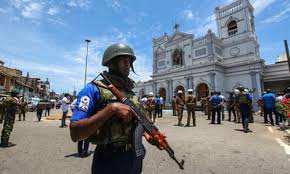
So I’m sure most of you know of the violence and tragedy that took place yesterday in Sri Lanka. A series of bombs went off in churches and hotels, killing 207 and injuring hundreds more. But what is the Sri Lankan government doing about it? Sri Lanka censors social media: Blocking online communication.
So right after these terrorist attacks, Sri Lanka President
Udaya Seneviratne announced a block on all social media sites. This includes Twitter, Facebook and Instagram. He said the ban happened because the Sri Lanka government wanted to stop fake news. And this is especially in the wake of a tragedy. However, he said social media will be back up after the investigation. But he didn’t say how long the investigation will take.
And many confirm what the president said. Sri Lankan citizens reported their You Tube down and Whats App inaccessible. One Facebook spokesperson said while their hearts are with that nation, he criticized this move. Because in a tragedy, people depend on social media to see if their loved ones are okay. But fortunately, this doesn’t happen often. However, when it does, the world takes notice. Sri Lanka censors social media because they fear social media will spread hatred and bullying, especially against the country’s Muslim population.
I agree with that Facebook spokesperson. This is the wrong time to be blocking Facebook, or any kind of IT service or IT support. First of all, in times of crisis, people really do depend on social media. Look at how people use it to let they’re all right, especially in times of disaster. Yes, some people use social media for hatred. But in cases like this, more people use social media for encouragement and love. This is why Facebook and other social media sites are needed even more, in times of tragedy. Do you think it’s ever right for a country to block or censor social media?

Apr 18, 2019 | Uncategorized
So we all know some of the controversies involving facial recognition. There are privacy concerns. There are also racial and gender concerns. The latter is the root of the Microsoft conflict with police over facial recognition.
So recently, Microsoft president Brad Smith said they spoke with a California police department (I don’t know which one). They wanted to buy equipment and body cameras with facial recognition technology. However, Microsoft turned them down. One reason is because the police wants to scan every face they pull over. This includes those they pull over even for the most minor of offenses. Apparently, Brad Smith saw where this can lead to.
He expressed concern that this could lead to racial and gender profiling. With this facial recognition, women and minorities could be a bigger target than white men. The IT support technology itself struggles with this. Because the facial recognition itself is trained mostly on ID’ing white men. Therefore, they could easily mistake a woman or a minority man. Then, as we all know, this technology can accuse people for crimes they didn’t commit. Thankfully, Smith says they are working on these flaws. They want these machines to get the person’s gender and skin tone right. Ironically, Smith revealed this at an AI conference in Stanford U., which is in California.
I actually have to agree with Brad Smith on this one. Often, news headlines shout about the law targeting the wrong person. Very often, the victims of this profiling are people of color. So I don’t say this often, but kudos to Microsoft for taking this stand. Many of you in computer repair have followed me for years now. So you know how I feel about AI technology period. If not, then this video pretty much sums it up. But at least this Microsoft conflict with police over facial recognition is starting up a conversation. It’s also raising questions and awareness. Do you trust facial recognition to get this right?
Apr 17, 2019 | Smartphone
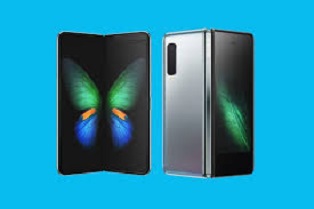
So several times now, I talked about the upcoming Samsung Galaxy Fold phone. This could be a revolutionary event in the smartphone and IT service game. Or it could be the biggest flop since 2013’s Google Glass. But let me ask you. Is the Samsung Galaxy Fold worth $2,000?
So yes, it’s here and it’s available now. Off the bat, this mammoth has 12 gigs of RAM and 512 and six cameras. That’s enough to literally, hold data on a small nation. Even when you shut the foldable phone, you still have your main camera to make social media videos. You can use two of them when you open them up. Then the other three are in the back of the phone. It also has two screens, one when close and one when opened. So you almost get 3 for the price of one.
That’s what right with the Samsung Galaxy Fold. But what’s wrong with it? If you can get over that big, obvious crease in the middle of the screen, then you’re doing better than most. Critics also complain about how bulky it is to carry. There is no expandable storage. There is also no 5G (which is a good thing, depending on who you ask). And that $2,000 price isn’t for everybody. But then again, this is a ‘luxury’ phone, right?
However, it’s a better deal than the $2,600 Huawei folding phone. But there are more complications. Yes, the phone is available to order for shipping, but when will you get it? I ask because the demand is so great, they had to push back the shipping dates. So if you have to have this thing, like a few of our computer repair clients do, I strongly urge you to wait until they’re in stores after April 26, 2019. But I ask you again. Is the Samsung Galaxy Fold worth $2,000?

Apr 16, 2019 | News
So I’m sure yesterday, many of you saw the footage. The Notre-Dame, an 856-year-old cathedral in downtown Paris, went up in flames. The fire did significant damage to one of Paris’ gems. One French tech billionaire is doing something about it. A French techie helps rebuild Notre-Dame.
So the IT support leader’s name is Francois-Henri Pinault. He’s pledging over 100 million Euros if his own money to rebuild the Notre-Dame. Pinault will use his investments, like Artemis, to fund this mission. He’s also using his voice to raise awareness and funding for this cause. In fact, French President Emmanuel Macron calls for international funding to get this cathedral back together again.
So who is Francois-Henri Pinault? In European circles, they know him as a fashion luxury guru. But he’s more than that. During his interview with TechCrunch, he talked about his love for and contribution to IT service and computer technology. One time, he served as a software developer at Hewlett Packard. That led to the founding of Soft Computing. In the 1980s, he helped found it in Paris. It became a powerhouse in the French and European tech community. In fact, last year, Soft Computing merged with a tech ad company Publicis. Pinault even helped funded a smart headphone company in LA.
So this is how this French techie helps rebuild Notre-Dame. So often, we talk about tech leaders doing negative things. Maybe we do this too much. It brings me joy to talk about how tech billionaires are doing positive things. This is one example. Thankfully, there were no deaths or severe injuries. But there is speculation. Yes, they told us it wasn’t terrorism, or any other crime. However, some people aren’t buying it. But does it matter now? Maybe we should follow Pinault’s example and instead of pointing fingers, maybe we should do something else. Maybe we should ask: What are we going to do about it?

Apr 12, 2019 | Uncategorized
If Alibaba is the Amazon of China, then Jack Ma is the Jeff Bezos of China. He’s the IT support mogul over there. Ma’s story is an inspiration (which I’ll get into later). However, some of his workers are protesting what they call brutal work conditions. Alibaba’s work culture: Inspiring or Detrimental?
So for anyone who wants to work for Alibaba, they must abide by the ‘996 rule’. That means employees work from 9am to 9pm for 6 days a week. Ma defended this ruling. He tells people off the bat if you’re looking for an 8-hour lifestyle, then don’t come to Alibaba. He also calls working 12 hour days ‘a blessing’. But obviously, not everyone thinks so.
Because there is an online labor movement they call 996.ICU. It’s now one of the most popular websites in China. They say the 996 rule exploits workers, and the only reason Ma does it is to benefit himself alone. They say they work these long hours with no overtime compensation. In fact, they name the website 996.ICU because working these long hours will get you in the ICU. They use horror stories of computer repair techs and programmers literally dropping dead because of long hours. Ma calls such stories ‘nonsense’. However, that’s about the only response from Alibaba about this controversy.
Well, here is Ma’s inspiration story. In the late ’90s, he was a teacher in China earning $12 a month. Remember, this is Communist China, here. He came to the USA, only to be kidnapped at gunpoint. He promised the gunman to be business partners if he let him go. Then, he learned about the Internet and e-commerce. Several years later, Alibaba is born, and is today worth over $400 billion. Ma’s personal worth is $36 billion. We don’t know what the Alibaba employee makes, or if there is overtime comp. But looking at Alibaba’s wealth, maybe 996.ICU has a point. Maybe all this long work isn’t for their benefit at all, but simply to serve one man and one man only. And that’s not right. The debate rages on. Alibaba’s work culture: Inspiring or detrimental?
Apr 11, 2019 | General
So do you ever wonder what it takes to run a major IT support company? Ever wonder what their day is like, what they eat, what family life is like for them? Well, here is the daily routine of Twitter’s CEO.
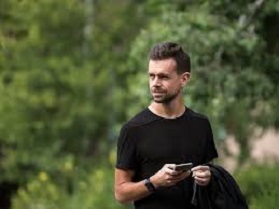
So Twitter CEO Jack Dorsey recently went on a podcast called Ben Greenfield’s Diet, Fat Loss, and Performance. He talks about his lifestyle for physical and mental health, and it is NOT traditional or conventional. Dorsey revels he’s big in hydrotherapy. That’s using water to cure all things that ails you, whether it’s steam baths, or water therapy. He also walks to work and fasts from meals…daily. Keep in mind his walk to work includes five miles a day.
That’s because Dorsey sees food strictly as food…at a time when many Americans, myself included, ‘live to eat’. Also, Doresy believes he needs to burn off that fuel. That’s why he only eats one meal a day…dinner. The health community calls this intermittent fasting. He also meditates at least one hour a day twice a day. At a time when many of us sit in front of screens hours a day, Dorsey uses a standing desk in his office. When he gets home, while most of us ‘Netflix and chill’, he journals and wears an Oura ring to track his sleep.
Let me make this clear. And I think Dorsey would agree with me here. This level of living is NOT for everybody. So I’ll just say it…Don’t try this at home! However, Dorsey believes this gives him the energy he needs to run a multi-billion dollar IT service social media platform. I must admit, it must be working out pretty good for him. It doesn’t come without controversy. Some health experts say intermittent fasting can make your body worse not better, because your body needs food all hours of the day. When you intermittent fast, you deny your body that need. But this is the daily routine of Twitter’s CEO. What daily routine gets you thriving…or keeps you sane and surviving the world in 2019?
Apr 10, 2019 | Uncategorized
So back in February 2019, Walmart announced it’s getting rid of all it’s greeters. That’s a shocking move for America’s biggest retail chain. But wait…there’s more. Walmart employees: Robots are doing your job.
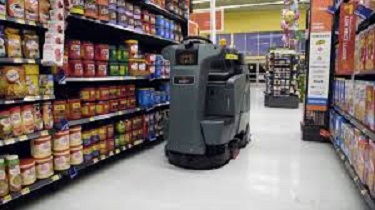
So let me be specific. First’, they’re letting IT support things like robots serve as janitors. For example, a fleet of 1,500 Auto-C machines will be cleaning and mopping floors. Because according to Wal-Mart spokespeople, they can clean floors better than humans. They can polish floors better, too. Then there is Auto-S, the robot price check. This army of 300 robots will make sure every item on the floor is in the right place and has the right place.
When I worked in retail, one thing we did was get items off the truck and stock them in their proper places. Apparently, those days are over. Because the robots called ‘FAST Unloader’ will sort and scan the products for you now. I’m guessing they will need human beings to get the stuff off the truck. But I think we all know that will change too, if it hasn’t already. There will be 1,000 of those. They even have 900 Pickup Towers. They will process online orders for you. When you get there, the robot, with little human help, will have it ready for you.
So why are they doing this? Walmart says they want their employees to interact with customers more. Therefore, by letting robots do other jobs for them, they can focus more on customer service. I’m, sorry, but I’m not buying it. They’re already getting rid of greeters. And they’re thousands of them. Now, when these robots take over these other manual tasks, chances are Walmart leadership will say, “Well, if robots can do these things, maybe they can do customer service as well.”. I even know consumers who would welcome this. I even hear a few computer repair customers gripe, “I can’t wait until robots take your jobs!”. Walmart employees: Robots are doing your jobs. Where will this really lead: to better customer interaction or outright annihilation of human robot jobs?
Apr 9, 2019 | internet
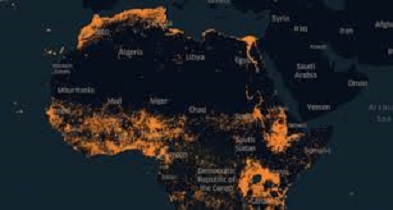
So, we all know by now that AI can do many things. Some of them good, but some of them scary and even detrimental. However, Facebook came up with an AI use that could help an entire continent. Facebook AI maps Africa’s population.
They have a map that shows where the African continent’s 1.3 billion people live. Not only does it go country by country, but it can pinpoint right down to neighborhood by neighborhood. One reason they’re doing this is to help humanitarian organizations reach out to the places they need the most help. Another reason is to help bring Internet access, especially to places in the continent that have little or no access.
But this system is by no means perfect, and far from it. Yes, it tells you the density of a certain area. But of course, it doesn’t tell you who needs more and who needs less. These AI maps tell you nothing about economies, demographics, and computer literacy. Who needs more IT support and IT service? Who already has it? The Facebook AI teams of actual humans check and double check to weed out regional biases. And some of this AI might be wrong. But so far, very few of it is. Because of every 1,000 buildings it picked up, 996 of them were accurate.
Yes, much needs to be done. But this is a huge step up. At least they know where the people are. This way, teams can get there to help and deliver goods and services quicker and with more accuracy. However, there are lots of things to air out. For example, I didn’t see any roads or highways that led to these places. So how are the teams going to get to these places? And which places are in more need? Which African nation do you start with and which city/town and do you start?
Apr 8, 2019 | Smartphone
So, many people think fingerprint technology guarantees them security on their smartphones. It doesn’t. Look at the Samusung Galaxy S10 fingerprint breach.
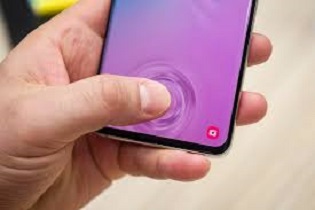
So this new smartphone is supposed to lead the world in crypto IT service. Some in the IT support community said this phone is totally hack-proof. But it isn’t. Because according to this telling video, anyone with determination can break into the allegedly super-secure fingerprint scanner. Then, they can get all your ‘crypto’ info, even what’s in your cryptowallet. In fact, all you need is a 3D printer and a pair of gloves to pull this cyber job off.
The man’s video shows he can break into this high-tech system in around 15 minutes. Furthermore, it only took him three tries. He states a 3D print will unlock the phone just as good as the owner’s fingerprint does. Then, anybody can go to town with your Samsung Galaxy 10. This is where the printing gloves come in. Let’s say someone steals the phones. When the thief gets comfortable, they can use the gloves and 3D printer to take your fingerprints and break into your phone with your own fingerprint! The video producer warns about banking apps that demand only your fingerprint.
And if they get your fingerprint and break into your bank account… need I say more. You can virtually kiss your financial security goodbye. That’s just one way the Samsung Galaxy S10 fingerprint breach can wreck your life. So this should be a warning to especially the cryptocurrency makers. Don’t just depend on this revolutionary technology and think you’re invisible. Because clearly, you have work to do. And to consumers who think they can just throw money at the problem, you can’t. Do you really think paying $1,000 for a smartphone will guarantee you safety? Is fingerprint security really any better than password security?
Apr 5, 2019 | News
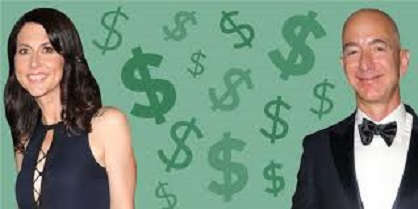
So a few months ago, most of media, including us at this computer repair firm, announced Jeff Bezos’ divorce. Now, the results are in. Here is the Bezos’ divorce settlement.
So they filed the petition Thursday. According to a SEC document, the divorce grants MacKenzie Bezos 4% of Amazon. This also includes 25% of Amazon stocks. In cash terms, MacKenzie will get $36 billion. MacKenzie Bezos herself tweeted her satisfaction in the deal. Also in the tweet, she said she’s giving up her interest in the Washington Post and Blue Origin. She also thanks family and friends for their support and looks forward to the next chapter in her life.
According to the filings, the Bezos’ divorce settlement will be official in about 90 days. Furthermore, it says Jeff will have authority of all shares. But of course, MacKenzie will have equal authority of her 25%. How are Amazon stocks taking this news? Apparently, it’s going pretty good. Yes, they lost some ground after the divorce announcement. The other shareholders didn’t know where this was headed. But since this turned out to be more civil than many thought, stocks are going up. In fact, as of 11:30am Friday, April 5, 2019, stocks gained 12 points in just this day alone.
I am proud of Jeff and MacKenzie of how they handled their divorce. I know I made comments like, “Wait until his soon to be ex-wife gets through with him”. But now, I take that back. They settled this thing with peace and dignity. And yes, Jeff Bezos is still in the centi-billionaire club with Bill Gates. And of course, MacKenzie came out of this doing very well. I was cynical at first because we all know of stories, from IT support billionaires to Hollywood celebrities, where it got very dirty and messy. But thank goodness, the Amazon story didn’t end up like that. How will this further affect the Amazon empire?
