
May 22, 2019 | General
So being in delivery can be dangerous in any situation, from food to IT service. But try being a deliverer at night with no uniform. It could have cost somebody his life. A celebrity almost shoots Amazon employee.
That rapper is hip-hop legend and actor Ice-T. On Twitter, he stated an Amazon delivery driver pulled up to his house at night. He had no uniform. In colorful terms, Ice T said he almost shot him. Then he took his complaint to Amazon via Twitter. In no uncertain terms, he suggested Amazon give their delivery drivers uniforms or vests. He also said it isn’t safe for Amazon drivers to keep making deliveries in regular clothes. Of course, Ice T said it in language I can’t quote here.
But how did Amazon respond to Ice T’s complaint and suggestion? Dave Clark, Amazon Sr. VP of Global Operations and Customer Service tweeted back. But the response was about as casual as, “Did you see Game of Thrones Sunday?”. He thanked Ice T for the suggestion and said lots of innovation is coming in this way. Basically, Clark told Ice-T ‘they’re working on it’. Many, many customers on Twitter support Ice T’s call for Amazon to put their drivers in uniforms.
This isn’t the first time Amazon delivery caused an uproar. Because not long ago, one driver stole a dog from a customer. Thankfully, that story ended happily. This one ended peacefully. I agree with Ice T. Every delivery company, post office employee, and food service: What do they have in common? They’re wearing uniforms! At Geek Choice, many of our computer repair experts wear Geek Choice shirts. Now Amazon is the richest company in the world. Surely that can fork over a little cash to keep their people safe and give them uniforms to wear. Clark’s response sickens me. It doesn’t take much ‘innovation’ to create vests and/or uniforms and hand them to their drivers. A celebrity almost shoots Amazon employee because of Amazon’s neglect and carelessness here. Is it going to take a severe tragedy to put their drivers in uniform?
May 21, 2019 | Computer technology, Smartphone
So the foldable phone is supposed to be the next IT service big thing. But it’s not looking good. Huawei’s trade war and Galaxy Ford’s issues keep getting in the way. Despite these setbacks, computer companies are moving on. Introducing the foldable laptop despite phone.
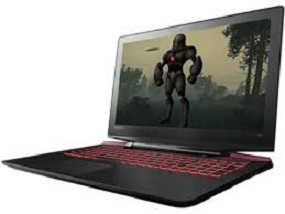
Because now, Lenovo shows off it’s ThinkPad X1. Their foldable display can make this thing look more like a tablet than a PC laptop. Yes, it’s 13.3 inches, but once you fold it, the screen and rest of it’s size is cut in half. I will admit. Those in computer repair know, and respect Lenovo for their innovations. Some worked. But some others ended in disaster.
What the ThinkPad X1 does is remove the screen from the tactical keyboard. That’s how you can fold it in half and cut space. But Lenovo isn’t the only one playing with this. Dell told computer experts they’re working on the same thing. But in the pictures I’m seeing of the Think Pad X1, the screen almost covers the keyboard. That’s how it folds. Experts know how little about this item. We don’t even know the price. But we can expect Lenovo to release it sometime in 2020.
Saying all this, what are we going to do about the foldable smartphone? Well, I’m interested in neither. But if you are, then my advice to keep waiting. Yes, Samsung delays the Galaxy Ford, but be patient. They’ll get there. The Trump administration pretty much blacklisted Huawei from even doing business in the US. Is it bad for me to say that I don’t feel sorry for Huawei at all? Not even a little bit. So needless to say, the foldable smartphone isn’t going so well, and has little resolution in sight. Now, Lenovo is introducing the foldable laptop despite foldable phone. Is this a good time though?

May 17, 2019 | Uncategorized
So the WikiLeaks drama is a gift that never stops giving. If you want a refresher course, then here it is. One of the main players of this is Chelsea Manning; the Chelsea Manning drama continues.
So Manning is back in jail . Let me explain. Back in March, they locked her up because she didn’t cooperate with a grand jury subpoena. But last week, it expired and they had to let her go. But yesterday, they sent her back to the Alexandria, VA Detention Center. Because once again, she refuses to cooperate with a grand jury. With poise and dignity, Chelsea Manning explained her reasoning in this You Tube video.
This goes all the way back to 2010. Because back then, Manning leaked over 250,000 pieces of classified info to WikiLeaks and it’s founder, Julian Assange. She did this while serving as a former US Army intelligence agent. Also, she leaked military field reports and footage of US airstrikes. Manning was soon indicted, tried and convicted. She received a long prison sentence, but former President Obama commuted that sentence. She got out in 2017. As you can see in the video, Manning is not backing down. But neither is the court system.
Because Judge Anthony Trenga didn’t just jail Manning. He’s fining her $500 a day per day she doesn’t cooperate, starting next month. And if she doesn’t cooperate in 60 days, then he’ll double it to $1,000 a day. I don’t think that’s going to phase Manning that much. This is why I say the Chelsea Manning drama continues. Some in the IT service community call her a hero. They say she exposed the government and what they’re really up to. Now she’s a political prisoner. But some call her a dangerous criminal. They say her leaking of military information put many, many Americans in danger. But what do you call her?

May 16, 2019 | News, Security
So you still don’t think the US trade war with China has anything to do with your little world? You better think again. This is especially if you’re in the IT support world. Because US President Donald Trump signs national emergency to protect computer tech.
So basically, this emergency deals with potential threats on our communications. Also, the threats are specifically from foreign entities. Though the document didn’t say so, China is that foreign entity, especially their IT service company Huawei. However, this shouldn’t shock anyone. For example, last September, the US indicted several individual Chinese hackers. Now, they claim companies like Huawei and ZTE are spying on American interests.
But there’s more. This order can forever ban certain companies from doing business in the USA. Nobody really knows what these companies are. However, most of us see that Huawei and ZTE are probably at the top of the list. In a statement, FCC leaders applaud President Trump’s efforts. They say with this order, they’re willing to take whatever it takes to keep communications safe. Furthermore, they say the order will keep foreign spies from doing damage to our IT service infrastructure. The real statement is more legalize, but that’s pretty much the sum of it.
However, some Americans will suffer. Because in rural areas, some get their cable services from Huawei. They’re prices are so low that some people can’t resist. Of course, we can only imagine what this would do to the Chinese economy. And if the US bans Huawei altogether, then how will stocks in both countries react? Yes, Trump signs national emergency to protect computer tech. In a best case scenario, this will protect our systems from dangerous hackers. Maybe spies will get the message and go home. That’s best case scenario. But what is the worse case scenario?

May 15, 2019 | Uncategorized
So I just read an interesting report about a potential security threat. It certainly has IT support security leaders’ attention. It’s the exposing of Intel chips. Could this lead to a massive hack?
So researchers found flaws in these Intel chips. They fear if these flaws get in the wrong hands, then they can steal info from these chips. I mean the kind of leaked info, like passwords, private photos and messages that can mess somebody up. They compare it to Meltdown and Spectre. But this would be even worse. In fact, they’re already calling this new group of bugs Zombie Load. Yes, it is as scary as it sounds.
Because instead of hijacking systems with malware and other things, Zombie Load lets hackers exploit the chip’s own flaws. So it would be like a system turning against itself, then eating itself from inside out. Sorry if that sounded too graphic. Zombie Load is also made up of not just one, but four different bugs! But wait…there’s more. These security experts and researchers say every Intel chip since 2011 could be venerable to Zombie Load. In the computer technology world, 2011 may as well be the 1911. In other words, that is a lot of chips that could be exposed by Zombie Load. I could be venerable to this. So could you. In fact, anybody could.
For instance, the exposing of Intel chips could even mess up your apps. Because Zombie Load leak data from app to app. For instance: What is that Facebook post doing on Twitter? Now what do we do? First of all, we don’t panic, but we remain alert and aware. Or as the Millennials and Gen Z’ers say, ‘stay woke’. If you do see something wrong, call someone. Here at Geek Choice, we’ve been solving these issues for over 20 years. We can very much do it today. In fact, we can fix them better than ever before. But could this lead to a massive global hack?
May 14, 2019 | Uncategorized
So as many of you know, the stock market is not good right now. In fact, yesterday, it dropped over 600 points. One of the biggest victims of this slide is Apple. But it’s not because of this US vs. China trade war. Apple stocks sink. The reason may surprise you.
The reason Apple stocks sink is because of a US Supreme Court ruling. That ruling said that you the Apple customer and app developers can sue the IT service conglomerate over high prices. Stockholders didn’t like that at all. In fact, Monday May 13 alone, Apple stocks dropped over 6%. The plaintiffs complained of Apple’s monopoly over the apps. They also complained about the 30% Apple takes from app sales, and the absolute control of the apps.
The plaintiffs don’t win any money or material value…yet. All this victory does is say they have a right to sue. The vote was 5-4 against Apple. The court ruled consumers are buying the app right from the Apple Store. Therefore, they have the right to sue Apple under antitrust laws. But in a statement, Apple spokespeople insists they are not a monopoly. Then, the statement says the majority of their apps are free, and the app distributor determines the price on the rest of them. In other words, they hardly get any revenue from apps.
Then why do they fight so hard in this lawsuit if they’re not making revenue? They already make billions upon billions on sales, repairs, software and other things. Apple should have settled out of court. It was a bad move to continue with a very public lawsuit. I think this makes Apple look like the big, bad, greedy mega-company. A mega-corporation that’s robbing the little guy, the app developer, of his/her royalties. Is that why stocks are suffering because of this? Is it because the shareholders don’t like this image of Apple? Today’s ticker says Apple is trying to make a comeback. Will they?

May 13, 2019 | Malware, Security
So let me start off by saying Happy Anniversary. Okay, that’s sarcastic, because for the IT service world, this one is nothing to celebrate. It’s WannaCry’s second anniversary. Did we learn?
So let’s turn back time. On May 13, 2017, The WannaCry virus spread globally like a raging wildfire. But great Britain got the worst of it. It almost shut down hospitals, transportation, and governments. Some hackers took over user’s files and other sensitive info. However, they didn’t demand cash. Instead, they demanded cryptocurrency, like Bitcoin. There was also a lot of blame to go around. Some blamed the NSA. But in actually, a North Korean hacking group used NSA documents and they launched the attack. In fact, they even used NSA backdoor Double Pulsar, to deliver WannaCry to the world.
So why do I talk about this cyber attack two years later? Because look at the impact it had. Back in 2017, there was already little trust for the NSA or the IT support world. Then WannaCry came along and made many of us even more cynical. Here’s an example. Microsoft released patches to fight the attacks. But people were slow to patch these systems. Political leaders called out the NSA on the damage it caused.
The WannaCry virus caused over $2 billion in damage. Also, nobody was indicted or anything. So why do I talk about this? Because today 1.7 million Internet endpoints that are still venerable. And guess where the most venerable devices are? You guessed it, right here in the USA. The WannaCry is mostly contained, it still causes problems. One thing I remember is that it targeted systems still using Windows XP, a system Microsoft stopped supporting years ago. They got hit really bad. So the next time a computer repair expert says to stop using certain software, will you at least consider it? It’s WannaCry’s second anniversary. What did we learn?
May 9, 2019 | Smartphone, Uncategorized
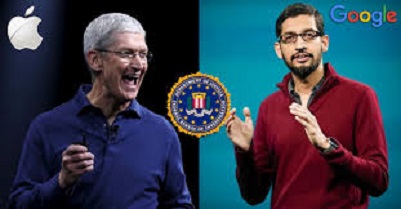
So Google CEO Sundar Pichai wrote quite an article for the New York Times. It criticized Apple for using something we all crave and need…privacy. This Google CEO sounds off on Apple.
So let me explain. Pichai criticized Apple for selling privacy protection as a luxury item. This stems from new…ahem…budget smartphones from Apple and Google/Android. Because both offer privacy features. However, the Google smartphone starts at $399. But the new Apple one cost $749, almost twice as much. In the New York Times article, Pichai said, “Privacy cannot be a luxury good offered only to people who can afford to buy premium products and services”. Yes, he directed this to Apple and this new smartphone of theirs.
Then add the fact that Google’s new smartphone offers privacy protection features as much as Apple does. If that isn’t enough, then add the criticism Tim Cook has toward Google, especially when it comes to privacy issues. One time, he used the word, ‘surveillance’ quite often. He didn’t say Google directly, but even a kid know who Cook threw shade at. This week, Google showed off a bunch of new products helping consumers control their own data. Of course, many others criticized Google over the lack of privacy. Maybe Pichai is getting the message and trying to do something about it.
Because ‘privacy’ is now the word of the day of sorts in Silicon Valley. Look at some of the recent news articles in the IT service community. But look at these prices though. Google’s is almost half as Apple’s. That’s the part I find interesting. If Cook is criticizing Google so hard, then why is his privacy protection smartphone so much more? And why does Google CEO sounds off on Apple? Why are they doing this now? Is it because Pichai is so concerned with privacy? Or is this a way for Google to stick it to their arch rivals?
May 8, 2019 | General
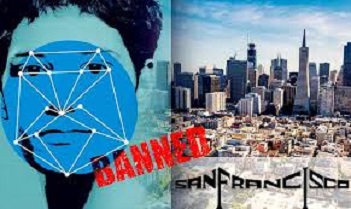
So we say a lot about facial recognition around here. It’s a huge part of IT service’s future, whether we like it or not. But it has it’s critics. They complain of things like privacy invasion and racial profiling. In fact, one US city considers banning facial recognition. This city might surprise you.
Because the city I refer to is San Francisco, CA. That’s right. One of the most tech savvy cities in the world is considering banning all things facial recognition. Their Board of Supervisors voted to make a bill banning this. Then, it requires any entity, private or public, to get written approval before buying any kind of this tech. This includes everything from licence plate readers to body cameras.
If this bill passes into law, then San Francisco will be the first city to ban facial recognition. We’ll just have to say. The bill cites civil rights, civil liberties, racial profiling, and religious persecution all as reasons they want to ban this kind of technology. The bill also says it mistakenly identifies people with darker skin. Those who want the ban say it gives the government more control, and not in a good way. It will give them power and control to track people and follow them in their private lives.
However, there are some who support this kind of tech. Some will argue we need this to stop terrorism. Then there are those who argue we need body cams to stop police brutality. Some will even say, “If you’re not doing anything wrong, then you have nothing to worry about”. We need to get rid of that saying. Because time and time again, people are going to prison even when they’re not in the wrong. This is one reason why this US city considers banning facial recognition. Will it help?
May 7, 2019 | General
So do you remember a report I did about Alibaba? They overwork their employees with little to show for it. Furthermore, CEO Jack Ma likes it this way. But there is another China IT service corporation who wants positive influence. Tencent promises technological good.
So this is what Tencent CEO Pony Ma promises for his $460 billion company. He says Tecent’s mission is to, “improve the quality of life through Internet value-added services”. These are the three ways he wants to do it. The first is provide more big data for tradition businesses. Then the second is use his apps to easier provide gov’t services. This includes getting drivers licences and passports/visas. Finally, the third is helping society. One way he proposes is track missing people through facial recognition.
These things sound great, don’t they? But Tencent has a hard row to plow through, and Pony Ma knows it. The Chinese government and rival companies are putting the squeeze on him. For example, a gaming freeze cost Tencent billions of dollars in profits. Then you have competitors like Douyin. That’s an up and coming player in China’s social media world. With all these things, Tencent is changing the way they do business altogether, from cloud computing to IT support.
So maybe, and this is the cynic in me talking, this is why Tencent promises technological good. So they can compete and stay effective in a forever changing climate that is 2019 China. And do you want to know something else that’s ironic? Pony Ma revealed this plan at a Digital China Summit. The Chinese government sponsored this summit. So maybe Ma’s second suggestion won him some points with them. But whatever the reason, whether it is sincere or a business deal, I’m just happy Pony Ma is taking Tencent is dealing with them. What do you think of this move?
