Feb 22, 2018 | General
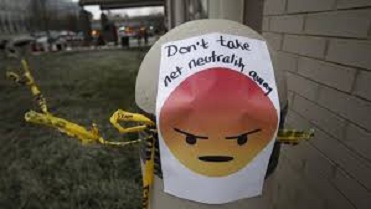
So back in December 2017, they repealed net neutrality. But why am I talking about this today? Because today, this ruling is now official. However, that doesn’t mean the fight for net neutrality is over. Is net neutrality really dead? Maybe not.
So okay, the fight really started right after they passed the law. For example, 20 states sued to stop net neutrality repeal.?? But they can’t do that now. Because now that the repeal is official, these states can no longer complain how the repeal infringes on their rights. Does this mean states can’t do anything? And does this also mean there is nothing individuals can do?
Well, not exactly. Protests are going on all across the country. They’re even going on near our computer service shop. It may not change things right away, but it will get people to listen. Democrats can force a vote to challenge this repeal. It may not override President Trump’s support, but it could send a powerful message come midterms. Many states are coming up with their own net neutrality rules. Also, many political leaders argue this repeal violates the Administrative Protection Act (APA). This prohibits arbitrary rule making. Some argue the net neutrality repeal lacked major discussions and not experts testified before they made this ruling.
Is net neutrality really dead? I say maybe not because many other people are doing something about it. People are writing to the Senators and Congressmen and keeping this issue very fresh. Our elected officials know mid-terms are coming up. They also know 2020 isn’t that far behind, and there is so much at stake. I think if we, especially us in IT service, keep net neutrality a hot issue, then they won’t just let this repeal go. Watch your ISP’s as well. If enough resistance comes, they could resist right back. But how would it look on their part? Then again, how many ISP’s do you have competing against each other? That’s why we need more ISP competition, but that’s another subject for another time.? So is net neutrality really dead?

Feb 21, 2018 | Security
So I take it this happens to you. You go on a website, especially to buy or sell something. But they give you a math problem or question to answer. It’s because they want to prove you’re human. They call the program Think fast: Trying to outsmart robots.
As you know, many are people are turning to facial recognition for security. They’re using it everywhere, from airports to new smartphones. In fact, facial recognition is the only way to unlock the iPhone X. But some researchers and experts say that’s not enough. They say this because robots and AI technologies are getting smarter and smarter.
So they come up with a way to recognize your face while you answer a simple question at the same time. Georgia Tech U. researchers still try to perfect this. Believe it or not, even with 2018 IT support, it’s tough? for face and voice recognition to align. However, there are many human vs robot tests out there. As early as the 2000s, you had websites asking you to type in a code or answer a math problem. However, it’s a different world know. Everyone in computer repair knows it. In fact, everyone everywhere knows it.
So I love this test Think Fast did. They asked a question. It took humans about a second to answer. Then, it took robots/computers about six seconds to answer. These were simple, like “Do you like cats or dogs?”. Right now, the goal is to fight spam, hacking and ID theft. But as bots and AI get smarter and smarter, the fight could be so much more critical. I hate to sound like a sci-fi movie, but we’ve seen what robots are doing. We also see how they’re permeating every aspect of life. Is this just an extra layer of protection? Or is this necessary in the fight against robot domination?
Feb 20, 2018 | Smartphone
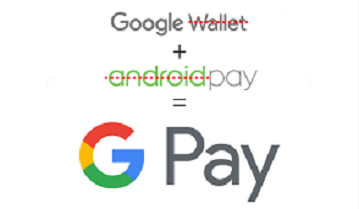
So starting in January 2018, Google brought together all of it’s pay brands into one umbrella. That umbrella is Google Pay. But Android Pay took it’s time getting that memo…until now. Android Pay turns into Google Pay.
With these updates, Google hopes to create a more dominant presence in stores, online and retail, around the world. Then add new designs to Google Wallet. They now call it Google Pay Send. Soon, they will be able to use the app for sending and requesting money, kinda like Western Union. Google Pay consumers can expect this function in the coming days. But wait…that’s not all.
The new Google Pay app will show you stores that will accept Google Pay. This will be according to your location and shopping habits. For example, if I am near our Boston computer service shop. I use my phone to pay for food items. Then it’s going to show grocers, coffee shops, and restaurants near my Boston computer service shop. Or it could be anywhere in your neighborhood, city or town. Google leaders and executives are doing all they can to make this transition as easy as possible. Of course, this is because they want you to use Google Pay as fast as possible.
Here is just one way they’re trying this. Do you have a Bank of America account? It’s the second most popular bank in America, and one of the most popular in the world. If you do, then you can set you the Google Pay app in the Bank of America app. That way, they can intertwine. So this is another way they can get you shopping with Google Pay quicker. I don’t know if they’re doing this with other banks or not. It wouldn’t surprise me. They’re already linking this new app with other apps like AirBnb. That doesn’t surprise me either. But why does Android Pay turns into Google Pay? Is it perhaps to keep up with Apple Pay?

Feb 19, 2018 | networking
So this past weekend, they had their NBA All Star game. But it’s just more than the game itself; there are tons of other festivities. However, there was one you probably didn’t know about. The NBA All Star game used as a technology platform.
They called the platform BIG, meaning Business Inside the Game. One of the hosts was NBA all-star Baron Davis. Then add Lyft co-founder John Zimmer, Moviepass co-founder Hamet Watt, and rapper/actor turned entrepreneur Ice Cube. There were also some other, like NBA star Chris Paul. One focus is to ask how NBA stars can make an impact other than basketball. The other is to address how technology is changing sports and popular culture.
John Zimmer never forgot how cab companies and local governments tried to stop Lyft and Uber when ride sharing first came out. But he emphasized this was just the beginning. He said today, ride sharing contributes 0.5% of all human transportation. Then he said that in 20 years, ride sharing would contribute to the majority of all rides. Ice Cube hinted it’s important for innovators to continue to challenge, and break, the status quo. Others are suing technology to test mew ways of entertaining. Baron Davis himself emailed the reason he started BIG.
He started it because he wants to create a platform from all walks of life to make change. And they can do it through business and IT support. I say good for them. Because I’m tired of reading stories of celebrities going broke a few years after retirement. One year, they are living it up. Then the following year, they’re in bankruptcy court or can’t even pay child support for their kids. Maybe computer servicing and IT service can start the turnaround. Maybe what men like Baron Davis and John Zimmer are doing will change that. Would you use an event like the NBA All Star game as a technology platform?
Feb 16, 2018 | General
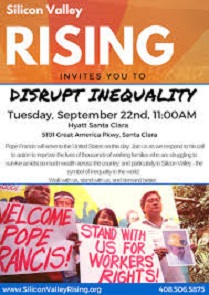
So I read this article about a San Francisco coffee house. This one house charges eight dollars per cup of coffee. That’s just one example of Silicon Valley’s wealth inequality problem.
Silicon Valley, greater San Francisco and San Jose, have some of the worst wealth inequality in America. In fact, the San Francisco area ranks third in the highest wealth gaps between rich and everybody else. Then take the San Jose area, just down the road. They rank sixth highest in the highest wealth gaps between rich and everybody else. But that’s just where this tragic comedy begins.
Because between 2014-2016, the highest wage earners see raises averaging $60,000. Meanwhile, everybody else saw wage increases of only $2,000. So $2,000 is hardly enough to match inflation, especially in that part of the country. But wait…isn’t technology helping stop Silicon Valley’s wealth inequality problem? No it’s not. In fact, though I hate to say it, IT support is making wealth inequality worse. Some experts say Silicon Valley companies reward those who already have higher salaries. Meanwhile, a third of the population depend on assistance just to survive. The billions of dollars the high tech industry makes just isn’t trickling down to the rest of the community.
Over the last several years, I witnessed protests from maids, waiters, and drivers making minimum wage serving tech leaders making billions. Also, I read stories where 20-somethings tech employees get fired for daring to complain about their low salary. Silicon Valley/San Francisco is the home of: Google, Facebook, Salesforce,? NetApp, Apple, and Ebay. It’s also the home of Cisco, Intel, Synmantic, etc. I don’t know if they’re doing anything to curb this problem. But it is a problem. And they need to do something. Because if they don’t, I fear Silicon Valley will collapse on it’s own weight and greed. I shouldn’t blame Silicon Valley though. In Boston, home of our computer service shop, we have our battles with wealth inequality.? Companies and people are already leaving Silicon Valley because of this. What do you think, if anything, can be done?

Feb 15, 2018 | News, youtube
So yesterday, this country endured another mass shooting. This one took place at a high school in Parkland, Florida, a suburban town just west of Fort Lauderdale. So now, 17 are dead and 15 are still fighting for their lives. Social media reveals Florida shooter’s mind.
On Instagram, there are photos of the Florida shooter, Nikolas Cruz, posing with guns and knives. Between 2015 and 2016, he also posted pictures and ads of weapons he wanted to buy. One such weapon was the Maverick 88 Slug. He even asked his followers for advice about gun costs and passing background checks. Then there are the knife pictures. In January 2016 alone, Cruz posted countless Instagram photos of him holding knives like trophies.
I also notice how in many of these photos, Cruz covers his face with a mask or bandanna. In fact, in most of his pictures, he covered his face. He posted photos of dead animals. When anybody talks about killing animals, or posts pictures of dead animals, that’s a huge sign of trouble. In fact, that’s how many serial killers get started. Furthermore, he commented on You Tube videos about killing people. Several months back, on an Antifa You Tube video, he commented, “…I wish to kill as many of you as I can”.? Then there was a You Tube video that talked about the?1966 sniper shooting at U-Texas-Austin. He commented, “I’m going to do what [the shooter] did”.
IT support may have dropped the ball, but Cruz’s classmates and peers saw this coming. One tweeted, “Everyone predicted it”. Then, another student revealed Cruz always had guns on him. Even the mayor of Parkland confirmed Cruz was a mental health patient who underwent treatment. So IT service wasn’t the only one who dropped the ball here. The mental health facility did; they should have kept him there. I’m not one for extreme gun control, but how did a boy in his late teens get access to so many guns and knives? Furthermore, when he posted these disturbing, perverse posts, why didn’t anybody intervene? It seems the only ones hip to what this guy was about was his fellow teens. The adults in Cruz’s life seemed asleep at the wheel. Social media revealed what was on the Florida shooter’s mind. Why didn’t anybody listen?
We at Geek choice want to extend our thoughts, prayers, and condolences to all affected by tragic shooting.
Feb 14, 2018 | Computer technology
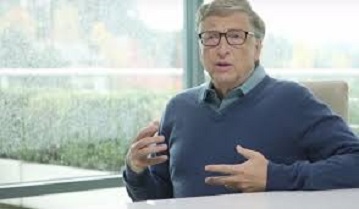
So do you ever hear the saying, “When the cats are away the rats will play.”? Apparently, Microsoft founder Bill Gates fears this is happening to the IT service and computer tech world. Bill Gates threatens government intervention if tech leaders don’t get it together.
So the first thing Gates talks address is the monopolization of tech companies. He’s right. Look at Amazon; they own about everything. Then look at Google and Apple. Those two companies, and their offspring, back over 90% of all smartphones. Then you have phone companies. Only a handful of retailers, like AT&T, Verizon, Sprint and T-Mobile sell most of the phones.
But Gates didn’t stop there. Gates says they’re supporting things that will prevent the government from functioning. One example he gives is Apple refusing to unlock a phone for law enforcement a terrorist owned. The owner of the phone was one of the perpetrators of the 2015 San Bernadino, CA massacre.? Then,? Gates wonders why tech companies are backing anonymous financial transactions. Furthermore, the Russian interference of the 2016 elections, and tech companies not doing anything about it, came up. Then you have AI technology threatening jobs, even threatening human interaction on the most intimate levels.
Gates isn’t the only one worried. Congressmen, Democrats and Republicans, say IT support have way too much power. One says, “If you don’t do something about it, then we will”. That should scare anybody. Think about it. A handful of tech companies control everything we do these days. Think about if just Google, Apple, and Facebook shuts down all their companies today. What would that look like? So in a way, Gates is right, as are the concerned lawmakers. But I find it ironic this is coming from Bill Gates. Wasn’t this the man who used to say, “The goal of business isn’t to create a profit. It’s too create a monopoly!”? Is he having a change of heart now? Bill Gates threatens government intervention. Or is he learning from his mistakes and doesn’t want other magnates repeating them?

Feb 13, 2018 | News, Security
So the 2018 Winter Olympic games are underway. But it’s not the athletics that are making news. It’s the hacking. One cyber attack was so bad they had to shut the Winter Olympic website down. However, it’s back up now. Olympic cyber attack: Who did it and why?
The hackers attacked just before the opening ceremony. They also messed up TV and Internet coverage. It took 12 hours for networks to restore coverage and order. An Olympic spokesperson talked about the attack. He assured the public they dealt with the issue and everything was good. But nobody is talking about who did it.
Almost immediately, cyber experts pointed fingers at Russia. And right away, Russian leaders denied any involvement in any hacking. And people braced for this. Just about every government in the world warned of potential online attacks. In fact, even the US Dept. of Homeland Security told fans going to South Korea to be on the lookout. One warning said, “At high profile events, [they] may take advantage of the large audience…”. They don’t get any bigger than the Olympics, but most of you probably know that. Because in 2012, they attacked the London Olympics too.
However, the world is a different place than it was six years ago. So let’s get the elephant out of the room. Look at the tensions between the two Koreas in recent months in years. It’s almost as if the Korean War could restart at anytime. But war doesn’t have to come through bullets and bombs. The enemy can attack through our IT support systems and our computer repair and technology systems. Did North Korea do this? I know North Korean dictator Kim Jong Un plays and talks nice recently. But does he mean it? Or is it just a trap? Personally, I think it’s just a trap. How can you trust a guy who does such hideous thinks over and over? I think North Korea is behind the Olympic cyber attack. So who do you think did it and why?
Feb 12, 2018 | internet
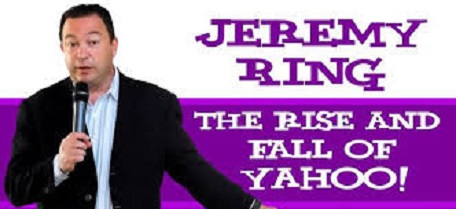
So in the 1990s, Yahoo was at the forefront of IT support and Internet technology. Then, in January 2000, Yahoo’s stocks peaked at $118.75 a share. How the mighty have fallen. Author and former Florida State Senator Jeremy Ring recalls his Yahoo employee days. We Were Yahoo: According to a former senator.
In fact, Jeremy Ring calls his book We Were Yahoo. At 25, he started a Yahoo office in New York. But soon after that, Yahoo sent him to their Silicon Valley headquarters. So he was there at their peak. During his tenure, Yahoo was worth over $120 billion. That was more than most car companies, combined. Ring also recalls how Yahoo had over a billion customers. Keep in mind the world’s population at that time was around six billion.
So what happened? Well, they missed some opportunities. Yahoo could have bought out Google…twice! But decided not too. Then Yahoo declined to do a paid ad search program. But Google was happy to do a paid ad program . The rest is history. Not only that,? in the 2000s, Yahoo could have bought Facebook. That didn’t happen either.? Ring also talks about other factors in later years, like the Wall Street woes of the late 2000s, which helped Yahoo’s demise. And we all remember the Yahoo email hack of 2013.
Despite all these woes, Ring recalls Yahoo as an important pioneer. They were the first to have sub-sites, like Yahoo Finance and Yahoo Sports. They were worth more than most media and news conglomerates combined. Plus, they were the first Internet company to have a Super Bowl commercial. However, let’s play what if. I named today’s report after Jeremy Ring’s book We Were Yahoo. What if Yahoo purchased Google and Facebook? Today, these two entities are worth over a trillion dollars. And now, Yahoo has to depend on Verizon’s acquisition just for mere survival. It didn’t have to be this way, Yahoo. Jeremy Ring’s We Were Yahoo book is available online for as little as $10.? Would you buy Jeremy Ring’s book?

Feb 10, 2018 | youtube
So yesterday, we talked about Logan Paul’s ad suspension over bad You Tube/Twitter behavior. But it seems like You Tube isn’t stopping there. Because they now have new policy about what is good and what isn’t. You Tube’s new policy: Good rules or censorship?
So now, You Tube is ready to put suspensions and sanctions on any You Tuber. That is, any You Tuber that post videos they call harmful to the You Tube community, whether that be viewers, vloggers, or advertisers. However, this may not mean outright banning. It could mean blocking sponsors. It could also mean not making a home page or trending tab. I guess it depends on how severe the offense.
They are using humans to monitor and enforce these rules. But they’re also using AI/robot technology. What AI will do is track what vloggers are posting. One spokesperson said when somebody uploads something blatantly cruel, it can hurt a lot of people. He listed things like heinous pranks, promoting violence and hatred, and acts of cruelty. He says the damage can create real-life consequences. But he kinda assured us this isn’t about censorship. He said let’s make sure a few don’t impact the 99.9 percent who are doing right.
I gotta admit, that’s great talking when it comes to You Tube’s new policy. But is it the truth or spin? What will they consider inappropriate, or hate speech? The rules may have been a little clearer a few decades ago, or even a few years ago. But this is 2018. This is a time where everybody seems to be offended by everything, one way or another. You probably look at somebody wrong, and you’re going to offend them. That’s playing out in the IT support and computer servicing field as well. The other problem is the whole AI technology thing. So a robot is going to suspend somebody because their vlog was offensive? How will that work?? You Tube’s new policy: Good rules or censorship?
