
Oct 14, 2013 | Computer technology, internet, Wireless
Just a few hours ago, Facebook got Onavo. Onavo is a mobile app analysis company. Basically, they give advice on apps and data. They’re base on Tel Aviv, Israel.
They’re conflicting reports on how much this buyout?cost?Facebook; it’s in the range of $100-$200 million. Onavo specifically?deals?with?mobile apps and battery life. Facebook is?stepping up it’s mobile game, since more and more people?are using?Facebook on their mobile devices. With?Onavo’s services, this?seems like a great fit. Facebook?Founder/CEO?Mark Zuckerberg is on a campaign?to give?everyone in the world the right to online access. This is a cause Onavo founders Guy Rosen and Roi Tiger share.?Onavo will probably school Facebook on how to attract mobile developers. I can see them teaching Facebook about maximizing their mobile potential, from consumer use to getting companies to put mobile apps through Facebook.
Ironically, Facebook tried to buy Waze, but Google ended up getting it. Waze would’ve been a great prize, but I think Onavo makes a great parting gift. Onavo could use the venture capital and push and Facebook can use the knowledge about mobile apps. My only concern is this might be too expensive. Plus, Onavo only has 30 employees. So economically, this may not be a good idea. As far as technology goes, this is a great idea! Do you think Facebook and Onavo will be a successful merger?
Oct 13, 2013 | Computer technology, internet
You might find this shocking (yeah, right) but there are many things the federal government struggles with. A competent IT system happens to be one of them.
They were lucky to launch their health care site. The struggle continues to make their IT new and efficient and to catch up with the times. For example, many agencies are still using Windows XP. Most bases didn’t even begin to get weened off of XP and on more modern Windows systems until last year. Keep in mind Windows XP was released in 2003. Their dependency on temporary contractors help matters very little. And they’re the ones who provide even the elementary services. About half the workforce is over 50, and 25% are around retirement age.
One would think it would be obvious. This is an opportune time to hire college graduates in IT to fulfill these voids. At a time when many a 20something are struggling to find work, mounting in debt, and moving back in with their parents, here is a golden opportunity that many can benefit off of. Hire IT/computer science majors! First of all, they’re up on the latest software and hardware and IT technology. Obviously they need the work. And the government needs the help. Whose going to train them? Well apparently most employees are over 50, so they have the experience to bring up the next generation. It may not solve the whole problem, but it would be a start. So what’s stopping them?

Oct 12, 2013 | General
In recent days, we’ve learned Facebook is doing away with a privacy setting. How many stories have we heard of people not getting a job or getting fired from a job because they’re employer checked their social media pages? Then there’s the NSA scandals. The online privacy debate has no end in sight.
There’s a group called World Wide Web Consortium.? It consists of advertisers, privacy rights advocates and other Internet experts. They can’t even agree on the Do Not Track controversy.? Advertisers proposed an opt out button. There, people can visit websites without getting target ads so long as they push that button. But privacy advocates claim this won’t stop data collection on people. Ad agencies know the rules are getting tighter as the public outcry gets louder. So they’re coming up with new ways for tracking.
Look, I get it. Advertisers need a way to get their product or service out there. For 20 years, the Internet has been an inexpensive but effective way to do that. But I also understand people want to left alone. And they don’t want to be bombarded by ads because they looked on a previous site. For me, the term ‘site tracking’ has all kinds of negative connotations, especially after last summer’s NSA scandal. But the fact that ad companies and privacy rights groups are trying to figure out a solution is an encouraging sign. It’s more encouraging than the bickering in Washington, DC right now (oops! did I say that aloud?). Is there a solution out there for advertisers that will ensure privacy?

Oct 11, 2013 | Entertainment, News
We are ending our second week of a government shutdown. Let’s look at the ways technology will be changed, or ways that we wish it would be changed.
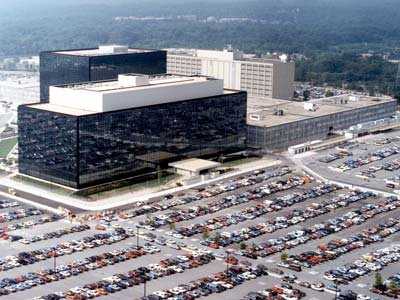
10. NSA: Unfortunately, this organization will be spying and recording as usual. You know they’re going to keep this agency alive if all other aspects fail.
9. Smithsonian/National Parks: What does this have to do with technology?? It takes a lot of research technology to keep these American institutions going. But sense these workers were told to stop due to the shutdown, the research and technology is bound to follow.
8. Gov’t Contractors: Companies like United Technologies will have to hand out furloughs and slow down productions. With the contractors and inspectors gone due to the shutdown, that just trickles down.
7.No Emails?: Every person furloughed is forbidden to check work emails or any other work related technology. Failure to comply could even result in jail time. I heard some may even have their smartphones taken away to ensure obedience.
6. Data.gov: This website is shut down. A lot of people, including school children and college students, depended on this website for research projects and other projects. Obviously, government and private sectors are far more dependent on internet research then they were in the mid 1990s. What if this trend continues?
5. Cyber Security: An agency called NIST, whose specialty is ensuring online security, is shut down. Some nations may see the shutdown as an opportunity do get into cyber mischief. Is the government shutdown a field day for hackers?
4. National Science Foundation: They will make no payments during a shutdown, no grants, no loans, no nothing! Think of all the research and technology they can really help somebody that won’t be happening now.
3. Health/Disease: The Center of Disease Control will be limited in researching diseases, and the technology needed. I hear some cancer patients may not even get treatments due to the shutdown. The seasonal influenza program could be halted because of it.
2. NASA: During the shutdown, only 3% of NASA employees will be working. So pretty much, NASA is shut down. So to all the techies out there: there won’t be any cool science/technologies coming out of this historic institution. And with all this talk about comet Ison, this may not be a good time for that.
1. Furloughs: 800,000 people are without work now. That’s 800,000 people who literally don’t know where there next check is coming from. That’s 800,000 people who probably won’t be buying computers, smartphones, video games, or technological gadgets anytime soon.? My concern is if these men and women aren’t put back to work soon, this trend is going to trickle, then explode throughout the US economy.
How has this shutdown impacted your life?

Oct 10, 2013 | internet, News
Al Jazerera, the major Middle Eastern based news/current affairs network, is launching a 24 hour online news network, according to our sources. We can expect Al Jazeera Plus, that online network, to launch sometime in 2014.
The new online channel is expected to cover news, current affairs, as well as human interest. In other words, like other news networks, they’re going to tell you how to think and how to feel (I sure to heck hope not!). But Al Jazerra Plus has hubs literally all over the world, from? Johannesburg to Beijing. They’ll also have an office in San Francisco, California where English and Arabic language services will be available for everyone. Panelist will come from all over the media world, like CNN’s Peter Bale and Facebook’s Jon Steinberg.
I know some of you are going to look at the name Al Jazerra and all kinds of crazy images and stereotypes are going to come up. Let me change that perception. Several years ago, Al Jazeera was voted one of the most influential global entities, ranking alongside Google and and Apple. This says something about our changing times. More people are turning off mainstream news and more people are turning on online news and alternative media.? An online news site called Russia Today? which has over a million subscribers on You Tube alone. I’ve seen RT and I love how it tackles issues American mainstream media won’t touch. I think online news sites are doing well because they don’t give you a bunch of Hollywood fluff. So if Al Jazeera Plus is going to be successful, they must go this route. Give people something new and challenging. Make people think, don’t tell them what to think. The audience is already there, all they have to do is? captivate them. How do you think Al Jazeera Plus will do?
Oct 9, 2013 | networking, Wireless
Are you surprised by the success Apple 5C and 5S is having in this country? Were you surprised when long, overnight lines formed at Apple stores and other electronic stores all over the US? Let’s see if it happens worldwide.
Between October 25 and November 1, 2013, these 2 devices will be debuting in over 25 countries. On October 25, they will make their debut in nations like Belgium, Ireland, Italy, Portugal, Russia,Spain, South Korea and Thailand and other European countries. On November 1, they’ll make their presence known in Columbia, India, Mexico, Saudi Arabia, United Arab Eremites, and other nations in South America and the Middle East. You can’t deny the positives Apple 5C and 5S, like the colors and design. They’re trying to push new features too, like free Internet radio. Prices will range from $99-$399, depending on the model. For example, a 32 GB model will run someone $399, while someone buying a 16 GB model can expect to pay $299. And of course there’s the new security craze, the Touch ID Scan.
About that touch ID craze: they’ve already proven it’s hackable. Whether it’s as hackable as a password system is, I guess only time will tell. As this become knowledge, they will put a lot of lackluster into these 5C and 5S products. Also, keep in mind many of these companies are in financial turmoil, even more so than the US. I read the unemployment rate in Spain and Greece are in the twenty percentage range. Portugal’s is in the mid-upper teen range. But also keep in mind Apple is the most valued brand in the world right now. So for a brand like Apple, people will scrape and scrap for this smartphone. So I guess numbers overseas could go either way. How do you think Apple 5C and 5S will do in these nations?

Oct 8, 2013 | internet, Wireless
Amazon is dominating the technical battle of the e-book game. After all, they are the ones who started the phenomenon with Amazon Kindle. Let’s look at their next device.
It’s called the Amazon Kindle Paperwhite. It is what it says it is. You read books and other texts on it, just like last year’s version, from size to battery life. The hardware and software changed a little. The processor is faster and it does come with more light. Pages turn easier. The decorations are simple enough. It’s mighty difficult to obtain books outside of the Amazon system. I think this was done deliberately for obvious reasons. Amazon is making it easier to bookmark pages on this and other devices;? bookmarking has been a common complaint by many. What really makes Paperwhite a winner is the X-Ray technology. You press on a character, place, or word you don’t understand, and a pop-up window explains it to you. There’s even a vocabulary builder app.
Now I must admit, I wasn’t a fan of Kindle, or e-books in general. Then I discovered the x-ray technology that explained what I was reading. It cleared up a lot of things, and increased my love for reading a lot more. That’s something a paper book can’t do. So my days as a paper purist ended right there. The price of the Paperwhite is $139. I’m reading you can get it as low as $119. But it’s lower than a lot of hand held devices out there. I think it’s a good buy. It would make a great holiday gift (sorry to mention Christmas in October, but I figure somebody is thinking early). So it may not be flashy and make you sing and dance, but it does what you buy it to do and gives you more. You can’t say that about everything sold these days. What do you think of the Amazon Kindle Paperwhite?

Oct 7, 2013 | Computer technology, Software
HTC is soon to release their One Max, a 5.9 inch smartphone that could pass as a tablet. The release date is unknown, some say October 15. Some say October 17. But some extra could come with this newly released device.
According to Chinese social media website Sina Weibo, the HTC One Max has a fingerprint scanner. They’re showing leaked images of the scanner with a missing back case. The scanner sits between the SIM slot and the camera. This has been confirmed by Verizon testers of the One Max. In fact, there are photos going around of this scanner by an avid Verizon blogger.
I know what many people are thinking. They copied this from Apple 5S. I must admit, there are similarities. But there are differences. The Apple 5S uses the thumb as a scanner. The One Max calls for the forefinger. You can use the 5S to unlock your screen and make Apple store transactions. To this day it’s not certain you can unlock the One Max screen with the fingerprint scanner. I highly doubt you’ll be able to make Apple Store purchases off of it. But if you can’t unlock your screen with One Max, then what good is it? So I don’t think this is copying. I think this is good competition on HTC’s part. Do you think fingerprint scanner will be a good selling point for the HTC One Max?

Oct 6, 2013 | News, Security
In February 2014, Sochi, Russia, a resort city on the Black Sea, will host the Winter Olympics. Expect lots of things: pageantry, athletic competition, and surveillance. They can expect lots and lots of surveillance.
During these next Olympic games, athletes and fans in Sochi can expect every move and every conversation to be watched. That’s because the Russian government is ensuring no action or communication goes unseen. According to documents given to British newspaper The Guardian, the FSB (NSA of Russia) and Russian owned communication technology companies are in cahoots to install phone and Internet services that track everything the person is saying. They even plan to track and intersect..ahem…sensitive words, phrases and comments on social media. One article gives this example: if you were to type in or talk about one of President Vladimir Putin’s political opponents, the FSB would see it and you we be watched even more carefully.
Though I am shocked and saddened by such revelations, I can’t say that I’m surprised. When you look at what the NSA has been accused of doing over here, and Russia’s history, it was only a matter of time before the Olympics would get this treatment. I don’t condone it by any means. Yes, I know safety and security must be a priority, especially in the new dangerous world we’re in. But remember what founding father Benjamin Franklin taught us, “Those who are willing to give up liberty for security deserve neither.” But I don’t think it’s about security here. Note that if you mention a political opponent, you’re subject to more scrutiny. The NSA doesn’t even go that far, I don’t think. What’s the real reason behind this Winter Olympic surveillance?
Oct 5, 2013 | General
Today, two years ago, Apple founder Steve Jobs passed away. Let’s count some of the ways his peers are remembering him.
Apple co-founder and current CEO wrote a letter to his to his company honoring Jobs’ legacy. He also tweeted about their long friendship. In Cook’s letter, he tells employees about Jobs’ vision and leadership. Cook told them to honor Jobs’ work by continuing on with his work and vision. Andy Grignon, a senor engineer at Apple, also reflected. In the New York Times, one can read Grignon’s story about iPhone development. Gringnon was in charge of radio development of the iPhone. What I got from Grignon’s article was the Jobs’ and the company’s nervousness and excitement at the same time. They knew they were on the verge of something revolutionary, but were cautionary optimistic.
Both of these accounts capture Jobs’ innovation, creativity, and sometimes ruthless attributes as a businessman. We all know by now he wasn’t perfect, especially when it comes to family issues. Some say? his business practices were questionable. But you can’t argue with successful results. Cook and Grignon bring the human and business side of Jobs and do it with style. What would Jobs say about the things that have happened since his October 2011 passing. What would he say about the NSA revelations? What would he say about the iPhone 5S? What would he say about his company named most valuable in the world? If Steve Jobs were alive today, would he approve or disapprove of the way Apple is going today?
