
Jun 5, 2014 | Security
Earlier this week, the Queen made the strongest decree against cyber crimes I have ever read.
The UK government wants life imprisonment for any cyber crimes that leads to someone’s death, serious injury or illness, or major national security threat. It doesn’t stop there. There’s a call to strengthen their Computer Misuse Act of 1990, giving stiffer penalties for hackers found guilty of business espionage. This includes a maximum of 14 years for cyber attacks that cause social, economic or environmental chaos or disruption. Such attacks already carries a 10 year maximum sentence. They’ve talked about the mega virus Heartbleed and other security concerns. But I wonder if there is a deeper matter here.
This proposal starts off well: cyber crimes that leads to death or injury or illness. We’ve all read cyber bullying that has lead to someone’s suicide. We’re all concerned that one crazed act by one cyber sociopath can lead to a major catastrophe, such as a war or pandemic. So I get that. But the part of national security threat and business espionage concerns me. On paper that sounds great, and in some cases it is. But when I think about the NSA/Edward Snowden scandals and other things taking place, the cynic in me kicks in. Are they really going to go after cyber terrorist, or are they going after people they just don’t like, or after people that don’t conform to their agenda? I know it sounds like a Harrison Ford movie, but look at what Snowden had to endure. And what about censorship issues? Will this proposal lead to the UK government block websites they don’t like in the name of security? There are a lot of questions here I don’t have the answer to, and I don’t think too many people do. Are these new law proposals good for security or do they infringe on people’s liberties and rights?

Jun 4, 2014 | internet, Security
China is preparing for an anniversary, and this is by no means a celebratory one. But how is the Chinese government marking the event?
For the 25th anniversary of the Tiananmen Square pro-democracy protest turned massacre, online censorship in China will intensify.? There’s already been reports of increased blockage on Google services like search, Gmail, You Tube and translation. Linkldin also walks a fine line. They set up a Chinese professional network, but yet they’ve been venerable to this new censorship.? The Tiananmen Square march started when university students demonstrated against the communist party. This June 3-4, 1989 protest lead to the massacre of hundreds. Who can forget the man standing in front of the tanks? So they chose this sensitive date do further limit international online influence. Now add a slowing economy, ethnic tensions, and international tensions with nations like Japan and Vietnam. I don’t see China’s censorship of media going down, not even after this anniversary is over.
But is this the message China wants to send, especially at this time? It seems to me the 25th anniversary would be a time where you loosen censorship, not intensify it. If they take down these barriers and create an open and free Internet, that would say, “Look at how far we’ve come since this tragedy.” But to increase censorship during a time this only reminds us the more things change, the more they remain the same. What do you think companies like Google or Linkldin should do in this case?

Jun 3, 2014 | General
This week, Apple is holding a WWDC (Apple Worldwide Developers Conference) will take place in San Francisco, CA. Let’s see what they’re really up to.
They’re talking new versions of mobile and Mac systems and?new features that should interest the consumer. From what I’m getting, this year’s conference has a more competitive feel to it. It’s no longer enough that your life is better with Apple’s products, they want you to know it’s better than the competition, especially Android. Another big theme is Continuity. That’s how you can combine your Mac, Macbook, iPad and iPhone to work together without effort. Two feature that confirm this are the iCloud Photo Library and Air Drop. One puts all your photos from all your Apple devices into one cloud. The other lets you send wireless documents from one Apple device to another, even form a Mac to an iPod Touch.
These are great signs, especially when you know the competition is catching up. But I don’t think they will. Apple is just too strong of a company and brand to let that happen. But two things Apple can do are keep the prices decent and maybe improve the look of some of it’s products. But definitely remember the prices. I applaud them for having an iPhone 5c for prices as low as $25 a month. They’re going to need more of that. What else does Apple need?

Jun 2, 2014 | Computer technology, Entertainment
How would you like to go to a movie? In this movie, the actors have one thing in common: none of them are real!
It’s already happening, thanks to Paul Debevec, who runs USC’s Institute of Creative Technology. They use thousands of LED’s (light-emitting diode) and 50 cameras to capture every minute detail. The computer measures lightning off the skin and penetrates the skin. They can capture any wrinkle, any facial movement, even down to a blink or twitch. Real life actors are scanned and their images are turned into technological stuntmen. Digital cloning has been used in “Avatar”. They scanned Sandra Bullock’s face for a scene in Gravity. And in the recently released film “Maleficent”, human face clones were used as fairies. Debevec seems to believe we’ll be able to make whole movies using this technology.
And it’s not just movies. The US military is using digital cloning. Even in the classroom, they’re using digital cloning to preserve history. I saw a demonstration of a Holocaust survivor telling his story to school children through this cloning. Now those are great ways to use digital cloning, but what about the not so great ways? I’m already reading chatter about how this is going to cut cost. I’m worried that could include cutting actors’ and crew people’s jobs in an industry that’s already extremely difficult to get into. I wonder what could happen if hackers, spies, or other cyber criminals get their hands on this technology. So like anything else, digital cloning should, and must be used for good and not abused. Is digital cloning a blessing or curse in the making?

Jun 1, 2014 | Computer technology, Entertainment
A few days ago, I talked a little about how few women are entering the computer technology field. There might be a remedy for that, but many parents aren’t going to like it.
I’m talking about video gaming. Many technological experts believe gaming is the way to get girls, particularly ages 8-18, interested in coding and other tech fields. The game that can change everything is Minecraft. For those unfamiliar with this gaming phenom, it’s like a combo of Lego, Matrix, and your favorite movies/TV shows. It’s family friendly and it’s everywhere. Minecraft has around 100 million users. The majority of those are in grades K-8. It teaches creativity through computer science. You can use ‘mods’ in Java code and created your own. You can create your own personal fantasy world. Recently, girls have been outperforming boys in Minecraft.
Without giving my age here, I grew up in the time of Nintendo and Game Boy. Some games I played really taught me something. The Legend of Zelda taught me problem solving skills and saving skills. That game was a continuation and I had to know what tools I needed to get to the next level. Tetris was a great teaching tool. It taught me to organize and? think fast and on my feet. You had to organize blocks and had little time to do so. Oregon Trail taught me a lot about basic math. I can go on and on. So if Minecraft is going to build our next generation of computer scientist, then I say let the games begin! How has video games positively impacted your life?

May 31, 2014 | Malware, Security
It’s the fastest rising crime in the US: data breach and ID theft. Why isn’t more being said or done about it?
This time, I’m not focusing on the hackers, stores, or security agencies. This is a focus on the consumer. According to a Consumer Reports survey, one in seven Americans were told told their online data was compromised. Sixty-two percent of those did nothing about it, not report it, not take steps to improve privacy, not anything. In 2013 alone, over 11 million Americans fell prey to email phising schemes that led to malware infection.
Keep in mind this comes during some dangerous times: Target breech, Heartbleed virus, sextortion, and NSA revelations, among others. Consumers were warned about Windows XP closing. Weeks after that, 25% of users were still using Windows XP. There’s a tendency in human nature to think something can’t happen to you and you’re not going to even get a hangnail, let alone your whole computer wiped out. But believe me, it can. Several simple steps can be done: constant password changes, hiding your IP address, going anonymous on blogging sites and social media, removing digital footprints, use anti-viral software. If you do get hit, get a professional. Virus, spyware and malware removal is the first thing we’re taught, so it’s textbook for us. Or is there just a culture of apathy when it comes to online security and safety?

May 30, 2014 | General
The LA Clippers has been a well talked about NBA team. Not because of it’s play, but because of scathing, racist comments made by soon to be former owner Donald Sterling. Whose going to be the next owner?
According to ESPN, an agreement has been made and signed to sell the embattled basketball franchise to former Microsoft CEO Steve Ballmer for $2 billion. This isn’t Ballmer’s first attempt at NBA ownership: He tried to purchase the hapless Sacramento Kings and move them to Seattle. Ballmer says he’s honored at this new opportunity and vows to help the Clippers keep their winning ways and better serve greater Los Angeles. But not so fast: According to Donald Sterling’s attorney, there can be no deal until Sterling himself signs. I wouldn’t hold my breath for that one.
Whether Sterling has to, or will agree to, Ballmer owning the Clippers remains to be seen. He has to get 80% of approval from other NBA owners. I doubt this will be a problem. Many in the sports world are looking forward to Ballmer owning the Clippers. Magic Johnson tweeted this as a big win for the franchise and the city. I think most fans are saying that too. I don’t know what kind of owner Steve Ballmer will be. He has some experience with the NBA. He seems to be respected among the sports community. And Ballmer owning the Clippers will speak well for Microsoft that one of their own is now thriving in the sports world. And let’s face it: anything is better than what the Clippers are dealing with now. I read a poll that said Mr. Sterling was now the most hated man in America. Do you think Ballmer will move the team out of LA (he insists he won’t do so)?

May 29, 2014 | internet, networking
It’s something that is difficult for many to talk about: race/ethnic/gender diversity. Google, the world’s leading Internet corporation, is tackling the issue within it’s own company.
And according to their own blog, the diversity numbers are lacking. Only 30% of Google employees are women. African-Americans make up 2% of Google’s work force; Hispanics make up 3%, while Asian-Americans make up 30%, Whites, over 60%. Google itself admit they have to do a better job with improving diversity. They have taken steps to bridge the gap, like donate tens of millions to women’s organizations and historically black universities to bring computer science to women and minorities. That’s scratching the surface.
Statistics say that in 2011, of all the B.S. computer science graduates, 17.6% were women. In previous decades, those numbers have been in the 20-37 percentile range. Among African-Americans and Hispanics, it’s around five percent. I respect Google’s financial contribution to increase diversity. But we don’t just need short term solutions that start at colleges. Google needs to start at the elementary school level, and I mean in Kindergarten and First Grade, if not sooner. Get young children interested in computer science early, especially in Black and Latino communities. So when the next generation comes around, they will be ready. Since Google can afford to, send Google employees to elementary, jr. high, high schools, and universities to lecture to kids about the importance of computer science. Tell them the rich opportunities they will have. I’d encourage schools to incorporate computer science education as early as they can. The younger they start, the less intimidating it will be. What else can bring these diversity numbers up?
May 28, 2014 | Computer technology, internet, Software
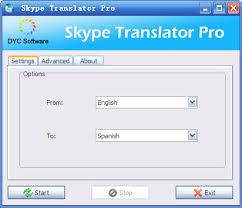
For around a decade, Skype has brought people globally via computer technology. What would it look like if we could understand every language through Skype?
Microsoft is having a conference to enable technology to bring language barriers down the world over. That’s where Skype Translator comes in. At the conference, they showed audio translation between English and German, using a combination of Skype voice, IM technologies, Microsoft Translator and other aspects of network speech recognition. This may sound new, but Microsoft has been working on this is for around a decade. If all goes well, Skype Translator should be available on Windows 8 as an app sometime late in 2014.
If Skype Translator goes well, imagine how easier international Skype conferences will be. I was at a conference where Skype was used recently. We talked with people in an underdeveloped country and thank goodness there was a translator to mediate between us and them. But that brings another issue. There are many, many languages out there. Then add that to the many, many dialects. So will just the most spoken languages be used or will most or all languages be included? More and more businesses are using Skype. More people are personally using Skype. And more and more people are connecting internationally. So this sounds like a good and sensible move by Microsoft. How else would the world benefit from Skype Translator?

May 27, 2014 | Computer technology, internet
Google plays an epic part of daily life, from maps to You Tube. Google wants to enter other areas of life, like wearable technology, driveless cars, and more.
Google is seriously considering acquiring Dropcam, one of the top camera makers. Dropcam makes cameras that stream photos to smartphones and computers. You can get one of these for around $150. Google wants to enter the thermostats and home detector (like fire and carbon monoxide) market as well. Google isn’t the only ones trying to enter the home security business. Rivals like Apple are venturing in online connected household appliances. In fact, next week Apple is planning a conference talking about how to run your household with an iPhone.
This sounds more than just another acquisition. This sounds like the next big technological revolution.? Surely you’ve seen commercials where the parents are checking on their kids in the house through a laptop. But the question is will Dropcom accept Google’s offer? What will Google’s offer be? So far, nobody’s saying anything. But if Dropcom and Google do get together, and Apple’s venture is successful, then imagine a world where detectors and all things appliances, from your lights, TV, even your blender, will be controlled by a computer or camera. If this is the next step, then what will be next?
