Feb 13, 2015 | Backup, Computer technology, News
Cloud storage companies trying to get into the game of free storage to get people in the door are growing and growing. We also have plenty of pay cloud storage as well. Here at Geek Choice, we have done some digging, and found something great for you! Well one of the big players is making a big stake. Microsoft is ready to strike hard with an offer that may be too hard to refuse. Microsoft is offering 100GB of free OneDrive cloud storage for two years!
If you don’t know Onedrive you may know it as Skydrive which was the original name for the cloud storage for the Microsoft office products. Microsoft has really been doing a great job at getting the One drive integration into Windows which makes it the easiest cloud storage for your Windows operating system. Especially once Windows 10 come out for sure.
Now the offer is for US residents only but you do have to do something to get this enormous amount of storage. You must sign up for a free Bing Rewards account. When you have done that you go to your Bing Rewards dashboard and then click on the 100GB free link. Once you click the link you have to agree to receive promotional One Drive e-mails which is a minor price to pay for a 100GB of cloud storage.
So now you must be asking yourself, what do I do after the two years are up? Well if you think Microsoft is trying to trap you with big prices for that storage after the two years, well your wrong. After the two years your storage will only cost you $1.99 per month. Which is around $24 a year, for tons of storage!
Now if you are worried about getting this storage and figuring out how to use it, our friends at C|Net have a tutorial to show you how to move your data from your PC to your cloud. Click here to view the tutorial.
So there you have it. An easy two years of free 100GB storage. Microsoft is coming up big with the new Windows 10 looking so promising and now with the free storage they are really trying to get some good will from consumers. What are your thoughts on Microsoft just giving away so much storage? Let me know in the comments section below.

Feb 12, 2015 | internet
Remember when the online travel game was competitive? Okay, not so much. But now it’s getting less so. Last week, Expedia bought out competitor Travelocity. That’s just the beginning.
Expedia buys Orbitz for $1.6 billion dollars in cash, plus shares of stock. This deal includes all of Orbitz names, like ebookers and Cheap Tickets and Hotel Club. According to Expedia CEO and President Dara?Khosrowshahi, they chose to acquire Orbitz because of their strong brands and the impressive manpower behind those brands. They’re banking this acquisition will better service a more diverse clientele. Orbitz CEO Barney Harford is just as excited about this uniting. He hopes this merger will increase great offerings and deals to customers and partners alike. Apparently, this deal has been in the making for quite some time. Orbitz ?has been outsourcing to Expedia since 2013. Expedia wasn’t the only bidder for Orbitz, but I’m sure the many months of outsourcing made the difference. Now, Priceline is Expedia’s only major competitor in the US.
And the way it looks, Priceline is doing fairly well. Their main spokesperson, TV legend William Shatner, has made over $600 million since his the first commercial he did for them back in the 1990s. Their stocks are almost 65 percent higher than it was just a year ago. They’ve had a very good last couple of quarters. They have a very strong international travel base, especially Europe and Asia. But they’ll even tell you the US travel base is better than Europe’s at the present time. I think Expedia has a better edge in the Americas’ travel market. And America’s economy is getting better (well, according to reports). Everyone I know uses Expedia for their travel needs. I’ve been a loyal Expedia customer for many years. And I’m confident Orbitz will boost Expedia’s sales. I’d wish there were more competitors in this online travel race, but we have what we have. This is going to be an exciting race. Who do you think will win: Expedia or Priceline?

Feb 11, 2015 | Malware, Security
Today, Facebook releases Threat Exchange. It’s being built as a platform where businesses can caution each other about the latest security threats and hacking trends, like malware, spam and phishing.
Other social media giants and online providers, like Yahoo, Twitter and Tumblr contributed to the building of Threat Exchange. In fact, seven tech companies, including Dropbox, are involved in this creation. This program consists of API’s (Application Program Interface- a set of tools for building software applications) and Facebook’s platform for allies to ask, answer and share security threats to participants. According to Facebook officials, playing around with early feedback allows participants to be more open and blunt about conversations involving threats. And they can control the conversation. For example, a major threat to one company many not be a threat at all to another company, so just alert the one company. Or there may be a major attack on the horizon for all participants involved. And it’s already working. Thanks to threat exchange, many companies are schooling other companies of what to do in the wake of a security threat.
Now this is what needs to happen. Hackers are getting bolder and bolder and so are their attacks. I’m happy Facebook, Twitter, and five other online companies, are putting competition aside and working together toward the common good. I’m glad the best minds in technology are building a network like this. I would like to see them take it even further. I hope Facebook opens up Threat Exchange to the people. Maybe we the people can learn to protect ourselves from security threats. And who knows? Maybe we can share our security concerns on this new forum. In this era of ever increasing attacks, we need each other to combat this worldwide threat before more people get hurt. What more can we do as a community to combat threats like malware and ID theft?

Feb 10, 2015 | News
January 7, 2015 will go down in French history. Terrorist gunned down French newspaper Charlie Hedo headquarters, killing 12 and injuring 11 others. Now, French lawmakers are taking action.
Moves are being made for France to block terror sites. They’re blocking child abuse sites as well. This bill is a revised version of 2011’s Loppsi Act. But these revisions give French cyber police authority to force Internet service providers to block certain sites within 24 hours, whether they have a court order or not. Blocked sites will be replaced by a page from the government telling them why the particular website is blocked. The system will be checked quarterly to see if sites are appropriately blocked. This bill isn’t without criticism. The criticism in France is led by Felix Treguer, leader of a French free speech group. Treguer and others say this bill leads to censorship and could be an enemy to free speech. Mr. Treguer said, “Website blocking is ineffective since it is easily circumvented. It is also disproportionate because of the risk of over-blocking perfectly lawful content.?
I want to believe the French government is trying to do right and prevent terrorists and child predators from spreading propaganda. But Felix Treguer has a point. First off, if they can’t do it online, the bad guys are going to try the old fashioned way, like pamphlets. And if you give cyber cops this kind of power, then who are bad guys? Are they terrorists and abusers? Or are they the blogs that criticize the French government? Or are they the websites that are too ‘controversial’??This bill just opens the floodgates to censorship. I’m all for fighting these kinds of evil. But will this do any good? Are they going to go after the true monsters or use this as an excuse to shut down other websites? Or worse, are they using tragedy to exploit other peoples’ freedom of speech?

Feb 9, 2015 | Entertainment
Later this year, Apple is expected to release it’s own streaming music service. Apple’s iTunes already has powerful music allies in their corner. Is Apple getting it’s own record label?
It’s not as far-fetched as it sounds. Apple, with all it’s money and power and influence, could offer to stream music that their competitors can’t touch. I’m talking about competitors like Spotify. Keep in mind, best selling country/pop artist Taylor Swift withdrew her multi-platinum album 1989 from Spotify because of a royalty dispute. What’s to stop her from offering all of her music exclusively to Apple streaming service? Taylor Swift is one of the most popular and influential music stars of her generation. What if other musicians get encouraged make exclusive deals to the Apple brand?
That’s not the only thing streaming competitors have to worry about. Like I said before, look at Apple’s power. iTunes has approximately 800 million customers from over 140 countries. As of January 2015, Spotify only has 60 million users and 15 million subscribers in 60 some nations. Add that to the one billion Apple devices, including the iWatch. Not only is Apple’s new streaming service intertwined with other services like Apple TV, the soon to come streaming service will soon be available on Android products!
I almost forgot, trusted sources speculate the price for the streaming service will be $7.99 a month, two dollars less than competitors like Google Music Play. I’m sure Apple is probably coddling up to music stars now about making their rights totally exclusive to them. But I’m sure Spotify, Google Music Play, and other streaming services are too. The days of the record label, FM radio and physical stores being the triangle of an artist’s bread and butter are all but over. Now, anybody from anywhere can put a You Tube video up and become a star. Remember Susan Boyle or Justin Beiber? Musicians know this and are looking to streaming services to carry out their art. So with all this being said, can Apple really become it’s own record label?

Feb 8, 2015 | Security
Yesterday, I talked about the hacking of health insurance provider Anthem, one of the biggest security breaches of all time. Those crooks better hope they never run into Alex Holden, the anti-hacker.
Alex Holden was born in Ukraine in the mid 1970s, then part of ?Soviet Union. As a small child, his family tried, but failed, to move to the US, making life even more difficult under communist law. His parents taught him and his brother chess and other problem solving games in order to exercise their minds. After the Chernobyl disaster in 1986, the family moved first to Italy, then to Wisconsin. There, he found his calling in computers. By the age of 27, he became top information security officer at Robert and Baird Co. In 2013, he started his own security firm after his employer, Cyopsis, split. Soon after, his genius and his skills were needed and needed badly.
Last summer, a network of Russian hackers were very busy. By this point, they accumulated approximately 542 million emails and well over a billion ‘unique records’- things like usernames and passwords. Many of these records were all set to be sold on the black market. Some of these items go for as little as five dollars. Holden and his Hold Security firm shut the biggest password theft operation of all time down, saving countless accounts. And that’s not all. In October 2013, he caught another hacking network breaking into Adobe Systems and compromising over 3 million credit cards. Holden and his team of sixteen caught criminals infiltrating a limo company. These criminals not only leaked credit cards, but scathing information about A-list athletes and other celebrities. There’s plenty more where these stories came from.
I’ve always said that if the criminals are getting stronger and bolder,?we on the side of right have to be stronger and bolder. We need more Alex Holden’s in the technology world today. Where are they?
Feb 7, 2015 | Security
A major health care company was hacked Thursday, February 5, 2014. And we’re talking one of the biggest health care providers in America.
Anthem’ s computer system was severely infiltrated. Anthem is the second largest health insurance provider in the US, and it’s feared that as many as 80 million customer accounts could be compromised, though investigators are still determining the exact number. According to CEO Joseph Swedish, this was an external and sophisticated cyber attack. Hackers got access to names, dates of birth, medical identification, social security numbers, physical and email addresses, employment information, and income data (how much a person makes in a week, month or year). No credit cards were compromised. The FBI has been contacted and are assisting in this case. Anthem customers are urged to visit website?Anthem facts or call 1-877-263-7995 to see if their accounts took a hit, as well as get other vital information and support. It’s believed this is the largest security breach in medical history.
When I think of it, of all the hack attacks over the last several years: Home Depot, Target, TJ Maxx/Marshall’s, Neiman Marcus, this is probably the biggest one of them all. One, look at the number of people that could be affected. Eighty million is nearly a fourth of the US population. And I take no relief that credit cards weren’t compromised. They got social security numbers. Social security numbers are an ID thief’s main tool to get into credit/debit cards, bank accounts, and whatever else they want to get into. And to risk having intimate personal information like your physical address, medical ID and income data being released to the whole world is a risk few people can bear. Now, everybody knows everything and any psychopath can come to your home and business and commit unspeakable deeds. But here is a great segment about what we can do to keep safe. How many more of these breaches must people suffer?

Feb 6, 2015 | General
Since the 1920s, the Radio Shack franchise has led the way in technology and tech based products. Today, that era is all but over as Radio Shack goes bankrupt.
Radio Shack filed for Chapter 11 bankruptcy on Thursday, February 5, 2014. Part of the deal is they will sell up to 2,400 of their stores, as many as 60% of their physical shops to Standard General and many of these shops will be run by telecom giant Sprint Corporation. The bankruptcy has been months, if not years in the making. In 2014, there was talk of closing 1,100 stores (imagine the potential job loss), but lenders stopped that from happening. In December 2014, Radio Shack warned lenders if it didn’t get more support, it would be forced to file bankruptcy. In the past year, they lost over 66% of their stock.
Radio Shack was founded in 1921 as a mail order and small retail business specializing in radio equipment to the shipping community. It was founded in Boston, MA. In the decades that followed, it became one of the first franchises to sell many things technology. For instance, in 1947, they had the first showroom to sell speakers and turntables and other new items for the times. In 1959, they began selling CB radios, radios that weren’t really popular until the mid 1970s. In 1977, they sold their first personal computer, backed by BASIC operating systems, created by a young, little known techie named Bill Gates. It began selling cellular phones in 1984. The year before that, they sold and introduced the first laptop in history. So what I’m getting at is Radio Shack has been on the cutting edge of technology again and again. But ironically, it’s cutting edge technology that’s putting Radio Shack into bankruptcy. With the rise of Apple and Microsoft stores, online shopping, and other technology franchises, not too many people have the need for this long running franchise anymore. What will become of Radio Shack now?
Feb 5, 2015 | Smartphone
In college, or even in high school, did you ever take a self imposed cut day? Were you ever inspired by the 1986 film Ferris Bueller’s Day Off to take your own day off? Thanks to 2010s technology, your Ferris Bueller days might be over.
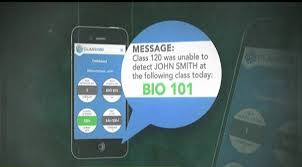
There is a new app called Class 120. It has a message of go to class or be tracked! ?You can thank Indianapolis, Indiana based company called Core Principal and it’s CEO Jeff Whorley. Class 120 will alert a parent or whoever is flipping the tuition bill when the student failed to attend class. The smartphone app tracks a student by a geographical system that tells someone what class students are supposed to be and whether they’re there or not. But here are two keys: If the student misses class, Class 120 doesn’t tell you where he/she is. And for this app to work, students have to program their class schedules in the smartphone. So far, this app is connected to 2,000 campuses.
These are two reasons why I’m not buying into this app. First, it can easily be manipulated. All the student has to do is not program the schedule in the smartphone and he/she can do whatever. Plus, it has a big brother ‘I’m tracking you’ element to it. When I was in college, I didn’t need an app to urge me to class. All the professor had to say was, “Miss this amount of classes and you automatically get an F or an I (incomplete).” Most of my peers got that message as well. And as expensive as college was even then, and way more expensive now, I didn’t want to rip off my supporters by failing to show up. But I do applaud ?Mr. Jeff Whorley for drawing the line. At least Class 120 doesn’t tell you where they are when they don’t go to class. At least it gives you that privacy and respect. But Whorley believes this app is needed to combat wasting billions of dollars a year on missed classes, which often leads to people flunking or dropping out. What do you say?

Feb 4, 2015 | internet, Security
A marriage ends in divorce. A long term relationship ends in a break up. If you’re thinking about putting nude, sexually explicit or embarrassing photos of your ex online, you better think again!
The state of California makes it clear: no more revenge porn! They made an example out of Kevin Bollaert (the younger guy in the photo), operator of a former website called U Got Posted. This website allowed anyone to post nude or explicit pictures of anyone they wished to, without the victim’s knowledge or approval. Bollaert’s website required the victim’s age, name, location, and Facebook page. Bollaert’s U Got Posted also charged the victim $350 a pop to have the scandalous photo removed. Thousands of dollars were made through this extortion. But a San Diego, CA court found Kevin Bollaert’s guilty of 20 counts of ID theft and six counts of extortion. Bolleart could face 20 years in prison. This is the first time a revenge porn operator has ever been convicted of running such a website. California has specific and strict laws against revenge porn.
And to this I say, hats off to San Diego and California! I’m glad one state is taking a stand against this evil and madness. Revenge porn is often difficult to prosecute because victims often don’t own the revenge pictures. I don’t know if this is because so many Hollywood celebrities have fallen victim to this hacking and unwelcome attacks. But whatever the reason, I like this crackdown. There is an old saying: As California goes, so goes the nation. In this case, let it be so. I know some will defend such actions in the name of free speech. But with freedom comes responsibility. And every adult and teen knows right from wrong. We should all be responsible enough not to put our exes nude pics online, or to blackmail strangers to take them down. How would you like it if someone did that to you, or your loved ones?
