Feb 3, 2015 | General
In the past year or so, Uber has been through some trials: resistant cab companies and drivers, new and crazy regulations, and customer complaints to name a few. Now they could face their biggest trial yet: one of their biggest investors!
It looks to be Uber vs Google in an upcoming taxi sharing struggle. Keep in mind Google invested over a quarter a billion dollars in Uber back in the summer of 2013. Now it seems Google is creating it’s own ride sharing service. According to an unnamed source, David Drummond, Google Vice-President of corporate development and CLO (chief legal officer), informed the Uber board this could happen. Also keep in mind Mr. Drummond is on Uber’s board of directors. The anonymous source believes Google employees are already testing a Google owned ride-sharing app. For a while, Google has worked diligently perfecting the self-driving car. ?Now, Uber is partnering with Carnegie Mellon University to work on robotics auto based technology, in hopes to one day build their own self-driving vehicle. But as far as the rumors of Google building their own ride sharing service, of course Uber leaders and employees are getting concerned.
This is for several reasons. One, Google is perhaps the most prosperous corporation today, if not all time. Their pockets are extremely deep, so is their talent/labor pool. So Uber knows if Google is really serious about putting their own ride-sharing app together, they can do it so quickly and so efficiently. Plus, Google was the company that helped build Uber. Now they want to compete against them? Maybe I’m reading this all wrong, but I pick up a sense of betrayal. Let’s say a two friends invest in your company. Your company goes on to be successful, ?despite controversy on all sides. One of your friends is on your board of directors. One day you find out your friends, who have way more money, power and talent than you, are competing against you, and sparing no expense to do it? Wouldn’t you feel betrayed? Or am I reading too much into this?

Feb 2, 2015 | Entertainment
Super Bowl 49 was perhaps the greatest Super Bowl of all-time, speaking of the game. The ads, not so much. But mediocrity didn’t stop the relationship between advertising and social media.
Hashtags slipped, but still dominated the super bowl ad scene. Hastags were in half of all ads, 28 in total. Facebook was only mentioned in in four ads, Twitter in three ads and Snapchat in only one. These don’t include promos for NBC television. So while Hashtag made it in 50% of all non-NBC Super Bowl ads, that’s down from 50% last year. You Tube, Instagram, or Google Plus were not represented at all. Snapchat’s only representation were to promote upcoming film comedy Picture Perfect 2. T-Mobile was the only company to include Facebook and Twitter in their ads. Some company ads, like those backed by Geico and Budweiser, ?didn’t feature any online or social media mentions at all. Some others, like Turbo Tax and Nationwide, only featured their own Internet address. In fact, nearly half the companies advertised last night had their online address URL in the ad.
It’s estimated that Super Bowl commercials influence at least 10 million people to buy the sponsor’s product or service. This nation’s population is over 318 million, so that may not sound like a big number, but it is. If you can convince millions of people to support your business on this occasion, you’re doing something right. I’m still wondering why Hashtags still dominate so well over all online forms, except for URL’s. I think every commercial should include a web address in this day and age, and more should include Facebook and Twitter as well. So how did the advertising do? Well, I found a website that had a playlist of all the non-NBC based Super Bowl ads of 2015. To me, some of them were way too long. At 4.5 million for a 30 second ad, it’s good to know some companies have this much money to gamble with. But you be the judge.
Feb 1, 2015 | Entertainment, youtube
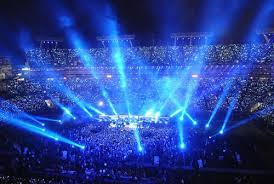
Tonight is Super Bowl 49. The halftime show will be headlined by platinum record selling recording artist and A-Lister?Katy Perry. But she’s not stopping there.
This year, the halftime show and social media will be intertwined like never before. During her show tonight, February 1, Perry and her sponsors will be advertising her products throughout the Internet and social media. Katy Perry merchandise will be promoted and sold on Twitter, You Tube and Shazam and through devices like Roku, Samsung and LG electronics. It’s the first shopping enabling Super Bowl halftime show in history. We can thank online commerce provider Delivery Agent and credit/debit card giant Visa for backing this potentially historic occasion. For example, You Tube has Katy Perry’s VEVO channel, which has nearly 15 million subscribers. The subscribers should be able to ‘click to buy’ through that channel tonight. Roku customers can use their remotes to shop through the Shop TV app, on certain, but not Samsung and LG devices. Won’t be able to get your hands on Perry backed products tonight? I bring you good news. These products will be available until 8pm Tuesday, February 3rd, assuming there’re still some goodies left by then.
I must say, this is a bold step linking the Super Bowl and advertising. For decades, it’s been the most watched TV event of the year, at least in the USA. Advertisers spend millions for 30 second ads during the game. But this is the first time fans can buy merchandise from the halftime show headliner while the headliner is performing. Other ads convince you to buy their cars, beer, snacks, etc tomorrow. This new venture is getting you to buy right now! But how many people tonight can pry their focus away from the game or show to go online shopping? That’s the question. Will this venture be a hit or flop?
Jan 31, 2015 | Computer technology, Software
Today, I’m talking about free Google Earth Pro. It used to cost nearly $400 a year. Now this geography based software app is about to be totally free.
Google Earth Pro is somewhat of a spinoff of Google Earth. Google Earth was started in 2004 after Google acquired a small company called Keyhole Inc. Google Earth supplies a virtual globe in which you can find geographic data anywhere in the world, or should I say universe. You can even explore Mars and the Earth’s moon on it. But with Google Earth Pro, one can get premium photos. Earth Pro automatically locates GIS (geographic information system) images. The free Earth version makes you do it the old fashion way. Earth Pro offers map addresses for spreadsheets and lets you locate multiple points at the same time. Though Earth Pro is geared for businesses, it’s often used by scientists, adventure travelers and environmentalist. It’s by no means limited to just studying the Earth. Google Earth Pro has been used for building eco-friendly homes, predicting potential disasters, and planning the next outdoor getaway, to go where few dare to go. There are dozens of other uses for Google Earth Pro.
This is why I believe this is a great call by Google. Yes, Earth Pro offers more than Earth does, but $400 more? Okay, you break that down by month and it’s only $33 a month and $7.70 a week, but look at what you’re getting with that. Or should I say, look at what you’re not getting with that. You’re only getting a few cooler perks with Earth pro, but nothing worth paying ?$33 a month. Businesses may be able to afford that, but what about that traveler hiking around the country backpacking and staying in hostels? So hats off to Google for making Earth Pro accessible to all. In today’s economy, can you pull out an extra $399 out of your hat?
Jan 30, 2015 | Entertainment
Even for those who never watch football ever, chances are they will be watching this upcoming Super Bowl. Let’s take a look back at my favorite ads, many of which are technology based.
10. Bud Light’s?Rock Paper Scissors?(2007): Oh, what we won’t do for that last beer! (Please drink responsibly this weekend, folks!)
9. ?Xerox’s Monks (1976): It’s one of the earliest tech based Super Bowl ads. In the 1970s, it was a miracle to print two pages per second.
8. Go Daddy’s Broadcast Hearing (2005): A great spoof in the wake of the Janet Jackson scandal from a year before, and Go Daddy has brought us racy Super Bowl ads ever since.
7. McDonald’s Nothing But Net (1993): You try making a jump shot off the Chicago Sears Tower for a Big Mac. And remember, nothing but net.
6. Career Builder’s Monkeys (2005): Because you dream of working in an environment like this. Go ahead. Admit it. Some of you may already do.
5. Noxema’s Joe Namath and Farrah Fawcett (1973): Perhaps the first time a major NFL star got a Super Bowl commercial. And his face is rubbed by a future TV legend. Now that pays for itself.
4. Hulu’s Alec Baldwin (2009): Yes, this commercial is slick, humorous, and sends a message about the evils of watching too much TV. But this commercial helped usher in a brand new era in technology: streaming movies and TV shows.
3. Coca Cola’s Mean Joe Greene (1980): No top 10 Super Bowl commercial countdown would be complete without this classic. Decades later, the interaction between the kid and NFL star warms the hearts of many.
2. Budweiser’s Hank the Clydesdale (2008): I’ve got to put my Clydesdale in here. This ranks so high because it has everything: humor, determination, a good moral, and can make you laugh and almost cry at the same time. This is a total package commercial nearly everyone can relate to.
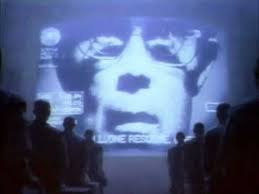
1. Apple Macintosh’s 1984 (1984): Need I say more? This commercial was so powerful it only had to be shown once. It turned a company from obscurity to greatness. It started a technological revolution that goes on to this day. Where would we be without this ad?
Let the debate begin!
Jan 29, 2015 | Uncategorized
For years, the smartphone race between Apple and Samsung has been like watching a main event pay-per-view wrestling match. It just goes back and forth and both competitors pull all the stops to please their fans. Let’s look at Apple vs Samsung 2015.
For years, Apple has led this smartphone race. But Samsung is catching up in a hurry. During the December 2014 quarter, it’s reported that Samsung sold somewhere between 71-75 million smartphones, and?over?70% of them the more expensive phones. Apple sold 74.5 million during that same time frame, a record for them. This put them in a virtual tie to close out 2014. Apple CEO Tim Cook credits new big screen iPhones for the record breaking performance. Because of this, and despite Samsung’s high ending sales lately, this is bad news for Samsung. Samsung is losing high-end, high paying customers to Apple. The big screen iPhone 6 and iPhone 6 Plus made record sales last year, which use to be Samsung’s main event spot. Even Tim Cook will tell you that. But they’re also losing steam on the low end market. Competitors like Xiaomi and Lenovo are manufacturing and selling more low end phones than ever before. And since the economy has hardly recovered (I don’t care what anyone says), you know more people are buying low end phones than ever before.
That’s not the only reason more people are buying low end phones. People are tired of having their expensive devices hacked and accounts broken into. With a low end phone, you can’t put that much information on it but you can dispose of it, get a new one for a low price, and still keep the old number. I think this is where Apple and Samsung should put their focus. Yes, still push the big ?products, but concentrate a little more on the little phones. Because the competition sure is. What to you think?
Jan 28, 2015 | Smartphone
What a past couple of months it’s been for Sony. First came the hacking scandal, then came disappointing sale numbers. Now people are being laid off.
Sony lays off workers, 1,000 more of them. We’re not including the over 1,000 workers laid off back in October 2014. In fact, by March 2015, around 5,000 workers are expected to lose their jobs. Most of these job losses will be in Europe and China and most will involve smartphone manufacturing. Come April 2015, Sony is expected to announce a whole new restructuring plan. You see, Sony has lost over 1.5 billion dollars in the smartphone game, thanks to the strength of their competitors. But it’s not just them. The smartphone business in general is bracing to lose billions this year, and Sony is making a restructuring plan to make sure the 2016 year is profitable. It almost seems like they’ve given up on the 2015 year, and it’s only January. But this year, Sony is expected to sale 9 million fewer phones than hoped for. They want to cut down their Chinese sales while focusing on Western markets, like Japan and the US. Production is expected to decrease 30%, but they’re going to focus on the more sophisticated, expensive smartphones. They want to invest in smartphones that will turn your appliances off and on and apps that are security based (have you seen certain commercials where you can see people watching who comes from their tablet?)
Like I said, it’s been a hard year for Sony, and it doesn’t look like it’s going to get better anytime soon. But it looks like they’re trying to make the right moves. I don’t like for anyone to lose their job. But maybe Sony should have done a better job planning smartphones and studying the competition before jumping in the smartphone game. It sounds like they underestimated their competitors, and now they got the best of them. Now they have to re-do their whole smartphone plan all over again. What’s the lesson here?
Jan 27, 2015 | Uncategorized
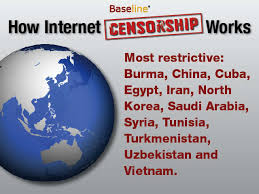
In Cuba, the Internet is mostly banned. And for the small handful who do have access, they have to pay a high price, can only have it at government sponsored Internet cafes, and it is heavily censored. Some young people are doing something about this.
Young Cubans build network that stretches throughout Havana, Cuba’s capital and largest city. With this hidden network, they can chat with friends, play games and keep up with the latest movies and music. They were able to do this by their engineering skills and putting?together?a pool of over 9,000 computers and hooking them up to hidden Wi-Fi and Ethernet cables found all over that city. But their access and connection are still limited, and sources say they’re getting no help from any outside government or any other outside entity. Cuba is one of the least wired nations in the world, and Cuban residents like 22-year-old Rafael Moreno want to change that. He used his electronic engineering skills to help put this network together. He talks about why Cuba needs this underground Internet system. “We really need Internet because there’s so much information online, but at least this satisfies you a little bit because you feel like, `I’m connected with a bunch of people, talking to them, sharing files.”
I’m proud of this group. Leave it up to young adults who are tired of being censored and shut out to find a way to connect to the outside world. And with President Barak Obama working to improve US and Cuban relations, I hope for a day where the Cuban people don’t have to jump over hoops just to use Internet access we Americans virtually take for granted. So Cuba, you want to improve your nation and it’s reputation around the world? Give online access availability to every person in Cuba. Wouldn’t that be a great start?
Jan 26, 2015 | Entertainment
Remember when your TV could only get 3, 4 or 5 channels? Remember how cool it was when you got 30 channels with cable? Remember what it was like to get 100+ with Satellite? Remember the joy you felt when you first downloaded Netflix and/or Hulu on your device?
The game is changing again: introducing Sling TV. It’s a Dish Network only service, available only in the US, and the subscription is expected to cost only $20 a month. And there’s no contract requirement. With a heavy concentration on channels like ESPN, Cartoon Network, and HGTV, Sling TV is aimed at Millennials and younger people. It’s available on all devices from Android to Apple. All you do is go on their website and sign up on the computer/device of your choice. Other channels available will include CNN, Food Network and Travel Channel. Some channels, like Bloomberg and Disney XD will cost an additional five dollars a month. They are some on-demand shows will be available through Sling TV, but you may have to pay extra for that too. But one setback, well a minor one: you can’t skip commercials.
I wish I knew more about Sling TV, but what information I can gather, this might be a good deal. I’m a sports fan, so ESPN would be a huge stepup. Plus, ESPN is very popular with the under 35 crowd. So is Cartoon Network, Travel Channel, even CNN. But so is MTV, BET and VH1. Twenty dollars a month sounds like a great start for these channels, but I think it can add a few more, especially if they want to cater up to the younger generation. And at a time when one cable company is getting so much power they can virtually charge anything they want, it’s great to have options. If I were Sling TV, I would definitely add AMC, home of Walking Dead and Mad Men, and they’ve got to have ABC, home of Scandal and How to Get Away with Murder. What other channels should Sling TV have?
Jan 25, 2015 | General
The Super Bowl is a week away. For non-football fans, that means the greatest ad night of the year. But some corporations have little to celebrate.
America Online, better known as AOL, is restructuring. That means AOL job cuts, and plenty of them. There will be some hiring, but only in the business sector. It’s unclear how many will be laid off and how many will be hired, but old worries and new resumes are reported to be flooding AOL New York City headquarters. Why is this happening? Because the advertising landscape is changing. Programmatic advertising is now the big thing in firms across the globe. That means they’re letting machines and big data buy ad space, not people negotiating for it.Programmatic advertising currently makes of 40% of all their advertising department, a number that will only increase as time goes on. Could this mean entire AOL teams will merge into a big one? If that’s the case, then how many jobs will be lost here?
When I was a kid, I was always told that in the future, not only would I be competing with other people for jobs, but with machines and computers as well. I didn’t believe it because that was a world I couldn’t comprehend. I think we’re all comprehending it now. Over the years, how many manual jobs and how much labor has been lost because the computer can do things better? This isn’t a case of good ol’ day syndrome; but this is a reminder that things aren’t what they use to be. America Online is not unique in it’s predicament. These changes are being made in boardrooms around the world. This is why in this century, computer skills are critical, no matter what profession one is entering. It’s better to have a back up skill too just in case a machine takes over your career.
