
Feb 22, 2015 | Entertainment, internet
There is hardly a bigger target for cyber bullies than celebrities. Their personal life is often out in the open for all to comment on, using anonymous and hidden names. One star is tired of the madness and meanness. Now, this rap star quits social media.
Australian born rap star Iggy Azalea announced on her Twitter feed she is quitting social media. This started while on a Valentine’s Day vacation in Hawaii. While in a one-piece bating suit, paparazzi took photos of her. I’m guessing this was without Azalea’s knowledge or approval, but that’s another subject for another time. But the brutal, ugly and nasty comments poured in, simply because…surprise, surprise, her body isn’t perfect! Cyber bullies target the cellulite on her thighs. On February 18, Azelea announced she was taking time away from social media. She says the hate has made her an angry person, and that the Internet has become an ugly reflection of humankind. Azelea tweeted from now on, her management team will be running her social media accounts.
This post vacation cyber bullying isn’t the first run-in Iggy Azalea had with social media. In the past several months, she’s had online feuds with everyone from Snoop Dogg to Papa John’s Pizza. I think this latest episode was the final straw. I respect Azalea for making this bold move. If this is what it takes to have peace of mind, then good for her. No amount of fame, fortune or celebrity is worth losing peace over. But she’s only partially right about something: the Internet is an ugly reflection of humankind. While many lives has been lost and destroyed because of cyber bullying, think of all the lives that have been saved and made better because of all the good the Internet is doing. Can we dish out less of the bullying and more of the encouragement, please? And who gave the paparazzi permission to take those photos of her anyway?

Feb 21, 2015 | Malware, Security, Software
Chinese based computer technology firm Lenovo dropped the ball. It promoted software that was meant for good, but turned out to be anything but. This is Lenovo’s security fail.
The software was called Superfish. It was on laptops and PC’s sold between September 2014 and January 2015. Off the bat, Superfish got bad reviews. But earlier this week, the situation went from bad to worse. A password was discovered that would allow anybody access to the computer’s certificate authority, even if it means bypassing encryption. And as sophisticated as hackers are today, they can easily infiltrate that Lenovo computer to spy on the user or flood their system with malware. This could lead to identity theft, sextortion, revenge porn, cyber bullying, and other cyber crimes and indecencies. Lenovo has come up with software to help you uninstall Superfish and test your machine to see if you have this potential threat. Superfish is such a widespread concern that even the US Department of Homeland Security is urging customers to test and rid their machines of Superfish.
I’m glad they caught this potential threat when they did. I haven’t heard of anybody being hacked severely by Superfish. Let’s hope it stays that way before we read yet another report of a major hacking. Lenovo is working with Microsoft and other technological giants to combat this threat. So if you think you’re venerable, don’t procrastinate. Get it off your system immediately. Don’t wait until you’re the next victim. But what can be done to prevent Superfishes of the future?

Feb 20, 2015 | internet
Ever go from website to website and wonder, “Why is my last website putting an ad on this current one?” Advertisers are working with telecom spies to do just that. Telecom giant AT&T believes it has a solution. But does it require paying for privacy?
In Kansas City, MO, AT&T is experimenting with newer, faster Internet service. This faster service will cost you $70 a month. But if you want to stop the telecom spying and pesky ads following you everywhere, you have to pay an extra $29 a month. So now you’re looking at $99 a month, before taxes. They tried the same thing in Austin, TX back in fall 2013. They even admit that when you choose the cheaper option, your web browsing tailors to advertisers to serve your favorite interests. I’m glad somebody finally has a privacy option, even if it is $360 a year. That’s no loaf of bread, I don’t care how good the economy is, allegedly. However, to get the discount, you can expect to give up a lot of data to telecom and Internet companies and advertisers.
I hate to say it, but that’s the nature of the beast. How do you think you get Facebook, Twitter, You Tube and other social media sites are for free? Someone has to be paying for it. But there has been a huge outcry for privacy rights over the last few years. And many people want to be left alone. So I think this is a good business move for AT&T to provide privacy. But you have to love privacy from advertisers so much you’re willing to pay almost $400 a year for it. I’m willing to bet there are many who will pay. I know the telecom spies and ads can be annoying, but would you rather pay extra? And do you see this paying for privacy trend becoming the new normal?

Feb 19, 2015 | internet, News, Security
Months ago, Kevin Bollart from San Diego, California was arrested on revenge porn charges: identity theft, extortion, conspiracy. The United States is cracking down on revenge porn, and now another one goes to jail.
Earlier this week, Hunter Moore, 28, pleaded guilty to revenge porn related charges, including identity theft and aiding and abetting. Moore now faces over five years in prison. His co-defendant, Charles ‘Gary’ Evens, has also been charged. Evens allegedly stole nude photos from victims and made $200 a week from it. By the time of their arrests last year, hundreds of emails were compromised and many nude photos came from disgruntle exes in the name of revenge. Hunter Moore’s website was called IsAnybodyUp. He was inspired by Bollart’s revenge porn scheme, which allowed people to put up other people’s nude, sexually explicit, or other embarrassing photos on their site, for a small fee, without the victim’s knowledge or approval. Moore’s website and reputation became so notorious Rolling Stone magazine called him the most hated man on the Internet. Here is the part that struck me the most: Hunter Moore’s IsAnybodyUp made up to $10,000 a month in ad revenue alone. This revenge porn site got an estimated 30 million views.
There lies the problem. The fact that a revenge porn site got this much money and this many reviews is disturbing. If the demand for such filth is this great, we’re going to see more Hunter Moore’s and Kevin Bollart’s in the future. I’m happy laws and governments are doing something to combat revenge porn. But it starts with us as the consumer. When we stop logging on to such sites that violate peoples’ basic rights and scar them for life, maybe they’ll get the message. When we boycott advertisers that support revenge websites and tell these advertisers why we’re boycotting them, maybe they’ll get the message. Hopefully, Bollart, Moore and Evens are getting that message now. Will this help to prevent the next revenge pornographer?

Feb 18, 2015 | Entertainment
I read an article that says the Millennial generation, those born between 1981-late1990s, is turning away from traditional TV in record numbers. Is TV production following the same route? Is a TV show and MacBook going hand and hand?
Popular TV sitcom Modern Family will debut an episode on February 25 called Connection Lost. What makes this episode unprecedented is the entire story will be told through a character’s Apple MacBook Pro. Experts call this ‘screen capture’ film making. The episode starts as Claire (portrayed by Julie Bowen) on her MacBook. Her daughter Haley (portrayed by Sarah Hyland) gets into a confrontation with her, and can no longer be tracked. Now, MacBook apps and video chats has to be used to find her. Every character somehow has access to these apps and video chats. But why are pictures of Yosemite National Park used in the background? Is there some kind of message behind that?
Connection Lost is the brain child of Modern Family creator Steven Levitan and scriptwriter Megan Ganz. Levitan drew inspiration from his love of gadgets, particularly Apple gadgets. There was a similar real life incident between Mr. Levitan and his daughter that inspired this episode. His daughter and Haley are around the same age and in college. For over five years, Modern Family has pushed the envelope in prime time TV and has broken new ground. Now they’re breaking new technological ground. But the concept of a child (an adult child) getting lost has been done so many times. But if the story is told through a laptop computer screen, maybe it will work. Keep in mind one reason why Modern Family is an Emmy award winning show: the creative writing. So will Connection Lost be a history making hit? Or will Connection Lost be a history making embarrassment?

Feb 17, 2015 | Security
A Russian speaking hacking ring breaks into banks throughout the world. They steal a billion dollars. This isn’t a movie plot or TV pilot. This is real life.
According to cyber security company Kaspersky Lab, hackers stole a billion dollars from banks in Russia, United States and Europe. These cyber thefts have been going on since late 2013. They’ve hit up 100 banks in 30 countries, although the names of these banks haven’t been released, and they’re probably not even known. The hackers used phishing schemes, studying bank and ATM operations for months. Then they strike, programming ATMs, setting up fake accounts, gaining $10 million per bank, then moving on to their next target. Unlike many other hacks, their only interest is cash money, not credit/debit cards or other personal information. Unlike robbers, they target banking systems instead of people. Because they can move from bank to bank so quickly, that’s how they can accumulate so much money without getting caught. Then there’s the widespread geographic. Since late 2013, these cyber robbers targeted Russia, United States, Germany, and Ukraine, and these are the targets people know about. But there’s speculation this ring wants to expand to China and other parts of Asia, even the Middle East.
I hope authorities find out which banks have been targeted. That would help in solving this case. Don’t think just because they don’t target people that they’re less of a threat. That’s just a strategy they use to further evade the law. It seems everywhere you look, major targets are being hacked: Target, Home Depot, Anthem health insurance, Sony Pictures. This has to be at least the fourth blog I’ve written about cyber security in a matter of weeks. A few days ago, US President Barack Obama met with technology leaders in Silicon Valley to combat this ever increasing threat to us all. And believe me, this is a threat to us all. What if hackers get into electric and nuclear and military systems and shut them all down? What do we do then?
Feb 16, 2015 | Computer technology
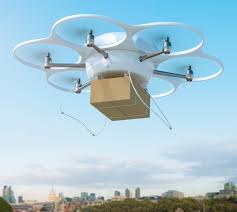
Five years ago, few people even knew what a drone was. Now, they can be used for any reason: in war, package deliveries, even for toys and sport. Now, the Federal Aviation Administration proposes drone regulations.
These regulation will only apply to drones weighing under 55 pounds. Pilots will need a drone license issued by the TSA. Drone pilots must be minimum 17 years old and be retested for licensing every two years. Drones will be able to fly only in daylight hours and the pilot must always be in sight of the drone. They must fly under 500 feet, be slower than 100 miles an hour and must have viability of over three miles. Drones will no longer be able to fly over people. Drone operators will not have to get a regular pilots license. And if you have a drone you fly over the backyard, don’t worry. These regulations don’t apply to you and your model airplanes.
But I think the FAA is walking a tight rope. On one hand, drones can see and capture everything below them. So drones’ pictures can capture your homes, families, comings and goings, whether you want them to or not. So regulations are needed to protect privacy rights. Plus, what if drones fly so high they get in the way of commercial or helicopter flying? Think of the accidents that could cause. But you also have companies like Amazon using drones to deliver customer orders. I’ve already read articles from Amazon leaders complaining these new rules won’t allow Amazon Prime Air to do business in the United States. And drones have been used in acts of military conflict. Will these rules apply then, even when our troops and/or innocent civilian life is in danger? Keep in mind these regulations are just proposals. Nothing has been signed into law yet. With the potential fallout, will these drone regulations ever make it to law?
Feb 15, 2015 | Computer technology
When I was a kid, I was told that one day fast food jobs and other minimum wage jobs would be replaced by robots, taking jobs from humans. Were they right?
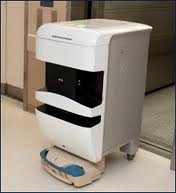
There’s a hospital in San Francisco that has me going paging Dr. Robot. There’s a robot named Tug who travels around University of California’s San Francisco hospital. Tug delivers medicine, clean linens, and meals to patients. Tug also cleans up patients’ trash, dirty sheets and medical waste. Tug travels up to 12 miles a day without needing any recharging. Tug also has company. By March 1, 2015, there will be 24 other medical robots, the largest fleet in any hospital in the world. Each Tug has a name, many after a fruit, some are named ‘Tuggy McFresh’ and ‘Little Tuggy’. Patients at this hospital can order Tug service on their devices. They deliver food from the kitchen to bedside. They deliver medicine from the hospital lab to bedside. They navigate their way through the hospital’s WiFi system. It uses waves to open doors and even board elevators. Did I mention Tug can carry 12 food trays at once? I’ve visited my fair share of hospitals, and I’ve never seen a human hospital staff worker do that.
Here’s the other thing: everyone seems to have respect for these robots. People are so quick to get out of their way. I think people have more respect for these machines than they do their fellow human being. That’s the awesome, but scary thing about Tug and other working robots. Many of us have seen movies and TV shows where robots turn on humans and obliterate them. If it ever comes to that, it will be way more subtle. They’ll just take jobs. Any employer can say, “Well, the robots are cheaper and do a better job and don’t cause as much headache.” Is this where we’re heading? Or am I just paranoid?

Feb 14, 2015 | Computer technology
There’s a lot of speculation going on. Why are Apple leaders talking to car makers and automotive companies? Why are they keeping a close eye on Google? Is Apple building an electric car?
Computer technology mega corporation Apple wants to build a driver free electric car, according to a automotive source who is anonymous. Apple is learning about car parts and car production. But Apple doesn’t want to know about combustion engines or standard car manufacturing. This leads some to believe Apple doesn’t want to build a standard car; it wants to build an electric one. They’re also studying software operations to compliment self-driving vehicles. They’re studying high-definition mapping, car sharing, and electric car recharging. They’re looking for advice and education, but not partnerships when it comes to this new project. This has been Apple’s typical attitude when it comes to making their innovative products throughout the years. When an Apple executive from London was asked about these revelations, she refused to comment.
Keep in mind Google has been working on an electric car for years. And though no Apple personality is admitting it, yet, it seems like they’re putting together their own electric vehicle masterpiece. Apple and Google have been fierce competitors for years. And Apple doesn’t need an electric vehicle to add to their arsenal. They’ve got computers of every kind, iPods, iPads, and smartwatches. Why do they need to make electric cars? Is this a move simply to compete and run against Google?

Feb 13, 2015 | Computer technology, News, Security
Today, President Obama is expected to land in Silicon Valley. Yes, they’re security threats to talk about, like the health insurance company Anthem hack. But there’s an elephant in the room. The elephant is called: Tech and federal relations.
For decades, technology companies and the US government had a great alliance, from World War One to the Cold War to the 21st century War on Terror. Tech firms and corporations have been asked to help build equipment and strategies in war time to job creation and growth. But in 2013, that buddy-buddy relationship went sour when the NSA/Edward Snowden scandal broke out. Tech companies claimed the NSA forced them to turn over private consumer records, like cell phone conversations and social media posts. Many customers believed Silicon Valley and Washington were in collusion invading our privacy and violating our rights. Silicon Valley distanced itself as far from DC as possible. The net neutrality debate is hardly helping matters. Now this current administration wants to stop tech giants from strengthening encryption. They don’t want enforcement agencies cracking their codes. Now there’s the zero days controversy. The government wants to deliberately build up flawed software and use it to fight future enemies. I can only imagine how Silicon Valley feels about that one.
But yet hacking, security breaches, revenge porn, ID theft, and other cyber crimes are at all time highs. And this will be a part of the discussion as well. I hope they talk about security more than they do their disagreements. If the tech and government communities can come together to end wars, bring east and west together, and fight terrorism, surely they can come together to fight these cyber evils. I know you’re getting tired of hearing it, but we on the side of right need each other more than ever. Can tech and federal relations be improved?
