New information about the Apple iWatch is buzzing around the world, from the Internet to morning talk shows. But is Apple’s newest product since the iPad even worth the hype?
For die hard iWatch junkies, you’ll be glad to know pre-sale orders begin Friday, April 10. It will be released in stores Friday, April 24. The smartwatch is one of the first wearable technological devices in history (let’s not spoil the blog by talking about that monstrosity called Google Glass!), and Apple is banking everything on the iWatch. It’s part watch, part iPod, part iPhone buddy, part GPS system, part health and fitness device. But this device isn’t cheap. The aluminum models are between $350-$400. It all goes uphill from there. A steel model iWatch will cost you $550-$1,100. Would you rather had the gold model? Are you willing to pay $10,000-$17,000 for it? From the information I’m getting, the iWatch will work with the iPhone when the iPhone is on and from a short distance, and it works with Bluetooth and Wi-Fi. Critics rave about the apps and easy connection to other Apple devices. Battery life is getting mixed reviews. From what I hear, it lasts for about 24 hours. That’s great for some and others wish it were more. It’s longer than my iPod Touch; I’ll tell you that. Some critics don’t like how slow the apps can be and the fact iWatch is only compatible with Apple products.
Should you be spending hundreds, even thousands, on this watch? You shouldn’t be spending thousands on any watch! This is especially true when the $400 watch is just as efficient. Apple is putting a lot on the line here, especially against competing smartwatches. Will this be a good risk for Apple? Many could use all these features in one device. They say one should only get the iWatch if you really need it. Do you really need the iWatch?
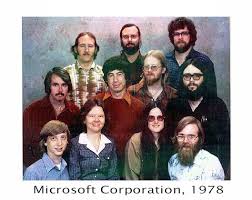
In 1975, Gerald Ford was the US President. All in the Family was the top TV show. Jaws was the top movie. Captain and Tenille’s “Love Will Keep Us Together” was the top song. The Pet Rock was the top trend. And a technological revolution was born.
That technological revolution was Microsoft. This weekend, it celebrated it’s 40th anniversary. It was founded by Bill Gates and Paul Allen. As you know, Microsoft eventually made Gates the richest man of our generation. Gates had such a firm hand on his company that any employee who suggested anything that might weaken company profits would face strict disciplinary action. It was called ‘strategy tax’, and although it destroyed many potential innovations, it created many revolutionary ones that changed the face of computer technology forever. Now Mr. Satya Nadella is the boss, and became so when Microsoft fell in some difficult times. His strategy included turning it from a Windows only to serving a broader range of online services for everyone. That’s paying off, as Microsoft is rolling in $87 billion in revenue. If you recall, Bill Gates stepped down in the early 2000s to focus on his philanthropy with the Bill and Melinda Gates Foundation.
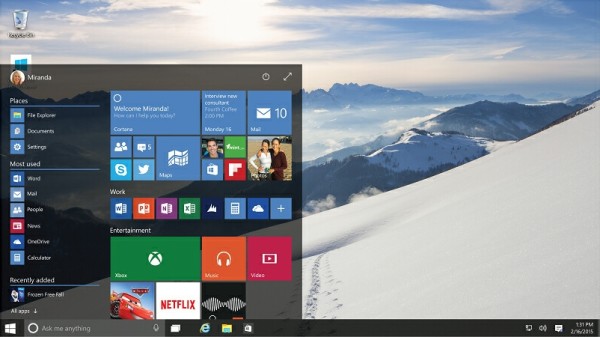
To commemorate the 40th anniversary, Bill Gates wrote a letter to the company in which he talked about Microsoft’s humble beginnings. He’s optimistic about computing’s future, believing it will evolve the next ten faster than ever before. I truly believe Gates is onto something there. He praises Satya’s leadership. Like many other tech leaders, he vows to make the Internet and other tech resources available to everyone around the world. Gates closed the letter reminiscing on the accomplishments of the last 40 years, and looks forward to the years…I mean…decades to come. But I think about the upcoming Windows 10 coming out later this year. Will Windows 10 help or harm Microsoft’s legacy?
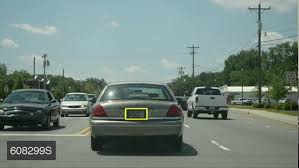
A year ago, the US Department of Homeland Security tried to come up with a licence plate tracking system. But because privacy rights groups raised so much controversy over the program, plans were scrapped. Now, those plans are back.
The Department of Homeland Security is reaching back out to private companies. They want these companies to help US law enforcement build a license place tracking system. The DHS claims they can do this now because they’ve addressed last years’ concerns. In a statement Thursday, DHS insisted it won’t build a national database or contribute data into existing systems. They will seek bids from gathering data private companies. They will charge and determine how much access to give Immigration and Customs Enforcement, which is a DHS agency. But privacy rights advocates aren’t too crazy about this deal. A spokesperson for The Center of Democracy and Technology said, “If this goes forward, DHS will have warrantless access to location information going back at least five years about virtually every adult driver in the U.S…”. Spokespersons for law enforcement say such concerns are blown way out of proportion. We should also note the FBI already uses licence plate tracking.
If such concerns are blown out of proportion, then why did Homeland Security postpone this plan last year? They must have known something was wrong with this. And I’m not totally trusting of this new system either. Have you read about what happens to jails/prisons when private companies take over them? I have the same concern here. What if private companies get into the ear of certain law enforcement employees, leaders and agencies? Wouldn’t that compromise and cancel the integrity of the whole system? There’s an old saying that was popularized during the Watergate era: Follow the money. Should we follow the money if this new program comes becomes reality?
Most girls born after 1960 have probably owned a Barbie and/or a Barbie toy set. It used to look something like this. Today, the Barbie franchise looks a lot different.
Today’s Barbie can literally have a conversation with you. It’s called Hello Barbie. Hello Barbie is expected to appear on store shelves in late 2015. This Barbie uses the child’s voice pattern and Wi-Fi to interact with the child. In a demonstration, an adult woman talks about New York restaurants and even what she should be when she grows up. Yes, an adult woman is literally asking a doll what she should be when she grows up! While this doll is a technological breakthrough, it’s causing intense debate. Those who support Hello Barbie say it will enhance a child’s motor and social skills. Some say it will give lonely children a friend and make it so they don’t have to be lonely. But opponents are nicknaming this new toy ‘surveillance Barbie’. Civil libertarians and privacy right advocates say this doll can be used to spy on a child, or anyone for that matter. They argue Hello Barbie can manipulate the child into something he/she isn’t, or exploit a child’s emotions. There’s an advocacy group called Campaign For a Commercial-Free Childhood that’s even calling on Mattel to take this talking doll off the shelves at once.
I won’t go as for as the Campaign For a Commercial-Free Childhood, but there’s cause for concern. There is just something Big Brother/Orwellian about this doll. I’m afraid of what it might be teaching our children. ?I believe it is Mattel’s intention to make Hello Barbie a fun, educational and enriching experience for children. But in the world we live in, it can easily be twisted into something sinister. It can easily be manipulated into a spy tool, turning family against family and friend against friend. I don’t like the way it’s telling people what they should be when they grow up either. They’re taking children’s imagination away to figure that out for themselves. And what about the social ramifications? This could discourage kids to make real friends with real people. Why even try when you got interactive Barbie at home? So when the child gets grown and enters the real world, he/she won’t have the people skills they need to succeed, especially if they spent the first 18-22 years of life with a doll as their best friend. Isn’t society already coming to that already?
Early last year, the Internet world buzzed at the possibility of a merger of two mega media conglomerates Comcast and Time Warner (For the love of all that is good…nnnnnnoooo!!!). That was my aloud thinking, but there are?a few things that have to happen first.
One is US government approval. There has been delay after delay, and we don’t even know is they’ll approve this merger. But Comcast VP David Cohen is optimistic this deal will be approved in the middle of 2015. What’s holding up the federal review is a dispute over FCC access to confidential contracts. Then there’s approval from state governments. In California, conditions were proposed for this merger. Comcast rejected California’s conditions. In New York, political and community leaders are concerned about Comcast and Time Warner’s poor customer service ratings. Some call for a promise from Comcast: Provide universal broadband for all New York City customers, then we’ll talk about backing the merger. Both California and New York’s Public Service Commission have delayed votes. And in North Carolina, VP Cohen is peddling the merger in the name of faster service. In fact, he promises service will be twice as fast. A state law prevents ?local broadband from crossing into other people’s territories. This could cause a huge hinder in their merge quest.
Comcast and Time Warner really expected this deal to be signed, sealed and delivered by Christmas 2014. Now, they will be lucky to have government approval by summer 2015. I’m concerned this deal will push and bully smaller cable companies out of business. Then there’s the ‘Too big to fail, too big to care’ factor. If this merge happens, and they’re the only candy store in town, this would give Comcast/Time Warner a license to charge and treat customers any way they please. I’m glad the Feds and some states haven’t given the okay yet. But I’ll be even happier if they deny it all together. Do you think the merge will ever pass through?
Windows 10 is a very exciting operating system. With all of the upgrades from 8.1, like use of the Hololens, a personal assistant that is like Siri but way cooler. I mean she is named after the AI in Halo for god?s sakes, the ability to stream Xbox one games and much more!
Well last week an announcement was made that in the first year of Windows 10 there will be a free upgrade for everyone that has a copy of Windows 7 and 8/8.1.?? Sound good right? Well it gets better. They will be also offering the upgrade to pirates.
No not the sailors with the eye patches, hooked hands, and boats. But those who have a non-genuine copy of Windows 7 or 8/8.1 not obtained legally. So there you have all these pirate rubbing their hands together getting ready to be able to go from non-genuine to genuine in a snap or :
Well from the looks of it Microsoft isn?t trying to trap you or give you free software for that matter. In an interview with Terry Myerson, Microsoft?s operating system chief from Reuters they claim ?we are upgrading all qualified PCs, genuine and non-genuine, to Windows 10.?
However with Windows 10 although non-genuine PCs will be able to upgrade to Windows 10 but the upgrade will not change the state of your license. So this means non-genuine Windows is not published by Microsoft. It is not properly licenses, or supported by Microsoft or any trusted partner. If the PC was non-genuine or mislicensed before the upgrade, the PC will still be considered non-genuine or mislicensed after the upgrade.
So it looks like you will get Windows 10 but it won?t be genuine all of a sudden.
Now you may ask yourself why Microsoft wouldn?t just stick it to those people who are non-genuine. They could certainly disable non-genuine versions of the Windows OS from running altogether but it seems the company would then run some risks. They may lose people who have just not activated their software or people did pay after learning it was not legit just to get rid of the non-genuine message and black desktop.
We are all looking forward to the release of Windows 10 which is due out this summer.