
May 6, 2015 | Computer technology, Wireless
What do Apple and DNA evidence have in common? This isn’t a crime show plot; this is app technology in the making. Apple wants your DNA sample and then they deliver results to your phone.
Apple is working to launch an app that would test the DNA of those owning a certain iPhone. The app is backed by Research Kit. Research Kit is Apple’s software platform that helps run medical studies on iPhones by collecting data through sensors and surveys. For example, one Research Kit app studies Parkinson’s disease symptoms, and recruited thousands for the study. While this shows Research Kit’s potential in reaching people and fighting diseases, studying DNA is something else. Try convincing people to submit their DNA. It won’t even be collected by Apple, but academic partners. That DNA will then be shared by different recipients. One spokesperson hints the app should be ready by the annual worldwide app developer’s conference, held in San Francisco, CA and scheduled for June 2015. The DNA study would look at around 100 genetic diseases. The tests would cost around $100. The studies would first be approved by Apple and an independent board that oversees research studies, especially ones involving volunteers. Then there’s the whole ‘spit in the cup’ way of collecting the DNA. At least there’s a market for it. In a short time, over 900,000 people paid for such kits. Around the world, over 750 million people have iPhones. You do the math.
One thing that creeps me out is the whole spitting in a cup. I‘m thinking there has to be a better way to collect DNA. You could sweep your mouth with a cotton swab and send it back. You could even swab your skin and send it back. Other than that, Apple has my vote, so long as it’s used for good. If this can treat and eventually cure diseases like Parkinson’s, then this is a great thing. If DNA test are going to be used to track, control, and used against people, then don’t use it at all. Would you sign up for a Apple Research Kit study?
May 4, 2015 | Computer technology
Remember the Will Smith movie I Robot? Could something like that happen in real life? Will robots take our jobs? Will robots take over the world?
Some experts say 30% of human jobs will be taken by robots by 2025. That’s just 10 years from now. They’re baking cookies in Massachusetts and tending to the sick in California. You may say, “They’re just going to take minimum wage and menial jobs. They’re not coming into my cushy office space.” Don’t be so sure of yourself. These same experts say that by the 2030s, robots will have the same mental, social and emotional capabilities as human beings! So white-collar jobs are on the line, in the same way blue collar and minimum wage jobs are. Careers in journalism, marketing, surgery, and accounting are being threatened by robots and super smart computers. But not everyone is screaming doom and gloom. Other experts say the robot revolution will just kill old jobs and create new ones. Some say this could make the job market better. It’s being called the Second Machine Age, comparing it to the 19th century Industrial Revolution. Then, the job stage shifted from agriculture and farming to industry and factories. Are we witnessing another job stage shift?
Obviously, I wasn’t around during the Industrial Revolution. But I doubt people were freaking out about those machines being smarter than human beings are. I’m sure they were concerned about jobs, but that’s about it. That’s the difference between the Industrial Revolution and the Second Machine Age. We are literally competing with robots and computers for jobs. What’s to stop an employer from saying, “I don’t have to pay that robot very much. That robot makes far less mistakes than John Smith or Jane Jones.” What if companies all over America and around the world do that? I’m not exactly seeing how this will improve the job market when we’re going to be competing against machines. I’m starting to see it in every day life. Instead of going to a store clerk for check-out, I can now go to a kiosk or machine. I’ve heard people say, “Well, the machine doesn’t give me rude service or back talk.” That brings another issue. Has the human race fallen so bad that we would rather have robots serving our needs?
May 1, 2015 | Computer technology
Ever have someone guess your age? How well did they do? Were they exactly right, off a few years, or off an entire generation? Let Microsoft take a guess.
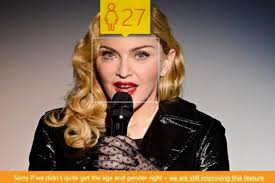
That’s right; Microsoft is building a robot that will take any of your pictures, no matter how or how bad, and try to guess how old you were when the photo was taken. Microsoft had no problem finding volunteers for this experiment. Within hours, tens of thousands rushed to check this app out. At a BUILD conference, the age guessing robot was so popular they could hardly keep the servers up. It works with any photo under 3MB. Note I didn’t say this app was perfect. In fact, it has a long, long way to go. First off, it starting crashing almost as soon as it got hot. That tells me it can’t yet handle the big crowds Microsoft is looking for. They took one photo of an elderly gentlemen and guesses of his age ranged from 7-73. I saw one demonstration on TV this morning. They took a recent photo of Madonna and guessed her age as 27. She’s in her middle 50s. I’ve seen pictures of baby dolls being guessed as aged 2-4. They even got CEO Satya Nadella’s age wrong, by quite a bit. The robot said he is 59. Nadella is really 47.
While they’re making improvements, the Microsoft age guessing app would make a great game. I can see how entertaining it can be to upload a photo and have them guess an age. This could be a hit at parties. The age guessing robot can tell you a bit about yourself. If their age is below yours, you’ve been taking good care of yourself. If the guess is older than you, maybe it’s time to make some changes. But I hope this app it’s just for fun and games. Could facial recognition and age guessing be used for more sinister purposes?

Apr 25, 2015 | Computer technology, Wireless
In Switzerland, their national postal service will be conducting an experiment. Instead of a mailman delivering the bills, checks, letters, and junk mail, robots will be filling in.
The Swiss Post will be using drones supplied by Matternet. These experiments are expected to start summer 2015. The first drone they’ll use is called ONE. This drone can deliver over two pounds of mail over 12 miles in one trip. Matternet has already tested drones to deliver medicine to Haiti’s poorest communities and most inaccessible neighborhoods. This drone company leads the world in hours flown and now wants to run three pilots for the Swiss Post. Matternet’s founders, Andres Raptopoulos and Paola Santana, are very excited about the experiment, as well they should be. It’s been their dream to send drones to places that could use them the most. Maybe they have a little too much confidence in Matternet. Raptopoulos is quoted as saying, “Quadcopters may be the biggest invention in vehicle technology since the internal combustible engine.” But then again, when you look at how popular and useful drones are today, Raptopoulos may be onto something.
I applaud Matternet for using drones for when they’re needed and in emergency situations and in times of crises. They’re doing a good job with that in Haiti, where the need is often critical. But how critical is it for mail to be delivered by drones? Will it really hurt us if our letters and small packages keep getting to their destinations the old fashioned way? I think Matternet should focus their efforts on philanthropy work, like what they’re doing in Haiti. There are a lot of places around the world, and even here in America, that can use such services. And what if the experiment is successful? What if nations around the world use Matternet drones? How many potential jobs could that cost?
Apr 21, 2015 | Computer technology
Have you ever been to a department store and greeted by an elderly lady and gentlemen? It made you feel welcomed, right??Mitsukoshi, a popular department store in Tokyo, gets that concept…sort of.
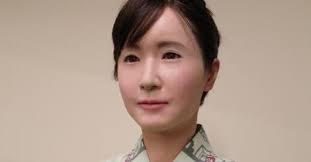
At this Tokyo store, you’ll be welcomed by a robot greeter. It…I meant her name is Chihira. She’s a humanoid robot and a brainchild of Toshiba. She made her historic debut on April 20. She speaks Japanese, Chinese, Korean and does Japanese sign language. She can blink, talk, and move in many other human forms; she’s controlled by 43 motors. Chihira can even lip sync. She joined a famous Japanese opera singer in a duet, then asked for applause at the end. The robot, not the singer, but the robot said, ” I would like you to listen to the song I’ve put a lot of effort into.” Yep, Chihira can even plagiarize. But what she can’t do is handle customer complaints…yet. Food giant Nestle also has a humanoid robot working in the world.
When I was in junior high, a science teacher told us one day robots could take our jobs. I didn’t believe him then, but I believe him now! Don’t get me wrong. This is a wonderful and huge technological step. Part of me is fascinated that a computer can speak more languages than most Americans can and can attempt to sing opera. I give credit to Toshiba and Mitsukoshi. Chihira is going to be a huge draw and get many feet, pocketbooks and wallets in the store. I find it funny they didn’t program Chihira to deal with customer complaints. How convenient they still let humans be the punching bag for complaints but let the robot do all the good stuff. I may be old school, but I prefer an actual human being greeting me in the store. I prefer a person with real feelings, emotion, and empathy. I prefer a person that has real pay check to earn, real bills to pay, and real families to feed (get my drift?). Are these robots great public draws or great risk to human jobs?

Apr 13, 2015 | Computer technology, Wireless
Last week, Apple launched a pre-order campaign on their next big anticipated thing, the iWatch. Were the pre-orders successful?
Yes, they were successful. On Friday April 10th alone, Apple received approximately one million pre-orders. That’s so many that if you pre-ordered today, it would take you until May to get your watch. The majority of watches were for the aluminum Sports version. That’s the low cost version that will run you a minimum $350. A third of orders were for the stainless steel Apple Watch edition. That edition starts at $549. There were hardly any orders for the Gold Edition series. Maybe the $1,700-$10,000 price tag has something to do with that. The average ticket for order was $504. The most popular colors are space gray, then stainless steel, then silver aluminum, then space black steel. Black was the most popular cover of all the sports band colors, making up for 64% of sales. White sports band made up for 22% of sales, while pink, blue and green made up for a combined 14 percent of sales. Nearly three-fourths of pre-orders call for the larger 42mm size. And it seems like the iWatch appeals to Apple’s faithful and loyal. The vast majority of iWatch customers also purchased an Apple product in the last two years.
What do all these numbers mean? Some are concerned that Apple pre-orders did a little too well. Some are concerned there won’t be enough supply to meet demand come April 24, when iWatches come to physical stores in the United States and nine other western nations. Maybe the Gold Edition was a golden mistake. If the minimum of this gold standard cast $1,700, but the average ticket is around $500, what does that tell you? There may be a few that purchase the high end iWatch, but this economy is still struggling, and there’s?still not too many people in the mood to go all extravagant. They’re not in the mood for the crazy colors either, as in only 14% of bands were in pink, blue or green. Maybe they should just stick to the conservative colors. Do these statistics make you want to get an iWatch?
