Mar 22, 2015 | Computer technology
Just about everything we do in the 21st century is backed by technology. Everybody has a desktop, laptop, or hand held device. Many people have all three. But for some people, this is just too much.
Welcome to the anti-tech backlash. And if someone abuses technology, it only intensifies the backlash. It could come so subtle, like texting while driving or leaving your cell phone to ring in a public place, like a movie theater or church. Then they’re far more serious episodes that cause some to hate today’s technology. In Boston, while on the subway, someone took pictures up women’s skirt with their smartphone (it’s called upskirting). There were no laws preventing or condemning this perverse behavior. Luckily, Massachusetts lawmakers are trying to combat this trend, but it’s an uphill battle because culprits who do this hide under ‘Free speech’ and ‘freedom of expression’.
Then there’s Silicon Valley itself, technology capitol of the world. There’s a growing disillusion between techies making six and seven digit figures and minimum wage workers who feed them, clean up after them, and serve them. Add to that the rent crisis in that area. It’s easy for techies to pay extremely high rent and real estate over there, but what about those only making minimum wage? Don’t they have a right to decent housing and other opportunities? Then there’s the fear dilemma, and how far will they go. When I was in high school, I was always told, “Robots are going to take your job one day.” Look at how advanced and humanistic robots have become in the last 20 years. A month ago, I read about this firm in Sweden urging employees to get an RFID chip in their hands. With the chip, they had access to doors, copiers, even lunch. Many fear this could be a trend, to the point where employers will one day require employees to get chipped. That way, they could follow you 24 hours a day, and if you get out of line, they’ll take the chip off and you won’t have a job. Yes, technology has been good to us, but they’re a lot of dangers as well. Do anti-techies have validity in their concerns?
Mar 21, 2015 | Computer technology, Security
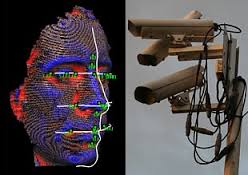
If your international trip flies through Washington Dulles International ?Airport, that passport had better be who you say you are. There’s a camera that runs deep, and I mean deep, that will check you out.
It’s called facial recognition technology. It’s biometric technology that studies a person’s unique facial features: facial position, eye shape, nose, cheekbone, etc. Back on March 11, Customs and Border Protection (CBP) began a facial recognition program at Dulles Airport to combat passport fraud and false identity. It’s believed this technology will help catch impostors flying into our border, but civil libertarians and privacy rights groups worry of more sinister consequences. You see, the picture taken will be matched with the RFID backed passport picture. If the two pictures don’t seem to match, the officer alone will have full discretion on legal action. CBP themselves say facial recognition won’t be the only factor in letting a person into the country, or whether further screening methods are necessary. Other than that, CBP has been generally hush-hush about this new security measure. It only takes a few seconds to snap a facial recognition photo, and they promise the photos won’t leave CBP headquarters, unless there is a criminal investigation. This test program is likely to last 19 months.
I know some are going to go hurrah for extra security at our airport. When I look at one incident that happened today, I see why. But let’s dig deeper. They have RFID technology in our passports already. Our passports can tell any law enforcement official around the world where we are. Do we really need to spend billions of dollars on this? Some may say, “Look at ISIS and other terror groups. Look at the drug cartels. Look at human traffickers.” I understand how dangerous and fragile this world is. But whose to say they won’t use this technology to go after law abiding Americans while letting the sociopaths go free? Haven’t they done it before?
Mar 19, 2015 | Computer technology, Wireless
How much would you pay for a smartwatch? It’s the next big thing in wearable technology. Would you pay $200? Would you pay $500? Would you pay $1,000?
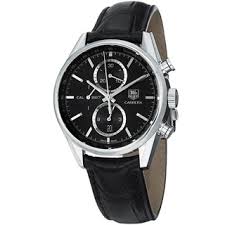
How would like to pay over $10,000? You would if it were up to Swiss watchmaker TAG Heuer, you probably would. TAG Heuer is teaming up with Google and Intel to make the ultimate smartwatch. Not only that, this could lead to more collaborations between the technology world and French based luxury conglomerate LVMH. Speaking of LVMH, their watchmaking leader Jean-Claude Biver made an announcement at a watch expo in Basel, Switzerland. This announcement included the prediction this new watch would be, “The greatest connected watch.” Android Wear head developer David Singleton backed him up, saying, “When I think about the?watch,?it’s always been a marriage of beauty and utility. We’re going to do that with our partnership.” While TAG will design the watch, Intel will provide the chip system, and Google will take care of the software. This watch is expected to be on the market in late 2015, probably just in time for the Christmas shopping season. That would be the perfect time of year to compete against Apple’s iWatch.
And this is the perfect year to make such a strike. About 28 million smartwatches are expected to sell in 2015. Compare that to less than 5 million in 2014. Apple is expected to garnish over half those numbers. I asked how would you like to pay over $10,000 for a smartwatch. ?That’s the price for Apple’s gold smartwatch, the most expensive one of it’s kind. We don’t know the price of TAG’s upcoming watch. But looking at what’s being manufactured into this creation, and who is behind the creation, this watch could equal, if not exceed, $10,000. Could the Google, Intel and TAG Heuer beat Apple? Or instead of high end watches, could low end watches beat Apple at this game?
Mar 18, 2015 | Computer technology, internet
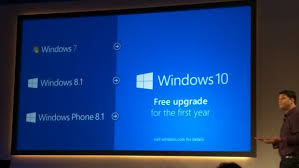
Microsoft’s Windows 10 is coming soon. This summer, Microsoft will be offering free upgrades to their latest Windows edition. All Microsoft users will be eligible, even if they’re software copies aren’t genuine. But what’s behind such a generous offer?
Many say it’s a strategy to combat piracy in nations like China. They want to get the real Windows 10 to the hundreds of millions of Chinese Microsoft users before the piracy people beat them to it. They’re studies showing 75% of all computer software in China isn’t even properly licensed. The other goal is to ‘re-engage’ with Windows customers in China, before the illegal computer markets do, if they haven’t already done so. Interesting because it was speculated Windows 10 would be out in Autumn 2015; now they’re saying Summer 2015. No specific date has been released. But as early as January 2015, Microsoft announced free upgrade to Windows 10 for any Windows 7 users. Was this to save face with longtime Microsoft consumers? They’re partnering with mega Chinese PC maker Lenovo Group to help promote Windows 10 in China, especially to current users. They’re also partnering with other Chinese conglomerates like social media company Tencent Holdings and security company Qihoo 360 Technology to spread the good news of latest Windows upgrade. In fact, starting later this year, Lenovo said they want to start making and selling phones using Windows software.
It seems Microsoft really is in a mad dash to beat the pirates in getting Windows 10 to consumers. Can you blame them? China is the piracy capital of the world. China also has the fastest growing economy and has the biggest population in the world. It almost sounds like they’re putting more focused on Chinese customers than they are on American customers. But China’s population is several times that of the US. And with more buying power in that nation, you can bet Microsoft is in a race against the clock and piracy to get Windows 10 out. Wouldn’t you be?
Mar 17, 2015 | Computer technology, Smartphone
What was your favorite Nintendo game from back in the day? Or are you a current Nintendo fan now, who is on the lookout for the next new game? Both of you could be in luck.
Thanks to a deal between Nintendo and a Japanese mobile gaming company called DeNA, both these possibilities could become a reality, although Nintendo says new games will be the primary target. All Nintendo IP addresses will be eligible, and don’t expect to be flooded with a slew of games. They’re taking the selective quality approach rather than the mass quantity approach. Ever hear of DeNA? Few people outside of Asia have. It’s a social gaming platform for desktop and mobile computers based in Tokyo, Japan. This is part of the reason why Nintendo President Satoru Iwata loves this alliance. He believes that mobile games can be the jump-off point that gets more consumers more dedicated to the Nintendo brand. And DeNA has the tools and means to bring such mobile games. This friendship between Nintendo and DeNA is about five years old. If everything goes to plan, you could see Nintendo games, new and possibly old, on your smartphone devices before 2015 is over.
Between 1985-1995, Nintendo was the premier name in home video gaming. When they came out with Game Boy, one could say they even came up with modern day portable gaming. But since the emergence of Playstation and Xbox, the Nintendo franchise has been slipping, economically, creatively and otherwise. The Nintendo Wii has kept the franchise relevant and somewhat competitive, but hardly in the conversation. Could this push for Nintendo mobile gaming bring their numbers up? And if so, what games would you like to see offered? Would you rather see new games along with this new technology? Or would you rather see classics like Super Mario Brothers, Zelda and Double Dragon? How about both?
Mar 14, 2015 | Computer technology
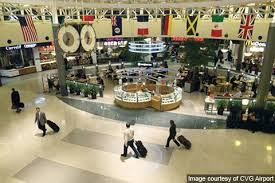
In the 21st century, flying out of a commercial airport can be a tedious and chaotic experience. You have to get there earlier and endure more intense security. One major airport has a way to cut down on security waits.
At Cincinnati/Northern Kentucky International Airport, they have a new system that tracks that tracks people’s phones to estimate how long a security line will be. The airport will tell passengers how long the wait is in each security line. Blip Systems is the father of this technology, and it depends on Wi-Fi and Bluetooth technology. It finds a device’s MAC address and determines how many people are in that area. They insists there is only so much data they can collect, especially to those worried about privacy issues. Cincinnati’s airport is the first in the United States to have such a system. Twenty airports worldwide are already using it. Numbers don’t lie. According to the airport’s own study, security line wait time has decreased nearly five minutes. But Blip Systems isn’t done. They’re currently building systems to track whose in airport restaurants, stores, and possibly, every move around the terminal.
I think Blip Systems is skating on thin ice here when it comes to privacy rights. In a world where we have fewer and fewer of them, let’s not add to it. Yes, this airport phone tracking saves time at the airport. On the surface, that sounds great. We at airports could use all the breaks we could get. But when I read about how they want to track every move at the terminal, I get suspicious. Why would they want to track every move? For advertising purposes or for something else? So we save five minutes at an airport security checkpoint. Is this convenience luring us out of even more privacy?
