May 30, 2015 | Computer technology
The mobile pay movement is growing. We all know about Apple Pay. Recently, Google announced Android Pay. And that’s just the beginning.
Google’s Android Pay was a main event topic at an I/O developer’s conference in San Francisco. In one session, Google Ad and Commerce chief Sridhar Ramaswamy revealed the Hands Free mobile payment option. It’s a payment option where you don’t even take your wallet, or your phone out of your pocket. The Android user gives a command in a store like “I want to pay with Google.” While the Droid device stays out of sight, the cashier presses a button on the payment terminal to process the payment. Sound strange? Google plans to test Hands Free at major eateries like McDonalds and Papa Johns throughout San Francisco in the months to come. Ramasqamy insists it’s a Hands Free is in it’s early prototype stages. A Google colleague said Hands Free and Android Pay are two separate entities and use two different technologies. Check out this You Tube promotion?in which people struggle with every other method of payment, that is until a mother says “I want to pay with Google” and leaves the store. Will it be that simple?
This could be a direct challenge and threat to rival Apple Pay. I emphasize could be. I’m not very convinced this will work. Hands Free sounds more like a scene from Star Trek than actual reality. How is the command going to be processed? Who is going to process it? In the months to come, I’d love to see these tests at McDonalds and Papa John’s. Then I might be a little convinced. I hope Apple doesn’t copy this move. If I were Apple, I would wait to see if Google falls on their face with this one. Am I being too cynical about No Hands?

May 20, 2015 | Computer technology
How would you like to know about LG Display’s new 55-inch device? I’m not talking about televisions this time.
This is introducing LG Display wallpaper. The South Korean flat screen panel company debuted it’s new organic light-emitted diode(OLED) you plaster to your wall. This OLED is to solidify their place in high-end display. This wallpaper/panel is 55 inches, .97 mm thick, weighs 1.9 kg, and can be stuck to or removed from any wall with a magnetic mat. It’s even slimmer than LG’s existing 55-inch panel, which is 4.3 mm thick. But this debut parade didn’t stop there. They showed off a convex OLED panel one can use for digital outdoor advertising. There’s a reason they’re pushing for this uber-slim panel technology. It helps make TV slimmer and lighter. Unlike LCD, it emits light based on electric current. Yes, there is a demand for OLED panels. Their goal is to sell 600,000 of these panels this year and 1.5 million in 2016. Since the yield in these panels is better, they can make better goals. That’s not all. LG Display wants to reveal a 99-inch OLED panel before this year is out. They’re already up to the 77-inch. They’re also upgrading middle and small segments of this panel. These could be used for mobile devices and car dashboards.
This is one sign the days of the bulky TV are almost over. But many people have their big screen TVs on tables, armoire, and cabinets. I don’t have the statistics, I wonder how many people do have big screen TVs on the wall. I ask these questions because if they’re determined to pump out all these big panels, and want to make new ones, they’d better make sure the market is out there. But almost everybody has some kind of mobile device. Surely there’s a big demand for wallpaper there. Shouldn’t LG Display be more focused on small and middle panels than trying to make bigger ones?
May 18, 2015 | Computer technology, Software
Do you remember Apple Maps from a few years ago? Remember what a disaster and a joke that was? Apple has acquired a GPS company that could help.
Apple announced it’s acquirement of Coherent Navigation, a Silicon Valley area based mapping and positioning firm. This purchase was made to boost Apple’s presence in the GPS field. Coherent Navigation was founded in 2008 as a small commercial navigation firm. In the years that followed, navigational firms have exploded! Coherent has worked on everything from auto navigation to robotics. Coherent has worked on high precision systems, which is even stronger than consumer navigation systems, since there’s less room for error. We don’t know how Apple is going to use Coherent Navigation’s services. But the competition over navigation among major tech conglomerates continues to intensify. For years, Google has all but dominated mapping technology. In February, Uber opened a robotic autonomous research facility at Pittsburgh, PA’s Carnegie Mellon University. A group of German car makers are trying to beat Uber in acquiring Nokia Here, the digital mapping section of Nokia. There’s another reason Uber wants Nokia Here. Uber wants to lessen their dependence on Google Maps. So the plot thickens.
What’s the fight over Nokia Here got to do anything? It shows you how important mapping/GPS technology is. And with more people depending ?on GPS, the competition is going to get even more intense. Apple knows this and is doing something about it. From what I know, Coherent Navigation is a solid company to help Apple out. I’m not taking sides by any means. Personally, I’d like for businesses to remain small and I’m getting a little weary of hearing of yet another acquisition every week. But if I were an Apple executive, this is the move I would make. Do you Apple acquiring Coherent Navigation will even make a difference?
May 15, 2015 | Computer technology, General
For years, Google has toiled to produce the perfect self-driving car. It’s been on road tests for a long time. Now, the Google car is almost ready to make it’s public debut.
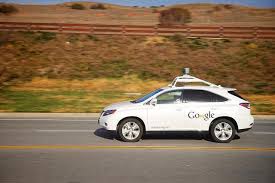
This summer, the Google self-driving car will make it’s debut road trip in Silicon Valley. Google’s central headquarters are there, in Mountain Valley. These robot cars can only go up to 25 mph. In case of emergency or mishap, feature drivers will be available to intervene. They’re now testing how the driving community interacts with and thinks of such a vehicle. The self-driving panel wants to face challenges to a self-driving car, like destination points, construction and other stoppages, and traffic issues. In all the tests that have taken place between Nevada and California, there’s been only eleven accidents and no injuries to anyone. All the crashes were minor. And there was a small incident involving a cyclist, where a driver had to take the wheel. Google engineers quickly corrected the problem, then added it to a list of issues to be studied. Please remember, when Google cars have these road test drive, they’re just that: test drives on live roads. This isn’t the time to pre-order a Google self-driving car. They’re forecasting another five years will pass before that happens.
But I think the Google car is ready for this next step. Yes, there has been some accidents along the way, but those have been few and far between. The main thing is nobody has been injured. So that must mean the majority of these tests went very well. These cars are going to be maximum 25 mph. It often takes a lot more speed before a serious accident can occur. The question is: how well will these real life road tests do? Google car is laying a lot on the line. If they mess up on the road too much, they can kiss their self-car dreams goodbye. If Google car was on the lot and ready to sale today, would you buy one?
May 14, 2015 | Computer technology, Wireless
In the early 1900s, man dreamed of flying. It happened. In the 1960s, man dreamed of going to the moon. It happened. In the decade of the 2000s, civilians dreamed of going to space. It’s happening. Now people dream of drone selfies?
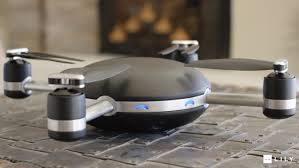
This is where Lily drone comes in. They’re already calling it ‘magic’ because unlike most other drones, it’s easy to use out the box. When ready to use, just throw it in the air. Assuming you’re going under 25 mph, it’ll follow you for 20 minutes maximum without need for recharging. Lily records sound and makes videos as well as takes pictures. The drone is used for recording outdoor sporting events. Extreme sports enthusiast would embrace this device very well. Lily is expected to cost $500 in the pre-order phase. It will run you double if you wait afterwards. It contains a tracking device as well as a waterproof case. Lily herself is waterproof. ?And for those really death defying stunts, it has a slow motion feature. But this drone isn’t perfect (but what drone is?). It doesn’t have obstacle avoidance capabilities. So remember that if you’re flying it into mountainous or urban areas. It follows you around, but if it crashes somewhere, remember it’s unavoidable. The release date of Lily isn’t yet known, but I bet it’s coming sooner than later.
When I heard the term ‘selfie drone’, I immediately thought the worst. That’s what some media outlets are touting Lily as. But if people are using to capture extreme sports, a world few of us will ever know, then Lily is a great investment! Just be careful out there. If Lily is going to be used this to just take selfies every two minutes, then for the love of all things good, then don’t spend $500-$1,000 on Lily! Isn’t selfie culture out of control already?
May 8, 2015 | Computer technology
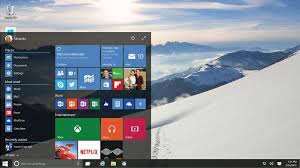
This week, at a conference called Microsoft Ignite, a developer named Jerry Nixon took the mic. He hinted Windows 10 would be the last version of Windows. Is he saying what I think he is?
Nixon explained Windows 8.1 was virtually a prequel to Windows 10, a version just to prepare the way to Windows 10. Don’t freak out: Microsoft is not killing the Windows franchise. This is just the transition from a brand new Windows every year to keeping Windows 10 as a permanent service to be constantly updated. We’ve been asked to think of it as, “Windows as a service”. Is this because there won’t be anymore versions of Windows service? Engineers are already being trained for regular improvements and updates. This will be achieved by splitting up operations between the start button and built in apps, letting them do the work. Apps like Xbox are being designed for regularly monthly updates. In fact, we’ll see a lot of automatic app updates and more powerful apps in the months to come. You think Nixon’s comments sound far fetched and outlandish? Microsoft doesn’t. One employee confirms Windows 10 will be will be a service of new growth and innovation. This spokesperson isn’t even talking about future Window brands. But he insists Windows 10 will remain up to date for all our Microsoft needs, from our computers and laptops to our Windows smartphones to our Xbox. Is this another hint?
So will there be a Windows 11 or a Windows 12 in the future? I don’t know. But if I were a betting man, I wouldn’t bet on it. Remember what happened to Windows XP? That alone tells me Windows is moving in the right direction. I think it’s a better one. Frankly, I’m tired of waiting for the next Windows version to come out. And when I finally get used to it, it’s time for another one. And sometimes the new one is even worse than the old one. I give Microsoft props and respect for trying it this way. Ten years ago, we didn’t even know what apps were. Now, apps can even run an entity like Windows. Let’s hope it works. So I ask you: Will Windows 10 Be It’s Last?
