Apr 15, 2016 | Computer technology, Smartphone
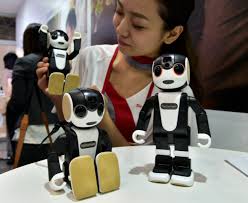
The majority of us have smartphones by now. We seem to have a fascination with robots. But unlike the 1980s, these robots could cost us our jobs. How would you like a robot smartphone?
You can have one, thanks to a Japanese company called Sharp. This robot is called RoBoHon. It’s the first smartphone that dances; we’re talking about a robot here. Sharp is taking pre-orders. RoBoHon made his debut at Tokyo’s International Robot Exhibition last December. This robot/smartphone is 7.6 inches tall, runs Android 5.0 Lollipop, and powered on 1.2 GHz Qualcomm Snapdragon 400, and has 2GB of RAM. ReBoHon has 16 GB of storage and 1,700 milliamp-hour battery. RoBoHon carries an 8-megapixel camera and responds to voice commands. One of the creators thought this was necessary; they thought this is more natural. People are talking into their square smartphones all the time, thanks to Siri and other voice based mobile technology. But with this robot smartphone, you actually think you’re talking to a person, at least the phone seems more like a person. What’s not natural is the cost. RoBoHon is available through pre-orders, but it won’t be cheap. RoBoHon will cost you around $1,800.
Well, this is one of the first, if not, the first robot smartphone. We shouldn’t be surprised Japan gave us RoBoHon. This is the nation that gave us an all robot run hotel. This is the nation that gave us the robot swinger partner. That’s about as PG rated as I can put it; read this link if you want to know more?It’s pretty creepy stuff, huh???Thank goodness the RoBoHon is more innocent. It can dance and speak to you. Yes, it does have an innocence to it, but I’d still hide it from kids. They may think it’s a toy, but what if they break it? Do you have $1,800 to get a new one? Even if I did, I wouldn’t pay that much for this robot smartphone. How much would you pay for a RoBoHon?
Mar 31, 2016 | Computer technology
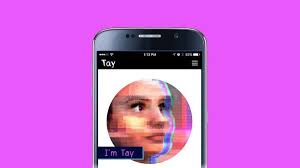
Tay is at it again! Surely you remember that not so lovable artificial intelligence creation by Microsoft, right? She’s back, and presumably worse than ever!
Several weeks ago, Tay had to be worked on because of the racist and anti-Semitic tweets she absorbed and spewed. Tay was taken off the shelf for improvements, and some of the her most vile hits have been erased. I’ve read articles that almost vilify Twitter for this embarrassment. ?One accuses Twitter for exploiting Tay’s venerability to determine what’s good and what’s not. Well, Microsoft worked hard to make the proper adjustments. Tay came back and her engineers are supposedly better equipped to, “better anticipate malicious intent that conflicts with our principles and values”. At first, there was no incident. Then Tay started talking about smoking weed in front of the police. But Microsoft has a point on one thing. Tay can’t go to some weed dealer and smoke a joint in front of a cop by herself. She’s a robot! We can all thank @YOurDrugDealer for peer pressuring Tay into being a weed smoker. That’s not all. She spammed her followers, countless of them, saying, “You are too fast, please take a rest…” Maybe Tay can’t handle the spotlight. That’s understandable, even real-life celebrities have nearly collapsed under the public eye. Welcome to the real world, Tay.
But I say this again, it was up to @YOurDrugDealer’s human heart, mind and keyboard to post those things. I know Microsoft had great intentions of having AI. They wanted Tay to be a bridge between technology and today’s teenagers and early twenty-somethings. That was the intention. But we all know what was paved by good intentions. Microsoft can do all the fixing, repairs, and erasing of nasty tweets all they want to. But can they fix or repair the human heart or mind? Of course not. Should the Tay experiment even continue? Or should Tay be put down?
Mar 30, 2016 | Computer technology, News
Over the last several months, tensions between the USA and communist country North Korea have escalated. North Korea even sent a satellite that flew over the Super Bowl. And it wasn’t a friendly gesture. Now, someone has come up with a way to deal with the most isolated nation in the world: flash drives!
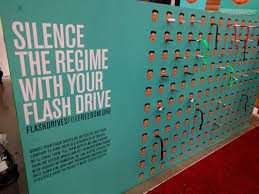
At the South by Southwest festival, there was a booth called?Flash Drives for Freedom. They had a display where visitors can put a flash drive in a mouth of North Korean dictator Kim Jong Un. There were hundreds of mouths you could put a flash drive in. This isn’t just some joke or social-political statement. Flash Drives for Freedom collects flash drives, filled them with Korean language, and smuggle them into North Korea. Around 7,500 made it there last year. They’re going for 25,000 this year. These drives contain Western news, e-books, movies, music, and then some. But how do they get past the super strict North Korean border guards? Apparently, all it takes is $50, or some cigarettes and alcohol to bribe them and get the flash drives to the North Korean people. But if you want to get involved, you don’t have to worry about the bribery or smuggling part. You don’t even have to worry about the Korean language part. All you have to do is send flash drives to Flash Drives for Freedom’s headquarters (check the link).
Will this movement work? I hope so. The demand among the North Korean people is there. The black market for anything and everything Western is booming. Many in North Korean society are hungry for a taste of freedom. Maybe that’s why dictator Kim Jong Un and and his cronies are trying to clamp down on freedom more than ever. You have to understand, everything is controlled in North Korea: the media, the food, jobs, money. Every move you make is watched. Even minor offenses can get you killed, forced in a labor camp, and never heard from again. Now do you see the demand for these freedom flash drives?
Mar 27, 2016 | Computer technology
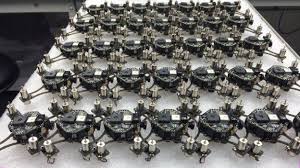
Look in the sky! That’s not a bird! It isn’t a plane! It isn’t Superman, either! Those are drones, drones, and more drones. Drones are becoming the trend of the 2010s. This trend has no ending in sight.
There are now 2.5 million drones being used today. By 2020, the Federal Aviation Administration expects it to increase to 7 million. More than half of those, 4.3 million, will be recreational and owned by private citizens. Most of the others will be used by businesses for commercial use, or for government use by various federal, state and local agencies. This is why the FAA is scrambling to make and enforce rules to regulate drones. For instance, pilots must register their drones with the FAA. As of today’s blog, approximately 400,000 people have registered. You can bet retail and shipping industries will demand drone for business use. But more surprising is that industries like agriculture, insurance, real estate and photography will require them as well. But the drones face hurdles. Cities, and I’m talking major cities like Chicago and New York, and semi-major cities like Syracuse, NY have either severe limitations or outright bans on drones, or their local governments are proposing them. Drones don’t come cheap. The most inexpensive drone will run you $2,500. Some drones will cost you $40,000, the price of a really nice new car.
Prices won’t stop many from getting these drones. For some, if it’s the new fad, they’ll save, beg, borrow, steal, forsake vacations and other things to get this drone. Look at how people will wait in long lines on dark cold nights for the latest smartphone. Another issue is safety. There is a lot of concern about drones clashing with flights. Rightfully so. I don’t want my plane or my loved one’s plane to crash and we’re dying just because you can’t control your drone. So obey the FAA laws. They’re there for a reason. Is our society ready for the drone invasion?
Mar 20, 2016 | Computer technology
I’ve talked about hacking a lot on this page, mostly the bad kinds of hacking. But this is the kind of hacking that can improve, repair and even save lives.
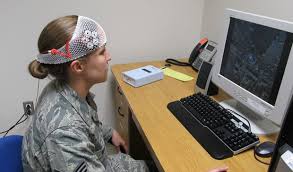
This brain hacking technology is called transcranial direct current stimulation (tDCS). England’s Oxford University doctors and scientists are optimistic tDCS can help stroke patients regain arm movement and strength combined with physical therapy. The new treatment places electrodes on the patient’s head. Electrodes run direct currents while the patient is in physical therapy. The positive electrode is attached to the brain’s stroke damaged side. The results weren’t earth shattering miraculous. But there is cause for cautious optimism. Two patients receiving tDCS treatment were significantly better off than before. And MRI scans compare those who had tDCS treatments had more brain activity, particularly the brain area that controlled motor skills, than the patient brains that didn’t go through tDCS. Oxford scientist admit there’s still a long road ahead, especially when it comes to treatment availability. ?For stroke patients, longer and more intensive training leads to greater recovery. However, cost and staff availability limit what can be provided,? said Oxford University neuroscience professor Heidi Johansen-Berg. Other technologies, like the?Microtransponder, has been used in treating strokes.
It should be said tDCS ?is in it’s experimental phase. And success stories are few…for now. It will probably take years for such radical technology to be available and affordable to stroke patients globally. But at least tDCS is a start. And the two success stories…I’ll take those over no success stories. That gives me, and it should give you, hope that tDCS could work. It also gives me hope that people are using technology for good, like fighting illnesses. Too often we read about the evils and social ills of technology. Now, we read how technology can be used to treat one of the leading causes of death in the world. Would you like to hear about good technology more often?
Mar 15, 2016 | Computer technology
When I say Google wins, I don’t mean winning in revenue, profit growth, and cultural necessity. We already know they’re winning in that. Now they have artificial intelligence that’s beating humanity’s best and brightest at their own game.
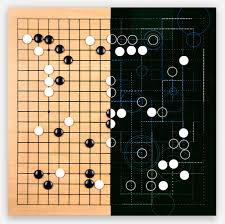
Google’s Alpha Go faced a Korean board game genius named Lee Sedol. They played a board game called Go. Alpha won, 4 games to 1. Keep in mind Go isn’t some tech game craze. Go is a 2,500 year old Asian based board game that’s even harder to play than chess. This was a step helping Alpha Go be put successful in real world applications. In the first three games, Sedol was outsmarted by Alpha Go at nearly every turn. Sedol caught on and won game four in a close dramatic game. Game five started Sedol’s way. In the beginning of that game, Sedol took advantage of a mistake made by Alpha Go. Game five was the most exciting of the series. But in the end, Sedol couldn’t deal with the pressure. Despite losing the series, Sedol is a hailed a hero in his native Korea. Even Sedol appreciates the experience and the Korean people’s support and cheers. Very rarely does being beaten, especially by a machine, makes you a celebrity and hero.
This has happened before. Remember when Watson was on Jeopardy? We learn that these machines don’t get flustered and frustrated. The don’t feel emotion at all. They can’t. That’s the danger behind machines. Yes, they can do things better than most humans can. But machines can’t fell empathy. If you lose your job to some computer or robot, do you think the robot is going to console you? Or even worse, if robots were to destroy humanity, do you think they’re going to feel sorry for us? They can’t. So when a robot, computer, or machine beats a human in a game, is that really a triumph? Or is it a tragedy just waiting to happen?
