Mar 14, 2016 | Computer technology, General
It’s that time of year again. In the next two or three weeks, people who haven’t watched a college basketball game all year are suddenly basketball aficionados. Welcome to March Madness. There’s an app for that. There are several of them.
The obvious two are CBS Sports and ESPN Tournament Challenge. Since the early 1980s, CBS Sports has given us the NCAA tournament. This year is little exception. Catch the games, view the schedule and see which game you’ll see. The ESPN Tournament Challenge app has what it suggests: a bracket challenge and a great prize for the winner. But it also has deep information and statistics on all teams, whether they be Duke and Kansas, or more obscure teams like CSU Bakersfield or Middle Tennessee State. There are apps you probably know little, if anything about. There is Bracket the Madness. It helps create pools and brackets through Facebook and emails. There’s FanCake, which will reward you with tickets and prizes if you get enough points through them. With theScore, you can personalize your tournament chase by choosing scores that matter strictly to you. If a 2-secede is going to upset a 15-secede, theScore will alert you. Not all apps are free. Tuneln Pro will cost you $10, but you can get for free just about anything this one charges you for.
In the old days, if you didn’t have a TV, you missed out on the tournament. Now, thanks to smartphone apps, you can watch on the phone when you’re working (not giving anyone ideas) or listen on your device. You can do so much more than watch. You can fill out brackets, challenge others, and win great prizes. Most of these apps are either free or very inexpensive. Did you know March Madness is the second biggest sporting event in America, next to the Super Bowl? Who is in your Final Four bracket?

Mar 13, 2016 | Computer technology, Entertainment
In Central California, there is a town called Indio. In Indio, there is a festival called Coachella, one of the most celebrated music festivals of the year. Can you make it to Indio and Coachella this year? If not, virtual reality may be able to help.
Thanks to an alliance between Vantage.tv and Coachella, you can stream this music festival on a VR (virtual reality) device. You will need to download the Coachella VR app. This app gives you a tour of the festival grounds and guarantees features that will put you close to the action without the raucous crowds. The app has libraries of performers on the card. It has live stream of Coachella’s top performers in 3D VR with a 360 degree panoramic format. The app can be used and viewed through Google Cardboard, Samsung Gear VR and other major VR headset entities. Vantage.tv wants to be a leader in VR technology. They believe partnering with a popular music festival will help them stand out in the competition. But other major events are cashing in on the VR movement. The NFL and NCAA has enabled game watching through VR. Amusement park giant Six Flags also has a virtual reality roller coaster.
But Coachella is the first major music venue to broadcast through VR. So Vantage.tv will be at the forefront in this area. Personally, I’m still a little weary of VR, because I believe it could be so addictive it can separate you from RR (real reality). But if you’re going to promote VR, Vantage.tv has a great way of doing it. Obviously, not everyone has the time, money, or energy to go to a festival like Coachella. So using VR to bring Coachella to them is good for the two companies, good for the performers and good for the fans. Would you choose to watch on your couch in peace or be around a rowdy crowd?
Mar 12, 2016 | Computer technology, News
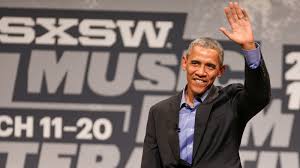
President Barak Obama was the main event speaker at the SXSW South by Southwest conference in Austin, Texas this week. President Obama urged the attendants to use technology to make America a better place and to face America’s greatest challenges today.
Such challenges include online terrorism, cyber security and education. He told the 2,000 plus attendees he’s recruiting them to find new ways to solve our greatest challenges. The event was held at Palmer Events Center downtown. This is part of a week long White House initiative to build tech-government relations. Topics included citizen access to government tools, alliances with private tech companies, and other issues, even those not being dominated by headlines. The Apple vs FBI case was brought up…somewhat. President Obama didn’t go in the specifics of the case, but he encouraged middle ground in this debate. But he did talk about finding ways to crack encryption codes to expose terror plots and cyber sociopaths like child predators. ?Obama talked about his meeting with tech leaders and filmmakers to combat the lure of online radical extremism. ?In a Medium article, digital service administrator Mikey Dickerson challenged techies to do more than build apps for food sharing and socializing. He says each of them are needed in government.
If I didn’t know any better, I think there’s a love-hate relationship between tech companies and the US government. Back in 2013, it was thought they were in cahoots in the NSA surveillance scandals.But most tech leaders came out saying they were forced to hand over customer information to the NSA. Last year, elected officials and Silicon Valley execs met to fight terrorism. Now, Apple and the FBI are in an epic battle of safety vs privacy. President Obama wants to end his presidency his relationship with the tech industry on a good note. Depending on who wins the election, do you see tech-government relations getting better or worse in the future?
Mar 11, 2016 | Computer technology
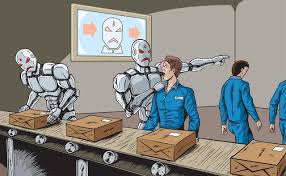
Twenty-five years ago, my teachers used to say to me, “You better get these grades up, go to college and get a good job. One day, robots are going to come after your jobs.” Me and my peers would just laugh. We’re not laughing now.
Most Americans aren’t laughing either. There’s a poll out saying most Americans believe robots will take jobs in the near future, just not their jobs. According to?The Pew Research Center backed survey, 65% think robots and computers will eventually take human jobs. But 89% of those same people thought their own jobs were secure from this threat. Those in government, education, and non-profit are less likely to believe robots will take their jobs. Those in corporate America and small business are most likely to believe their robots will take their jobs. Those under 50 and with higher educations are less concerned with the potential robot takeover. Back in 2013, an Oxford University study in England concluded 47% of jobs are at risk of being taken over by robots and computers. The next year, a Pew study said continued advancement in computer technology and robotics will have have big implications on the workplace and society. The survey proved what I knew all along.
Americans are more concerned with poor management and jobs being shipped overseas then they are with any robot. But the concept isn’t so far fetched. We know about self-driving cars.We know about robots running hotels. We know about computers that can think better than humans. And if I were in the medical or non-profit field, I wouldn’t get too comfortable. Robots and computers are conducting surgeries. They’re even serving meals, making beds, and delivering medicine at hospitals. We’ve even seen footage of robots doing military training. What used to be a plot for movies and sitcoms quickly becomes today’s reality, almost as real as American jobs being shipped to China and Mexico. Do you still think your job is secure?

Mar 6, 2016 | Computer technology, Humor
Smartphone uses love Siri and other phone voices. We Americans are fascinated with accents, whether it be from other parts of the country or foreign nations. There’s technology to combine both.
Eventually, that robotic smartphone voice is going to get tired. For some, it already may be tiresome. Now, your phone can speak in a British accent. This works for both Apple and Android based devices. For iPhone, open Settings, the Siri, then Siri voice, and choose the accent option. So far, there’s male, female, American, Australian, and British. For Android devices, tap the menu icon on the Google Now screen. Then tap Voice, then tap Language. They have many languages to choose from, including several English languages. Choose English UK. There you have your British accents. Don’t expect Paul McCartney, Julie Andrews, or any spectacular, breathtaking British accent with this option, anymore than you should expect James Earl Jones or Morgan Freemen when you choose the male and American options. The British voice is just as generic and almost as robotic as the American option. I haven’t heard the Australian option yet, but I wouldn’t expect Hugh Jackman or Olivia Newton-John to direct your GPS, either.
But the phone accents they have now is a great start. But it’s just a start. I’d like them to add more accents. How about the French, German, Italian, Mexican, Brazilian, or Jamaican accents. While Android offers different languages, and that’s great, but I’m talking about English language with these accents. Let’s take it even further. How would you like different access from different regions of the US? Obviously, not all Americans sound the same. We could have a Boston accent. We could have a Brooklyn accent. We could have a Southern accent. We could have a California Valley Girl accent. What accent would you like your smartphone voice to have?

Mar 1, 2016 | Computer technology
Last week, I reported on how Zenefits resorted to 250 layoffs to rebuild and restructure the company. Apparently, that’s just the tip of the iceberg. Is Silicon Valley in trouble?
The tech bubble in Silicon Valley could be bursting. Investors are losing confidence, especially in start-ups. Investor company Fidelity is slashing their investments to companies such as file hosting service Dropbox, biotech company 23AndMe, and cooking delivery service Blue Apron. Last year, Fidelity dropped the value of it’s share in Snapchat. From June to September 2015, their shares went from over $30 a pop to under $23. The funding faucet by investors has gone from free flowing to, in some cases, trickling. Silicon Valley deals decreased by over a third. Venture capital funding is down 13%. Some magazine articles even forecast an outright Silicon Valley bubble burst, similar to the dot com crash of the early 2000s or the Great Recession of the late 2000s. Companies like Zenefits and Jawbone have laid off employees. Other startups like Uber are being urged to go public. That’s not a guarantee either. Since September 2011, no tech company has been giving an initial public offering. Many Yahoo employees have either walked out or been laid off. And news stories like what Uber customers endured in Kalamazoo, Michigan don’t help either.
But it’s not just Silicon Valley showing signs of economic slowdown. So far, 2016 hasn’t been kind to stocks at all. Some businesses have lost 20% of their stocks. Then there are the layoffs, and I’m not talking just talking about the technology industry. Retail giants like Macy’s and Sears are expected to lay off thousands. Small businesses are being shut down and boarded up. Our beloved financial powerhouses like Chicago Stock Exchange is now owned by China. It seems like the economy all over America shows cracks. So is Silicon Valley in trouble? Or is the American economy in trouble?
