Apr 25, 2016 | Computer technology
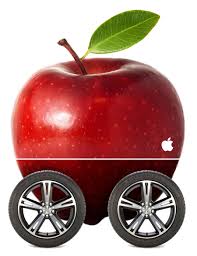
By now, most of know about Google’s ambitions for an electronic car. Now, rumors in the tech world run rampant about one of Google’s biggest competitors, Apple, trying to build a car.
There was an announcement that German car corporation BMW and Apple ended talks to collaborate on an iCar. According to German business journal?Handelsblatt, BMW and another German car maker called Daimler stopped collaboration with Apple over the potential car due to ownership and leadership issues. Sources say Apple wants their car built on it’s own cloud software. Just because collaborations fell between them and Daimler doesn’t mean Apple is going to stop their icar quest. Word of the web is Apple could already be in collaboration with Magna Steyr. Unlike their rival Google, Apple has no experience with producing a car. That’s why they’re so desperate to find a top notch car company for help. Some reports say Apple has employed up to 20 people in Berlin to work on this car project. Apple wants to have this car driving off the lot by 2020. German journal F.A.Z. describes these employers as top class software and hardware developers, salespersons, and engineers. Apple isn’t confirming anything about this project.
But there’s an elephant in the room here. Let’s assume Apple is trying to build their own car? Why are they doing so in Germany and Austria? At least Google is working on their car here in America. Detroit and other cities could have used this businesses. Do you know how many American developers, salespersons and engineers that can use these jobs? At a time when college graduates are $100,000+ in debt and struggling to find any job, and at a time American small businesses and franchises are shutting down, couldn’t we use these jobs? Couldn’t Apple have built a car making facility or invest in car making tools and people here in America?

Apr 24, 2016 | Computer technology
North Korea is the most isolated nation in the world. Iran is one of the top ten most isolated, and has been since Ayatollah Ali Khamenei’s revolution back in 1979. But using Iran’s own technology, the Iranian people are changing that.
You see, over 70% of Iranian households have a satellite dish. The government uses them for state run channels. Meet a mechanical engineer named Reza (he’s using an alias name for reasons I think should be obvious). He loves his You Tube, but You Tube is banned in Iran. So Reza uses USB drive, MGEG file and software called Toosheh. With this, he decodes and gets fresh You Tube videos Americans like us virtually take for granted. Toosheh was launched last month in LA by eight American and Iranian pro-freedom and democracy activist. Toosheh is Farsi for bundle. It allows Iran satellite dish owners to use Iran’s underdeveloped, yet censored Internet. Iran’s Supreme Council for Cyberspace enforces some of the strictest online censorship rules in the world, banning everything from You Tube videos to American news to anything the Iranian government may count as ‘anti-Islamic’. But Toosheh takes advantage of Iran’s woeful tech infrastructure.
Toosheh is catching on. Since October 2015, it’s been downloaded over 56,000 times. For the first time, thousands upon thousands of Iranians have access to Twitter, Facebook, and You Tube. For the first time since the late 1970s, many Iranians can listen to American music and watch American TV shows. They can listen to Iran political satire, like Kambiz Hosseini. He has a podcast that can be compared to our satirist, like Jon Stewart, John Oliver and Samantha Bee. They even have access to e-books that are sexually graphic and books that explain their constitutional rights, or in Iran’s case, lack therof. I think Resa and the developers of Toosheh should get some kind of freedom or honor award for breaking such barriers. Could Toosheh eventually cause a revolution of Iranian freedom and liberation?

Apr 20, 2016 | Computer technology, News
Since the drone is a huge technological trend, the FAA implied strict rules to keep drones away from flying aircraft. Maybe the European Union and other European governments need to do the same thing.
A few days ago, British Airways Flight 727 was hit by a drone. The flight was from Geneva, Switzerland to London Heathrow Airport. In fact, the plane approached Heathrow when the drone hit. The Metropolitan Police (Britain’s version of the FBI) confirmed a drone hit the plane while making it’s decent into London, carrying 132 passengers. They can’t prove it yet, but if it’s an unmanned aerial vehicle (UAV), it would be the first time a drone hit an airplane in recorded history. But there’s been some close calls. In September 2015 alone, helicopter drones barely missed airplanes either landing or taking off at London’s Gatwick and City airports and Manchester’s airport. Britain’s Civil Aviation Authority (similar to our FAA) says no drone should be within 400 feet of a plane in flight. Drones should never be out of sight from their pilots. Drones are not to be within 50 meters of another person, car, or public facility without their permission. British political and community leaders are calling for stiffer penalties and better education about drone safety.
A law is only as good as enforced and explained. Both Great Britain and America need to do a better job educating the public on drone safety. Explain why the rules are there. Make clear the potential devastation and destruction that could happen if these rules are broken. Let the people know the harsh fines and potential jail/prison time for violations. Think about the emotional guilt: If your drone hits an airplane, and that airplane goes down, the blood is going to be on your hands. Thankfully, British Airways Flight 727 landed safely and nobody was dead or injured. Next time, it might not be so lucky. What should be done to prevent tragedy before it gets started?
Apr 19, 2016 | Computer technology, Software
A few days ago, I wrote a blog arguing the desktop computer is irreplaceable. According to this one article I read, I may be in the very few who think so.
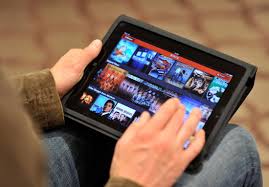
A study was done on 53,000 Americans from all walks of life. All across the board, Americans are abandoning wired Internet and choosing mobile only Internet in record numbers. In fact, 20% of households today are mobile only, compared to 10% in 2013. That’s double in just three short years. Households making $50,000-$75,000 a year were surveyed. About 18% of them had a mobile home. Only about 8% of households the same income went mobile only in 2013. For those making over $75,000, nearly a third of those homes are mobile only. Back in 2013, only 14% of such homes were exclusively mobile. Even for those making under $25,000 a year, the number of people trading in wired Internet for mobile service has nearly doubled. In public libraries, less people are standing in line for use of the wired desktop computer. More are coming in logging on to WiFi and using their smartphones. In fact, more of the financially challenged are using public WiFi from libraries to coffee houses to restaurants rather than pay the cost of ever increasing cable and Internet bills.
This is what happens when only a handful of companies own the whole ISP (Internet Service Provider) industry. They can charge whatever they want, and whose going to stop them? When they’re too big to fail, they’re too big to care. Plus, think about how expensive a smartphone was a few years ago. Today, prices for smartphones are so low that pretty much anyone can afford one. We can’t really say the same thing for monthly online service. But wired Internet isn’t going away, anymore than the desktop computer is going away. They will be needed for years and decades to come. But do you see even more Americans going mobile only in the years to come?

Apr 17, 2016 | Computer technology, Smartphone
How many of you can remember the 1968 election? How many remember how volatile that was? There were two political assassinations, first Dr. King, then Senator Robert Kennedy. There was the 1968 Democratic Convention in Chicago that ended in riots. There was George Wallace, then a die hard segregationist who won half the South.
Today, we are in the smartphone era and the 2016 election is shaping to be almost as volatile. In July, the Republican National Convention will take place in Cleveland, probably with no clear-cut nominee. Nearly 20,000 will attend, including delegates. Most will be blogging, texting, Facebook(ing), tweeting, and You Tube(ing) their experience. A Trump campaign member says they will use their own tech hardware for communication rather than Quicken Loans Arena’s WiFi. Ted Cruz’s team works on an app to see where each delegate might be swayed. Expect FireChat to be used. That’s an app that doesn’t even need the Internet. It uses Bluetooth and peer WiFi connections. Organizers can even track delegates by putting RFID technologies in their badges. Candidates can ask delegates to download an app specifically for the convention. These are small trackers that can be bought and sold for $20. There’s also talk of an online check-in. We don’t know how many, or if any, Trump, Cruz or Kasich have supported.
Are you aware that by July’s convention, none of these candidates may have the 1,237 delegates they need to get the nominee. Then what? The last time the Republicans had to deal with that was in 1952. Obviously, this is a totally different world than it was in 1952. A lot more is at stake. Allegations of corruption and wrongdoing are everywhere. ?I think it’s disturbing enough they want to use RFID technology to track people’s every move, even in the bathroom. It makes me wonder, “What are they doing with the RFID chips in our cards”? I hate to say it, but tensions are so high within and between the political parties that I wouldn’t be surprised if rioting broke out, just like it did in 1968, probably even worse. And smartphone technology would cover it all. Do they have an app to help keep the peace? Will they come up with that?

Apr 16, 2016 | Computer technology
I can actually remember a time when not only the desktop computer was a luxury, but a status symbol. Not that long ago, people did just about everything on desktop. But now, with so many other options, I have a question to ask: Is the desktop dying?
I ask this because time spent online with the desktop computer has dipped and continues dipping. Online desktop use declined 9.3% in December 2015, 7.6% in January 2016, and 6% in March 2016. Some tech industry leaders say people are ditching desktop habits for mobile ones. But not so fast. For much of 2015, desktop online use actually went up. Some data suggests the desktop era is still very active. March 2015 was the most active use of desktops in the past three years. But that was March 2015. March 2016 paints a difference picture, as desktop online use dwindles over 20% from just a year before. However, some research says mobile and desktop Internet usage were increasing at the same rate. These stats aren’t only important for consumers, but for publishers, media leaders, marketers, and social media leaders. Many of them depend on social media growth and smartphone use growth to feed their businesses. But one thing is obvious: the Internet business is here to stay forever! In March 2015 alone, nearly 1.6 trillion minutes were spent online, whether it be through desktop or mobile device.
I have to laugh at people who say, “The desktop is going to be dead in five years.” No it’s not. Sure, mobile technology is taking over and probably will be. But ten years from now, I can almost guarantee somebody’s going to using a desktop, just like somebody is using a radio or television today. ?Offices around the country will be using them. Teachers and students at school will be using them. Many other professions will use them. Do you think the desktop is dying?
