
Apr 9, 2017 | Smartphone, Uncategorized
Do you remember Nokia’s heyday of the late 1990s and early 2000s? I say this because Nokia’s dream might come back. Hence, meet the company HMD Global. They want to sell Nokia smartphones in the next decade. And lots of them. So Nokia’s dream may come true.
However, don’t expect the phones of yesteryear. At a press conference, Nokia leaders talked about a different kind of phone. This new phone will run clean and popular versions of Android technology. This includes vanilla Android, or something like it. Google’s involvement is critical. In fact, one leader says this is critical to making Nokia great again (no pun intended). But they hint about giving Nokia the kind of updates that will make the competition envy. I’ll believe Nokia’s dream when I see it.
However, Nokia executives may be onto something. They admit most smartphones don’t offer the latest versions of OS. Furthermore, they say this has to change. Could the new Nokia provide that change? They say they want to put the right kind of apps and systems in this new phone. This includes things like Google Assistant. The first new Nokia phones could go on sale as early as May or June 2016. But how will it go? And you know we got your back if you need a screen replacement on this new Nokia, right? I know, cheap plug, but what can you do?
Well, it depends on who you ask? Some in the IT service game say it’s about time. Others are skeptical. Some say Android/Google isn’t capable of running a pure OS system anymore. But I say let’s give it a try. However, there’s something nobody is talking about. That is the cost. How much will it cost to make Nokia’s dream come true. Will they go on the cheap and sell basic smartphones? Or will they go $700-$800 to compete with Apple 8 and Samsung Galaxy 8? Or will they do the smart thing and do both and cater to both markets? How much would you pay to see Nokia’s dream come true?

Apr 8, 2017 | internet
Yesterday, I reported on a potential legal battle between the Trump Administration and Twitter. The US government demanded people behind an anti-Trump Twitter account reveal themselves. But Twitter didn’t let that happen. Then came lawsuit talk. But in the last 24 hours, something else happened. The Twitter lawsuit ?dropped!
So why is the Twitter lawsuit no more? Because the Dept. of Homeland Security dropped the demand. They no longer require the people of @ALT_USCIS to unmask themselves. Twitter learned of this late yesterday afternoon. So they dropped the lawsuit. Tech journalists tried to talk to Twitter leaders about the matter. But Twitter declined to comment.
We don’t know if the US government will drop this matter for good. Maybe they’re regrouping for a second try to unmask @ALT_USCIS. In the IT service world, anything is possible. However, Homeland security depended on a statute involving tax information. Twitter called the move, ‘ineffective’. Furthermore, Twitter defended itself with the First Amendment. That First Amendment says, “Congress shall make no law abridging freedom of the press.” Hence, Homeland Security really had no case. I think they knew it. But that doesn’t mean they can’t, or won’t, try again.
The US government can just use a different tactic or statue. I hope they don’t. Between you and me, this Twitter lawsuit needs to stay where it is: dropped! But the current administration is adamant about cracking down on leaks to the press. This is especially true if these leaks are unflattering. I say this because both sides are too busy to be fighting about this. Twitter isn’t exactly in the best of shape. And the Trump Administration has more pressing issue to worry about than what some Twitter account say about them. It seems like the war between Trump and Twitter ended before it really began. Will all remain peaceful?

Apr 6, 2017 | internet, Smartphone
Okay, we all know about diet soft drinks. Also, many of us know about light beer. They’re to be lighter and a little healthier than the original. But what is Twitter Lite?
Twitter Lite is a new version of Twitter mobile. But this one avoids slow connections. It also cuts on data use and takes up less of your device. Of course, all of this is according to Twitter. In fact, they say it’s 30% faster than regular twitter. However, it will still include all the regular Twitter goodies, from typical Tweets to profiles. I hope in includes NFL games.
The only thing the consumer needs, is obviously, a smartphone a tablet. The smartphone and tablet need a web browser. Now that we got the basics out of the way, let’s get to new business. Twitter Lite includes a ?data service mode. This reduces the amount of mobile data. They say this reduces data by as much as 70%. They do this because they want to keep your mobile data expenses low. But here is one huge plus for Twitter Lite. It offers offline service. This really comes in handy to a lot of people. Let’s face it: not everyone has a WiFi spot. And it gets annoying asking people, “Do you have WiFi? What’s the password?”
These are all great promises, if they can deliver them. In our Boston computer service shop, we use Twitter quite often. I sure hope Twitter can deliver the goods. They need to. In the past several years, Twitter struggles with a lot of issues. They include falling stock prices, bullying, competition, and Silicon Valley cost of living woes. Like Samsung with the Galaxy 8, Twitter needs to hit this home run out of the park. Can they do it? Will this get more people to use Twitter, or make it easier for them? Or will Twitter Lite leave a bad taste in everybody’s mouth?
Apr 5, 2017 | Computer technology, Security
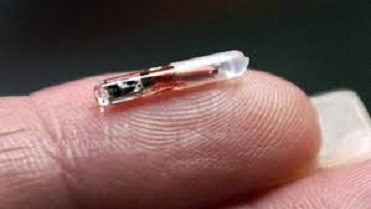
How do you get into your office or work space? Do you still use keys? Or maybe you use a code? But in Sweden, they’re using microchips. They implant these microchips in your hand, near your thumb. Sweden’s Microchip: Tech Trend or Big Brother?
So the company leading the microchip charge is Epicenter. Their headquarters are in Stockholm, Sweden’s capital and largest city. Sometime ago, Epicenter offered the microchip. It’s the size of a grain of rice. Also, it can open doors, control printers, and even order food. All you have to do is wave your hand. Furthermore, Epicenter CEO?Patrick Mesterton praises the microchip. He loves the convenience of the implant.
So do the people. Sweden’s microchip is so popular Epicenter throws parties around it. These parties entertain the people as they wait for their implant. ?It uses NFC’s (near field communication) technology. It reads data from a couple of inches away. They also contain info about other devices, and other people. But the implants can’t read information on their own. However, this brings up biological and ethical concerns. Somebody asked about a chip being in somebody’s body. But Mesterson practically compared it to the heart’s pacemaker.
But what about the privacy and ethical issues? Sweden’s microchip, and any microchip, can follow you wherever you go. You put the chip in your hand. Your employer and colleges can track you 24/7, whether you’re on the clock or not. That is scary. Plus, they inject this in your body! Don’t forget that part. Now microchip technology is nothing new. They put it in dogs to track them, for fear of getting lost. You can put them in your kid’s shoes. This is in the name of finding them, and to ‘make sure they’re doing the right thing’. Hence, there’s even talk of using the microchip to track down a potential cheating spouse/significant other. There’s IT support and there’s outright tracking. There are laptops fixed and then there are fixing laptops to follow you. So I ask you. Sweden’s Microchip: tech trend or big brother?

Apr 3, 2017 | Uncategorized
Imagination Tech deals in semiconductors, chips, cloud, and other computer software and hardware. But they’re dealing with an Apple bombshell. Apple is their biggest customer. However, Apple announced they are going to stop using Imagination Tech. Apple stock causes Imagination Tech downfall.
So, how low are their stocks? As of today, their stock points are down around 70%. But why are they this low? Because Apple brings in over half Imagination Tech’s business. That is what is causing the Imagination Tech downfall. Apple said it will no longer use Imagination Tech’s graphics or software for any of Apple’s products. Hence, this will be a slow phase, around 18 months or two years. Also, Imagination Technologies will no longer get royalties from Apple.
So why is Apple doing this? Because they now have their own graphics people. Furthermore, Apple wants more control of their own technology. It’s obvious shareholders hate this change. Because the stock price plunged to it’s lowest level since summer 2009. On March 31, 2017, their stock points were over $250 a share. But now, those same stocks are worth around $76 a share. Last year, Apple thought about buying Imagination Tech. But that deal went sour at the last minute. This only adds to the Imagination Tech downfall?
So what does Imagination Tech do now? Furthermore, what’s the lesson we in IT support can learn from this? Here is one: Don’t be too dependent on one client or one business! This is true for computer repair, laptops fixed, or any other computer tech business. This is a dangerous way to do business. Because that one client can leave you, take all your potential business, and leave you with almost nothing. I think the best thing Imagination Tech can do now is look for bigger clients, and several of them. At least they can say, “We supplied Apple with software and hardware.” When you can honestly say that, that’s one heck of a selling point. Will Imagination tech bounce back and overcome this downfall?
