
Sep 19, 2016 | Computer technology, youtube
First came the smartphone. Then came the smartwatch. Then came the virtual reality craze. What will they think of next? A Canadian technology company called Thalmic Labs already thought of something. And they’re getting plenty of support. This revolutionary wearable technology gets millions in venture capital.
Thalmic Labs’ has a technology piece called the Myo. You wear the Myo on your arm. This armband uses electricity generated by your arm muscles. With this, you can control devices like computers, smartphones and drones. In one You Tube video, Myo users do other normal things with the armband, like teach a class and play video games. You can buy a Myo wristband for around $149. ?Thalmic Labs announced they received over $120 million in funds.
These funds come from big tech names and banking names. Intel, Amazon and Fidelity have contributed a combined $120 million. Amazon invests millions in voice control technology. Maybe their generous contribution to Thalmic Labs will persuade them to assist Amazon in that cause. ?Intel leads the tech world in microchip technology. They’re obsessed with taking wearable technology to the next level. Do they think Thalmic Labs can aid their cause? In fact, Intel’s New Technology Group Senior VP Josh Walden praises Thalmic Labs for their technology breakthroughs.
Thalmic Labs started in Waterloo/Kitchener, Ontario, Canada. Their main headquarters are still there. They also have offices in San Francisco and Waterloo, Iowa. They employee a combined 100 people, approximately. But I notice none of these companies say anything about Myo. They say nothing about investing in the making, promotion, or selling of Myo. And Myo could be Thalmic Lab’s top selling product. It could make them so many millions they won’t even need venture contributions anymore. But that’s not where the focus is. It should be, but it isn’t. The focus seems to be using Thalmic Labs to promote these mega companies’ own agenda, like RFID technology and/or voice control. ?If I were Thalmic, I’d take the money with glee and thanks, but I’d advise them to help me with Myo. Help me make, promote, and sell this revolutionary product. What would you do?

Sep 18, 2016 | Uncategorized
Over the last several years, streaming service Netflix gave us wonderful shows: House of Cards, Orange is the New Black, Bloodline, The Get Down. Netflix releases a series like any other. This Netflix new show makes history.
This show is called Meridian. It’s only 12 minutes long. It wasn’t even made for Netflix or for a general audience, for that matter. It was made for TV engineers to perform tests on. Now they’re giving away Meridian for free for other engineers to perform tests on it, even other streaming services like Hulu. Netflix is using Creative Commons to make Meridian to make sharing easier. You see, Silicon Valley is obsessed with getting a piece of Hollywood. And Meridian is just the beginning.
Netflix will be conducting experiments to see what works for what markets. For example, you may have a racy movie for streaming services or late night cable TV. What if you want that movie on prime time TV, or on an airplane? You know that movie must be edited for content. And what about sending movies overseas? What appeals to an American audience may not appeal to French audiences. Some countries, like China, have heavy censorship laws. How do movie engineers overcome that? In recent years, Netflix produced over 150 open source products to tackle such questions.
However, Meridian is their most revolutionary open source test. Meridian is shot with 60 frames per second and brightness levels of 4000 nits. Let me break that down in a language we all understand. Meridian picks up all grainy footage, all the cigarette smoke, all the fog, all the foreign noises. When I was a little kid, my Grandmother used to record music form her record player to her cassette tapes (age hint!). We had to be completely quiet or leave the room. Because any foreign sound would be picked up. That’s kind of how Meridian is. Except they want all the footage to be picked up. Does that make you want to watch Meridian?

Sep 17, 2016 | internet
Ratings for Thursday night’s NFL game between the Buffalo Bills and New York Jets were very high. Over 48 million Americans watched on TV. Two million watch through social media streaming. More people are watching football on Twitter.
This Twitter streaming service is free. Twitter’s audience was smaller than when Yahoo offered this free service last year. An average of 243,000 people watched the game on Twitter at any given time. This could mean at any given quarter, or maybe during the last two minute warning. But CBS and the NFL network got 15.4 million viewers at any given time. Twitter will offer nine more Thursday night NFL games during the 2016 regular season. Twitter got their numbers by using a metric system known as average minute audience. They calculate numbers per viewers per minute. Nielsen ratings are gathered the same way. Twitter has over 300 million users. That may sound like a lot. It is a lot. But over the last year or so, Twitter growth, especially getting new users, have been stagnant.
The NFL is the most popular sporting institution in America. Look at how many watched a regular season Thursday night game. That’s a little less than half than those who watch the Super Bowl annually. I see why Twitter wants to get in on the NFL action. This could be just the thing to boost Twitter numbers. Now, look at how people are watching the game in the 2010s. Yes, obviously people gather around their TV to watch their favorite teams. That’s how most people still watch football, and any sports. But that’s slowly but surely changing. Many people watched the Olympics through social media. Numbers are still small compared to TV, but numbers are growing. That’s the bottom line for Twitter leaders and investors. Will these numbers continue to grow, especially if they continue to offer this service for free? Is Twitter the new, hip way to watch football?

Sep 16, 2016 | Uncategorized
Today, Apple’s iPhone 7 was released to the American masses. The sales numbers are staggering. This is a day for Apple to celebrate. While Apple is celebrating, their competition is stressing. Apple has massive sales. Samsung Galaxy Note 7 has a massive recall.
The recall was ordered by the US Consumer Product Safety Commission (CPSC), a government agency. Approximately one million Galaxy Note 7’s will be recalled due to recent fire and burn hazards. I read one article of a man receiving 3rd degree burns because of his dysfunctional phone. The pictures were not pretty. That’s why they’re not in this article. ?According to CSPC Chairman Elliot Kaye, affected customers can return their bad phone for a refund or replacement. Customers can check a code on the back of their Galaxy Note 7. Type that number in Samsung’s website to see if you’re entitled to a refund or exchange.
The culprit is a battery cell defection. For Note 7’s ordered, bought and shipped between August 1 and September 15, 2016, the lithium-ion batteries were subject to overheat, even catch fire. That heating and fire led the burning of many phones, and even some customers. So far, 55 Galaxy Note burns have led to property damage. Twenty-six burns led to personal injury. Replacement phones should be available at your nearest retailer around September 21, 2016. But if I were you, I’d wait a few days later just to be safe, if you can.
This couldn’t have come at a worse time for Samsung. So far, I’ve heard few, if any, complaints about the iPhone 7. But here Galaxy Note is trying to keep their head above water. This is the part where I usually ask who won: Apple or Samsung? Book look at this sad situation. This is more of an unintentional forfeit than a contest. The question is: Can Samsung turn it around? Can they overcome this scandal? Can Samsung Galaxy Note make up enough sales to even compete with iPhone 7?

Sep 15, 2016 | Smartphone
Did you order the new Apple iPhone 7 online? Do you plan to stand in line all night (and if so, why?!) at an Apple Store? Do you hope this all night adventure will get you an iPhone 7 without a reservation? You better listen up. Here is an Apple iPhone 7 supply update.
Apple already confirms this newest iPhone will be in short supply, especially for those who walk-in, or should I say file in, with no reservation. In a statement, Apple said iPhone 7 in jet black won’t be available for walk-ins. All iPhone 7 Plus models, no matter what color, are already sold out for the initial period. No Plus inventory will be available for immediate purchase. The jet black iPhone 7 is very hard to come by, even for Apple employees and staffs, and they usually have the first crack at new products. The jet black 7 plus gets good reviews all around. That’s the color and flavor most critics and tech journalists chose. So that explains a lot. But fear not, iPhone 7 customer walk-ins. However, iPhone 7 silver, gold, rose gold, and regular black will be available for walk-ins at your nearest Apple store. But even those will be in limited supply. Apple urges you to check for availability before going to the Apple store.
I would also like to advise if you’re not going to get the iPhone 7, don’t go to any Apple Store for the next few days. They’re going to be mad houses. Apple iPhone has something else going for them. Their rivals, Samsung Galaxy Note 7, has problems. Their phones are exploding, literally, so much that recalls are being ordered. Apple isn’t going to tell you this, but it doesn’t take a marketing degree to figure out this works in Apple’s favor. How many Samsung Galaxy Note customers will run into Apple iPhone’s arms? I’m the kind of person that waits for personal testimony, then maybe get the product. Will you be standing in line for the Apple iPhone 7?

Sep 14, 2016 | Security
Can someone take down our Internet? Unfortunately, the answer is yes. It wouldn’t be that hard to do either. I just read an article that gave me chills.
Some people, or some organizations, have been probing Internet security and defense companies. They’re learning how these companies defend themselves and their clients. Not because they want to imitate their strategies. They’re learning defense tactics because they want to take the Internet down. Ever hear of DDoS (distributed denial of service)? This attack blocks users from websites, well, at least the ones that are supposed to be there. Some online companies have seen an increase of DDoS attacks. They’re being attacked by several culprits in several different areas. That means the online companies have to work harder to defend themselves. Hackers are seeing if they can manipulate the Internet addresses and routers, and seeing if online defenders will do something about it. This sounds like something worse than your typical cyber criminal or hacktivists. Could this be the work of mega corporations, or foreign governments?
This article wasn’t written by some stoner in his mom’s basement. This article and research was written and conducted by Bruce Schneier. He’s one of the most respected cyber security techs in the world. He’s written book, essays, and scholarly articles dedicated to online security. Schneier is the CTO (Chief Technological Officer) of Resilient Systems Inc. So if Bruce Schneier sounds a warning like this, the warning needs to be taken seriously. Schneier believes foreign governments could be behind this probing, like Russia and/or China. How many articles have I written about Russian and Chinese hackers? How much tensions have we seen between these nations over the last several years? Yes, this could happen. Yes, it will mean catastrophic things for our Internet if the bad guys are successful. Can this threat be stopped?

Sep 13, 2016 | General, Uncategorized
There’s been a lot of talk about Millennials, the generation born between 1981-1998. We can’t deny their contribution to technology, as innovators, leaders, tech employees, and obviously, tech consumers. But what about the generation coming after them? What about Generation Z (born between 1999-present)?
That’s just one name they’re being called. Some call them Centennials. Some call them the iGeneration. Whatever name you wish, they’re bringing a lot of tech savvy and buying power with them. They are called digital natives’ for a reason. The average Gen Z’er gets their first smartphone at 10 years old. They check their phones 150 times a day (that’s no exaggeration; that’s a literal statistic). They sent 50 billion instant messages a day. Over 6 billion emojis are sent daily by the Gen Z’er. Keep in mind the oldest of Generation Z are in high school. Already, tech companies and banks prepare for this generation’s buying power. Bank of America prepare for this oncoming wave of future investors. Other companies work around the clock to build better apps, smartphones, social media networks, omnichannel marketing, and other tech facilities catering to the Gen Z crowd. They better hurry. The oldest Gen Z’ers already have after school jobs and the buying power that goes with it.
Tech leaders need to be on their A+ game if they want this generations’ business. Millennials saw the Internet mature. With Gen Z, it already matured. By the time the oldest ones were in 4th grade, we already had smartphones and social media. Plus, by 2030, they’ll be the largest generation of all time, with 2.4 billion people. Compare that to two billion millennials (age 18-35) today, making up 27% of the global population. By the 2040s, Generation Z will make half the global population. They’ll probably be the first generation where the average life expectancy is 100 (today, it’s 71 globally, 79 in USA, Monaco has highest with 89). So we need to take this generation seriously. They are our future. How do we cater to their needs now?

Sep 12, 2016 | internet
There’s another trend breaking the Internet. It’s not Pokemon Go. It’s not a new hip-hop video. It’s not a funny You Tube clip. It’s the world of optical illusions.
Yesterday, a game developer named Will Kerslake tweeted perpendicular gray lines on a white background. Twelve black dots appear throughout this contraption. They appear in 12 places where gray lines meet. It sounds simple and mundane. Not even six hours after Kerslake tweeted this, it was shared over 6,000 times. Here’s the trick: you can’t see all 12 dots at the same time. You see the dots in one spot the first time. The second time you see it, the spots appear to be in different places.
Kerslake isn’t the first to share optical illusions. The day before, a Japanese psychologist named??Akiyoshi Kitaoka put it on his Facebook page. Kitaoka’s image was shared over 6,000 times. There are 12 dots on this impression. You can’t see them all at the same time. In some cases, you see them in different places. That’s why this optical illusion is such a sensation. This charts expose our bad?peripheral vision. If you start at the center, you’ll see it clearer. But if you read the chart without moving your eyes, you’ll miss the dots.
I found another way to find the 12 black dots. But I’m not going to spoil it for you. You’ll just have to look up the optical illusions yourselves. Some may say, “It’s only been shared 12,000 times in one or two days. This isn’t exactly a phenomenon.” You must understand, some online trends take some time to catch on. Some take off immediately. But this optical illusion teaches us something about ourselves. Plus, this could inspire others to come up with their own optical illusion. Let’s see if they can connect the dots with your illusion. Are you ready to create your own world of optical illusion?

Sep 11, 2016 | internet
Do you ever have the idea the world is just too politically correct? Do you think social media has gotten politically correct? There’s a new social media network guaranteeing freedom.
The network is called Gab.ai. It’s founder is Andrew Torba. Torba created this platform to compete against Twitter and Facebook. Not only that, Torba wants to combat what he sees as social media censorship. Facebook has been accused of censoring political speech, then claiming it was a ‘glitch’. Recently, they’ve come under fire for censoring the ‘Napalm Girl’ photo, one of the most iconic and chilling photos of the Vietnam War. Twitter permanently suspended conservative commentator? Milo Yiannopoulos for allegedly cyber bullying actress Leslie Jones. Naturally, Yiannopoulous was one of the first to open a Gab.ai account.
He’s not the only one. Gab.ai has over 12,000 users. Another 42,000 have registered for accounts. There are 12 million pages holding 240,000 posts. Users spend 12 minutes per session. Gab.ai guarantees freedom of speech and an anti-censorship environment. But there are some rules and regulations. No threats of violence will be tolerated, neither will or pornography. Your personal information won’t be exposed without your consent. Users are expected to show the same respect. Torba says nobody has been banned from Gab.ai.
So far, most users are conservatives who feel threatened by censorship. You can tell by the pro-Trump and anti-Hilary posts. Many conservatives feel threatened and left out by social media. That’s why so many flock to Gab.ai. The NSA revelations are still fresh in many memories. People want a safe haven for freedom of speech. I’m just glad for more social media competition. Hopefully, Gab.ai will put Facebook and Twitter on notice that all opinions matter, so long as they’re not violent or threatening to anybody’s safety. I hope Gab.ai puts the politically correct police on notice, too. Freedom of speech will be had, whether they approve or not. Many conservatives turn to Gab.ai because they think other social media sites are biased. Are they?
Sep 10, 2016 | Computer technology
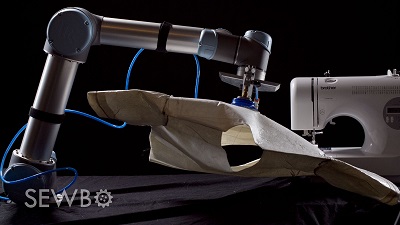
Obviously, the robot craze isn’t going away. Robots check you in at hotels. Robots act as nurses; they bring you food and medicine. Now, robots sew your shirt.
We can thank Sewbo for this development. Sewbo’s machine can turn stiffening fabric into a t-shirt. The arm feeds the piece into the sewing machine. The shirt is finished sewing. The robots puts the t-shirt in hot water to remove the fabric stiffener. This machine cuts and measures fabric. So it can make shirts regardless of size, from small to 5x large. There are some parts of Sewbo’s process that aren’t exactly clear. But watching the progress sure was intriguing. Sewbo isn’t the only one investing in sewing bots.
A company called Electroloom wants to print 3D garments. But instead of a factory run by humans, robots would do most of the work here too. The process is very complex, so I won’t make a fool out of myself explaining it. I’ll let Electroloom employees explain in this link. ?Shoemaker Adidas use robots to make shoes now. So how far fetched is it for robots to make shirts, or any other clothing item for that matter?
Normally, I would cringe at robots making anything. I hate the mere idea of robots taking jobs away from human beings. But here, I’ll make an exception. How many shirt factories do you see in America anymore? When I was little, we had one in our hometown. But those days are long gone. Maybe Sewbo and Electroloom can bring shirt factoring jobs back to America. At the very least, it would get interest back in sewing. The Electroloom demonstration seems like a real winner. I hope they can continue the funding and the venture capitalism to keep it up. Sewing is tough work. Maybe Sewbo’s bot will make it easier. Would you let robots sew your shirt?
