
Feb 1, 2014 | Computer technology, General, networking, Software
The Super Bowl is perhaps the biggest advertising day in America. But they’re not stopping with TV ads. This year, a more personal brand of advertising will great fans in grater New York City.
That’s because this year, the NFL [National Football League] has put up wireless transmitters so ads can be sent to your own personal phone. Though they’ve been testing this for months, if successful, this kind of advertising could revolutionize the ad and the smartphone industry. The first waves will start out with practical info and some in-store promotions. But privacy and legal advocates are saying not so fast. They’re concerned of tracking, spamming, and even identity theft.
Now don’t go watching the game tomorrow night expecting a text message from Budweiser, Go Daddy, Macy’s, Pepsi-Cola, or any other major corporations.?These ads will only go to those in Times Square and those watching the game live at Met Life?Stadium in East?Rutherford, New Jersey. That may not?be the case next year. I’m sure if they had their way, our phones will be blowing up with ads not only during this big game, but everywhere every day. I hope the advertisers know how annoying and what a nuisance that can be. And the advocates have a right to be concerned. In the wake of the Target and?Neiman Marcus?breaches,?it’s becoming easier?for hackers to steal IDs and ruin lives every day. They don’t need anymore invitations. But if they?keep it safe and keep it sane, these phone ads can be a good thing.?Come next Super Bowl, if you got a phone ad from any advertiser, who would it be?

Jan 31, 2014 | News, Security
Are you aware NSA whistleblower Edward Snowden is nominated for the Nobel Peace Prize for exposing the NSA surveillance program last year? There is plenty more where that came from.
This surveillance thing isn’t limited to the USA. The CSEC is Canada’s version of?America’s??NSA. According to CBC,?Snowden’s documents reveals the CSEC uses?free Wi-Fi at?airports throughout that nation to track passengers coming and going. The tracking didn’t stop at the baggage claim; it lasted for days afterwards. Nonetheless, their?law prohibits them from targeting Canadian citizens. They’re only allowed to?track foreigners. The?CSEC responded, but in legalize. In?a statement, the agency said: “[We are]?mandated to collect foreign signals intelligence to protect Canada and Canadians. And in order to fulfill that key foreign intelligence role for the country, CSEC is legally authorized to collect and analyze metadata.”
It’s been over a decade since I’ve been to Canada, so I don’t know what the response will be. But I’m willing to bet it won’t be a positive one. Whether it be the US, Germany, China or Canada, people don’t like their rights being trampled on. And at least in the US they did have?a little?legal wiggle room. But from what I’m reading, the CSEC doesn’t even have that. And they statement issue is a poor excuse of explaining and poor excuse for covering up this act. I can about guarantee this isn’t over. What do you think the fallout will be like?
Jan 30, 2014 | internet, networking
What did you do for your 10th birthday? Did you have a party in your backyard? Did you get the latest video game system or game, maybe go to a concert? Guess who is about to turn another decade ?
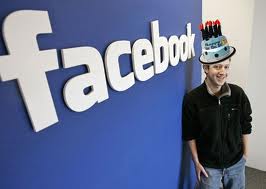
On February 4, 2004, Facebook was founded in Mark Zuckerberg’s dorm room at Harvard University in Cambridge, MA. But don’t expect Zuckerberg to throw any parties or attend any concerts to mark the occasion. You’ll probably find him writing memos to better his company and better himself. In an interview with Bloomberg Businessweek, though he is critical of himself, he is grateful of where and the company is right now. With over half the world’s population online and with competitors like Twitter, and with many teenagers logging off Facebook for good, there are many challenges ahead. Zuckerberg wouldn’t have it any other way.
On the other hand, he has a lot to be grateful about. He’s a billionaire before the age of 30. Facebook is used by over 1.20 billion people worldwide and is expected to be the first company ever to reach $150 billion worth in the shortest amount of time. Not long ago, Facebook’s stocks were struggling to reach $20 a share. As of today, a share will run you $61. And let’s not forget about the impact it’s had on it’s users. As for me personally, I’ve reunited with people who I thought I’d never hear from again. Where do you think Facebook will be by it’s 2oth birthday?
Jan 29, 2014 | Computer technology, News
Did anybody see the State of the Union Address? Jobs and the economy were big themes. I liked what President Obama laid out. I just hope it works.
Last night, the US President called for six new high tech manufacturing hubs. He highlighted existing hubs in Raleigh, NC and Youngstown, OH. He praised them for connecting business and universities and helping the US lead the world in technology. He didn’t say where these hubs would be. He bragged about Youngstown’s contribution to 3D printing, with the help of $30 million in federal funding. He talked about Raleigh’s building energy efficient chips. Backed by $70 million in federal funding, companies from Delta Solutions to DIR Solutions are taking part in Raleigh’s project.
There’s a lot I can take in behind this. We needed these hubs, like yesterday! Don’t let that unemployment record fool you. That’s just the number of people who can’t collect unemployment benefits. The real number of unemployed persons is probably around 20% and that doesn’t include those being underpaid and those working two or three jobs just to survive. While they’re at it, put one, or two, or more of those hubs in Detroit and elsewhere in Michigan. Their job rates are woeful and U Michigan and Michigan St. are wonderful colleges turning out wonderful talent. Maybe Newark, NJ can get one of these hubs. I know $30 million and $70 million sounds like a lot of money. But do you know how much federal funding other nations got? Sorry, I don’t mean to get on a rant, but if more were invested in our nation and our people, then we’ll see this thing turn around. What do you think of these manufacturing hubs?

Jan 28, 2014 | Computer technology
In 1999, the first ever?smartphone was released and sold in Japan. By the late 2 Triple 000s, they became all the rage all over the world. Guess how many smartphones have in 2013 alone?
Two thousand thirteen was the first year ever one billion smartphones have?sold, maybe a little more. We can thank the cheap smartphone for this. These phones, some going for in the low $100s, are especially popular in rising markets China and India. Overall, smartphone sales increased over 38% from 2012 sales. Samsung leads the globe in smartphone shipments, maintaining a double digit lead over Apple. Though Apple had a great Q4 2013, this was the lowest year to year increase since they launched their iPhone back in 2007.
I wonder how many of these cheaper smartphones in the US were sold last year. In China and India, where many are still woefully poor, a $150 cell phone is a major status symbol. I’m just throwing that out there. In China, China Mobile, their biggest telecom firm, is offering iPhone 5s and 5c. But the economy is struggling worldwide, and phone companies took a gamble with inexpensive smart phones. That gamble is paying off. I just wish I had the stats for North American sales. What will 2014 hold for the smartphone industry?

Jan 27, 2014 | Entertainment, internet
Last Thanksgiving, I visited my cousin’s family. A question about jazz came up. Back in my day, I would have had to get an encyclopedia, maybe even research it at the local library. All they had to do today is go to Wikipedia and their question was answered…just like that!
That shows you the power of Wikipedia on the Internet today. And it’s getting more powerful: Wikipedia is adding celebrity voices to preserve their legacies long after they’re gone. The project is called WikiVIP. They’re also calling on scientist, artist and other people who have made their mark on this generation to record their stories. One of the first to agree is Stephen Fry. He’s a British TV star and activist. They hope Fry’s influence and popularity, will inspire others to follow his lead. The BBC is giving Wikipedia short clips of it’s long history for perseverance.
I’m glad Wikipedia is taking this step. I hope?American celebrities follow this cause. Let’s face it, none of us are going to be here forever; none of us are even going to see 150. We have a rich history and culture. This is a great way to honor it and teach future generations.?What if George Washington, Fredrick Douglas,? Abraham Lincoln, or Elizabeth Cady Station had the voice technology we had today?

Jan 26, 2014 | General
Friday marked the 30th anniversary of the Apple Macintosh computer.?? To mark the occasion, ABC News interviewed Apple CEO Tim Cook. But so much more was revealed.
There is a new Mac called the Mac Pro coming out. It’s allegedly the most powerful computer they’ve ever built. And it’s manufactured right here in the USA, Austin, TX to be exact. Mr. Cook talked about investments in Arizona and says he wants to do even more. He talked about secrecy in his corporation and how consumers love the element of surprise. But Mr. Cook also addressed the NSA surveillance controversy. He called for more transparency and will continue to call for more transparency. He was even shown sitting across the table from President Obama and calling for less secrecy in the NSA and saying that Americans need to be made clear of what that program is doing.
I applaud Mr. Cook. It’s about time somebody started bringing jobs back home where they belong. At a time when college graduates are struggling for work, and at a time when more twenty somethings are moving back home than ever before, I hope these American jobs will put a dent in this troubling trend and give Millennials? hope. I’m happy about the stand he takes concerning the NSA. He and many others tech moguls are concerned that our government is running a muck with secrecy. And for him to get in their face like he’s doing, yes, I totally am in agreement. Is it just me, or does this interview make you want to order a Mac Pro?
Jan 25, 2014 | Uncategorized
Google is the most powerful online source today. It’s probably one of the most powerful corporations today, if not all-time. Yesterday, they proved that even they are human.
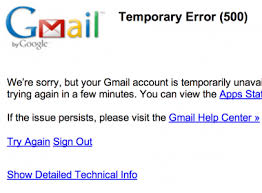
Yesterday, around 2pm Eastern time, Gmail and Google+ went down. They were down for almost an hour. The interruption was felt worldwide. It was a Code 500 problem, meaning minor, temporary, and we don’t know what caused the problem. You Tube was affected; during this time period, hindering videos from being uploaded. Twenty minutes later, most Google users had full power again. By the end of that hour, everyone Gmail and Google+ user was up and running again.
But that’s only part of the story. Apparently,?some at the Yahoo thought it was good to polk fun at Google’s temporary misfortune. They said they didn’t mean any harm, but it got to the point Yahoo CEO Marissa Mayer had to apologize. I’d love to be a fly on the wall at Yahoo headquarters right about now. Keep in mind Yahoo has it’s online turbulent email history. I got two things from this episode. One: all people, companies, and corporations are going to make mistakes. Even the mighty Google fumbled the ball; we just don’t know how yet. Plus, I don’t think it was wise for the good people at Yahoo to tweet about Google’s mishap. There’s a saying: Get the speck out of your own eye before removing someone else’s. Is Yahoo speck free?
Jan 24, 2014 | Computer technology, General, Uncategorized
It was January 1984. Madonna introduced herself to the nation on American Bandstand. Dallas and Dynasty were the top shows on TV. Hulk Hogan just won the WWE Championship. And a computer revolution was born.
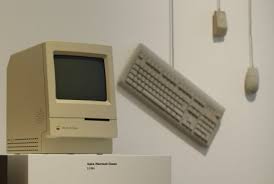
On January 24 that year, we sat down to watch the Washington Redskins take on the LA Raiders in Super Bowl 18. A commercial came on that spoofed the George Orwell novel (I think a prophetic novel) 1984. We were told the Apple Macintosh would make 1984 not look like 1984. They were onto something. Computers before the Mac seemed unfriendly, robotic and had a scary big brother component to it. Apple Mac changed that. It was portable. It was easy to use. You could do work play games on it (who remembers The Oregon Trail?). If I’m not mistaken, that commercial only ran once, but that’s all it took. Though it cost nearly $2,500 (in 1984 dollars), it was wildly successful. Most home computers cost you $10,000 or more back then.
But look at what it did for the Apple company. The company was in trouble. Steve Jobs and company were just hoping for a profit. What they got was a $10 billion company. What they also got was notoriety to a new generation. Despite this success, Apple did slide into trouble in the 1990s. But then came the iMac. Then came the iPod. Then came the iPhone. Now they’re a trillion dollar company. I mention these gadgets because none of these would be possible without the original Apple Macintosh. So happy birthday Mac, and many more?
By the way, who won that Super Bowl between the Redskins and Raiders?

Jan 23, 2014 | News, Security
The NSA surveillance revelations of 2013 has been one of the most controversial issues of our day? Was it to protect our nation from terrorism? Or was it a violation of civil rights and liberties (those who follow me regularly know where I stand). Let’s see where a review board stand.
Before you ask, this review board, called Privacy and Civil Liberties Oversight Board (PCLOB), is an independent board, not sponsored by any political party or organization, corporation. etc. In the wake of President Obama’s speech calling for phone records to be thrown out, this board says there’s no basis to support the NSA’s spying on our smartphones and computers. Their report says there is no instance the NSA’s phone data program has or will stop terrorism. There are some who say the program stopped a potential 2009 terror attack, in which terrorist plotted to bomb New York City’s transit system, but the PCLOB rejects this. They concluded the program raises ‘constitutional concerns’ and the phone data program should no longer exist.
Wow, this is powerful! This board wasn’t pulled from the street. This board includes federal judges and members of the George W. Bush, Clinton and Carter administrations. I’m sure this report will be debated over and over. I’m sure they are people on the other side of the debate whose credentials are just as great. But so does the PCLOB. Does this not give the civil libertarian argument at least a little credibility?
