
Mar 6, 2014 | internet
Earlier this week, Bitcoin took a huge dive. I don’t know if it’s they will come back or not, but I just learned Bitcoin isn’t the only alternative currency.
There is a Native American Tribe called Lakota that has their own currency called Maza Coin. Native American community leader Payu Harris was at a Bitcoin conference earlier this week to promote Maza Coin. Harris sold it for a dime a piece. Maza Coin is a new crytocurrency that works like Bitcoin, the currency that approximates Internet cash. The Lakota tribes make around $220 million through Prairie Wind casino, but around a fourth of that stays in the community. With this coin, Harris hopes to build a currency that will better support the Lakota community.
He knows the government will fight him on this, and they kind of have. The US Treasury Dept. have proclaimed Maza Coin legal. However, issues have been raised about bookkeeping and how the monies are changing hands. Of course, some politicians want Maza Coin banned altogether. But Maza Coin isn’t the only Bitcoin spinoff. There have been several within the last 5 years. I think this kind of currency could be the wave of the future. Many people know the US dollar is in decline. Many people know other world currencies are in decline. I think Payu Harris has the right idea: invest in an alternative coin, and rally the community to do the same. Expect more Payu Harris’ in the future. By the way my cynical intuition is kicking in: Who really caused that Bitcoin fiasco to start with?

Mar 5, 2014 | internet, Security
There’s a camera on every block and in every store. Someone can take a picture of you at any moment and blast it online. An employer can check your social media and refuse to hire you or fire you. Does privacy even exist anymore?
Apparently, this answer is yes…if you pay for it. There’s a New York Times article in which the author describes the literal cost of her privacy. These cost include $230 to encrypt her data on the Internet cloud, $35 for a privacy filter for her laptop, and $420 to bypass potential hacker and malware laced connections. Overall, $2,200 were spent to protect her online privacy.
I’m starting to empathize with this NY Times writer, in some ways. Sometimes, I like to browse travel websites for my next trip. Yet when I go to another site, surprise! That travel website has an online ad. Let’s not even get in the horror stories of hacking, from credit card theft, ID theft, even sextortion. But at what cost? I’ve gotten use to the ads following me around. I would pay the $35 for a privacy filter. And there are some steps you can take to keep your privacy private for free. I’ve always urged people to change their passwords often and not use the same passwords for all your accounts. So I ask you…Is $2200 a year a good investment on privacy or is it going overboard?

Mar 4, 2014 | Computer Repair, internet
Back in December, Amazon’s Jeff Bezos attempted to use drones to deliver Christmas presents. Apparently Bezos isn’t the only one showing interested in drone activity.
Facebook wants to buy Titan Aerospace for about $60 million dollars. Titan Aerospace is a company that makes solar powered drones that can stay in the air for five years without landing. One of Facebook CEO Mark Zuckerberg’s passions is to supply Internet access for the billions who have no online access. They want to use these drones to blanket the world with the Internet, starting with Africa, the continent with the least access. These drones would be atmospheric satellites that will operate in orbit. They’re looking to build over 10,000 Solara 50/60 models. In the daytime, they ?store energy stretching 20KM above sea level, making them ripe for regional Internet systems.
I respect where Facebook’s heart is. I’ve always believe that in 2014, everyone should have online access if they’re going to even have a shot at global competition or to have a chance to stay in the race. But I’m weary about using drones to do it. That’s because drones have been in the news for not so good reasons: to spy on people, to get information on people and turn it against them, even to kill people. And thinking about what part of the world this is going to, this could easily happen. Do you think drones can be used to bring good to those who need it? Or are drones just inherently evil?

Mar 3, 2014 | Entertainment
Did you see the Oscars last night? Did you like who won (on a personal note, I’m so glad Lupita Nyong’o won)? The 2014 Oscars made history because of another reason.
Oscar host Ellen?Degeneres took a selfie during the show that became the most tweeted and retweeted picture of all time. Actually, it wasn’t really a selfie. Ellen asked Meryl Streep for a picture and many other stars were called into the picture. I think Bradley Cooper was the one who took the picture. That picture has been retweeted over 1.3 million times over, easily breaking the previous record, set when President Obama was reelected in November 2012. This is particular good news for Samsung. Ellen used her Samsung Galaxy Note 3 often during the show. Samsung saturated that show with ads. Too bad Ellen used her iPhone to take backstage photos. I can imagine this will be good for Twitter.
So what’s to make of this? I’m wonder if other phone companies like Apple and Droid are going to follow suit. During the next award show, will their competitors get their host to pump up their latest product? I do have one question about that photo, particular to those who watched the Oscars last night. Was that selfie picture planned all along or was Ellen’s comic improvisation genius at work here?

Mar 2, 2014 | Entertainment
Yes indeed mega communications corporation is at it again.? They have bought out yet another smaller company, adding to their corporate machine.
This time, Comcast is acquiring Free Wheel TV. Free Wheel is one of the major platforms used by TV networks to serve ads appropriate for their online content. It’s used by conglomerates like NBC Universal, Fox, ESPN, VEVO, and many others. This deal is expected to cost Comcast around $320 million dollars. Comcast is doing this to build it’s own video ad platform. But this acquisition might cause conflict: Free Wheel has a partnership with Amazon and one of it’s top competitors, Direct TV.
But that’s not my worry. My worry is that one corporation is getting way too powerful. Keep in mind Comcast owns NBC Universal and has wants to buy Time Warner for $45 billion dollars. I hope that deal doesn’t go through either. Look, I understand they want to get better, especially at online advertising. But to purchase other companies and creating your own monopoly? I’m afraid there’s going to come a time when something goes wrong with your cable, they can either take their time getting it fixed, or not fix it at all, because hey, you can’t go to a competitor. That’s because there are no competitors! That is what this can lead to. And why haven’t Congress intervened in this? Or am I just being paranoid again?
Mar 1, 2014 | Uncategorized
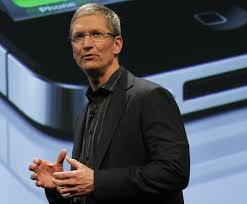
Rarely have I read about Apple and it’s CEO Tim Cook taking on politics. But it’s happened. And while the results were admirable, they weren’t pretty.
Mr. Cook took on conservative group National Center for Public Policy Research over sustainability issues. This group wanted Apple to share the cost of it’s sustainability programs and be more open in sharing it’s role with other businesses campaigning for environmental sustainability. The NCPPR urged him to push the theory that human beings play no role in climate change and the only reason a business should exist is for profit.? Cook vehemently rejected this proposal. He went even further: he told the NCPPR to sell their stock. He was so upset at the proposal he used the word ‘bloody’ to express his disgust. Some reported he even got emotional.
I think Tim Cook should be applauded for his response. Apple leads the forefront in green and clean energy and they should be praised for that, not bullied. In the end Apple’s commitment to the environment will be better for business and profit. I always thought a business had a responsibility to it’s community, nation and world to make it better, not just put money in it’s own pocket. Plus, what business is it to NCPPR how Apple spend it’s resources, so long as they’re doing so legally and ethically. So if they don’t like it, then they need to get rid of their stock. When it comes to politics, I don’t swing hard either way, but I am happy Tim Cook stood up for his company and stood up to these political bullies. Whose side are you on?

Feb 28, 2014 | General
In the San Francisco and Silicon Valley area, there has been widespread protest over techies’ use of the public transit system. Google wants to make up for the troubles.
Google?is donating 6.8 million dollars to fund free public transit rides for children and teenagers age 5-17. It’s one of the largest private grant fundings for any reason?in San Francisco’s history. So far, over 30,000 people have taken advantage of this generosity. The controversy started when Silicon Valley tech companies began using public bus stops to pick up employees in their private vehicles. Community activists have called for tech companies to invest more in the Bay Area, but despite this kind of funding, the protest continue. Some say this doesn’t generate revenue.
I see a lot of underground tension on both sides. First, community leaders and local politicians should be thankful for this generous offer. Some say it doesn’t generate revenue, but yet they got 6.8 million dollars in more business. And think of the one less burden parents have to deal with, especially those that are struggling. So I say have?a little more gratitude. But I can see why some leaders are so suspicious. For Google to make this move in the wake of this controversy. Why be so generous now and towards this particular cause? Is Google really donating in the name of community or trying to bribe the community into it’s good graces?

Feb 27, 2014 | networking, News
Starting today, February 27, 2014, Facebook will begin telling users the Facebook messenger app for Windows users will shut down by March 3.
A Windows Facebook Messenger user can expect to see the following: “We’re sorry, but we can no longer support Facebook Messenger for Windows, and it will stop working on March 3, 2014.” It invites you to go to their generic Facebook message to learn more. This app will continue on Android and Apple devices and systems, but just now Windows. Why is that? Just days before this, Microsoft said Facebook Messenger for Windows Phone would be ready and available in a few weeks. Facebook Messenger for Windows was started in November 2011 in it’s experimental phase and released to the public in March 2012. So this app lasted for about two years.
I’m a little disappointed in Windows. They’re shutting this app down on Windows but they’re now announcing it on Windows Phone. You’d think a company as big as Windows could support Facebook Messenger on it’s phone as well as through it’s other systems. Maybe this was Facebook’s call. Who knows? But whoever was behind this made a bad business decision in my opinion. If they’re doing this so more people can get the Windows phone, I think it will backfire and perhaps even drive more people into their competitors’ arms. What’s the real motive behind this move?

Feb 26, 2014 | scam, Security
In the past couple of months, security hacks have made all kinds of headlines. Unfortunately, this trend has no end in sight.
According to Hold Security LLC and it’s chief security officer Alex Holden, around 360 million accounts have been compromised in attacks. One attack compromised over 105 million accounts alone. With these accounts, cyber criminals are selling an additional 1.125 billion emails to spammers. But these 360 million include usernames, passwords, and emails in unencrypted word. Holden believes these attacks were breaches that haven’t been reported. Holden believes some of these companies attacks probably won’t even be aware that they have been hit until a third party tells them.
Obviously, this is going to put people at risk for ID theft, stolen bank accounts, health records, even military records. Hold Security LCC, which has seen it all, says this is overwhelming. And think of all the Fortune 500 companies and even governments that has dealt with this in recent years. I don’t report these things to scare you but to inform you. And this isn’t going to go away.? So we need to do what we can to protect ourselves. Change your passwords often, and don’t use the same ones for all your accounts. Check your bank accounts often. If you see anything suspicious, take action immediately! What else can be done to keep us safe online?

Feb 25, 2014 | internet, News
The online currency Bitcoin hits a snag. Mt. Gox, a major alley of Bitcoin, announced hundreds of millions of dollars are missing in company money. It’s so much money Mt. Gox is filing for bankruptcy.
We learn this through a leaked document. Despite Bitcoin writing a letter claiming they feel ‘squandered’ by Mt. Gox, their net worth fell below $500 per share. Keep in mind a few months ago, that number was in the $900 range. Twenty four hours ago, it was $581 a share. Don’t try to go on Mt. Gox’s website or Twitter page: they both went blank. According to this same leaked document,? Mt. Gox lost over 744,000 Bitcoins due to theft.
So is this the end of Bitcoin? Let’s not go that far. This crisis can be overcome. I just wouldn’t deal with Mt. Gox anymore. I doubt they’ll even be a Mt. Gox after this fiasco. That’s one step. Another is be more honest with the countless investors of Bitcoin. It shouldn’t have to take a leaked document to let people know Bitcoin has been hit by a crisis. I’m glad people know now, but let people know what’s going on, and talk about solutions. I think this is a great lesson for Bitcoin. I think this is almost a trial by fire. Do you think Bitcoin will make it out of this one?
