
Mar 16, 2014 | Computer technology, networking
I just got finished reading a blog called, “Do apps make us sociopaths?” Now I’m reading and hearing about apps where you can text anyone about anything without revealing your identity.
Now, investors are debating the the ethics behind such apps. Recently, thanks to negative mainstream criticism, a highly public resignation, and even violent threats, investors are being really careful. Netscape founder Marc Andreessen addressed the issue. “Investors make choices every day…Many that don’t get funded that would make [money] but aren’t ethical, moral and/or legal.” Note he didn’t call out any app names. But CEOs of apps like Whisper and Secret have responded, citing the positive aspects of their products. They say these apps can protect the messenger.
From that point of view, I can see where Whisper and Secret are coming from. There could be a situation where threats of retaliation are very real, similar to a crime hotline. But I can’t help but look at it the other way. In today’s world, you can trash, bully, or even threaten someone while remaining anonymous. Think of how many lives have been ruined because of negative anonymous posting. Think of how many people have been literally killed or committed suicide because of this disturbing trend. It’s not the technology that’s killing and destroying. It’s what’s in that person’s heart. It’s easy for people my age and older to say, “Well back in the day, we didn’t…” The reason we didn’t is only because we didn’t have the tools to do so. So I have to side with Andreessen on this one. Not because the technology itself is dangerous, but I think we’ve proven we can’t handle the technology. But what do you think? Are anonymous apps ethical?

Mar 15, 2014 | internet
When most people think of Go Daddy, they probably think of NASCAR superstar Danica Patrick and Super Bowl commercials. But before too long, you might be seeing this corporation on the New York Stock Exchange.
This domain name register and web host provider is interviewing banks to lead this financial venture. If they follow the typical IPO frame, and if all else goes well, they could be begin trading by summer or fall 2014. It’s trying to capitalize off the many, many businesses trying to go public. So far in 2014, more businesses have joined the NYSE than at anytime since 2007. This year, Go Daddy is expected to grow at least one percent. That may not sound like much, but keep in mind Go Daddy owns and/or operates 57 million web domains.
Go Daddy is growing up. It doesn’t depend on racy ads anymore. In fact, the last Super Bowl ad was more humorous than scandalous. That should be a clue of what’s coming.? Founded in 1997, they’re now taking the next step to becoming a major, serious corporation. So I applaud them there. But I’m weary of their timing. Yes, more companies are going public these days. So on paper, this looks like a great time to jump in. But I keep hearing lots of chatter, from many a financial experts, about an impending stock market crash that might be coming. Are they right? Will Go Daddy succeed on the stock market?

Mar 14, 2014 | Computer technology, News
The most dominating news item of the week has been the Malaysian Airlines Flight 370. That flight went missing and days later, there are no answers. Technology is helping out in this crisis.
A website called Tomnod.com has called on over two million of it’s subscribers to scan satellites and search for clues of this missing plane. This is Tonmon’s biggest campaign ever, flagging around 650,000 features in pictures. This website, operated by Digital Globe, and based in Colorado, is helping search over 24,000 square miles. According to Digital Globe director? Shay Har-Noy, there are millions are on website, studying every single pixel, looking for even the slightest thing that might be out of place. Keep in mind, Digital Globe operates satellites so sophisticated they can find a briefcase anywhere on the Earth.
That’s what I don’t get about this case. If satellites can find a suitcase, why can’t they find a Boeing 777 jet? Now I’ve heard stories about Emilia Earhart and her plane was never found, but that was in the 1930s. Surely in 2014, there has to be a way of tracing something. Yet we’ve been told the black box and other communications just shut down. There is so much we’re not being told here. And what about the 20 Freescale Semiconductor workers? What if this plane was hijacked and sitting in some underground bunker? Will technology help us find this Malaysian Flight Airlines Flight 370? What’s your take on what happened?
Mar 13, 2014 | internet, Security
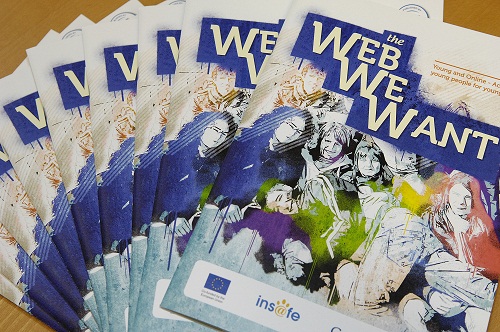
We know the headlines by heart by now. Edward Snowden. NSA surveillance. Target credit cards compromised. Sextortion. No wonder why some are calling for an online bill of rights.
World Wide Web inventor Sir Tim Berners-Lee calls for an online ‘Magna Carta’. Lee believes this pact would protect the Internet from tyrannical governments and out of control greedy corporations. In an initiative called ‘The Web We Want’, every nation is called to produce an online bill of rights in which institutions, corporations and governments are expected to respect. Mr. Lee argues that if we don’t have an open and free Internet, we won’t have open democracy, media, healthcare, community or culture either. He’s been an outspoken critic of American and British spy agencies and what we’ve learned about how they’re listening to our cell phones and watching our computers, whether the person knows or approves of it or not.
You know we’re onto something when the father of the modern Internet is calling for a revolution in online privacy. Some say Lee and other advocates have blown this thing way over proportion. There are some voices who say this kind of surveillance is what is needed to catch the bad guys. These voices will also tell you, “If you’re not doing anything wrong, you have nothing to worry about!” I’m not one of those voices. That’s because we live in age where even the most innocent things can easily be twisted and skewed into something far bigger than what it is. Plus, there’s that thing called the 4th amendment. So there’s legal protection right there. And ‘The Web We Want’ movement is growing. Will you join?
Mar 12, 2014 | Backup, Security, Software
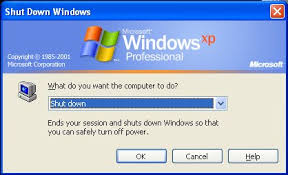
Mark April 8 on your calendar, ladies and gentlemen. No, it’s not a new holiday, festival or celebratory event. If you’re not willing to change your Windows system, then come April 8, you may have nothing to celebrate.
On the day, Microsoft is expected to shut down Windows XP. That means all security, bugs, and virus updates will be gone. In layman’s terms, if you use XP to shop online after 4/8/14, you’ll be way more venerable to ID theft. If you’re storing data on XP after this date, your data has a much better shot at being compromised.? I know many have upgraded their systems in recent years (XP has been around for 12 years). But around 30% of all PC’s are still running on XP. Windows XP was already installed in nearly every computer built and bought from 2002-2006. Now the easy solution would be just to switch to a more modern Windows version.
And by this point, that’s really the only solution. It’s never good to keep any system for over a decade, especially if there’s been several replacements ever since. Now I know Windows Vista was a historic fail, but what about Windows 7 or 8? This is especially true for corporate firms that has been so comfortable with XP for so long. It’s time to move to a new version. It will take some effort: testing hardware and software, scheduling, and training employees for a new system. It will take money: If your computer is 10 years or over, simply buy a new computer. It’s time to let go. I know very few people like change. Very few people like to part with money and put forth extra effort. But wouldn’t you rather have the latest running technology for your business or household? Or are you willing to take a chance, hold on to XP, and risk everything you’ve worked so hard for being wiped out?

Mar 11, 2014 | Computer technology, internet
Remember the Apple map fiasco back in 2012. It was one of the biggest online fails in Internet history. Now it looks like Apple maps are prime for a comeback.
Apple is upgrading maps primarily for their iPad, iPhone and iPod Touch for their next iOS product. They are using these new and improved maps to compete with Google Maps and to fulfill a promise that Apple maps will live up to high standards. They will use technology developers like Cue and Gautier to help engineer these maps. And thanks to acquisitions of mapping companies like Broad Map, their data will be upgraded with better, more enhanced data. And these new iOS 8 maps will have public transit directions and directions to and from airports. It will start in major cities like New York, Chicago and Los Angeles, but will eventually spread? to other cities that have local commuter rail, subway and bus systems.
My response to this: we’ll see. We were promised a lot the last time Apple tried this mapping thing out and a lot was hyped up. Look at what happened. Their competition must have been laughing to the bank. But they’re using new people and even bought out acquisitions to help them out. That’s a good sign. But the thing that attracts me and I think will attract most people to these new maps is the public transit apps. More people are using public transit now than they have in decades, since the 1950s. So this will be a huge selling point, assuming it works this time. How much confidence do you have in the news iOS 8 maps?

Mar 10, 2014 | networking, Security, Uncategorized
It’s a billion dollar a year business several times over. I’m talking about selling our personal information to the highest bidder with little legal or ethical accountability. CBS News’ Steve Kroft talks with Facebook director of public policy? Tim Sparapani on this controversial trade.
Mr. Sparapani now advises tech companies. He says there’s a lot that we don’t know about what’s being collected and sold about us. This includes everything from your political views to your medical records, and everything in between. Anyone, and I do mean anyone, can look at, buy or sell or know anything medical about you. They can follow and study what you buy online and the places you go to. For the longest time, data brokers have kept such a low profile. But now, a handful have come on the surface. There’s Paramount Lists, which has people struggling with addictions and debt. There’s Response Solutions; they have bipolar patients. Then there’s Stalistics. They broker the names of gays and lesbians.
Why are these data broker firms coming out now? Is it because they chose to or because they were exposed? I could care less. I’m just glad these issues are being discussed. Some may actually see positive aspects of data breaking. But at least we have concrete knowledge and know it’s being done and we can have an open debate about such issues. Do you believe data selling is ethical?

Mar 9, 2014 | News, Security
Russia has been in the news a lot this week, mostly due to the crisis of Ukraine and the world’s response to it. Here’s something they haven’t told you.
There is spyware out there called Turla. It’s said to come out of Russia, and it’s hit many government computers in the US and Europe. It’s been called one of the most sophisticated acts of espionage of all-time. These alleged Russian government backed hackers are said to be extremely disciplined in their craft. They pin point their targets to a tee. They exploit those who don’t have the technical knowledge and will to stand up to them. Of course, the US Pentagon and Russia’s Federal Security Bureau declined comment.
But this just didn’t start. Apparently, they’ve known about?Turla since 2008. Is it a coincidence that’s the same year Russia invaded?the former?Soviet nation of Georgia? I think not. Nor do I believe it’s a coincidence we’re just starting to learn about Turla in the wake of?Ukraine’s crisis. And since the US and most of Europe has been vehemently opposed to Russia’s meddling in the crises…maybe it’s a good thing we are learning about this Turla virus.?Where could they strike next? Could they strike our military? Could they strike our media? Could they strike the things we take for granted? How far could this escalate?

Mar 8, 2014 | Computer technology, News
To say Bitcoin has not had a good week?is putting it mildly. Newsweek and other either media want to know: Who was behind the Bitcoin fiasco?
We meet Bitcoin inventor Satoshi Nakamoto, age 64. He appeared in modest clothing and came out of his suburban Temple City, CA to a media firestorm. Not even the police officers could believe this was the man who started an online revolution. When pressed for questions about his creation’s downfall, he refused most questions. What came out the improve interview was his statement, “I am no longer involved in that and can no longer discuss it. It’s been turned over to other people. They are in charge of it now. I no longer have any connection.”
I do have much respect for Satoshi Nakamota. Not only did he start an online revolution, he kept his humility in doing so. He didn’t go around buying exuberant homes, flashy cars, pop champagne at the club, or date models with his new found wealth. He remained grounded. The one percent today can learn something from him. But I can’t help but express a little disappointment here. It’s hard for me to believe his own creation went under and he now he abandons ship. This reminds me of that scene in the Titanic where the shipbuilder jumps in the lifeboat the first chance he got and leaves his creation, and the people on it, to suffer. This is far from over. What will the next chapter of this Bitcoin soap opera be?

Mar 7, 2014 | Computer technology
There are drones over our homes! Maybe not right now, but thanks to the ruling of one case, there might be soon.
That case was Federal Aviation Administration (FAA) vs. Raphael Pirker. The FAA fined this rising filmmaker $10,000 for using a drone over the University of Virgina. Pirker’s defense was the FAA never really claimed flying his model of drone aircraft was illegal. Therefore, making the basis of making his drone illegal was null and void. They never took proper requirements to make an official regulation. Presiding Judge Patrick Geraghty? agreed. In layman’s terms, you can use your drone to do whatever you want. Up, up and away!
It’s comforting yet scary. It’s comforting because they’ve given us the freedom to use drones when it’s clear the federal government is doing so. So we should give props to Pirker, his attorney, and Judge Gereghty for this victory. But the scary part is what will these drones be used for? There has been lots of controversy about drones being used to spy on people. And what better way to spy than use a plane that few people know are flying above them? It’s bad enough the authorities are rumored of doing that, but now the rest of us have been given authority of doing the same thing. Should we be concerned?
