
Nov 25, 2014 | Computer technology, internet
The global online populations reaches a new milestone. Now, three billion people, more than 40% of the world’s population, is online.
Internet usage has grown online 6.6 percent in 2014. In less developed countries, about 2/3 of the population has Internet access, an 3.3 percent growth in this calendar year. In fact, in the developing world, online use and access has doubled in the last five years. These numbers are compiled by the United Nations’ International Telecommunications Union, committed to improving IT systems all over the world, especially where it’s most needed. Mobile network systems worldwide are booming too. By December 31, 2014, there will be 7 billion mobile technology accounts, from phones to tablets to laptops, even the smartwatch. That’s almost to the tune of one account per every citizen in the world.? Despite these encouraging stats, there is still work to be done. In the world’s bottom 42, the 42 nations with the least Internet access, communication technology remains very foreign, especially in rural areas.
For instance, there may be 7 billion mobile technology accounts, but only because in many western developed countries, many people have two or more multiple devices at once. In case you’re wondering, the top five nations with the best IT infrastructure are Australia, New Zealand, Singapore,?Bahrain and United States. But 450 million people still have no access to any mobile web service. Many tech leaders, like Facebook’s Mark Zuckerburg, are working ceaselessly to get online access to all. Now that’s a cause that I can believe in. Being in the comfortable US, I often take for granted there are hundreds of millions who have yet to send or receive an email. They have yet to see a You Tube video. They have yet to send a Facebook post or Tweet. They may not even want to. We shouldn’t be forcing anyone to use this technology. But it should be available for all people to use. How long do you think it will be before that will happen?

Nov 24, 2014 | General
Black Friday and the holiday shopping season can bring out the worst in people. From forcing people to work on Thanksgiving, to trampling each other for that Xbox or iPod, the holidays can be more about selfishness than giving. Apple is trying to change that.
Starting today and going through December 7, Apple will donate all proceeds from the purchase of 25 RED based apps. These apps range from Angry Birds to Farmville 2. Proceeds will go to RED, a charity started by U2 lead singer Bono in 2006 to combat, and eventually eliminate, the spread of HIV/AIDS. On December 1, World Aids Day, Apple will donate a percentage of all App store and online purchases to RED. And during Black Friday, a day when many will literally be fighting over the next big toy or gadget, physical and online Apple stores will offer customers buying certain Apple products (I don’t know what products they are) a RED gift card. Portions of this gift card will go to the Global Fund. The Global Fund aims to give antiretroviral treatments to AIDS patients throughout Africa, the continent hardest hit by the epidemic. Deborah Dugan, CEO of RED, hopes that Apple’s involvement will encourage other major corporations to step up.
While this is part of Apple’s push to step up it’s image, I enjoy reading stories like this. That’s why I’m talking about it now. I read so much about what’s wrong with this time of year that I don’t care what Apple’s reason is for their contribution to RED/Global Fund. I’m just glad it’s happening. I hope other technological companies, and other companies in general follow suit in the next 32 days, not just to this issue, but other social ills facing our world. Many corporations generally don’t have a good reputation today. So to see them rolling their sleeves to combat homelessness, AIDS, cancer, poverty, and other ills will make them look a lot better. Plus, it’s just the right thing to do. Not just this time of year, but all times of year. ?What would it look like if all corporations did their part this holiday season?

Nov 23, 2014 | Uncategorized
What little chance we had of NSA reform died in Washington last week, under the banner of anti-terrorism.
The USA Freedom Act would have ended the government’s ability to bulk collect record collections, and other sweeping provisions. This act only needed 60 votes; it only received 58. Those who voted against the bill, mostly Republicans, argued without a strong NSA, terrorist groups like ISIL will be able to run rampant. Susan Collins, a Republican from Maine, said, “Why would we weaken the ability of our intelligence community at a time when the threats against this country have never been greater?? But those who voted for the bill, mostly Democrats and Civil Libertarians, dismissed such comments as fear mongering, and even hinted they used threats like ISIL to terrorize people into killing the bill. Vermont Democrat Patrick Leahy responded, “This nation should not allow our liberties to be set aside by passing fears.” The USA Freedom Act was a devastating blow to privacy rights advocates and even technology companies. This was going to be the beginning of the end to NSA outreach, and with the Republicans taking over Congress in January 2015, it doesn’t look like the tide is going to turn anytime soon.
So I guess this is the end of this argument, right? I hope not. This is a conversation that needs to keep going, on all sides. I can give the bill killers a little credit. I understand the concern of ISIL and other terrorist groups who want to do nothing but kill and destroy. And they may have taken advantage of the USA Freedom Act to do just that. Then again, Leahy had a point: We can’t live in fear. I do believe the opposition pushed the fear card to give the NSA licenses to keep doing what they’re doing. Founding father Benjamin Franklin said it best: Those who are willing to give up freedom for security deserve neither. What do you think other founding fathers would say about the death of the USA Freedom Act?

Nov 23, 2014 | internet
Google is the biggest online-based corporation in the world. That’s quite an accomplishment, right? Not if you ask some international government entities.
The European Union, with headquarters based in Brussels, Belgium, is calling for their break up. There are calls to do this through anti-trust suits and/or new laws to shorten it’s far reaching influence. One draft motion says, and I quote, “…unbunlding of search engines from other commercial sites” should be used to weaken Google. This rare move for the EU is being led by German politicians from both the right and left side of the aisle. One of Google’s most outspoken critics is EU Digital Commissioner G?nther Oettinger out of Germany. He’s proposing levies for displaying copyright material, forcing neutral search results and he’s not too crazy about Google car software either. But clashes have been nothing new between Google and European elected officials. They’ve fought over everything from privacy issues to global commercial dominance. Remember the right to be forgotten controversy?
Obviously, things are done on that continent differently than what I’m used to. But there is a part of me that understands where these EU leaders are coming from. Often times, a corporation can get too big to fail. When they get too big to fail, they can become too big to care. But I don’t think that’s Google’s case and I think there’s more to this. This seems like the European Union wants more control over what Google does in Europe. This isn’t good. When any government gets too much control of any private owned company, it can lead to censorship and many other social ills. So when I read quotes like ‘unbundling if search engines from other commercial sites’, that makes me nervous. So what do you think the EU motive of breaking up Google is: fair play or government control?

Nov 21, 2014 | Malware, News, Security
Can China shut us down? That question was asked at a House intelligence committee meeting in Washington, DC. The answer is a disturbing yes.
According to US Cyber Command top leader Admiral Michael Rodgers, China and a couple of other nations have the potential to cyber attack our electric grid and other major computer systems. The danger of a major foreign cyber attack has been fairly well known for years, but this is the first time it’s been confirmed by a major cyber security leader. We’re not just talking something that can disrupt a computer, but can disrupt treatment facilities, even nuclear plants, and entire online retail networks. Admiral Rodgers warns these powerful hackers can virtually do anything they want with little trace or consequence. the Admiral also warns cyber economic espionage has gotten so strong, skilled and sophisticated that their ability can do intense damage to our economic future. And the hackers have little to fear because there’s so much allusiveness and very little accountability.
I’m not writing this to scare anybody nor am I fear peddling. I believe this issue should be addressed sooner than later. But I thank Admiral Rodgers for letting us know about this potential threat. Knowledge is the first step. He also says things can be done to combat the threat. He urged Congress to pass a bill allowing companies to share online threats with the government and each other. But that’s going to be a difficult to pass in the wake of the NSA’s Edward Snowden scandal last year. But something has to be done. Imagine going hours, or even days, without any electricity, nuclear power or Internet connection all over America. Imagine the economic and social calamities a major power grid hack could cause. One Asian country had to endure that several weeks ago. What can we civilians do? One thing we can do is call our state and federal representatives and call on them to the proper steps necessary to protect our infrastructure, without putting our civil liberties or civil rights at risk. What else can be done to protect our cyber entities?

Nov 20, 2014 | General, internet
Yesterday, I blogged about the controversy Uber is in, thanks largely to Business Senior Vice President Emil Michael. Now Congress, including a very prominent US Senator, is getting involved.
The controversy started when VP Michael suggested the media investigate and dig up dirt on a journalist who criticized Uber on her blog. Though this conversation was supposed to be confidential, it leaked out anyway. Mr. Michael apologized for these comments, but that didn’t stop US Senator Al Franken from writing a letter to Uber CEO Travis Kalanick, questioning Uber’s privacy policies. But it’s not just this incident that concerns Senator Franken, who is also Chairman of the Subcommittee on Privacy, Technology and the Law. At the infamous dinner party was Uber spokesperson Nairi Hourdajian, who told Michael that such acts would violate Uber’s policies. In a blog yesterday, Nairi Hondajian revealed Uber can access taxi driver and rider data for ‘limited business purposes’, but Senator Franken says the limits weren’t fully described. The Senator checked Uber’s policy on their website, and discovered this policy doesn’t match the policy stated after Mr. Micheal’s slip up. The Senator is troubled by reports of incidents Uber tracking customers. There’s the incident where an employee admitted to using a program called ‘God’s View’ to track a journalist without the journalist’s knowledge or approval. Senator Franken ended the letter with 10 questions for CEO Kalanick to answer and reply to no later than December 15, 2014.
Just when you thought Uber couldn’t get in anymore hot water, now they have one of the most powerful senators in America and his subcommittee to answer to. If these incidents are true, I’m glad Senator Franken is stepping up. Privacy issues have been on the technology forefront for several years now. And it often seems like major corporations have the upper hand. It’s good to have a man in the Senate representing the concerns of many people. If I were CEO Kalanick, I’d get back to Senator Franken before December 15. Could this public relations nightmare get anymore terrifying?
Nov 19, 2014 | General
Uber is trying to revolutionize the taxi cab industry, whether the industry wants it or not. Despite the protest from taxi companies worldwide, Uber is facing it’s worst enemy: itself.
Their take no prisoners, super aggressive anything goes attitude are turning off investors, employees and even customers. Earlier this week, technology blog Buzzfeed discovered a top Uber executive proposed the idea of investigating and publicly trash journalists who criticize them. The executive, Uber’s senior business vice-president Emil Michael, said he thought such comments were off record, but did apologize for them and insisted they didn’t reflect Uber whatsoever. This slip up comes around a time when CEO Travis Kalanick is running a media charm offensive, especially in New York City. But there was a fancy dinner in the same city. This dinner included a Buzzfeed editor, journalist Michael Wolff, as well as Mr. Michael and Mr. Kalanick. It was at this dinner where Emil Michael suggested hiring researchers and journalists to fight back against members of the press saying negative things against Uber. There were speculations of looking into their professional and personal lives. Much of the fury was directed at Sarah Lacy, editor of tech website Pondo Daily. In an article, with some colorful language, Ms. Lacy accused Uber of sexism, arrogance, and poor treatment of their employees. Mr. Michael became so outraged at the article he started plotting revenge.
I’m glad they didn’t. Going the revenge route wouldn’t have helped Uber, instead, it would have made things worse. What I would like to see is Emil Michael and Sarah Lacy have a meeting, say over a lunch or dinner, with online bloggers and journalist present, to air their differences and come to some understanding. From a humanitarian public relations standpoint, this would be good for everybody. If you were an Uber exec, or if you were Sarah Lacy, how would you handle this situation? Is Uber under fire?
Nov 18, 2014 | Entertainment, Malware, scam, Security
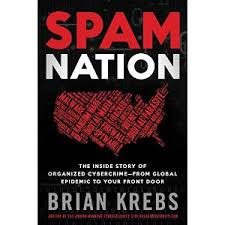
Today is November 18, 2014. The book Spam Nation is being released. It’s written by cyber security expert and investigative reporter Brian Krebs. Krebs’ forecast on cyber fraud is not optimistic.
On a morning show, Krebs is expecting another cyber security breach in the coming holiday shopping season. Remember the Target breach last year? In Spam Nation, he exposes the criminal masterminds behind such cyber attacks. They’re often from organized crime, gang members, and many of them are from Eastern European nations like Russia to Bulgaria. And not only is it getting easier for them, they’re getting more sophisticated. Krebs talks about spam pharmacies, viruses, malware and other devices they use. They’re even digital mob groups like Cosma, who stole untold American passwords and logins through an unforgiving malware attack. Did you know organizations like this will sell your information for as little as $25 to anyone willing to pay? Then these buyers will buy things with your account numbers, gift cards,? and anything else they get their hands on. It’s a win-win for everyone…except you the innocent consumer.
Krebs also sheds light on other issues. Did you know that you can expose yourself to spam pharmacies and hacking mobs even when you don’t open a spam or junk email? Spammers get the email, and sell usernames and passwords to the underground black market. This isn’t just an American problem; this is a global one. It costs consumers and companies billions of dollars every year. It can open the door to ills like divorce, foreclosures, even suicides. Spam Nation isn’t just doom and gloom. It gives the reader common sense things they can do to protect themselves. And it’s an easy and? read. You can read Brian Krebs security blog; he does a great job keeping up on computer security issues. Krebs does a good job exposing cyber fraud, the culprits behind it, and what we can do to protect ourselves and our households. Is Spam Nation a bestseller in the making?

Nov 16, 2014 | Computer technology, internet
After a disaster of mid-term elections for the Obama Administration, Mr. President got back in the good graces of many by announcing his support of net neutrality, keeping the Internet equally regulated. Some major corporations agree.
Believe it or not, many major corporations support net neutrality. These include Ford Motors, Visa, UPS (United Parcel Service), even Bank of America. These companies urged the FCC for fair, but strict broadband regulations. They’re not going to say it aloud. In fact, when asked, they’ve denied supporting net neutrality. But there is a corporate based advocacy group called Ad Hoc Telecommunications Users Committee. This committee met with the FCC three times. Before the visit, the committee must submit information about it. Through this, we find out Ford, Visa, UPS, and Bank of America are affiliated with this committee. We also find out all four sent representatives to such meetings: UPS sent a senior vice-president, Bank of America sent a senior vice-president, Visa sent a government relations leader and Ford sent a Washington counsel. The FCC is obligated to report the meeting subject matter. Guess what it was for these meetings? Subjects included, ‘protecting and promoting the open Internet’ and ‘terminating access monopolies’. Sounds a lot like net neutrality to me.
Why would they want to keep their support for this issue secret? The majority of Americans are for net neutrality, on both sides of the political aisle. They may have some powerful corporate executives and stockbrokers who disagree, but can’t we at least agree to disagree? I’m also aware Bank of America doesn’t exactly have the best reputation right now, especially among middle Americans. Wouldn’t coming out in support of net neutrality change that? But there is the cynic in me that asking why these mega, mega conglomerates are supporting this cause? And if they’re supporting it, should we?

Nov 15, 2014 | internet
Facebook is putting it’s foot down. When everything is falling into place like it is, you can do that. To start, Facebook changes it’s ad game.
Facebook leaders let it be known that marketers will have to buy ad space before they reach customers. Effective January 2015, they will change marketers’ post rankings to reduce the number of advertisements fed to around 1.35 billion news feeds around the world. The message seems to be clear: less advertising postings, more buying real ads. If advertisers were smart, they would take heed without complaint. Nearly 20% of the world’s population has a Facebook page. One person’s news feed can see anywhere from 1,500-15,000 new items a day. According to their own research, business ad/marketing posts are the last thing people want to see in their news feed. Brian Boland, Facebook’s Vice President of marketing ad products, said hundreds of thousands have complained about too many promotional posts. On the other hand, Facebook has worked ceaselessly to promote it’s paid advertising plans. One tactic is a pop-up ad that comes on Facebook mobile. In Q3 2014 alone, the demand from advertisers was so great Facebook made nearly $3 billion…in just that quarter!
I think Facebook is doing this for both reasons. One is to respond to customer complaints of being flooded by advertising posts. The second is to add even more to their ad revenue by virtually forcing marketers to pay for ad space. The first reason is more honorable than the second, but I see why the second reason is sufficient. I can see why small businesses with limited budgets would want to use ad postings to get their business out. Facebook is a good tool and I think they should go easy on them. But for mega corporations worth billions…come on! Pony up and pay for for the ad space. If they can afford to give major bonuses to their CEOs, they can afford to pay for advertising. So why shouldn’t they?
