Some like Uber, some don’t. When I mean some, I’m talking about whole cities and nations. Now it’s time for the Uber vs Portland face off.
As of yesterday, Friday December 5, 2014, ?Portland, Oregon citizens will be able to use this rideshare app that can give them faster service at a cheaper price. Sounds great, right? ?Well, there is a dilemma: Portland’s local government doesn’t allow ride sharing, and they’re not backing down. The city’s commissioner Steve Novick didn’t hold back his feelings about Uber: “They think they can just come over here and flagrantly violate the law? Apparently, they believe they’re God.” Commissioner Novick is putting taxi drivers on notice too, promising to enforce this law. If caught engaging in ride-sharing, Uber drivers can face fines up to $2,250 or jail time. Despite Portland Mayor Charles Hales and an Uber VP David Plouffe plotting strategy ?on speakerphone, Novick isn’t backing down. Brooke Steger struck back. He is Uber Northwest general manager, says the city’s threats should and will not hinder Uber and will stand 100 percent with it’s drivers. Steger hopes the city doesn’t take this kind of hard lining.
This fight isn’t going to end anytime soon. But we’ve basically heard from just one member of Portland’s local government. Yes, the mayor is trying to be some kind of peacemaker, but we haven’t heard from anybody else in the city council. Is Novick speaking for them all? Or are they just too afraid to speak out for or against Uber or they just don’t care. Uber’s upper management is determined to stick by their drivers. But how many drivers do they have in Portland? There is strength in numbers. It’s no coincidence that Portland is the last city on the US West Coast to open it’s city to Uber. Who do you think is going to win this fight?
Remember when we all gathered around the TV at night (or to watch your favorite daytime soaps…admit it!)? Those days are almost over. Everyone is quitting TV.
Television habits of those between 18-49 years-old decreased 3% in 2014. That may not sound like much, but digital viewership (watching on their desktops, laptops, smartphones, gaming consoles) among that age group increased 53% this year. Among older Americans, digital and mobile viewership increased 55% since this time last year, while TV use decreased two percent. Internet video watching ?increased four hours from a year ago.In the 3rd quarter of 2014, Americans watched 141 hours of TV, down 7% from 3rd quarter 2013. Even Nielsen ratings are taking notice. Proposals have been made to change it’s ratings systems to accommodate the ever increasing number of digital viewers. However, TV watching is still by far the most popular way of viewing shows and videos. But if this trend continues for too many years, this too will change.
What’s driving this change? Well, let’s state the obvious: more people own desktops, laptops, smartphones and gaming consoles than ever before, and will continue to do so in the years to come. Plus, more people are getting streaming like Hulu and Netflix. Why pay $100 a month for cable when you can pay $8 a month for a streaming network and you can keep up the same shows anyway? And think about shows like Orange is the New Black and House of Cards. Those shows are exclusively available to Netflix and are getting critical and public acclaim. The fact that 18-49 year olds are turning to digital viewing should be enough to get attention. But now that older Americans are using digital technology, it’s time for us to take notice. And some people are. And since everyone is quitting TV, should more producers and directors seek digital streaming as the new way of things?
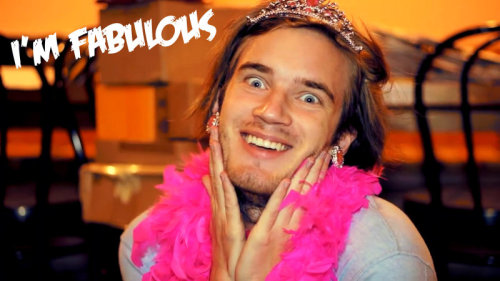
Apparently I am an old fuddy duddy, and I had no idea that this comments phenomenon even existed. Now I have watched and used YouTube videos to help me get through a difficult part of a game, or to find hidden items, but this is ridiculous. Watching someone else play a video game, and listening to his absurd comments and ramblings may be the end of a functional society as we know it. Last night while watching my favorite show “South Park” they were actually making fun of this phenomenon, specifically a famous YouTube personality Pew Die Pie. I mean, just typing out this guy’s name makes me want to puke in my soup. To go on YouTube and see MILLIONS of views and comments on his video’s is just mind boggling.
When I was growing up, parents couldn’t fathom why we all loved video games so much. They told us we were wasting our lives away by not going outside and enjoying real life. I didn’t see it back then, but maybe what my generation started, this new one is taking it to a whole new level. To be so lazy, that you can’t even play the mind numbing video game, and you have to watch someone else play, so you can listen to them comment on playing the game, is the end of a functional society as we know it.
If this is where the internet and the world as a whole is headed, then it is a dark day my friends. Here at Geek Choice, we love technology, and we love the internet. But this is not some marvel of technology, this is the opposite. I almost don’t even want to post this blog to draw more attention to this, but deep down I am hoping that people will read this and inform others of how stupid this is, and stop it.
So go and look up this Pew Die Pie on YouTube, see what he is doing to the youth of America, and give this kid a piece of your mind. If we let this continue, in 10 years the internet will just be a vast wasteland of people commenting on people’s comments on comments that they saw of some guy throwing a baseball against a wall, because he has nobody to play catch with since they are all watching the comment video. That and pictures of an oiled up Kim Kardashian…
Here comes Google junior, well, not exactly. But starting in early 2015, Google expects to create and release products geared at children under twelve.
This is the brainchild of Panvi Diwanji, Google’s VP of engineering, and mother of two. While it’s unclear what these products are, it’s widely believe these products will be those already popular with children, like Chrome and You Tube. Ms. Diwanji is committed to creating a fun, safe and educational environment for children. This effort comes in the wake of initiatives like? Doodle 4 Google and Maker Camp. While Ms. Diwanji’s intentions may be good, controversy is almost bound to follow. Tech companies always thrive to reach out to new demographics. But it’s been the unwritten rule that the under 12 crowd was to be left alone as far as advertising campaigns were concerned. Then there’s the FTC’s Children’s Online Privacy Protection Act. They’re enforcing this act with a firm hand. In September 2014, they hit up Yelp for $450,000 simply for not implementing a proper age screen in it’s ratings app.
So yes, Panvi Diwanji and her colleagues need to be careful in how they launch these Google for children products. But I’m glad she’s doing it. Kids under 12 are more tech savvy than you think. Often times, they’re more tech savvy than many adults are. And look at the crisis of education, especially in the United States. I believe building child friendly products and services is what this generation needs to educate and inspire this generation to do better in school and life. Besides, the Internet runs just about everything we do these days. Isn’t it better to have safe systems in place that will equip them for tomorrow? And don’t even get me started on safety. We all know how much inappropriate things are on the Internet these days. I understand why some parents won’t let kids go on Facebook until they’re 18. Even looking up something innocent
According to IBM, online sales increase 8.5% over 2013 sales. Mobile sales made up for nearly a quarter of all Cyber Monday sales, yet another record breaking increase. And no surprise, Apple led the way. Sales through Apple technology beat those of Android technology by $18. There’s something to note about online traffic on that day. Smartphones drove 29 percent of it, while tablets, only 13 percent. Major US cities lead the way in Cyber Monday sales and traffic. New York City led the nation in sales, followed by Washington, DC, Los Angeles, Chicago and Atlanta. Facebook and emails were leading factions in promotions. And with mixed emotions, I report that Wal Mart reported Cyber Monday 2014 was it’s biggest ever for online sales. I’m unhappy to report that because Wal Mart is still leading the pack (if you’re wondering why I have a disdain for Wal Mart, read this link). But there is some good in this because at least people aren’t trampling and fighting and knocking each other down…as much.
What’s to make of these Cyber Monday stats? It shows that the desktop isn’t dying! In fact, the majority of all Cyber Monday sales and traffic came from desktops. When I hear the desktop is going to be obsolete by 2020, I laugh. There’s nothing like sitting in the comfort of your own home and shopping privately. It’s no coincidence that Cyber Monday sales are up and Black Friday sales are down. Who wants to stand in line and sleep in tents all night,? face rude and bullying crowds over a low priced item that will probably be kaput or obsolete by summer 2016? However, I would like to see smaller businesses cash in on Cyber Monday, and who knows, maybe put some fear to the big boys. What do you think of these Cyber Monday stats?
They and cyber security experts say the same malware used in the Sony attack is the first major destructive one against a US company on American soil. There’s been similar attacks in Asia and the Middle East. Cyber security expert Tom Kellermann calls it this kind of hacking? “…a watershed event”. An FBI report gave businesses a five page report on the malware used on the attack, gave them tips to combat it, and told them to advise the FBI if hit by this and other kinds of similar malware. Apparently, this malware is so potent it topples all hard drive data and makes them nearly impossible to even boot up. Last week’s attack on Sony did more than illegally release upcoming attractions for free download. It crippled email and other systems for nearly a week during one of the busiest times of the film industry year.
Here’s the scary part of this attack. Around this time of year, we’ve had attacks for the sole purpose of illegally getting money. Some hacks have been between two governments.? This seems to go far deeper. This is the kind of hacking that is revenge based, the most dangerous kind of all. That’s one reason I think the FBI is worried. The other is the potency of this malware. If it crippled a major motion picture house for a week, I shutter to think what this could do to a small business. I don’t talk about this to spread fear or panic. But I think we should take all protection necessary against any and all forms of malware. Isn’t it better to know something before it could happen than to wait until after it happens?
Hollywood is hacked. Five upcoming movies produced by Sony Pictures are now scrambling to protect it’s copyright laws and file-sharing hubs around the world. And who is to blame?
Movie ‘Fury’ and the remake of ‘Annie’ are being hit the hardest. Annie has been leaked and pirated three weeks before it’s much anticipated debut. It’s been downloaded over 205,000 times. Fury has been illegally downloaded over 1.2 million times in the last several days. Fury is already one of the most pirated movies of all-time; this is before it’s even released. The hack itself happened on November 24, 2014. During one hack of a Sony corporate system, a skeleton appeared on their computers saying, “Hacked by #GOP”. The group call themselves ‘Guardians of Peace’. Not only are they releasing whole movies before their theater due date, these ‘Guardians of Peace’ are threatening to release many top secrets of Sony. But there’s another, and even more sinister dynamic to this dilemma.
There’s a Sony movie called ‘The Interview’ that is scheduled to be released Christmas Day. The Interview is a blatant, unflattering spoof of the communist regime of North Korea and it’s dictator, Kim Jong-Un. It stars James Franco and Seth Rogen, and they’re journalists/talk show host scouted by the FBI to kill Kim Jong-Un. This spoof makes the N. Korean dictator very unhappy, so unhappy that he’s threatened severe consequences if The Interview isn’t pulled. How coincidental Sony gets hacked right when The Interview and several other Christmas season movies (or should I say Oscar season) are being promoted and released. Look at the names chosen: GOP, Guardians of Peace. That doesn’t sound like N. Korea. That’s the point. The hackers don’t want to look too obvious. That’s why they didn’t hack The Interview. First off, that would be too obvious. Second off, that would give more people exposure to this movie, and Jong-Un doesn’t want that. So why not go after other Sony movies? Is North Korea behind this hacking?
Europeans and Americans are different. We’re different in our language, our food, and how we deal with technology and privacy. Here’s another example about the relationship between Europeans and privacy.
There is a group called the Article 29 Working Party. The issue, among others, is device fingerprinting, like the ones offered in newer Apple phones. They declare that this app, and all other apps that can gather info about a user, should be scrutinized with the same level as cookies, which can track users across the Internet. For now, fingerprinting isn’t under the same strict constraint as cookies. In Europe, companies must ask for consent before applying bits of information on people’s computers for settings and identity purposes. The cookies legislation has only been in place since 2012. But Article 29 Working Party is already lobbying for legislation to protect privacy for fingerprint use, even if it means going from country to country and the European Union.
That’s the situation between Europeans and privacy. Americans aren’t there yet, but we’re getting there. But prior to the NSA scandal of 2013, not too many Americans cared? about online privacy. Immediately following Edward Snowden’s revelations, Americans took to the streets insisting their 4th Amendment rights and other privacy rights be protected. Now there’s the issue of net neutrality. So this is a start. I’d like to see an organized party like Article 29 going to Washington to ensure our privacy rights are being respected. I’m optimistic this will happen, and in some cases, it already is. How can we improve the relationship between Americans and privacy?
I expected Black Friday to be complicated this year. From chain stores opening on Thanksgiving Day to Ferguson boycotts, I thought sales would take a downward spiral. Black Friday results show I was wrong…somewhat.
Tech giant IBM calculated the mixed statistics. According to IBM, sales were up 13% overall from 2013 but the average receipt is down by about seven dollars. The big winners were chain stores’ online sales. They grew nearly 30% over last year, but the number of dollars spent per order decreased a bit. Apple turned out to be a winner…again. Their receipt order on Black Friday was 23% more than Android’s. They brought in more sight traffic as well. While mobile computers and smartphones continued to increase, desktops aren’t dying. They made up for nearly half of all Black Friday computer sales.
I’m not surprised Apple is ruling the mobile technology roosts. I say that not because of superior quality, but because of superior marketing. I must admit, I was quietly hoping Black Friday results would be lower than last year’s. But the fact that online sales triggered the increase gives me hope. Is it just me, or are crowds getting worse and worse every year? I just saw a video of how shoppers acted on Black Friday during the 1980s and how they act now. With the lone exception of the Cabbage Patch craze, I didn’t see ’80s shoppers camping out in tents in the freezing cold, trample each other to death in stampedes, or police being called to break up near riots. No computer, smartphone, smartwatch, toy, TV, video game, radio, or accessory is worth my health or life.? Back then, Black Friday was more sociable. Today, it’s so competitive to the point the shoppers are turning into animals.? Is that why online sales did so well yesterday? Is this a continuing trend?
Technology, particular social media and smartphone cameras, have played a huge part of the story. Many, from my personal Facebook friends to NBA star Lebron James, have let their frustrations be known on social media outlets. They’ve also been used to organize boycotts all over the USA. In greater Boston, they have staged a march blocking Interstate exits in protest to this verdict. On Facebook, there have been calls to boycott Black Friday. There has been calls to boycott the entire greater St. Louis area altogether. And cell phone cameras have caught some of the rioting and it has led to some arrests. We couldn’t exactly communicate on social ills like this prior to the late 2000s. This goes to show you how much technology has changed the whole game.
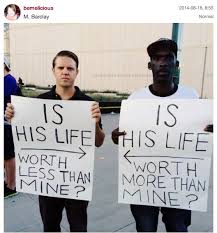
Like many, I’m saddened and heartbroken at this terrible injustice. But violence, looting and chaos are not the answer! All that does is add fuel to the fire and reinforces ugly stereotypes. But something must be done. I wouldn’t mind partaking in an economic boycott on Black Friday as well as boycott the entire St Louis area until the Michael Brown family gets the justice they deserve. For example, if I were hosting or leading a tech conference in St Louis in the near future, I would move it to another city. If you’re in that position, don’t have your conference in St Louis anytime soon! During the Civil Rights Era of the late 1950s and? ’60s, they boycotted downtown facilities and businesses nearly shut down. Business owners got the message and integrated their facilities. Remember, we have a lot of economic power, especially this time of year, where everyone is competing for our spending dollars. Shouldn’t we put our economic power to good use?