
Nov 14, 2014 | Backup, Computer technology
It’s time to go Lambda. I’m not talking about your fraternity pledging days. I’m talking about Amazon’s Lambda,? Amazon Web Service’s new contribution to the computer programming world.
According to Amazon Web Service’s CTO Werner Vogels, Lambda will allow programmers to reduce effort on their part. All they’ll have to do is write the code, define event triggers, and the program will automatically run after that. This is expected to save the programmer time, money and work. Lambda is also expected to do the managing, scaling and monitoring. Less than a second after an event is triggered, it’s processed through cloud functions. Lambda can follow principals of function business logic, data business states and interactions in between, as well as the basics. Though Lambda only supports Java script for the time being, but Mr. Vogels assures it will support other computer languages as this service becomes more well known. It’s advised that after you create your function, you give it content and resources at that time. Amazon is giving consumers the free sample to entice our potential appetite for Lambda. For those who are willing to attempt this endeavor, Amazon Web Service will provide a million free request a month and 3.2 million seconds of computer time a month.
It’s been eight years since Amazon got into the web service game. It’s now up there as one of the top. Back in 2012, Amazon was voted the best cloud provider of them all, beating out names like Microsoft, Verizon/Terremark, and Century Link/Savvis. So they’re in good position to make this announcement about their Lambda service. However, I’m a little weary of the promises it will do all the managing, scaling, and monitoring for you. If that can be pulled off, great! But at the moment, it sounds a little too good to be true. What do you think of Amazon Web Service’s Lambda?
Nov 13, 2014 | Computer Repair, internet, Malware, Security
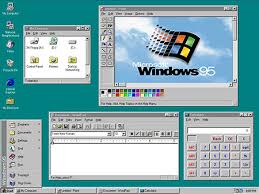
Microsoft’s Internet Explorer isn’t what it used to be. Maybe it never was. And now, an IBM research team found a flaw that goes as far back as the Windows 95 era.
Tech giant IBM’s X-Force Research team found a data manipulation venerability called CVE-2014-6332. It’s nicknamed the unicorn bug. It’s a rare bug IE depends on but a hacker can use it for attacks that force codes to run remotely and take over the user’s machine. Don’t let the name 2014 fool you. This venerability has been around since the mid-1990s. This bug became exploitable when IE 3.0 and Visual Basic Script was released back in 1996. Hackers can use these remote codes to install malware, which can lead to keylogging, screen-grabbing, exploiting remote address, and other malware problems. IBM X-Force revealed the problem in spring 2014, even talked about it at this year’s Black Hat USA Conference. When the bug was found, they didn’t find it harmfully active, but there’s still room for caution. Exploitation is tricky, but when it’s successful, it can cause data attacks that can wipe out important files and destroy any system.
This explains a lot. The quality of Internet Explorer over the years has been downhill and I see little improvement in sight. Plus, web browser competitors like Firefox and Google Chrome are becoming more and more popular, probably because IE is slipping in quality. The other disturbing thing is that it took nearly twenty years for this problem to be exposed.? And it took an outside company to expose the Windows venerability. And why isn’t mainstream media talking about this? For a problem to be plaguing one of the largest Internet conglomerates for nearly two decades; that should be breaking news. I think IE is lucky nobody really exploited this issue. If they did, it probably would have cause the whole Internet as we know it to near collapse. Is this venerability the reason IE isn’t what it used to be?

Nov 12, 2014 | Uncategorized
Google will lease Moffett Naval Airfield, based in the Silicon Valley, to NASA. The purpose will be to house robotics exploration and space vehicles, among other uses.
This airfield space won’t come cheap, and the lease won’t be short. It will cost NASA $1.16 billion and the lease will last 60 years. NASA plans to clean up the hangars, including historic Hangar One, and build an educational museum. Moffett Naval Airfield is 1,000 acres big and has a golf course, two runways and an operations building. We can add this to the other robotic and satellite labs Google has acquired. Google is so invested in robotics, space, and satellite technology they have their own sub-division for it called X Lab. This X Lab is responsible for bringing us (or at least a handful of us) Google Glass. The X Lab is also working on a pill to detect early signs of cancer and heart attacks. This facility was designated a military historic site in the 1960s, so it can’t be torn down. But decades of decay still took it’s toll. By 2008, the National Trust for Historic Preservation called it one of the most endangered historic sites in America. Keep in mind Moffett Airfield isn’t far from the Googleplex. In fact, they’re less than five miles apart, and the airfield is currently used by Google for their private jets.
There are lots of possibilities and questions here. This is a very smart move for Google to find this historic gem so close to headquarters and take advantage of it. Not only are they expanding their empire, they’re saving an important piece of military history. When I think of other investment they’re in (have you seen these freak robots they’re sponsoring), and now they’re investing in medical technology as well as space? Is Google trying to take over the world?

Nov 11, 2014 | Security
Yesterday, it was announced the United States Postal Service (USPS) was hacked. This hack attack goes as far back as mid-September 2014.
No customers were affected by the attack. No credit card numbers or transactions done online or in? USPS stations were hit. But the information of as many as 800,000 post office employees, including names, dates of birth, Social Security numbers, and addresses were compromised. Employees affected range from the lowest paid mail hand to Postmaster General Patrick Donahue himself. Officials say the hacker/s weren’t interested in committing ID theft or credit card fraud. While no specific culprit has been named, China is suspected. The Chinese government vehemently denies being involved in this, or in any cyber attack. They let it be known they have a strict anti-cyber crime policy. To add suspicion, China was suspected in the hacking of the Federal Office of Personal Management. Plus, cyber security experts say it makes sense for China to target a major federal agency like USPS. Hackers may assume their post office systems are just alike. If they ever wanted to get lots of info on a huge number of government employees at once, the USPS would be the jackpot. Motives could include everything from building their own companies to building intelligence.
I always thought fraud and ID theft were the worst things that came from hacking. I’m starting to think twice about that. Being personally ripped off from a computer is awful, but for one government to compromise another can be outright dangerous. And what about these employees? It’s chilling that all their addresses and names could be in the hands of foreigners they will never meet. Scarier still their personal information could be used for? foreign intelligence purposes, and there’s no telling what the intelligence could be used for. Or am I blowing this out of proportion? Do government and private security companies need to do more to prevent cyber attacks of entire entities?

Nov 10, 2014 | Computer technology, internet
In a statement on Monday morning, November 10, 2014, US President Barak Obama urged the Federal Communications Commission (FCC) to support net neutrality. The President says that will keep the Internet free for all companies and people.
The message says that mega cable and Internet conglomerates should not decide which sites the consumer can or can’t visit. Though President Obama stressed the FCC is an independent organization, let’s read behind the lines. He’s really giving FCC Tom Wheeler and his sympathizers the green light to take no prisoners when it comes to net neutrality issues. Earlier this year, Wheeler tried to come up with a compromise, allowing Internet companies to sell faster service to anyone willing to pay. But the President’s statement is a win for Internet activists everywhere, and for small Internet companies who can’t afford to pay for faster service, much less compete with the big boys. The set of rules the President asked for include the following: no blocking (your Internet service provider can’t block a website so long as that website is legal), no throttling (they can’t slow down websites and speed up others at their choosing), and ‘no paid prioritization’ (no service should be stuck in a slow lane because of inability to pay). You know major cable companies aren’t happy about this. I’m sure come 2015, they’re going to send lobbyist to plea with the newly controlled Republican congress do swing this in their favor.
But the FCC is an independent organization, remember? So what good is lobbying and bribing going to do? I’m glad President Obama made this statement. The Internet has been open and free for all for around twenty years. Shouldn’t we leave well enough alone? If net neutrality isn’t enforced, major corporations are bound to censor what we can or can’t watch, download, or where we can’t do business, not because of racy content, but because it doesn’t line up with their already fat bank accounts. Shouldn’t the Internet be fair for all humanity and all competitors? Doesn’t corporate America have enough control over our lives?

Nov 9, 2014 | internet
We can take for granted the English language being all over the Internet. But did you know only 5% of the world speak English as a first language and only 21% speak/understand it at all?
Yet 55% of the Internet is in English. This is a huge problem for those trying to make Internet access global. Take a nation like India, one of the fast rising players on the international stage. India alone has 22 official languages and over 300 unofficial ones. China, now the world’s top economic powerhouse, has Cantonese and Mandarin as official languages, but official languages include Uyghur, Tibetan, Mongolian, and Zhuang. Then there are scores of unofficial languages. In fact, most of the Internet is dominated by only ten languages: English, Spanish, German, French, Mandarin Chinese, Russian, Japanese, Arabic, Korean and Portuguese.
But I understand the other side. You see, 96% of Internet users speak these at least one of these major ten languages. And in places which others languages are used, they barely have Internet access anyway. But that’s changing, and many tech leaders are seeing to it. So if they’re going to make the Internet available to all, they should work on some kind of translation. There is language software already in place. But there just needs to be accessible and affordable to all languages and people. That’s a start. What else can be done to combat the Internet language problem?

Nov 8, 2014 | internet, networking
I’ll admit, I’ve accepted the Facebook friend requests of some crazies. But you don’t want to unfriend them, then they might get really crazy! There’s a strategy for that: Facebook makes unfollowing easier.
They have a new News Feed tool showing you whose taking up most of your news page. This new tool will let you unfollow them without unfriending them. There’s also a tool for hiding posts from your feed and you can tell Facebook whether to unfollow or see less of a certain author, friend, page or app. For years, Facebook has been making suggestions on who we should friend or follow. This can be annoying at times. But if you ask most Facebook users, this annoyances pales in comparison to feeds and pages full of repetitious, boring and just plain irritating posts.
So for many, this should make Facebook life easier. I’ll have to read less about drama between two exes. I’ll be reading less posts with F bombs and looking at far less pictures of deformed people or near naked people. On the other hand, this new tool makes me more conscious about what I post. While being unfollowed hurts a lot less than being unfriended, it’s still a blow to the ego. Will you be using this new tool on your feed?

Nov 7, 2014 | Security
In Great Britain, it’s legal for spy agencies to use secret surveillance and eavesdrop on attorney-client relations. That’s just the beginning.
Yesterday, the Government Communications Headquarters’ own classified documents were found. That’s Great Britain’s version of the CIA. The discovered documents state, and I quote, “You may target in principal target the communication of lawyers.” Other agencies have the legal right of way to use surveillance on journalist. Such documents were brought to light in the wake of a case that started 10 years ago. The case was the British government vs. a Libyan family. The family says they were mistreated, even tortured, in a joint British-American operation at the time. Now, this family says they and their lawyers from human rights group Reprieve were spied on to deliberately aid the British government’s case. Legal advocates are worried. Amnesty International legal advocate Richard Logan believes such acts would violate age old English principals that go as far back as the 16th century. However, there are qualifications that must be used before they can spy on lawyers, journalist, and others. Regulations include, “Having reasonable grounds to believe they’re participating in or planning against the interest of national security, the economic well-being of the UK or which in itself constitutes a serious crime.”
That statement sounds reasonable on the surface, but look at the big picture. Look at how broad that statement can be. People and institutions are so on the edge these days that anything can interpreted against national security, even a journalism story and lawyer-client confidentiality. Mr. Logan has an excellent point. It’s funny we learn about these documents and rulings when Britain is in the middle of an incriminating and embarrassing trial. I’m not in Britain,? but I think, and I hope the people raise concerns about this. Is this ruling a great big cover up? Does Britain have the right to spy?

Nov 6, 2014 | General
There is a 13-year-old eighth grader named Shubham Banerjee. He’s by no means the average junior high kid. In fact, he’s the toast of Silicon Valley and the technology world.
Banerjee makes history as the youngest entrepreneur to get approval for venture capital funding.? He’s based out of San Jose, the heart of Silicon Valley. Semiconductor giant Intel, based out of nearby Santa Clara,? presented a generous fund to Banerjee to help him develop a Braille friendly printer, and an inexpensive one. It bothered the teen that printers for the blind can easily run $2,000. With his parents’ financial and moral blessing, he began playing with Legos to come up with his own Braille printer. Before long, his printer was winning him science fair contests. A couple of months ago he was at an Intel Developer Forum in San Francisco displaying his printer under corporate name Braigo Labs. There, he was told Intel would give Braigo Labs venture funding for his printer development. Shubham Banerjee is a minor, so his mother is president of Braigo Labs. With this undisclosed amount of money provided by Intel, Banerjee plans to improve his printer and come up with other prototypes to improve quality of life for the visually impaired. His Braille friendly printer is expected to cost between $350-500, a fraction of what they already cost. There’s no release date on Braigo Labs’ printer.
But I am looking forward to Braigo Labs’ printer debut. I hope it does really well. My hat goes off to this kid. My hat goes off to Intel and others in Silicon Valley who believes in his dream and supports him, and his parents for encouraging him. On a news show this morning, he says he’s far from done and they’ll be more prototypes to come. What would you like to see come from Shubham Banerjee’s Braigo Labs?

Nov 5, 2014 | Computer technology, Wireless
Are you excited about wearable technology or just tired of it? If you’re tired of it, I’m sorry. There’s another company jumping in the race just in time for the holiday shopping season.
Bluetooth product maker Jawbone and health and fitness system Up will be introducing two products. Up Move is an aluminum nugget that can be worn either in a wristband or clip-on. It measures basic health activity: calories, steps taken, your sleep amounts. Up Move has a free mobile app for Apple and Android smartphones. The price of Up Move is usually $50. The wristband: only $15! You can start ordering today, but shipping starts November 7.
The other wearable product is called Up3. This wristband will run you $180. Jawbone says this device is like jumping from phone to smartphone. It’s features include wireless synching, water resistance (so long as it’s not submerged), customized reminders, built in alarm clock, motivation and connection with family and friends, goal set-up, and others. They also have resting heart rates as well as workout heart rates. Up3 can detect hydration and respiration rates. Don’t go rushing to Up 3 website’s yet. Shipping isn’t expected to start for a few weeks.
I’ve always said competition is good for business, especially this time of year. I have to do more research, but I think fifteen dollars is a record low price for any fitness technology, or any wearable technology for that matter. This is a good thing because now wearable devices are accessible to everyone and more people will want them. For all UP 3 is offering, $180 is a decent price. I’m not saying I want the Up3 for Christmas, but this is a good buy. The reviews of Up 3 are pretty good. I hope Fitbit and others step up their advertising and promotion game this holiday season, and I think they will. Which wearable technology is on your Christmas list?
