Mar 19, 2015 | Computer technology, Wireless
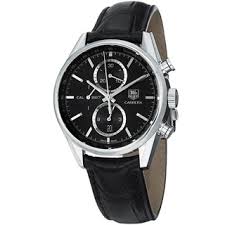
How much would you pay for a smartwatch? It’s the next big thing in wearable technology. Would you pay $200? Would you pay $500? Would you pay $1,000?
How would like to pay over $10,000? You would if it were up to Swiss watchmaker TAG Heuer, you probably would. TAG Heuer is teaming up with Google and Intel to make the ultimate smartwatch. Not only that, this could lead to more collaborations between the technology world and French based luxury conglomerate LVMH. Speaking of LVMH, their watchmaking leader Jean-Claude Biver made an announcement at a watch expo in Basel, Switzerland. This announcement included the prediction this new watch would be, “The greatest connected watch.” Android Wear head developer David Singleton backed him up, saying, “When I think about the?watch,?it’s always been a marriage of beauty and utility. We’re going to do that with our partnership.” While TAG will design the watch, Intel will provide the chip system, and Google will take care of the software. This watch is expected to be on the market in late 2015, probably just in time for the Christmas shopping season. That would be the perfect time of year to compete against Apple’s iWatch.
And this is the perfect year to make such a strike. About 28 million smartwatches are expected to sell in 2015. Compare that to less than 5 million in 2014. Apple is expected to garnish over half those numbers. I asked how would you like to pay over $10,000 for a smartwatch. ?That’s the price for Apple’s gold smartwatch, the most expensive one of it’s kind. We don’t know the price of TAG’s upcoming watch. But looking at what’s being manufactured into this creation, and who is behind the creation, this watch could equal, if not exceed, $10,000. Could the Google, Intel and TAG Heuer beat Apple? Or instead of high end watches, could low end watches beat Apple at this game?
Mar 18, 2015 | Computer technology, internet
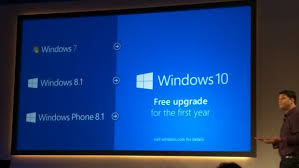
Microsoft’s Windows 10 is coming soon. This summer, Microsoft will be offering free upgrades to their latest Windows edition. All Microsoft users will be eligible, even if they’re software copies aren’t genuine. But what’s behind such a generous offer?
Many say it’s a strategy to combat piracy in nations like China. They want to get the real Windows 10 to the hundreds of millions of Chinese Microsoft users before the piracy people beat them to it. They’re studies showing 75% of all computer software in China isn’t even properly licensed. The other goal is to ‘re-engage’ with Windows customers in China, before the illegal computer markets do, if they haven’t already done so. Interesting because it was speculated Windows 10 would be out in Autumn 2015; now they’re saying Summer 2015. No specific date has been released. But as early as January 2015, Microsoft announced free upgrade to Windows 10 for any Windows 7 users. Was this to save face with longtime Microsoft consumers? They’re partnering with mega Chinese PC maker Lenovo Group to help promote Windows 10 in China, especially to current users. They’re also partnering with other Chinese conglomerates like social media company Tencent Holdings and security company Qihoo 360 Technology to spread the good news of latest Windows upgrade. In fact, starting later this year, Lenovo said they want to start making and selling phones using Windows software.
It seems Microsoft really is in a mad dash to beat the pirates in getting Windows 10 to consumers. Can you blame them? China is the piracy capital of the world. China also has the fastest growing economy and has the biggest population in the world. It almost sounds like they’re putting more focused on Chinese customers than they are on American customers. But China’s population is several times that of the US. And with more buying power in that nation, you can bet Microsoft is in a race against the clock and piracy to get Windows 10 out. Wouldn’t you be?

Mar 17, 2015 | Computer technology, Smartphone
What was your favorite Nintendo game from back in the day? Or are you a current Nintendo fan now, who is on the lookout for the next new game? Both of you could be in luck.
Thanks to a deal between Nintendo and a Japanese mobile gaming company called DeNA, both these possibilities could become a reality, although Nintendo says new games will be the primary target. All Nintendo IP addresses will be eligible, and don’t expect to be flooded with a slew of games. They’re taking the selective quality approach rather than the mass quantity approach. Ever hear of DeNA? Few people outside of Asia have. It’s a social gaming platform for desktop and mobile computers based in Tokyo, Japan. This is part of the reason why Nintendo President Satoru Iwata loves this alliance. He believes that mobile games can be the jump-off point that gets more consumers more dedicated to the Nintendo brand. And DeNA has the tools and means to bring such mobile games. This friendship between Nintendo and DeNA is about five years old. If everything goes to plan, you could see Nintendo games, new and possibly old, on your smartphone devices before 2015 is over.
Between 1985-1995, Nintendo was the premier name in home video gaming. When they came out with Game Boy, one could say they even came up with modern day portable gaming. But since the emergence of Playstation and Xbox, the Nintendo franchise has been slipping, economically, creatively and otherwise. The Nintendo Wii has kept the franchise relevant and somewhat competitive, but hardly in the conversation. Could this push for Nintendo mobile gaming bring their numbers up? And if so, what games would you like to see offered? Would you rather see new games along with this new technology? Or would you rather see classics like Super Mario Brothers, Zelda and Double Dragon? How about both?
Mar 16, 2015 | General
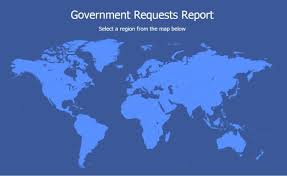
Government requests for Facebook in the United States and most of Europe for the second half of 2014. But yet the number of government requests worldwide has gone up by a couple of hundred. Here’s why.
That’s because in nations like Russia and India, they’ve increased. Facebook is the #1 social media site in the world. This is a good tool to take interest in someone, especially if that person is suspected of a crime. India has the second highest government request on Facebook‘s list. They’ve had 5,473 request between July and December 2014. But catching criminals may not be the reason. Late last year, India’s national government asked Internet service providers to censor over 30 sites. I wonder did they go through Facebook just to enforce this censorship? Keep in mind no Internet restrictions were made in the US during this time. Government request went up in Turkey as well, a nation that has it’s own censorship issues. In the past, Facebook and other social media networks and ISPs have been accused of being in cahoots with governments worldwide in spying on their citizens. These are accusations Facebook and other technology entities vehemently deny. In fact, Facebook vows to scrutinize each and every government request.
The first thing I notice here is the same nations that are tightening up on free speech are the same ones hitting up Facebook for requests. I notice the US and Western European nations. There, government request have declined. I wonder if the NSA revelations of 2013 had anything to do with that. I think that scandal woke up a lot of people, from social media CEOs to consumers to even law enforcement. I think even they’re backing off because they know Facebook’s stand when it comes to such issues. What about nations like India, Russia and Turkey? Can anything be done to lower the number of government requests in these nations?
Mar 15, 2015 | internet
For over 20 years, the Internet has brought people together, educated, united, and just plain made life easy for us all. But like everything in the world, the Internet has a dark side. Journalist Joseph Bernstein saw that dark side, and what he found isn’t pretty.
The first thing that struck Bernstein was how easy it was to take a walk on the dark web. All one has to do is Google Tor Browser and install the website Tor Project. I highly recommend against doing that. But if you’re going to be stubborn, don’t say you weren’t warned. Many .tor sites are going down anyway thanks to law enforcement or by the host themselves. Some go through portals like Hidden Wiki. But once you’re there, you can find any kind of darkness you want. Any kind of illegal narcotic is easy to find, even prescriptions. So are guns, passports, cheap iPhones, and even porn. One can find the more tangible products, like iPhones and guns and passports on Tor Supermarket. Bernstein says Tor Supermarket is easier to navigate and better looking than a lot of mainstream sites. But if you insist on buying cocaine or Oxycontin on the dark web, and you don’t get it, or the law intercepts your package, don’t go complaining. That’s the ‘honor system’ risk one will take.
Let’s get this out of the way: I DO NOT condone, promote, or encourage such website activities. The reason I even bring up such sites is to educate others of real dangers out there. Parents, please do what you can to block your children and teenagers from the dark web, and tell them why you’re doing it. I think the more we know about such dangers, the more we can prevent them or stay away from them. What other ‘dark websites’ should we know about?

Mar 14, 2015 | Computer technology
In the 21st century, flying out of a commercial airport can be a tedious and chaotic experience. You have to get there earlier and endure more intense security. One major airport has a way to cut down on security waits.
At Cincinnati/Northern Kentucky International Airport, they have a new system that tracks that tracks people’s phones to estimate how long a security line will be. The airport will tell passengers how long the wait is in each security line. Blip Systems is the father of this technology, and it depends on Wi-Fi and Bluetooth technology. It finds a device’s MAC address and determines how many people are in that area. They insists there is only so much data they can collect, especially to those worried about privacy issues. Cincinnati’s airport is the first in the United States to have such a system. Twenty airports worldwide are already using it. Numbers don’t lie. According to the airport’s own study, security line wait time has decreased nearly five minutes. But Blip Systems isn’t done. They’re currently building systems to track whose in airport restaurants, stores, and possibly, every move around the terminal.
I think Blip Systems is skating on thin ice here when it comes to privacy rights. In a world where we have fewer and fewer of them, let’s not add to it. Yes, this airport phone tracking saves time at the airport. On the surface, that sounds great. We at airports could use all the breaks we could get. But when I read about how they want to track every move at the terminal, I get suspicious. Why would they want to track every move? For advertising purposes or for something else? So we save five minutes at an airport security checkpoint. Is this convenience luring us out of even more privacy?

Mar 13, 2015 | Entertainment, General
So you can’t get enough of the late Apple founder Steve Jobs? Yes, another Steve Jobs biography will be out March 24, and you can pre-order it on Amazon.
It’s called Becoming Steve Jobs: The Evolution of a Reckless Upstart to a Visionary Leader. It’s written by seasoned journalists Brent Schlender and Rick Tetzeli. Interview subjects include those who were closest to the Apple magnate, including current CEO Tim Cook, Jobs’ widow Laurene Powell-Jobs, and Disney CEO Bob Iger. It should be made clear that this isn’t the Steve Jobs biography in 2011. Many critics say Jobs was portrayed as a jerk and egomaniac. This upcoming biography has more human tales of Jobs. For instance, when Jobs was in desperate need of surgery, Tim Cook offered his liver, since they were the same blood type. Jobs turned down Cook’s offer. This left a long lasting impression on Cook. “Somebody that’s selfish doesn’t reply like that,” he said. This biography talks of Jobs’ potential job venues, like planning ?to buy Yahoo with Bob Iger. The book talks about Jobs’ return to Apple in the late 1990s, as Apple started to rise from being a struggling ghost of better days to one of the leading technology conglomerates of all-time.
Do we really need another Steve Jobs book? Do we really need another Steve Jobs movie? As long as people buy, then I guess so. I read the first book. While it was harsh at times, it did a good job showing that Jobs, despite being one of the greatest techies ever, was still a human being. Like the rest of us, he also made mistakes and bad choices. Nobody bats 1.000 in the game of life. But this new biography seems to show bonds between his co-workers that went beyond board rooms and computer labs. The story about Jobs’ liver medical crisis alone kind of makes me want to get Becoming Steve Jobs. Would you pay another $22-27 for another Steve Jobs biography?
Mar 12, 2015 | Entertainment
There’s Netflix. There’s Amazon Prime. There’s Hulu. These video streaming networks are getting more and more popular. As video streaming takes over, could it take over TV’s 65 year luster?
In the second half of 2014 alone, traditional TV decreased 10 percent. In that same time, Netflix alone has grown to 40 million paid subscribers, and this streaming service is in over a third of all households nationwide. Thirteen percent of households have Amazon Prime. Hulu Plus comes in third with around 7 percent. Television producers and executives are concerned traditional TV will take a huge loss because of streaming. But should they be concerned? Reports say households with streaming services spend way more time in front of a screen then those who don’t. Streaming households spend 48 more minutes a day on TV, but that includes gaming, multimedia and DVDs and Blu Rays. One analyst says people are still watching TV. Just because someone has Hulu or Netflix doesn’t mean it’s time to throw the TV out the window.
I agree with that analyst’s assessment. I don’t think TV producers, executives, TV stars, or anybody else have anything to worry about…that is…those who can adapt to change. Video streaming can be a huge ally of TV. Say you miss your favorite show. You can watch it through streaming. Or say you just jumped on the bandwagon of a certain show, but it’s already five years old. Thanks to video streaming, you can watch older seasons to catch up on what you’ve been missing. Some like to call it binge watching. You couldn’t do that 10 years ago, unless you were fortunate enough to get every season on a DVD or VHS. And don’t worry about sponsorship. If consumers will buy from TV commercials, consumers will buy from streaming ads. Some TV leaders worry about the success of exclusive Netflix shows like Orange is the New Black, and that success will cause other pilots to skip TV altogether and go to video streaming. In that case, do they have reason to worry?
Mar 11, 2015 | General
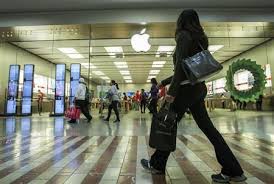
For those of you around my age: We use to go to malls for the video arcade, toy store and food court. Today, people are going to the mall for Apple products; mall operators are seeing to it.
According to a real estate research company, the mere presence of an Apple Store alone increases a mall’s sale by ten percent. So this gives Apple a heck of an advantage. Not only can they get a low rental rate from mall operators, they can turn up pressure for neighbors to pay more, in hopes to prey off Apple’s foot traffic. Back in the old video arcade and toy store days, your major department stores paid near nothing, while small businesses paid the majority of mall rentals. Apple goes even further. Apple bargains to pay no more than 2% of sales in rent. Some tenants pay as much as 15% of their sales. Mall operators generally charge rent based on the retail tenant’s sale expectations.
But there’s another factor in play: The disappearance of smaller businesses that were once staples of shopping malls. Is it just me, or are small businesses closing down in malls all over the USA, being replaced by major corporate chains? And despite what the media and stock markets say, even major chains like Sears and JCPenney are struggling. Decades old chains like K Mart and Radio Shack are forced to shut down many stores. These stores used to be in shopping malls. So it seems like Apple Store may save the shopping mall altogether. So I say give them what they want, so long as it’s within reason. For mall retailers who complain of paying extra, think of the foot traffic you’re getting. If people are spending hundreds, even thousands, at Apple, they’ll probably come spend a little at your small business. Am I looking at the Apple mall invasion the wrong way?

Mar 10, 2015 | General
I know this is Apple’s big press conference day, and it’s mostly about their smartwatch. I hope it goes well. I hope nobody has stolen their secrets.
I bring this up because their are some interesting documents floating around the Internet. These documents say the CIA (central intelligence agency) tried to breach iPhone and iPad security. The documents say the CIA has been trying to do this for years. In an event called “Jamboree” (no, I’m not talking about the Boy Scout national camp out), strategies and plans were discussed to exploit weaknesses in such electronics. These Jamboree conferences have gone on for years, even before the first iPad was released. Security keys and encrypted data were targeted to try and stop Apple’s attempt to provide mobile security to Apple users globally. The government did sponsor this potential invasion. ?With this invasion, if successful, spies can infect malware and test out weaknesses in Apple systems. The document said CIA spies came up with their own Xcode, a software that can get into apps and programs, through the backdoor, without the apps’ permission or approval. Of course, the CIA has no comment. Neither does Apple.
I notice a couple of coincidences here. I find it interesting this report comes out on the same day of this much anticipated conference. Who would gain from this kind of timing? Look at the fact that neither Apple nor the CIA are commenting about this Jamboree report. If you remember when the Edward Snowden scandal broke out, Apple said they were virtually forced to turn in records to the NSA. There’s a lot of finger pointing and things left unsaid. This story isn’t going away soon. But yet everybody is so giddy about Apple’s upcoming smartwatch. Assuming this report is true, will the CIA try to infiltrate the Apple Watch? If so, will they succeed?
