Earlier this week, I talked about a lawsuit involving Twitter on the grounds of gender discrimination. This comes in the wake of another major, major Silicon Valley fight over gender discrimination.
The opponents of this fight are Ellen Pao verses her former employer, a Silicon Valley venture capital firm called Kleiner Perkins Caufield. Pao and her attorneys argued she was denied lucrative deals while working as an associate at Kleiner Perkins. ?They argued it was exclusively men that were getting these deals. Pao was eventually fired. Kleiner’s defense countered this, saying Pao was an inconsistent worker and called the lawsuit opportunistic. In a five week trail filled with enough twist and turns for a John Grisham novel, the jury sided with Kleiner Perkins 9-3. The trial grabbed Silicon Valley’s ear.
Though the venture capitalist firm won this battle, Silicon Valley’s war over gender discrimination is far from over. The trial revealed disturbing obstacles and hurdles women often face in technology industries. After the verdict, Pao posted a series of tweets thanking thousands all around the world for their support. Obviously disappointed with the verdict, Pao hope this trail exposed gender issues in the technology and venture capital industries. She also calls on people around the world to help level the playing field for all women and minorities. I think, or at least hope, this will start a long, difficult dialogue on gender and race/ethnicity issues in technology. Maybe this will force some, especially those in hiring, to question their own attitudes on such issues. I don’t know who was in the right in the Pao vs Kleiner case. Obviously I wasn’t there. Maybe the jury got the verdict right. Maybe they got the verdict wrong. I hope the trial and the aftermath serves as a wake-up call to us all in the technology industry to be alert, aware and sensitive to others. Will it?
Yesterday, Indiana Governor Mike Pence signed the Religious Freedom Restoration Act. This bill would give businesses the right to refuse goods and services to customers, particularly same-sex couples.If you attempt to sue the business for discrimination, they can use religion as a defense. You knew it wouldn’t take long before the backlash to start.
Take Salesforce for instance. Their CEO Marc Benioff cancelled all their events throughout Indiana, and threatened a long term boycott unless the new bill is repealed. In an interview, Benioff talked about his company’s economic contributions to the state. He’s not bragging or exaggerating. Salesforce employs as many as 3,000 people in Indiana. In 2013, he acquired an email marketing firm for around 2.5 billion dollars. The firm is based in Indianapolis, the state’s capitol and largest city. An annual event called Exact Target is being threatened. This event has gone on since 2007 and last year alone, made Indianapolis $8 million. Benioff says he’ll move it to New York this year if he has to. Benioff asked other tech CEOs to take up this cause.
But Gov. Pence sticks by this bill. He insists this bill is not to discriminate against anyone and has even reached out to Benioff. I don’t think this bill was made to deliberately discriminate against people, but perception is everything. It’s sad to say, but in 2015 America, some businesses could run with this. This bill could allow owners to reject anybody on the basis of religion, race, creed, color, ethnicity, as well as orientation. They could hide behind religion to excuse such prejudice behavior. In the 1960s, a barbecue restaurant owner in South Carolina tried this. Will history repeat itself? Plus, this bill is going to upset a lot of Americans and possibly cripple Indiana’s economy. What if other tech companies follow Mr. Benioff’s example? What if other states welcome Salesforce operations with open arms? What is Marc Benioff removes all of his Salesforce offices and employees out of Indiana? Organizers of the gaming conference Gen Con are leaving Indiana and going somewhere else. Even the NCAA is talking about stopping college basketball tournaments in Indiana because of the bill. Is the Religious Freedom Restoration Act the worst bill in Indiana’s history?
Early last year, the Internet world buzzed at the possibility of a merger of two mega media conglomerates Comcast and Time Warner (For the love of all that is good…nnnnnnoooo!!!). That was my aloud thinking, but there are?a few things that have to happen first.
One is US government approval. There has been delay after delay, and we don’t even know is they’ll approve this merger. But Comcast VP David Cohen is optimistic this deal will be approved in the middle of 2015. What’s holding up the federal review is a dispute over FCC access to confidential contracts. Then there’s approval from state governments. In California, conditions were proposed for this merger. Comcast rejected California’s conditions. In New York, political and community leaders are concerned about Comcast and Time Warner’s poor customer service ratings. Some call for a promise from Comcast: Provide universal broadband for all New York City customers, then we’ll talk about backing the merger. Both California and New York’s Public Service Commission have delayed votes. And in North Carolina, VP Cohen is peddling the merger in the name of faster service. In fact, he promises service will be twice as fast. A state law prevents ?local broadband from crossing into other people’s territories. This could cause a huge hinder in their merge quest.
Comcast and Time Warner really expected this deal to be signed, sealed and delivered by Christmas 2014. Now, they will be lucky to have government approval by summer 2015. I’m concerned this deal will push and bully smaller cable companies out of business. Then there’s the ‘Too big to fail, too big to care’ factor. If this merge happens, and they’re the only candy store in town, this would give Comcast/Time Warner a license to charge and treat customers any way they please. I’m glad the Feds and some states haven’t given the okay yet. But I’ll be even happier if they deny it all together. Do you think the merge will ever pass through?
Back in 2014, Google‘s streaming empire You Tube tried to get Twitch TV, a website dedicated to live gaming. It didn’t happen. You know You Tube didn’t give up their live gaming dream that easy.
Now, they’re launching a live streaming platform focused on live gaming and electronic sports. And it sounds like they’re banking a lot on this venture. Sources expect live gaming to be a huge part of You Tube’s improved service. They predict a time when live streamers and live sports will be running to broadcast their events. So far, they’ve only been crawling, or not moving at all. In 2010, You Tube started broadcasting Indian Premier League soccer games live for free. It didn’t make much noise. By 2014, there were no mention of live events on You Tube on their homepage. But there are You Tube channels that broadcast live; some do so pretty often. Even the State of the Union address of January 2015 was broadcast live on You Tube. So this tells us it can be done. But now You Tube wants to take streaming to the next level. Instead of a partner, Twitch TV is now a competitor. Sources say You Tube is rounding up 50 engineers and streaming experts to make this dream happen. They’re expected to launch their new streaming program at a gaming expo in June 2015. No one from You Tube is talking.
If You Tube is going to give streaming another chance, they should include their most popular channels and stars. And there are plenty of game experts on You Tube that would jump at this chance. Yesterday, I talked about a chance of You Tube broadcasting a live NFL game this coming October. That would sure help their streaming cause, but what if that dream doesn’t come true? Why not reach out to your own You Tube subscribers for help? Wouldn’t it make competition with Twitch TV really interesting?
Last year, NFL?coaches?started using tablets to produce and call plays. That was a huge advancement between American technology it’s most popular game. Now there’s another one.
Now, the NFL is poised to make history again. They’re going to broadcast a live game exclusively for the Internet. This game will be in the 2015 season, week seven, between the Buffalo Bills and Jacksonville Jaguars. Because this game will be live from London, England, it will come on at 9:30 am Eastern, 8:30 Central and 6:30 am Pacific. The NFL is touting this game to You Tube and other social media/Internet brands. For decades, the NFL and television have been synonymous. But during the 2010s, there’s been a movement to form a partnership with a major Internet conglomerate. Back in 2011, they tried to make a deal with Google to take Sunday Ticket Package. But the NFL went back to Direct TV. But this Bills vs Jaguars game won’t be on Direct TV. According to one sports-media consultant, the NFL selling one game from London could eventually lead to a long term relationship between the NFL and Internet. The NFL hopes this one game would be the catalyst to selling a package of games to a major Internet company.
I give the NFL credit about the timing. To air this game online at 9:30 Sunday morning right before the regularly scheduled games (which starts at 1pm Eastern) is genius. As an NFL fan myself, I’d love to watch four games a day (9:30 am, 1 pm, 4:25 pm, 8 pm). But it sounds like it’s going to take more than one game to establish some revolutionary move to move games on the Web. And what about TV companies and advertisers? If the NFL starts moving games to the Internet, I doubt they’re going to let $27 billion dollars a year go without a fight. So how would they react? And how many NFL fans are hardcore enough to watch this game so early? And which online company would take a chance on this?
A former Twitter software engineer filed a class action lawsuit. In the suit, she claimed the company’s promotion policies deliberately and unlawfully favor men. The former engineer is Tina Huang. Huang talks of employees being notified of promotions through a ‘shoulder-tap’ process. But it was mostly men getting their shoulder tapped, creating somewhat of a ‘good old boy’ network. When Huang complained of this promotion system, and complaining of being overlooked, she was reportedly fired. The lawsuit says upper management is chiefly male and it makes all hiring decision. That alone breeds an environment favoring men for jobs and promotions. Twitter is fighting back. The social media conglomerate claims Tina Huang left on her own terms. They even say they tried to get Huang to stay, and was never fired. Twitter insists it’s deeply committed to diversity it’s office and is ready to prove Huang was treated fairly.
Windows 10 is a very exciting operating system. With all of the upgrades from 8.1, like use of the Hololens, a personal assistant that is like Siri but way cooler. I mean she is named after the AI in Halo for god?s sakes, the ability to stream Xbox one games and much more!
Well last week an announcement was made that in the first year of Windows 10 there will be a free upgrade for everyone that has a copy of Windows 7 and 8/8.1.?? Sound good right? Well it gets better. They will be also offering the upgrade to pirates.
No not the sailors with the eye patches, hooked hands, and boats. But those who have a non-genuine copy of Windows 7 or 8/8.1 not obtained legally. So there you have all these pirate rubbing their hands together getting ready to be able to go from non-genuine to genuine in a snap or :
Well from the looks of it Microsoft isn?t trying to trap you or give you free software for that matter. In an interview with Terry Myerson, Microsoft?s operating system chief from Reuters they claim ?we are upgrading all qualified PCs, genuine and non-genuine, to Windows 10.?
However with Windows 10 although non-genuine PCs will be able to upgrade to Windows 10 but the upgrade will not change the state of your license. So this means non-genuine Windows is not published by Microsoft. It is not properly licenses, or supported by Microsoft or any trusted partner. If the PC was non-genuine or mislicensed before the upgrade, the PC will still be considered non-genuine or mislicensed after the upgrade.
So it looks like you will get Windows 10 but it won?t be genuine all of a sudden.
Now you may ask yourself why Microsoft wouldn?t just stick it to those people who are non-genuine. They could certainly disable non-genuine versions of the Windows OS from running altogether but it seems the company would then run some risks. They may lose people who have just not activated their software or people did pay after learning it was not legit just to get rid of the non-genuine message and black desktop.
We are all looking forward to the release of Windows 10 which is due out this summer.
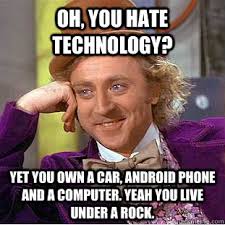
Just about everything we do in the 21st century is backed by technology. Everybody has a desktop, laptop, or hand held device. Many people have all three. But for some people, this is just too much.
Welcome to the anti-tech backlash. And if someone abuses technology, it only intensifies the backlash. It could come so subtle, like texting while driving or leaving your cell phone to ring in a public place, like a movie theater or church. Then they’re far more serious episodes that cause some to hate today’s technology. In Boston, while on the subway, someone took pictures up women’s skirt with their smartphone (it’s called upskirting). There were no laws preventing or condemning this perverse behavior. Luckily, Massachusetts lawmakers are trying to combat this trend, but it’s an uphill battle because culprits who do this hide under ‘Free speech’ and ‘freedom of expression’.
Then there’s Silicon Valley itself, technology capitol of the world. There’s a growing disillusion between techies making six and seven digit figures and minimum wage workers who feed them, clean up after them, and serve them. Add to that the rent crisis in that area. It’s easy for techies to pay extremely high rent and real estate over there, but what about those only making minimum wage? Don’t they have a right to decent housing and other opportunities? Then there’s the fear dilemma, and how far will they go. When I was in high school, I was always told, “Robots are going to take your job one day.” Look at how advanced and humanistic robots have become in the last 20 years. A month ago, I read about this firm in Sweden urging employees to get an RFID chip in their hands. With the chip, they had access to doors, copiers, even lunch. Many fear this could be a trend, to the point where employers will one day require employees to get chipped. That way, they could follow you 24 hours a day, and if you get out of line, they’ll take the chip off and you won’t have a job. Yes, technology has been good to us, but they’re a lot of dangers as well. Do anti-techies have validity in their concerns?
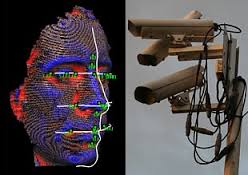
If your international trip flies through Washington Dulles International ?Airport, that passport had better be who you say you are. There’s a camera that runs deep, and I mean deep, that will check you out.
It’s called facial recognition technology. It’s biometric technology that studies a person’s unique facial features: facial position, eye shape, nose, cheekbone, etc. Back on March 11, Customs and Border Protection (CBP) began a facial recognition program at Dulles Airport to combat passport fraud and false identity. It’s believed this technology will help catch impostors flying into our border, but civil libertarians and privacy rights groups worry of more sinister consequences. You see, the picture taken will be matched with the RFID backed passport picture. If the two pictures don’t seem to match, the officer alone will have full discretion on legal action. CBP themselves say facial recognition won’t be the only factor in letting a person into the country, or whether further screening methods are necessary. Other than that, CBP has been generally hush-hush about this new security measure. It only takes a few seconds to snap a facial recognition photo, and they promise the photos won’t leave CBP headquarters, unless there is a criminal investigation. This test program is likely to last 19 months.
I know some are going to go hurrah for extra security at our airport. When I look at one incident that happened today, I see why. But let’s dig deeper. They have RFID technology in our passports already. Our passports can tell any law enforcement official around the world where we are. Do we really need to spend billions of dollars on this? Some may say, “Look at ISIS and other terror groups. Look at the drug cartels. Look at human traffickers.” I understand how dangerous and fragile this world is. But whose to say they won’t use this technology to go after law abiding Americans while letting the sociopaths go free? Haven’t they done it before?
What do A-list actress Ashley Judd, former White House Intern Monica Lewinsky, pop star Iggy Azalea, and former Boston Red Sox Pitcher Curt Shilling have in common? They’ve all been targets of cyber bullying. They’re all taking steps to combat it.
A few weeks ago, I talked about Iggy Azalea shutting down her social media accounts because of cyber hatred. That hatred started when unflattering pictures were released by the paparazzi. A few weeks later, Curt Schilling’s teen daughter was the target of cyber bullies and vulgar tweets. Shilling sought out the trolls and took legal action against them. Some, including a New York Yankee employee, were fired because of their mean tweets. Last weekend, Ashley Judd tweeted in defense of her favorite basketball team, the Kentucky Wildcats. The tweets she got back were so hateful and vile that some included threats of violence and rape. She has vowed to file charges against her cyber trolls in hopes these charges sent a message. Then there’s Monica Lewinsky, perhaps the first major cyber bullying victim. In the wake of her romp with then President Bill Clinton in the 1990s, she recalls being labeled on the Internet every negative, degrading name a woman can be possibly labeled as. While giving a TED talk, she virtually declared war on cyber bullying, and used her own humiliating ordeal as a catalyst. Lewinsky also used the TED platform to encourage victims to keep surviving and never give in or give up. She said, “Anyone who is suffering from shame and public humiliation needs to know one thing: you can survive it…”
I don’t know how which method you feel works best: shutting down, confronting the haters, or encouraging the victims. I prefer the second and third methods myself. At least they’re doing something. I encourage us all do whatever we can to fight this social epidemic. It all starts with us. Let’s watch what we say on Facebook, Twitter, You Tube, blogs and other social media. Our words can hurt. Basically, if you can’t say it to someone’s face, don’t say it online. If you are the victim of cyber hate, call them out on it at first, but don’t stoop to their level. Just let them know you don’t appreciate abusive language. If it persists, don’t hesitate contacting local authorities. There are anti-bullying laws in every state in the US. Stay strong; there are many, many, many other victims who have been where you are. For every hater, they’re usually many more true cyber friends who are ready to love, support, encourage and uplift you. Shouldn’t we be more focused on them?