
Jul 10, 2015 | Smartphone
Samsung is about to release it’s next crop of tablet/smartphone products. So is it’s rival, Apple. But this year, Samsung plays a date game for to keep a competitive edge.
Samsung is scheduled to release it’s newest smartphone-tablet hybrids in August instead of September. That’s when Apple usually releases their next iPhone. In previous years, Apple tends to dominate the tech media and consumer wallets for weeks afterwards. Surely you’ve seen the lines at Apple stores. I’ve even seen people in sleeping bags camping out the night before. But Samsung is no slouch either. In September 2011, Samsung released it’s first Galaxy Note. The Galaxy Note became such a popular money maker that Samsung became credited for a new tech phenomenon: the phablet. That’s a combination of tablet and cell phone. Since then, a new Galaxy Note would be released a Galaxy Note would be released twice a year. September is one of those times. But September 2014 brought two complications: iPhone 6 and iPhone 6 Plus. They were released just weeks before Galaxy Note 4 phones were. Apple won that contest by almost by consumer landslide. This year, Samsung will launch this year’s masterpiece before Apple does to avoid last year’s fate.
And I don’t know what to say about this one. As businessmen, I can understand this move. They were trampled by Apple last year. They’re don’t want to get trampled again. But I wonder does Samsung have a confidence problem? Okay, they were blindsided last year. But their Galaxy Note franchise has been extremely successful over the years. They can stand up to iPhone easily. I’d like to see both Apple and Samsung release their products the same day just to see what the end results are. I see long lines for both entities. So Samsung’s moving up their release dates. Is this an act of business smarts? Or is it an act of fear?

Jul 9, 2015 | News
Happy glitch day! That’s what we should call yesterday, July 8, 2015. ?At least three major institutions were affected in one day.
A computer glitch at the New York Stock Exchange made an already bad day at Wall St. even worse. Glitches halted trading for four hours, interrupting trading for over half the work day. Meanwhile, United Airlines, one of the largest airline carriers, suffered a computer shutdown. It was so bad that it grounded every United airplane at every airport in the USA for three hours! A United Airline spokesperson said the glitch was a router issue. If that wasn’t enough, The Wall Street Journal, the most trusted financial news medium in the US, was also hit by a glitch. This one was blamed on the people. It was explained so many people went to the Wall Street Journal in the wake of the other two glitches that WSJ’s website couldn’t handle so much traffic at once. By workday’s end, all three institutions were running again. No link was found between the NYSE and United Airline glitch. Though these shutdowns concerned authority figures from the White House to the FBI to Homeland Security, all insisted hacking wasn’t involved.
I must disagree with the authorities’ assessment. Three major institutions went down in one day at the same time! That’s no coincidence. Think of all the chaos this caused. Think of the chaos and work stoppage at the stock exchange and the billions that didn’t get traded. This was on the same day Asian stocks took a nose dive. Think about the chaos at airports nationwide. Business meetings were disrupted. Vacations were disrupted. I can only imagine the tempers flaring and tears shedding at the airports. And even after the glitch was fixed, they have to get thousands of displaced passengers on flights. They’re too many coincidences. And why ?was Wall St. Journal the only one hit? I’m sure many media were flooded when these glitches came down. I’m convinced these businesses were deliberately hacked (okay, there’s no hard evidence to prove that…yet). But who could and would pull something of this magnitude?

Jul 8, 2015 | News, Security
We’ve reported on disturbing cases about?the savagery of sextortion. But this has to be the worst sextortion case ever! This one is so bad it got the culprit 105 years in prison.
That culprit’s name is 31-year-old Lucas Michael Chansler from St. John’s, Florida, a suburb 25 miles south of Jacksonville, FL. Chansler pleaded guilty to nine counts of producing child pornography, but that’s only the beginning. ?Authorities representing the FBI have identified 109 victims. Most victims were underage teen girls. These victims span 26 US states, three Canadian provinces, and throughout the United Kingdom. Authorities believe there are 240 more victims out there. ?Chansler would seek out girls on social media sites. Eventually, he’d persuade girls to take inappropriate photos of themselves. Then, he’d threaten to blast the inappropriate photos online or even to their parents if they didn’t send him more explicit photos. Back in 2010, Chansler was indicted when one girl and her parents came forward. Here’s the real chilling part: Chansler himself confessed he targeted teenagers because he felt adults were too smart to fall for his scheme. Chansler used many aliases from VictorHugo to CaptainObvious. That’s one reason he was able to do so much damage.
The other is the reason this case is still fluid. There’s over 200 victims yet to be identified. Authorities believe, and I agree, it’s because of the shame this could put on themselves, their futures and their families. Thank God Chansler was caught. If not, he would have gone on and on and on. Parents, please keep an extremely close eye on what your children and/or teenagers are doing online, especially on social media. I urge adults to use caution and be very picky about who they let in their computer. If you don’t know that person, don’t accept that friend or follower request. If your?kid doesn’t know that alias, that alias shouldn’t be there! I’m not here to blame the victim. It’s a?shame?the internet has to be spoiled by a handful of sociopaths like Lucas Micheal Chansler. I hope authorities step up their game in the war against sextortion. Chansler will never experience another day of freedom, nor should he. What can we do to keep our families and friends safe?

Jul 7, 2015 | internet
A couple of months ago, we had the unfortunate duty?to report the sudden and tragic death of 47-year-old David Goldberg, CEO of Survey Monkey and Silicon Valley legend. Now, his widow Sheryl Sandberg steps in his shoes.
Ms. Sandberg, Facebook‘s Chief Operating Officer, will be on the directors’ board of Survey Monkey, her late husband’s online survey company. Survey Monkey announced Sandberg’s appointment to their board of directors. She vows to help people make better decisions, and this position will help Sandberg do just that. Survey Monkey is more than just cool surveys and polls. It’s used by employers to watch job morale, and even used by Wall St. to watch product markets and sales. Who knew this survey site had that kind of power? On the board, Sheryl Sandberg vows to keep Dave Goldberg’s vision alive of building a lasting company that will improve the way everyone does business. During Goldberg’s leadership, Survey Monkey went from a staff of 14 to a staff of 550. By the end of his six year tenure, Survey Monkey was a two billion dollar company. GoPro senior executive Zander Laurie has served as Survey Monkey’s executive chairman since Dave Goldberg’s untimely death.
I salute Sheryl Sandberg for taking this role. Who better to fulfill Mr. Goldberg’s legacy than the woman who was closest to him? Survey Monkey is a fast growing company that can really help people economically and morally. Who better than Ms. Sandberg to help them reach that potential? Who better to help manage the 550 employees and boost morale in that office than Ms. Sandberg? Plus, this was one of the biggest power couples in Silicon Valley. Wouldn’t you want that kind of legacy, honor and respect on your team? Let’s stir the pot a little bit. Wouldn’t Sheryl Sandberg make a great CEO of Survey Monkey?

Jul 6, 2015 | internet, Wireless
There were more American travelers this 4th of July weekend than any 4th of July since 2007, the eve of the Great Recession era. Many of those travelers took to the skies. If that was you, then how was your in-flight Internet experience?
I ask this because on all airlines, Internet use is an economic booster. But they’re not all the same. On major carriers like American, you could pay up to $20 for not great service. However on carriers like Jet Blue, WiFi is not only complimentary, but runs smoother than butter. Don’t forget these are the same airfares that offer free baggage check-in, unlike the big boys. Jet Blue can pull off free WiFi because of it’s generous relationship with Internet provider ViaSat. Jet Blue writes one check for all the bandwidth, and 40% of it’s passengers take advantage of this service. But there’s Internet providers like Gogo, which is used by American, Delta, United and even Virgin America. Gogo makes profit by charging a small number of people crazy amounts for Internet services. Maybe that’s why only 7% of these passengers even use in-flight WiFi. Gogo can charge as little as $5 an hour to $60 for a monthly subscription for frequent flyers. There’s Row 44, who works with Southwest Airlines. Southwest charges $8 a flight for their services, but frequent fliers can use it complimentary. United is also partnering with Panasonic, which will charge $20 a flight. No thank you.
It’s crazy I find out about this when the US government is about to investigate collusion in the airline industry. I also find it interesting the same companies who charge a ton for checked baggage are the same who charge a ton for WiFi use. Only 7% of passengers who are forced to pay for in-flight WiFi actually do so. But when WiFi is offered for free, 40% use it. Shouldn’t that be a clue to all airlines? What conclusions do you find from this report?

Jul 5, 2015 | Entertainment
People around my age will never know a time without ESPN or MTV. Kids today will never know a time without Netflix and Amazon. Netflix and Amazon wants to keep it that way.
According to Common Sense Media, 75% of children under age 9 has access to a smartphone. And it’s obvious how tech savvy tweens and teens are. Netflix alone makes up for a third of online traffic during peak times in North America. This sounds like a potential match made in heaven. In fact, Netflix, Amazon, Hulu, You Tube and other streaming services are slowly but surely taking over traditional family TV. Maybe that’s why Amazon came out with a show like Gortimer, the story of a 13-year-old and his fantasy adventures. This adventure/comedy show is a hit with critics and fans alike, especially with child fans. Plus, kids who grow up on streaming have more control over devices than we did over the TV. This new medium of children’s TV is making a new generation of TV producers and actors like Luke Matheny, director of Gortimer and 14-year-old Morgan Siegel, who plays Gortimer. And these aren’t your second rate shows. Many say Gortimer and other streaming children’s TV rivals anything found on Nickelodeon or Disney.
This shouldn’t surprise anybody. When you look at how Orange is the New Black and House of Cards is taking TV by storm, it was only a matter of time. There’s a lot on TV today I wouldn’t recommend to any child. The days of Saturday morning cartoons and prime time family hour are long gone. I don’t see them ever coming back. Thank goodness for streaming services like You Tube Kids and Netflix and Amazon filling in the gap, and keeping kids innocent. Would you rather have your kids go to a safe streaming environment, or take a chance with the TV screen?

Jul 4, 2015 | Computer technology
Cuba is a nation in transition. It’s decades’ icy relationship with the US is getting better. US President Barack Obama even called for more normal relations last year. Despite these changes, very few have access to something many in the US take for granted.
That’s internet access. Thanks to strict government regulation, Cuban residents can’t have home online connections. At best, they can use online services at a nearby hotel for $7 an hour, and most can’t afford it. Cuban Millennials are changing this. There’s Robin Pedraja, 28, who started an online magazine called Vistar. Vistar is a success despite being laughed at by government officials when he applied for a business license. There’s Elio Lopez, who helped put together an online network called El Paquete Semanal. That’s an online service that delivers movies, TV shows, digital magazines, and other apps throughout Cuba. There’s Yondainer Gutierrez, creator of AlaMesa. That’s an Android app that could pass for a Cuban version of Yelp. Hiram Centelles is one of the leaders of Cuba’s tech revolution. He grew up around black markets and noticed how difficult is was for buyers and sellers to get together. In 2007, Centelles created Revelico.com, their version of Craigslist. Within months, the government shut it down. But Revelico got back on and is now doing better than ever, getting eight million views a month and 25,000 listings a day.
I salute these guys and others using computer technology to help Cuba become more connected, with each other and the rest of the world. This is a critical step in moving forward, and I’m glad these men and women are leading the charge, and inspiring others to do the same. But also, on this American Independence Day, it’s a reminder of the freedoms we have, technological and otherwise. May we never take such freedoms for granted. Happy 4th and stay safe!
Jul 3, 2015 | Computer technology
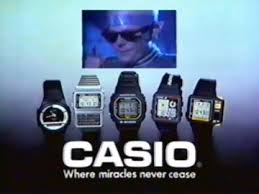
So you think Apple is going to dominate the smartwatch race? Not if a Japanese watchmaking firm has anything to say about it.
Casio Computer Co., the same folks that gave us the first digital wristwatch, is building their own smartwatch. They’re hoping their decades as a leading watchmaker will give them the edge over Apple and other smartwatch makers. Expect Casio to focus on comfort and durability, rather than just the technical aspects. This comes after Casio president?Kazuo Kashio’s resignation. His son assumes that role now. This is familiar territory for Casio. They’ve built watches with heart rate monitors, schedule managers, and other communication skills. Casio’s smartwatch will run you around $400, a little higher than the cheapest Apple iWatch. The release date is expected to be in March 2016. The Casio smartwatch target audience is men who enjoy outdoors, but obviously, anybody can get this watch. Casio is in great position to produce and launch such a watch. Between March 2014 and March 2015, Casio had it’s best year in sales. Right now, Apple owns 56% of the smartwatch pie, but that’s expected to drop dramatically in the next few years, thanks to competitors like Android and Casio. Here’s another reason why I think Casio is launching their smartwatch now: timing. In 2014, it’s estimated 3.6 million smartwatches were shipped. By 2020, that number will probably be 100 million.
So can Casio compete? I think it can, and maybe even beat Apple in the smartwatch game. Since the 1970s, they’ve led the way in watch innovation. They gave us the calculator watch, dictionary watch, TV remote control watch, gaming watch, the first camera watch, and the first MP3 player watch. How fitting they build the smartwatch. I‘m looking forward to see what they come up with. Looking at their track record, we can all expect to be surprised. Should Apple be afraid?

Jul 2, 2015 | Error
Google is the leading tech/online based company in the world. But earlier this week, they dropped the ball big time on social sensitivity, and was quick to correct it.
On it’s photo app, Google accidentally tagged two African-Americans as gorillas. A web programmer named Jacky Alcine quickly called out Google in colorful language. The Google Photos app just started a few weeks ago. The user starts a search. Google suggests categories from a machine trying to adapt human traits like labeling. The company removed the gorilla category all together, and that picture no longer exists. The machine, depending on artificial intelligence, made a huge mistake in labeling people as animals. Google vows this machine will do better labeling people in the photos. This isn’t the first time Google released an app while there were obvious bugs in the system. Even they acknowledged the system was imperfect when it was released. But I doubt anybody was expecting this. Some time ago, they found themselves in hot water with You Tube Kids when adult content was discovered on the child friendly app. Both incidents go to show that robots aren’t sympathetic when it comes to sensitive issues. But human beings are.
There are two lessons to this story. Don’t release your product until you checked, double checked, and triple checked to make sure it’s ready for market. Google said it had bugs in system at the time of photo app release. That should have been a warning sign right there. The second lesson is, let’s stop putting so much trust in robots! In Germany, an auto worker was accidentally killed by a robot on the job. If Google hired human beings to do the machine’s work, they would have caught such mistakes and prevented them from even making it online. Wouldn’t Google Photos be better off if it just hired human hands instead of letting a machine do the work for them?

Jul 1, 2015 | internet, Security
The FBI is investigating not one, not five, but eleven different attacks on the San Francisco Bay Area’s Internet system. This isn’t your typical attack.
This attack was physical, not cyber. This attack messed up internet cables 11 times going back to about a year. According to the FBI, the first of these attacks took place in July 2014. This attack disrupted the Internet for businesses and residential homes alike. The disruptions went as far as Sacramento, the state capital and 88 miles from downtown San Francisco. In one very recent attack, the culprit broke into a vault underground and cut several fiber optic cables. What makes this so concerning is that these fiber optic cables are the lifeblood of the information super highway. If you infect, disrupt, or tamper with the lifeblood, then the rest of the body, in this case the whole Internet, is going to suffer. In this latest attack, the fiber optic cables tampered with belong to Colorado based service providers called Level 3 and Zedo. ?Unfortunately, this case isn’t unique. Earlier this year someone cut through Arizona cables and cut off Internet services for tens of thousands. In 2009 California, underground fiber optics were deliberately cut. This virtually killed Internet and cell phone service for three heavily populated Southern California counties.
But what’s scary is we don’t know who is responsible for these attacks. What’s even scarier is they don’t have a motive. Authorities believe the culprit(s) are dressing up as utility workers using utility workers’ tools to break in and cut the cables. This could be a disgruntle employee. But something tells me this is far more sinister. Isn’t it bad enough that we’ve got cyber criminals trying to wipe out corporations and the shoppers therein? And what about international enemies who want to do harm? I wonder what would happen if a group of enemies decide to cut off fiber optics all over the country at once? Some may say, “That’s too far fetched.” Is it really though?
