Jun 30, 2015 | Smartphone
What’s the worst way to end a romantic relationship? Is it through email? Is it through texting? Is it through ghosting? Or do they send their new lover to…ahem…’communicate’ that it’s over? There’s an app that may trump them all.
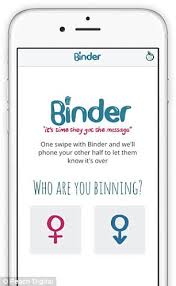
This is where the Binder app comes in. Using the theme, “It’s time they got the message,” this app is the ultimate communicator in breaking up. The app was built in the United Kingdom. It’s named after a British slang term ‘binned’, which means dumped your girlfriend. It was built as a joke. But knowing how people are today, you know this app is going to be used to seriously end bad relationships. The app asks the relationship breaker to input the name, number, and gender of the person they intend to break up with. Then they ask the breaker to choose the reason. And these reasons don’t let you down easy. Reasons include, “It’s better to have loved and lost, so on that note, get lost” and “Our relationship is patchy as your beard” and “It’s not me, it’s you.” ?Binder creates a card, adds a pre-recorded voicemail, and sends it to your?soon to be ex. The voicemail is even less kind. It whispers sweet nothings like, “I hate your face. [Your boyfriend] is sick in his mouth every time he sees you around.” But this is supposed to be a joke, right?
I learned a long time ago that technology isn’t the problem. It’s the human heart and mind behind the technology. And when I look at how evil today’s human hearts and minds are, the Binder app will become far from a joke. I shutter to think how many relationships will end and divorces will happen and families will break up through Binder. We rarely communicate with each other anymore. I went to a restaurant and nobody at this table said a word to each other from start to finish. They just all looked at their smartphones. At this one dance party, instead of dancing, they played with their phone. Albert Einstein said, “I fear the day that technology will surpass our human interaction. The world will have a generation of idiots.” I’ll go even further. I fear we have a generation of sociopaths. Is the technological and social climate just right for Binder to break hearts and destroy lives?

Jun 29, 2015 | General, News
The 2016 games in Rio de Janeiro are just months away. And they’re two cable companies who’ve already made preparations for future Olympics. In fact, they don’t even know where they’re having the 2024 games yet, but we already know who has the right to them.
In Europe, Discovery Communications and Eurosport have European rights to broadcast the upcoming Olympic games in 2018, 2020, 2022, and 2024. This landmark deal made with the IOC [International Olympic Committee] will give Discovery, major cred in the sports coverage world. It could definitely make Eurosport the premier sports network in Europe, if it isn’t already. This deal is valued at over $1.44 billion dollars; that’s 1.3 billion Euros. But that’s just the beginning. Come Olympic time, they’ll have exclusive rights to free TV, pay-per view, and even computer/mobile Olympic events. As tremendous is this feat is, there are limits. This deal doesn’t cover Russia. Nor does it cover Great Britain and France between 2018 and 2020. That honor belongs to the BBC and France Televisions. It’s been said Eurosport is a bigger sports network than our ESPN, or any American cable network. Maybe that’s because the US population is 315 million. The European population is over twice as much, reaching twice as many more people.
That’s one of the reasons we here at Geek Choice don’t like this idea. Two cable companies have full, exclusive Olympic rights over 54 countries and 137 million households. Think about that. If that’s not monopoly, I don’t know what is. And the IOC approves this. I’m just glad British, French and Russian media intervened, even if it’s just over a couple of years. Couldn’t they have shared with German, Dutch, Italian, and other networks instead of taking the whole pot? The Olympics cover hundreds of sports over days. Couldn’t they have split the events? I know what you’re going to say. “But in America, you don’t see NBC splitting the events.” Do you see NBC hogging up the Olympics in 54 countries?

Jun 28, 2015 | internet
Throughout the centuries, there’s been inventions that have literally turned things inside out. There’s been the wheel, gunpowder, light bulb, phonograph, TV, computer, and of course, the Internet. Let’s see how much Internet has increased so far this 21st century.
In 2000, barely half of American adults used the Internet. Today, that number is at 84%, although that number has stabilized in the last few years. Even Internet use among senior citizens has skyrocketed. Now, 58% of seniors are on the World Wide Web. Those who have college and advanced degrees are more likely to go online than those who have less than a high school diploma. But even that gap is shrinking. Economically, those making six digit figures are more likely to go online than those who make under $30,000 a year. But even the economic gap is shrinking. Those living in rural neighborhoods are less likely to log on than their urban and suburban counterparts. However, 78% of rural residents still use the Internet. In 2000, Asian-Americans were the most likely among racial/ethnic groups to go Internet. Statistics prove that’s still true today. But others are catching up. In fact, African-Americans have seen the greatest Internet growth rate in the last 15 years. In 2000, men were slightly more likely to go online than women. Now, it’s about even.
What contributes to the rise of Internet use and the closing of all these gaps? I think it’s necessity and availability. These days, one can visit their public library for Internet use. Or you could go to someone’s house to do so. And it’s becoming necessary. I can’t imagine not having online access in 2015. Maybe that’s why tech leaders are working so hard to give everyone Internet access. Let’s face it, you need to Internet to do so many things now: travel bookings, job findings, running a business. Notice on job applications, the first thing they’ll ask you for is your email address. What would you do without the Internet today?

Jun 27, 2015 | Malware, News, Security
When it comes to sophisticated international hacking, the US, Russia and China take the prize right? Not so fast. There’s a hacking group in the Middle East that’s causing concern everywhere.
A group called the Yemen Cyber Army hacked a Saudi Arabian news website called Al Hayet. Not only did they infiltrate, they threatened Saudi Arabia over the continued violence and unrest in Yemen. That was back in April, and Yemen Cyber Army has gotten stronger ever since. On May 20, they used Twitter accounts to hack the Saudi foreign ministry. The next day, Iran’s state run news blamed Yemen Cyber Army for this attack, which led to the leak of foreign ministry employees’ personal information. Now, Wikileaks is announcing the release of around a million records from the Saudi foreign ministry. Wikileaks didn’t say the exposed documents were given to them by Yemen Cyber Army. But Wikileaks did credit them for breaching the Saudi Foreign Ministry. This cyber group has no spokesperson. It’s not verified they’re even based in Yemen. Some of them claim to be from Yemen. But yet they won’t speak Arabic or give away their location. In fact, an Israeli cyber security group called ClearSky believes Iran’s government is behind the group. They discovered malware deployed against 550 different targets throughout the Middle East. Half of those targets are against Saudi Arabia.
Whether the Yemen Cyber Army is made up of Yemen or Iranian hackers, or both, one thing should be clear. Cyber conflicts around the world show no signs of slowing down. In fact, I expect them to only intensify. Unfortunately, the Internet seems to be a new way for individuals, corporations, and whole nations to attack and attempt to destroy each other. Obviously, there’s a lot of good the Internet does. In fact, there’s more good than harm. But ClearSky has a valid point. With all the turmoil in Yemen, I’m convinced the Yemen Cyber Army is getting a lot of help from outside Yemen, though I do believe some are from Yemen. Iran is just one of the nations helping them. Are there others?

Jun 26, 2015 | General
Microsoft and NASA are collaborating to make life easier for astronauts in space and on the ground. This project is called Project Sidekick. Sidekick will use new computer technology innovations to reach out to astronauts at ISS. For those of us who’ll never blast off, that means International Space Station.
Assisting in Project Sidekick is Microsoft’s technology called HoloLens. These lenses will give virtual aid to those working off and for the Earth. It’s expected HoloLens will be used on Space X’s next resupply mission to ISS on June 28. NASA leaders believe HoloLens will provide new capabilities for those conducting research science on the ISS. Microsoft and NASA tested Project Sidekick, which goes hand in hand with HoloLens, on the Weightless Wonder C9 jet. Project Sidekick’s first mode is Remote Expert Mode. With Skype and these lenses, the ground crew can see exactly what the space crew sees. As of right now, they can only communicate this verbally and orally. The second mode is Procedure Mode. This would lessen training time for astronauts and be critical for missions deep into the solar system, and better help communications through difficult operations. Project Sidekick will have it’s first real test starting July 21. That’s when NASA’s NEEMO [NASA Extre Environment Mission Operations] begins. That’s when a team of astronauts and engineers will spend two weeks underground in an underwater research station called Aquarius. Isn’t space and sea exploration the exact opposite? Microsoft and NASA believe oceanic exploration is a good test for space exploration.
This is just one of Microsoft’s coming innovations. I don’t know if this will work or not, but there is a huge interest in space exploration these days. They’re even people willing to spend big money setting up permanent space colonies on the moon and Mars. So Microsoft’s interest is timely. Will Project Sidekick and succeed?

Jun 25, 2015 | internet
Twenty-first century technology helped create a new family phenomenon: the helicopter parent. Now, you can use your smartphone, social media, even RFID technology, to keep track of your child 24/7. But who says this behavior is just for parents?
Let’s talk about helicopter siblings. Older siblings are using modern technology to literally play ‘big brother’ to their younger siblings. Such habits start early. I just read one article where a 13-year old lectured his 12-year old sister about why she shouldn’t watch certain movies on Netflix. I can definitely see this older brother using the tablet or smartphone to spy on younger sister as they get older, especially when her first boyfriend comes around. ?Some psychologists believe children are imitating their helicopter parents when they do this. And helicopter siblings keep the trend well into adulthood. I read another article where an older brother used an app called Life 360 to follow his younger brother to a Kansas City restaurant. Jeff (older brother) can use Life 360 to see when Chris (younger brother) passes by, goes to work, or even goes on a date like he was in this Kansas City restaurant. I almost forgot to tell you; Jeff is 46 years old. Chris is 40.
Believe it or not, some younger siblings welcome it. Some voices say social media helicoptering keep them grounded and careful of what they post. I am not one of those voices. Family or no family, this is still an invasion of privacy. I understand why parents would use this to follow their teenagers, especially rebellious teens. I disagree with it, but understand it. So yes, I have a problem with grown adults using apps to follow other grown adults. At least Jeff and Chris consent. But what if there’s extreme family drama? Call me a product of the old school, but we didn’t need watching over 24 hours a day, seven days a week. And didn’t most of us turn out all right?

Jun 24, 2015 | Entertainment
There are many, many dating sites out there. There are those catering to certain races and ethnicity, those catering to certain religious groups, those looking for true love, and those just looking for a hook-up. I discovered perhaps the most exclusive dating app/site of all.
It’s called The League. They’ll be the first to tell you it’s not for everybody. In order to make The League, you have to be personally accepted by it’s founder, Amanda Bradford, and her staff. Last month, 30,000 people applied for The League app. Only 7,000, about 23%, were accepted. That’s around the percentage of applicants accepted to a top tier university. Many League app users are New York City residents. According to Bradford, selectivity is the New York way. “I do think the concept of exclusive, invite-only, hard-to-get-into, wait-in lines ? it?s very New York,? says the 30-year-old. What does it take to make The League? You can get referred by another member. You can apply through the app, then be picked, prodded, and reviewed by Bradford and/or her staff. Women have to be between 22-38; men must be between 24-44. An advanced degree and high paying job help your case. Over a third have advanced degrees, and 13% are CEO‘s and/or successful business owners. And yes, you can be kicked out. Bradford herself says she loves kicking people out, especially for immature or inappropriate behavior.
Some call this snobby dating. We here at Geek Choice will never use this app. But I can see why The League is so attractive. In the 1970s, New York had a disco called Studio 54. It was the most exclusive disco in New York City, and probably the country. Yet, crowds lined up every night of people hoping to get in. But this app is too exclusive for me. If I use a dating app or site (and I won’t), I’d rather be meeting with ‘regular folks’, with all their flaws and imperfections. So The League can have their fantasy world where everyone is almost perfect. Isn’t it better to mate your potential mate the old fashioned way: face to face?
Jun 23, 2015 | Computer technology, internet
Ever been to a police station and had to pick a suspect out of lineup? Nowadays, computers can do that to anyone, including you. Even Facebook can pick you out.
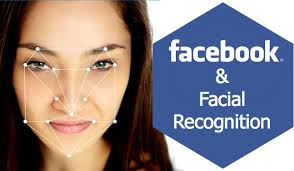
There’s an experiment going on in Facebook’s lab headquarters. They want to recognize you even when they can’t see your face. They want to recognize who you are by your shape, clothes, hair, even your favorite pose. Yann LeCun leads Facebook‘s artificial intelligence program. You know how you can recognize somebody, especially somebody you know really well, without looking at their face? LeCun wants to see if computers can do the same. LeCun’s team studied 40,000 photos, some with their faces covered or turned away. They ran these photos through a neutral network. The final algorithm correctly recognized people’s faces, whether covered or not, 83% of the time. This could be a driving force behind an upcoming app called Facebook Moments. That should be ready for the public by next week. Facebook Moments will comb through a user’s photos, from family reunions to celebrations to that wild vacation/walk of shame. It’s believed this tool will even alert someone when a photo of him/herself pops up. I’m sure that will make privacy rights advocates happy.
And I’m glad they’re addressing the issue of privacy with this facial recognition. Controversy often follows when airports practice facial recognition in the name of safety. You know there’s a firestorm coming when a social media entity practices it in the name of social togetherness. It’s kinda fun to try and recognize someone you know in the real world. But for a computer to do it? I have mixed reaction about that. Yes, it can be a good thing. But I often wonder, can this be used for evil? Can this be used to deliberately track and/or stalk someone? Could this technology be used to create a nanny/big brother state?

Jun 22, 2015 | Entertainment, Uncategorized
Amazon has definitely changed the publishing game. You can whip out Kindle in a public place and nobody knows if you’re reading the Bible or 50 Shades of Grey. But what about the author, or self-publisher?
Amazon proposes a new method of payment to it’s authors. Instead of paying authors by how many books are sold, there’s talk of paying authors by how many pages are read. They keep track of how many pages are put on the screen long enough to be read. Starting in July 2015, Amazon will start the payroll system based on pages read. This new order is for books published through Kindle Unlimited and Kindle Online Lending Library. Both programs, which run from $9.99 a month to $99 a year, already have a combined 800,000 books in their arsenals. This announcement is catered to self-publishers and distributes through Kindle Direct Publishing. Amazon claims to make these changes because paying the same amount for books based on length won’t provide enough alignment between reader and writer. To put it in street terms, Amazon thinks they’re bridging the gap between the short books and big books by paying per page read.
I’m weary of this new program. I don’t that it’s fair that a 20 page novelette written in a matter of days gets the same equal pay than a 300 page novel written in years. And this could open the door for many shortcuts. What if someone wants to make the font bigger? And how much is paid per page read? And I guess the author had better make every page count. I’ve read books where I could skip pages, sometimes even a whole chapter, and still get the best out of the book. I guess authors with Kindle Direct can’t play that game anymore. But that’s my point. Will this new pay-per-page plan improve the quality of self-published books?

Jun 21, 2015 | Computer technology
I’m riding in my Cadillac on Ocean Dr. in South Beach Miami. I check in the Clevelander Hotel oceanfront suite. I have supermodels on my arm and get VIP treatment in a 5 star exclusive nightclub. Someone taps me on the shoulder and says, “Your time is up.” Then reality sets in and I take off my Oculus and hand it over to the next guy.
This isn’t a far fetched incident. At some Marriott hotels, they’re setting up Teleporter stations. It’s part of their “Travel Brilliancy” campaign, and they’re hoping to start a travel revolution. The brains behind these Teleporter stations say 4D puts you in the movie, and you can smell the salty air and feel the ground shake. Think about how accessible and portable virtual reality is today. For around $200, you can get Gear VR Headsets. You can get Oculus technology on Samsung ?Galaxy 6 or Samsung Galaxy Note 4 smartphones. And you don’t have to check into a Marriott to have this experience. There is a travel company called Thomas Cook. They offer this experience in 10 stores throughout Europe. You can experience the Manhattan skyline or pyramids in Egypt. But wait: there’s more. Thomas Cook is mailing 5,000 cardboard VR headsets for as little as $24! Over a million of these cardboard virtual devices are being manufactured.
This is a great way to get virtual reality in the hands of the every day individual who doesn’t have a lot of money. Plus, it’s a great way to get away from the often predictable and unflattering real world. And with the low prices, anybody who hates their life can get their hands on one. But that could be a problem. Virtual reality can become addictive, and thus, abused. Our personal reality can become so dull and mundane that we run to our VR machine and soak in fantasy. What if we don’t want to come out of that fantasy? What if I never want to leave my South Beach hotel, my Cadillac or supermodel girlfriends? ?Should these machines come with a warning/cautious label?
Comment below and let us at Geek Choice know your thoughts!
