Aug 3, 2015 | Computer technology
Gone are the days of putting on and listening to cool messages on your bulky answering machine. Gone might be the days of leaving and hearing a human voice over the phone.
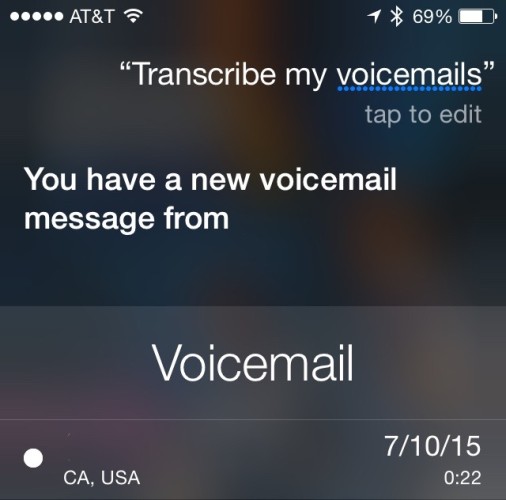
That’s because Apple wants your voicemail. They’re already testing Siri not only to take your missed calls, but to transcribe incoming voicemail. The Apple iCloud will send you the texted content of that voicemail. If these tests are successful, this reality can be available for all sometime next year. Let’s just say a caller calls using iCloud, but the recipient is unable to take the call. What would go straight to voicemail will go straight to Siri. The iCloud can already tell people where you are and why you couldn’t pick up the phone (or just don’t want to; admit it). But with this test Siri can turn voicemail into text messages. Apple’s upcoming mobile operating system, iOS 9, is giving Siri a series upgrade. In conjunction of this upgrade, Apple is also focusing on iCloud Voicemail.
They can do all the testing they want to. They can release iCloud Voicemail and promote the heck out of it. But will consumers want it? Some tech insiders predict the younger generations will embrace this. The older generations will not. Without giving too much information about myself, I’m in the middle. And I don’t embrace iCloud Voicemail. Call me old fashioned, but I like to leave humorous messages for callers to hear before they leave a message. I like hearing a human voice when I miss a phone call. I value the human emotion behind the voice that Siri can’t give. You guys are aware that Siri isn’t human, right?
p.s. We at Geek Choice would like to congratulate Facebook CEO Mark Zuckerberg and his wife Pracilla Chan on their expectancy of a baby girl. We wish Mrs. Chan a safe pregnancy and delivery.
Aug 3, 2015 | Computer technology
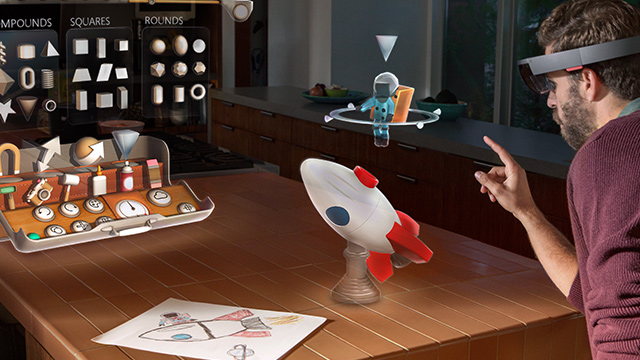
The HoloLens is a virtual reality device headset. This device allows a high-definition world to come to you in your own home. It may be coming to a home near you sooner than later.
According to Microsoft CEO Satya Nadella, the first edition of HoloLens should be out within the next year. He talked about it during an interview with BBC. The first HoloLens to debut will be the ‘V1’. Nadella pointed out the V1 will be geared toward developers and businesses. He predicts the HoloLens will be ‘a five year journey’. So I guess he’s telling the average consumer not to get too excited about HoloLens. It could be years before it comes to our doorstep. But I guess one has to start somewhere. And this BBC interview?should give viewers a sneak preview of what to expect form this revolutionary device and when to expect it (Nadella starts talking about HoloLens at 2:48 in the interview). HoloLens is part of the Windows 10 family. Some thought HoloLens would be a gaming product. To which I think Nadella would say ‘Not so fast’. In his past interviews, he’s emphasized this would be multi-focus, and bridge the gap between consumer and enterprise. Even after the consumer version of HoloLens comes out, it’s expected to evolve.
Evolution is critical to all technological products. Imagine if we were still using Commodore 64, CDs, or pagers. I‘m almost certain the longer it takes HoloLens, the bigger the public interest will be. Not only are they giving the hype machine more time, they’re banking developers and businesses will help out with the hype. But my concern with HoloLens is too much usage. Let’s face it; the real world is becoming a dark place. Will people use virtual reality that they’ll escape real reality every chance they get? Can virtual reality be as addictive as any drug?
Jul 31, 2015 | Computer technology
Amazon isn’t the only entity interested in drones. Google wants a slice of the drone delivery pie. Those two, and other companies, team up with NASA to create a drone air traffic control system.
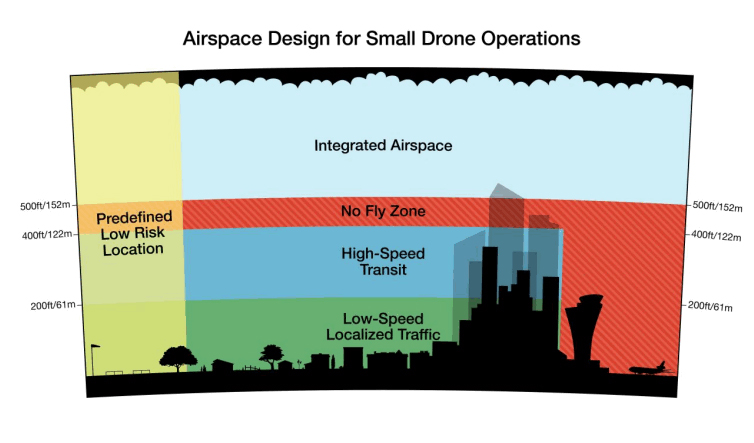
Amazon’s drone vice-president Gur Kinchi revealed his company’s vision at a NASA conference. This conference took place two days ago at the Ames Research Center at Mountain View, CA. It’s highly doubted you’ll see drone delivery services in the months to come. But the conversation is already starting. Rules and regulations must be in place well before drones can deliver packages. Such a system is being dubbed Unmanned Aerial System Traffic Management. Other companies helping NASA’s movement including Verizon Communication and Harris Corporation. Kinchi believes a drone traffic control system is the only way to keep drones from hitting each other, other air traffic, and other human beings. In fact, recreation drones have already caused injuries among people. Back in February, the FAA revealed strict laws revealing drone use. If passed, commercial drones could only fly during the day and within the drone operator’s sight. Drones would be forbidden within five miles of airports. Drones are to remain under 400 feet to avoid crashing with other air traffic. Long range drones must tell where they’re going. And all drone vehicles must have some communication skills to avoid disaster.
And this is a good start from the FAA. ?Gur Kinchi and the rest are right. We need a system to maintain some kind of order if drone delivery service is even going to be possible. Think of the mass destruction that will take place if Amazon and everyone else start delivering package drones tomorrow. It would be the equivalent of allowing toddlers to drive cars and fly airplanes. I don’t care how long it takes. But a drone traffic system needs to be in place before one drone delivery is complete. What do you think the drone movement?
Jul 28, 2015 | Computer technology, Security
Some of the brightest scientist and technology leaders are urging the ban of killer robots and unmanned intelligence weapons.
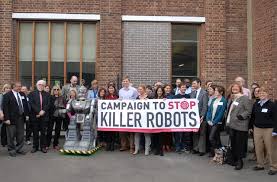
A letter was written and signed by Professor Steven Hawkins, Apple co-founder Steve Wozniak, and other respected leaders of the science technology community. This letter was signed by over 1,000 robotic researchers and 1,000 others. This letter calls for a ban on “offensive autonomous weapons”, weapons that can kill people on their own without human help and can’t be stopped by human intervention. This letter warned against a ‘military artificial intelligence arms race’ that could destroy the human race. The letter was presented at the International Joint Conference of Artificial Intelligence in Argentina. The letter writers aren’t anti-artificial intelligence. In fact, the letter argues AI can be good. For example, AI can protect our military in combat zones. They acknowledge that. But there’s concern offensive weapons could turn wherever they want and cause great human death and destruction. Hawkins even said such AI is our biggest threat. They’re calling on the UN to stop the threat. And there are other groups like Campaign to Stop Killer Robots to call attention to this issue.
I’m glad someone is exposing the potential threat. When I was a kid, I used to hear stories and watch shows about how robots could take over the world and destroy the Earth and her inhabitants. I never thought we’d see it happen. But here we are faced with this threat. What if someone turns on these machines and can’t turn them off? Next thing you know, dozens are dead. There’s no apology, explanation, investigation, lawsuit, or criminal trial that’s going to bring the dead back. This is why we need to prevent offensive autonomous weapons before they’re turned on in the first place. Or worse, what if they’re deliberately turned on with malicious intent to kill innocent human beings? You don’t think somebody is that psychopathic?

Jul 24, 2015 | Computer technology, Security, Software
In the last year or so, we’ve learned anything can be hacked. Even entire retail corporations?and government entities aren’t safe. Can a car be hacked?
The answer is yes. That’s according to professional hacker Charlie Miller of Ladue, Missouri, a suburb of St. Louis. Earlier this week, he and a friend tested their hacking skills on a 2014 Jeep Cherokee. One person was on a laptop while another was on the road driving around greater St. Louis. From the laptop, Miller was able to lock the doors. He blasted the car radio. He was took control of the steering wheel. Miller even shut down the breaks and transmission. Charlie Miller plans to discuss these disturbing results at the Black Hat convention in Las Vegas in August 2015. Miller’s experiment is so alarming that everyone is taking note, from consumers to car makers to political leaders. Chrysler is already teaming up with Miller to fix their soft security spots. A Chrysler spokesperson said the company is “…focused on identifying and implementing software best practices…”. Senators Richard Blumenthal (D-Conn) and Edward Markey (D-Mass) are pushing for laws that secure cars and protect the lives and privacy of everyone on the road. Miller worries the more automobiles depend on 21st century software technology, the more vulnerable?we all are. There could be hundreds of thousands of vulnerable cars on the road right now.
I agree with Charlie Miller. And I hope more legislators and car companies take note and do something. Don’t wait for tragedy to strike to combat evil and chaos. If they have a chance to stop it before they get started, then take it! We consumers should stay on their case until something is done. So share this and other stories like this all over social media. Write to your local Congressmen, Senator, car dealership and car company and insist this security threat is solved before someone gets hurt or killed. Don’t think somebody would hijack somebody’s car from home? Tell that to terrorists, cyber criminals, psychopaths, or anybody with a grudge. I‘m thinking even jilted ex-lovers could use this against each other. Can we afford to wait any longer to fight car hacking?

Jul 17, 2015 | Computer technology
Most people will tell you it’s not a safe idea to hitchhike. Most people say it’s unwise to pick up hitchhikers. Try telling that to a robot.
Submitted for your approval is HitchBOT. He was born, built and raised in Canada. Now he’s going hitchhiking across the United States of America. Yesterday, July 16, 2015, they gave him a kick-off party at a Peabody, MA museum. ?Today as I’m writing this, HitchBOT will be in nearby Salem, MA waiting for his first ride. That’s right; his ultimate destination is San Francisco, CA. And HitchBOT is depending on US drivers to take him there. HitchBOT speaks English, about the size of a kindergartner, ?has a bucket for head and body, garden gloves for hands and boots for feet. HitchBOT’s creators, David Smith and Frauke Zeller, will be the first to admit it’s not a world class machine. Their intention isn’t to win robotic awards. HitchBOT is more of a social experiment. They want to see if American drivers are trusting and generous enough to give this little guy rides westward, eventually arriving at the Frisco Bay. This isn’t HitchBOT’s first hitchhiking trek. He’s thumbed through his native Canada and through Germany and Holland. How will the good ol’ USA treat HitchBOT?
But Smith and Zeller are asking even more from Americans. They’ve listed places they want HitchBOT to go: Times Square, Mount Rushmore, Grand Canyon and other US sites. They can check the listings off HitchBOT’s Facebook and/or Twitter post. That’s ambitious. It’s ambitious to expect Americans to actually pick HitchaBOT up to begin with. This isn’t Canada or Europe we’re talking about here. This isn’t the 1960s or ’70s either. This is 21st century America! This day and age, Americans are cynical of their own shadow. In an era of ‘stranger danger’ and ‘ if you see something say something’, I don’t see HitchBOT going that far. I know this is a robot we’re talking about. But you know how much pop culture has been ingrained in us about robots turning on humanity? Do you think HitchBOT will even make it out of Massachusetts, let alone make it to San Francisco?
