
Jul 4, 2015 | Computer technology
Cuba is a nation in transition. It’s decades’ icy relationship with the US is getting better. US President Barack Obama even called for more normal relations last year. Despite these changes, very few have access to something many in the US take for granted.
That’s internet access. Thanks to strict government regulation, Cuban residents can’t have home online connections. At best, they can use online services at a nearby hotel for $7 an hour, and most can’t afford it. Cuban Millennials are changing this. There’s Robin Pedraja, 28, who started an online magazine called Vistar. Vistar is a success despite being laughed at by government officials when he applied for a business license. There’s Elio Lopez, who helped put together an online network called El Paquete Semanal. That’s an online service that delivers movies, TV shows, digital magazines, and other apps throughout Cuba. There’s Yondainer Gutierrez, creator of AlaMesa. That’s an Android app that could pass for a Cuban version of Yelp. Hiram Centelles is one of the leaders of Cuba’s tech revolution. He grew up around black markets and noticed how difficult is was for buyers and sellers to get together. In 2007, Centelles created Revelico.com, their version of Craigslist. Within months, the government shut it down. But Revelico got back on and is now doing better than ever, getting eight million views a month and 25,000 listings a day.
I salute these guys and others using computer technology to help Cuba become more connected, with each other and the rest of the world. This is a critical step in moving forward, and I’m glad these men and women are leading the charge, and inspiring others to do the same. But also, on this American Independence Day, it’s a reminder of the freedoms we have, technological and otherwise. May we never take such freedoms for granted. Happy 4th and stay safe!
Jul 3, 2015 | Computer technology
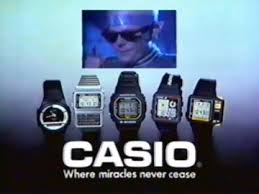
So you think Apple is going to dominate the smartwatch race? Not if a Japanese watchmaking firm has anything to say about it.
Casio Computer Co., the same folks that gave us the first digital wristwatch, is building their own smartwatch. They’re hoping their decades as a leading watchmaker will give them the edge over Apple and other smartwatch makers. Expect Casio to focus on comfort and durability, rather than just the technical aspects. This comes after Casio president?Kazuo Kashio’s resignation. His son assumes that role now. This is familiar territory for Casio. They’ve built watches with heart rate monitors, schedule managers, and other communication skills. Casio’s smartwatch will run you around $400, a little higher than the cheapest Apple iWatch. The release date is expected to be in March 2016. The Casio smartwatch target audience is men who enjoy outdoors, but obviously, anybody can get this watch. Casio is in great position to produce and launch such a watch. Between March 2014 and March 2015, Casio had it’s best year in sales. Right now, Apple owns 56% of the smartwatch pie, but that’s expected to drop dramatically in the next few years, thanks to competitors like Android and Casio. Here’s another reason why I think Casio is launching their smartwatch now: timing. In 2014, it’s estimated 3.6 million smartwatches were shipped. By 2020, that number will probably be 100 million.
So can Casio compete? I think it can, and maybe even beat Apple in the smartwatch game. Since the 1970s, they’ve led the way in watch innovation. They gave us the calculator watch, dictionary watch, TV remote control watch, gaming watch, the first camera watch, and the first MP3 player watch. How fitting they build the smartwatch. I‘m looking forward to see what they come up with. Looking at their track record, we can all expect to be surprised. Should Apple be afraid?
Jun 23, 2015 | Computer technology, internet
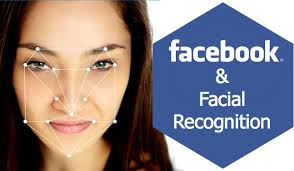
Ever been to a police station and had to pick a suspect out of lineup? Nowadays, computers can do that to anyone, including you. Even Facebook can pick you out.
There’s an experiment going on in Facebook’s lab headquarters. They want to recognize you even when they can’t see your face. They want to recognize who you are by your shape, clothes, hair, even your favorite pose. Yann LeCun leads Facebook‘s artificial intelligence program. You know how you can recognize somebody, especially somebody you know really well, without looking at their face? LeCun wants to see if computers can do the same. LeCun’s team studied 40,000 photos, some with their faces covered or turned away. They ran these photos through a neutral network. The final algorithm correctly recognized people’s faces, whether covered or not, 83% of the time. This could be a driving force behind an upcoming app called Facebook Moments. That should be ready for the public by next week. Facebook Moments will comb through a user’s photos, from family reunions to celebrations to that wild vacation/walk of shame. It’s believed this tool will even alert someone when a photo of him/herself pops up. I’m sure that will make privacy rights advocates happy.
And I’m glad they’re addressing the issue of privacy with this facial recognition. Controversy often follows when airports practice facial recognition in the name of safety. You know there’s a firestorm coming when a social media entity practices it in the name of social togetherness. It’s kinda fun to try and recognize someone you know in the real world. But for a computer to do it? I have mixed reaction about that. Yes, it can be a good thing. But I often wonder, can this be used for evil? Can this be used to deliberately track and/or stalk someone? Could this technology be used to create a nanny/big brother state?

Jun 21, 2015 | Computer technology
I’m riding in my Cadillac on Ocean Dr. in South Beach Miami. I check in the Clevelander Hotel oceanfront suite. I have supermodels on my arm and get VIP treatment in a 5 star exclusive nightclub. Someone taps me on the shoulder and says, “Your time is up.” Then reality sets in and I take off my Oculus and hand it over to the next guy.
This isn’t a far fetched incident. At some Marriott hotels, they’re setting up Teleporter stations. It’s part of their “Travel Brilliancy” campaign, and they’re hoping to start a travel revolution. The brains behind these Teleporter stations say 4D puts you in the movie, and you can smell the salty air and feel the ground shake. Think about how accessible and portable virtual reality is today. For around $200, you can get Gear VR Headsets. You can get Oculus technology on Samsung ?Galaxy 6 or Samsung Galaxy Note 4 smartphones. And you don’t have to check into a Marriott to have this experience. There is a travel company called Thomas Cook. They offer this experience in 10 stores throughout Europe. You can experience the Manhattan skyline or pyramids in Egypt. But wait: there’s more. Thomas Cook is mailing 5,000 cardboard VR headsets for as little as $24! Over a million of these cardboard virtual devices are being manufactured.
This is a great way to get virtual reality in the hands of the every day individual who doesn’t have a lot of money. Plus, it’s a great way to get away from the often predictable and unflattering real world. And with the low prices, anybody who hates their life can get their hands on one. But that could be a problem. Virtual reality can become addictive, and thus, abused. Our personal reality can become so dull and mundane that we run to our VR machine and soak in fantasy. What if we don’t want to come out of that fantasy? What if I never want to leave my South Beach hotel, my Cadillac or supermodel girlfriends? ?Should these machines come with a warning/cautious label?
Comment below and let us at Geek Choice know your thoughts!

Jun 15, 2015 | Computer technology, Entertainment
This week, the 2015 E3 (Electronic Entertainment Expo) will take place in Los Angeles, CA. There will be 50,000 video game enthusiasts, journalists, analysts, and producers that will touch down in what’s called the biggest video game conference of the year.
You can expect the big 3 Nintendo, Microsoft and Sony to make their presence known. Microsoft’s XBox One fans are already salivating over the upcoming 1 TB console. They can’t wait to show off new games like Halo 5, and Rise of the Tomb Raider. Sony is expected to announce new Playstation 4 games like Uncharted 4 and No Man’s Sky. Then there’s the Project Morpheus headset. And what’s this I keep reading about Sony possibly coming out with their own 1TB PS4 console? I’ll believe it when I see it. Don’t count Nintendo out,although they place a distant third in the video game wars. They’ll have a press conference Tuesday, directly speaking to their fans. There is a lot of chatter about games like Mario Maker, Star Fox, for their Wii U. Don’t forget about the smaller games that’ll be announced. And they’ll be some great virtual reality exhibits, like the Minecraft exhibit. Oculus will be everywhere.
As far as Nintendo, I’m one of those who want to see a comeback of an old classics, like Legend of Zelda, Double Dragon, Metroid, Tetris, or Final Fight. But don’t hold your breath. It would be great business for Nintendo, as many gamers can remember these timeless classics. Expect Sony and Microsoft to trade barbs, but personally, I think they should take this time to concentrate on their own products. What I‘d like to see is small time video game producers come and show off their skills. The E3 will be a perfect venue for small gaming businesses to demonstrate their products and watch them take off. Don’t you get a little tired of the big 3?

Jun 13, 2015 | Computer technology
Are you ready for the robot invasion? This isn’t a movie plot or ‘end of the world’ message. Yes, there really are human like robots out there. There is an organization who is behind this phenomenon.
That company is called DARPA (Defense Advanced Research Project Agency). It’s a military organization that comes up with bigger and better technology tools for our defense forces. Over the years, they’ve been involved in the Internet, GPS, Siri, and Google cars. Now they’re investing heavily in two legged, two armed, human acting robots, almost the kind people my age grew up watching. Believe it or not, the 3/11/11 tsunami that devastated Japan is what inspired the upcoming DARPA challenge. The reasoning is if these robots were put into action, many lives would have been saved. Back to the challenge: 3.5 million dollars was offered to any person, group, or business that can come up with a robot that can do eight things in a power plant rescue situation. Remember, the Fukashima power plant was hard hit in the 3/11/11 tsunami and it never fully recovered. But the eight things included drive a car to the plant, enter the plant, cut a hole big enough for escape, get out of the rubble, and exit climbing a metal staircase, among other critical tasks. I used past tense because the audition started in 2013.
Why am I talking about it two years later? The finals just wrapped up. The mostly humanoid robots came from various nations and continents.The winner and was a robot named Hubo from a South Korean tech team called KAIST. It’s a noble concept to build robots to save lives in emergencies like this. I think this was DARPA’s other reason for this long drawn out contest: to quell the concern that robots are evil and out to take our jobs and eventually our lives. But some are still skeptical. Has this contest changed your perception about robots?
