May 23, 2016 | Computer technology
Can technology hijack our minds? Facebook has com under scrutiny for allegedly ignoring conservative articles. We’ve heard many, many allegations of government agencies and tech corporations spying on everything we do on computer based products. So this sort of question needs to be asked.
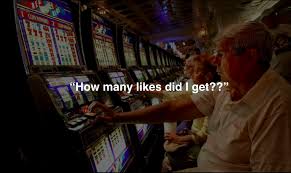
A blogger named Tristan Harris tries to tackle this question. He believes technology can hijack our minds and lists different ways it can be done. One way Harris believes technology controls our minds is through limited choices. He used Yelp as an example. When friends want to go out, you type ‘restaurant’ or ‘club’. But it’s the list of places they want you to go to. Harris talks about the ‘slot machine effect‘. Are you aware the average person checks their smartphone 150 times a day? That’s to see if what notifications we get on an hourly basis. The slot machine is the most profitable gambling tool in any casino. That’s because it’s easy to play and you play over and over. You’re afraid to stop playing because the next spin could be ‘the big win’. That draws me Harris’ next argument: the fear we’re going to miss something. We’re more glued to our devices than ever before because we might miss that important email. We want to see who accepted our Facebook friend request. We look forward to that next You Tube video or Netflix release. What’s the next video game going to be? We don’t want to miss anything.
And that’s how technology hijacks our mind. They’re nine other points Harris makes here. I don’t agree with all of it, but he made valid arguments. But I do notice a pattern on certain hotel sights. When I try to book for a certain city and certain neighborhood, I’m given only certain hotels, often the more posh and expensive ones. But when I Google for more budget hotels, I often find a bunch that the hotel websites don’t have. These are the ones I’m looking for. What’s up with that? Can technology really hijack our minds?
May 21, 2016 | Computer technology, Smartphone, Software
Just when you thought Google came up with everything. Just when we think Google has permeated every market. They shock us again.
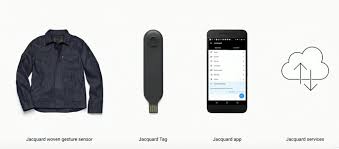
Google is teaming up with jean and denim maker Levi’s to create a smart jacket. Aimed at cyclists, this smart jacket will let you control music, utilize phone calls, navigate with a system, and many of the other things you can do with a smartphone or smartwatch. All they have to do is tap or swipe the jacket sleeve. This super jacket is part of Project Jacquard. This project is dedicated to weaving technology in forms of clothes. The alliance between Levi and Google is around a year old, but they just revealed this revolutionary piece of technology for the first time. They’re aiming this fashion statement toward cyclists because it can be very dangerous to to be holding a smartphone while operating a bicycle. The results can be almost as bad as texting and driving a car. But with this jacket, they just tap and talk. A Jacquard tag is sewn in the sleeve and charged through USB. The embedded tags are connected to a battery, LED and haptic technology, all woven in this jacket. Makers insists you can wash this jacket in the washer and it won’t be harmed.
Testing will go into the next phase in fall 2016. If all goes well, it should be in stores near you in spring 2017. We don’t know how much this jacket will cost. Yes, this is a great safety alternative for cyclists. It would make a great fashion statement. But this wearable jacket is fascinating and a little terrifying. It’s terrifying because someone can probably track you through this jacket. I know we can easily be tracked already, but this would make it even easier. Would you get this smart jacket? How much would you pay for one?
May 19, 2016 | Computer technology, Wireless
Can you believe the Google Android Wear smartwatch is two years old (man, technology is changing too fast). But Google/Android has little to celebrate in the watch department. Apple’s iWatch has been kicking them around since the very beginning.
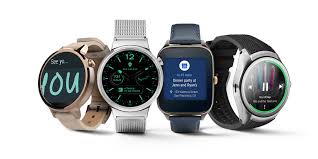
Out of necessity, Google has upped their game. They will introduce Android Wear 2.0. This one promises to be better. For example, Android Wear 2.0 says they will have standalone apps that won’t require a matching smartphone. One such app is Spotify. That’s right: if all goes right, you can download and enjoy your favorite tunes from your watch and watch only. Of course, you’ll still need some kind of Internet connection. They’ve made interface operations, like easier notifications and an easier QWERTY keyboard. With the new Android watch, you can type replies to messages, instead of just replying through voice. You can also obtain information from third-party apps, though it’s a limited amounts. For health advocates and active persons, they can keep track of steps taken or calories consumed throughout the day. Of course, competitor Samsung Gear 2 also has a slick keyboard where you can type responses. The iWatch, the current smartwatch race leader, has emoji responses.
I bring up Android Wear 2.0 competitors for a reason. They’ve got a long ways to go. Yes, these are great improvements for Google’s smartwatch. But the fact that these basics are actually called an improvement is telling right there. I guess the one thing they can do to compete is keep the prices low and competitive. But one smart thing the new Google smartwatch has is better access to apps like Spotify. Everyone likes music. The easier it is to get access to music, the better it will be for the customer. So easier access to this app is a great start. But that’s all it is: a start. How much would you pay for Android Wear 2.0?
May 16, 2016 | Computer technology, Smartphone
Today, America’s biggest retailer releases Walmart Pay. It’s Walmart’s own mobile pay service, kind of like Apple Pay. Walmart Pay is being tested in 600 stores throughout Texas and in it’s home state of Arkansas.
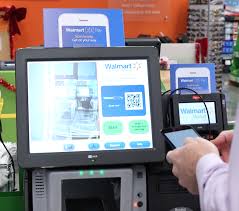
It should be made clear: Walmart Pay is not a part of Apple Pay, Samsung Pay, or any other mobile pay entity. Walmart Pay is it’s own entity and it’s competing with other mobile pay companies. In the next few weeks, Walmart Pay will spread in the Midwest and Plain States. Walmart Pay is available on Apple and Android devices and works with all major bank cards and Walmart gift cards. When you buy at any Walmart in this part of the country, open the Walmart app and hit Walmart Pay. Scan the QR code on the register screen, using the phone camera to connect to Walmart Pay. The app will give you an electronic receipt. Walmart Senior VP Daniel Eckert embraces Walmart Pay not only as another payment system, but as a way of improving the checkout experience altogether. This is just Walmart’s latest attempt to get in the good graces of the technology community. They’ve got a subdivision in the Silicon Valley. They’re also working on drones to deliver their groceries to customers.
But one thing about this boggles my mind. Walmart leaders insists this isn’t to compete with Apple, Samsung, or Google Pay. But yet none of them are accepted at any Walmart. This includes those 45 or so states that won’t see Walmart Pay anytime soon. I smell at best, a strategy and at worst, a lie. If they’re not trying to compete, then why are they setting up shop in Silicon Valley, the tech capital of America? Why are they trying to do like Amazon and set up drone services? Does Walmart think we’re stupid? Of course they’re competing. But how will this retailer do against the big boys of technology? Are they in the same league? Or have they bitten off more than they can chew?

May 7, 2016 | Computer technology, Entertainment, Smartphone
Are you anticipating the Kentucky Derby today? But you can’t make it to Louisville, and you sure can’t make it to Churchill Downs. Thanks to virtual reality, you can be closer to this historic horse race than ever.
Virtual reality company NextVR will be streaming the Kentucky Derby starting at 4pm. You can only get this through the NextVR app and Samsung Galaxy Headset. They will have VR cameras around the track, around owners’ suites, and in the paddock. In the paddock, horses prepare for the ‘fastest two minutes in sports history’. All one has to do is connect a Samsung Galaxy smartphone to a Gear VR headset, download the VR app, and turn to NBC, the network that’s broadcasting the Kentucky Derby this year. NBC has broadcast the Derby since 2001, and is expected to do so through 2025. Recently, sports and virtual reality have intertwined. NextVR has live streamed NBA and NHL games. It’s just too bad NextVR, nor Samsung Galaxy, can help you best pick who is going to win. They can’t help you make that perfect bet, either. You better rely on the odds and your own expertise for that. There are just some things virtual reality can’t do.
But with this Samsung Galaxy Headset hookup, you can be even closer to the action than even some people at Churchill downs will be. Sure, you won’t be mingling with the millionaires and celebrities, but you will be really up close and personal with the real stars: the 3-year-old horses. You’ll have to make your own mint julep and find your own fancy hats (you can find one at a thrift shop for under $10). But please don’t get too carried away. Just know that you’re still in your own home, in your own surroundings, not toasting mint juleps with an A-list star. Who is your money on this year?

May 2, 2016 | Computer technology, Security
You go to sleep. You wake up only to find your computer or smartphone doesn’t work. Neither does anyone else’s. You can’t even use your credit/debit cards because that system is kaput. You can’t fill up on gasoline because the electronic pumps aren’t working. Welcome to the world of an EMP.
This isn’t a sci-fi movie plot. Political leaders like Defense Department analyst Michael Maloof are extremely concerned of what an EMP could do to our computers, communications, banks, cars, transportation, food and water supply, electricity, emergency services. An EMP (electromagnetic pulse) can fry all electronics in it’s path. This can happen through a solar flare or a nuclear attack from high altitude. Think about how dependent we are on technology. If this were to happen, hospitals wouldn’t even be equipped to treat patients. Pacemakers would cease, leaving patients without this critical tool. Maloof believes North Korea has two satellites hovering over the US that can launch EMP’s at any moment. Even US Congress has been briefed on such EMP attacks. A device can fire an EMP from a distance and knock out power for an entire airport, or a high rise building. But Maloof is frustrated Congress isn’t doing more to prevent such a catastrophe. Other nations are. But Congress should be giving the EMP threat it’s highest priority, but it isn’t.
I agree with Maloof 100 percent. I don’t even hear the presidential candidates talk about this issue. It seems like we’re more concerned with who uses what bathrooms than a threat that could destroy us all. And if an EMP hit us, it would takes weeks, if not months to repair. ?Technology is no longer a luxury, but a necessity. If technology shuts down, our whole systems shut down. All the things we take for granted will cease to exist. It would be like knocking us from 2016 to 1835 in just one swoop. Shouldn’t our government and major tech corporations do more to prevent an EMP attack?
