Apr 27, 2017 | Computer technology
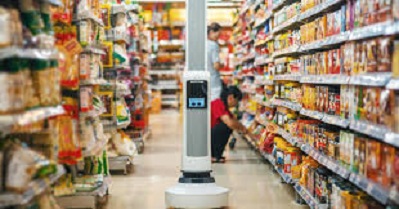
In some cities, they raised the minimum wage. But what did one fast food company do? Instead of paying workers that increase, they fired them. Then, they replaced them with automation workers, or robots. Is that coming for the retail industry? Retail robots: What about human workers?
Yes, I know. Since the 19th century, people worried about technology taking human jobs. But in almost every case, technology created new jobs. However, tech and economy leaders worry it won’t happen this time. Small businesses and family businesses worry about keeping their employees human! Remember when they just worried about keeping the business in the family? But some retailers delight in this change.
Some major retail corporations look forward to retail robots. Here are some reasons why. They speak several languages. Also, they know stuff that human workers may not know. These are the reasons retail chain Lowe’s give. I used robots in retail stores before. But these Lowe’s retail robots can talk to you, in many languages. They’re not the only ones. At CVS, there are more computer check-out stations then there are human ones. Also, some of them don’t even take cash. At one Amazon store in Seattle, you don’t need to check out at all. Just get what you want and walk out. Amazon will charge it to your account.
So on the surface, it looks convenient. And yes, we as people seem to hate each other more than ever before. Just look at last year’s election. Maybe that’s what is driving this disturbing trend. But believe it or not, some of us still like human interaction. Furthermore, what about the thousands of retail workers that will be thrown out on the street? It’s not just the retail robots, either. Some believe computer repair techs will also be replaced by robots by the 2030s. In fact, many economists say robots are a bigger threat to American jobs than outsourcing jobs overseas. Because eventually, they’ll be replaced by robots too. So do you think these retail robots are a threat or a sign of technological advancement?
Apr 14, 2017 | Computer technology
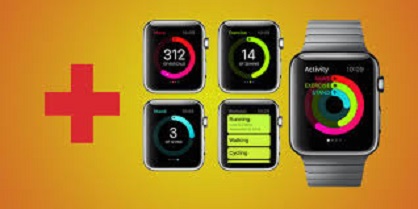
Diabetes is a disease in which there is too much sugar in the blood. It affects over 29 million Americans. But one tech company is coming up with the technology to stop it. Apple verses Diabetes: Can Apple Technology beat this disease?
So their Palo Alto headquarters have a secret team. On this team are doctors and medical engineers. They’re working to build these new sensors. So these sensors are new ways for patients to monitor and control and even cure their?diabetes. However, when I say new sensors, these sensors won’t pierce the skin. Therefore, patients won’t need any more needles or other sticking objects. That is, if these sensors are successful.
You see, many other tech and medical leaders tried, and failed, at this revolutionary medical technology. ?Steve Jobs started to involve Apple in this process a few years before he passed away. They’re also working on optical sensors. These shine a light through the skin to test blood sugar levels. But this is also difficult. Any bio engineer sill tell you. They also say Apple will have to spend billions of dollars to fund such sensors. But I don’t think that will be a problem for Apple. Despite some recent setbacks, they’re still one of the wealthiest companies in the world. The Apple verses diabetes war is real.
But think about what this will do for Apple and diabetics. If this is successful, this will make the lives of patients a lot easier. No more needles. No more sticking. This could even lead to a cure. Then think of what this would do for Apple. This would boost their reputation significantly. I’ve been in computer repair well over a decade. Yes, we make your computer better. But we also believe in making your world better. That’s true for almost every IT support company. If?Apple is investing this much in fighting diabetes, then God bless them for it. Can Apple help find a cure?
Apr 5, 2017 | Computer technology, Security
How do you get into your office or work space? Do you still use keys? Or maybe you use a code? But in Sweden, they’re using microchips. They implant these microchips in your hand, near your thumb. Sweden’s Microchip: Tech Trend or Big Brother?
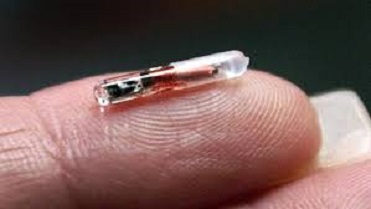
So the company leading the microchip charge is Epicenter. Their headquarters are in Stockholm, Sweden’s capital and largest city. Sometime ago, Epicenter offered the microchip. It’s the size of a grain of rice. Also, it can open doors, control printers, and even order food. All you have to do is wave your hand. Furthermore, Epicenter CEO?Patrick Mesterton praises the microchip. He loves the convenience of the implant.
So do the people. Sweden’s microchip is so popular Epicenter throws parties around it. These parties entertain the people as they wait for their implant. ?It uses NFC’s (near field communication) technology. It reads data from a couple of inches away. They also contain info about other devices, and other people. But the implants can’t read information on their own. However, this brings up biological and ethical concerns. Somebody asked about a chip being in somebody’s body. But Mesterson practically compared it to the heart’s pacemaker.
But what about the privacy and ethical issues? Sweden’s microchip, and any microchip, can follow you wherever you go. You put the chip in your hand. Your employer and colleges can track you 24/7, whether you’re on the clock or not. That is scary. Plus, they inject this in your body! Don’t forget that part. Now microchip technology is nothing new. They put it in dogs to track them, for fear of getting lost. You can put them in your kid’s shoes. This is in the name of finding them, and to ‘make sure they’re doing the right thing’. Hence, there’s even talk of using the microchip to track down a potential cheating spouse/significant other. There’s IT support and there’s outright tracking. There are laptops fixed and then there are fixing laptops to follow you. So I ask you. Sweden’s Microchip: tech trend or big brother?

Mar 31, 2017 | Computer technology
Tech billionaire Elon Musk does it all in the IT support world. He founded PayPal. Then he founded SpaceX and Tesla; he’s still the CEO of both. But his next venture boggles my mind, and it might consume my mind, literally. Elon Musk wants your brain and soul.
So, earlier this week, Musk announced his support for Neuralink. That’s a company that puts tech devices in peoples’ brain. At least they want to, because the company is still in it’s early stage. They also want to be players in the AI (artificial intelligence) game. Hence, Neuralink thinks these devices will help us keep up with AI technology. That is, if they can get them in our brain.
Elon Musk seems passionate about merging AI and human intelligence. Recently, he lectured a crowd in Dubai, UAE. He told them a merge between human and AI intelligence will come over time. Furthermore, he continues the conversation on Twitter. They talk about neural lace. That’s a brain-computer thing they can ‘allegedly’ use to improve the human brain. As of March 31, 2017, we only see this in TV, movies, or read about it in novels. At best, they have electric implants. They help with brain disorders like Parkinson’s or Alzheimer’s. But even that’s rare, because of the high cost, and the dangerous risks.
So why is Elon Musk doing this? Furthermore, why is Neuralink investing so much time and money in this? Yes, we can say, “This will help with brain diseases. Maybe this kind of technology will even lead us to a cure.” But that’s best case scenario. What’s the worst? Musk and Nuralink have their way, the worst could happen. Our minds would no longer be our own. Also, our souls will no longer be our own. Therefore, the computer will control our every move 24/7. In fact, we’re so dependent on technology now that it’s getting like that already. So we don’t need chips in our brains to control our every move. You don’t think it can happen? Twenty years ago, did you see Facebook and You Tube other social media happening?
Mar 18, 2017 | Computer technology
Ever hear of DARPA? It’s the US Defense Advanced Research Project Agency. Hence, they have wild ideas about computer technology and IT support. So one idea is making computers more human. DARPA’s Mission: Make computers think like humans.
They want to make computers learn like humans. Hence, make computers learn slowly and constantly over time. But there’s a problem with that. Computers can think only what human builders program then to think. However, DARPA’s mission has the answer. Or they think they do. They want computers to think biologically. That means they start off knowing very little, but learn and mature more over time. This is similar to animals and humans.
Furthermore, they have a name for it. They have a program they call Lifelong Learning Machine (L2M). It’s an AI (artificial intelligence) system that learns from experience. This way, there will be no need for reprogramming. Also, you don’t have to worry about data loss. The DARPA mission believes this will help all things technology: self-driving cars, cyber security, gaming, and more. They’re also coming up with new computer models. These models will better adapt to L2M. They’re not the only ones. Google is also building machine-learning models. Could this be the next tech trend?
In a way, computers and machines do mature over time. In my life, we went from floppy disk to Facebook. We went from Commodore 64 to MacBook. We progressed from recording music on the radio to downloading music to your smartphone. But all of these depended on the human mind to get to that. If DARPA’s mission comes true, computer technology will evolve on it’s own. Yes, some good will come of that. But would there be any more computer repair, or any need to have laptops fixed? And what about the jobs that would be on the line? Is making computers think like humans a good idea? Or are we creating a monster?
Mar 17, 2017 | Computer technology
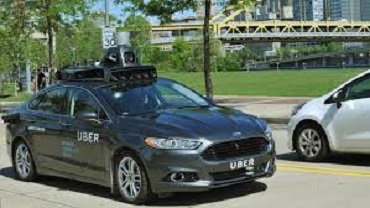
I’ve talked a lot about the self-driving car. Many IT support industries back it. Also, many more car industries build it. But before you rush to buy it, there’s something you should know. Look at the self driving car’s progress: average at best.
So, here is the self driving car’s progress. Uber’s car had tests on March 8. They put 43 cars on the road. But they only went 0.8 miles. So basically, they can’t even go one mile without human intervention. There are many reasons for this intervention. It could be anything from system control to bad weather. However, this is a drop. In February 2016, they made it to the one mile mark. In January, it was 0.9 miles.
Then again, there are some bright spots. For harmful events, cars went longer without intervention. For instance, on February 8, 2017, Uber cars went 40 miles without a potential harmful incident. But on March 8, they went 200 miles without one. Harmful events mean that without intervention, the car could hit a person or cause major damage. Not only that, but overall miles are dropping. Let me explain. They calculate miles that these cars total every week. Those miles are slipping. But there’s more good news. Uber drivers operate these self-driving cars. Their bad experiences are decreasing.
In Pittsburgh, and other cities, Uber conducts an experiment. They use the self driving car for regular pick up routines. So far, from what I read, it’s going pretty good. Consequently, they have their limitations. But there is a point here. The self driving car’s progress is progressing…somewhat. However, don’t expect to take it easy in the driver’s seat while the robot car does the work. We’re just not on that level…yet. First, let’s try going a mile without human intervention. Also, let’s try to go longer without risk of a major accident. I will admit, the process is exciting, and this will be the next big thing in IT service. Mark my word. How long do you think it will be?
