Mar 12, 2017 | Computer technology
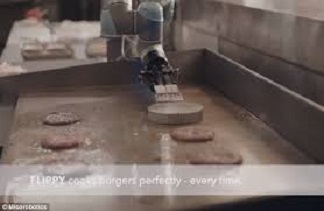
Every fast food chain has their niche. McDonald’s has Ronald. Then KFC has Colonial Sanders. Now, let’s go to CaliBurger, a fast growing chain. Their niches are computer technology and IT service. Because this place has robots flipping your burgers. So let’s learn more about CaliBurger Robots: meet chef Flippy.
Flippy is the brain child of Miso Robots. They develop robot technology that cooks, literally. But Flippy has his positive sides. He is quick and easy to install. Also, he flips burgers perfectly. That’s because he can see through cameras. Furthermore, they say CaliBurger robots will not take human jobs. However, more workers will be on the floor to entertain customers.
That’s not all. CaliBurger wants to lead the way in restaurant technology. While waiting for your food, you can play Minecraft with other customers. You can also play gaming tournaments. Plus, they want technology to be part of your whole CaliBurger experience. But there’s a reason Flippy is the star. They believe Flippy will cause fewer errors in the kitchen then teenagers will. They may be right there. But they want CaliBurger Robots to control all actions of their restaurants. They could be well on their way. They have restaurants in 12 countries already. By 2019, they expect to have over 50.
I’m torn on this one. They stress these robots aren’t going to take human jobs. But those CaliBurger Robots flipping burgers mean something. It means humans won’t be flipping those burgers, so humans won’t be getting those jobs. However, this could also mean better service. They want humans to engage with customers on the floor. But what if that ends up badly? And what if robots engage with customers, taking away those human jobs? It’s not far-fetched. In case you haven’t been paying attention, humans don’t like each other too much nowadays. I heard one employer say, “Robots are always on time, don’t give you attitude, and always do the job right.” Is that where this is heading?

Mar 9, 2017 | Computer technology
We talk a lot about robots around here. So yes, I talk about them in a negative light. That’s because I fear the day robots work all computer repair jobs, leaving all techs in the cold. But I stumbled on an article saying robots could be our saving grace. Robots save planet Earth: Can they save or destroy?
So the article talked the world’s problems, particularly global population. It says we need AI to take jobs. There are people who believe an aging population and a current low birth rate will cripple our economy. Also, the US Census Bureau says those over 65 will outnumber those under 5.
But wait a minute. ?Some say the robot revolution will happen because of our tech dependence. And I don’t have to tell anybody how dependent we are on technology these days. Some believe the aging gap will help replace human labor with robot labor. For example, let’s fast forward to 2027. Millions are in retirement. But too few are in the labor force. Well, by this point, young adults entering the workforce grew up smartphones and social media. So by this point, they’ll be more welcoming to robots. And this is how robots save planet Earth. But should we buy that?
All I know is that not many people in 2017 believe in robots save planet Earth. Tell that to the fast food workers losing their jobs to robots. Then, tell that to the clerks losing their jobs to robots. After that, explain that to the technicians watching their livelihoods go to AI technology. Maybe they have a point with the coming age gap. Yes, Baby Boomers are retiring. As of 2017, the youngest is 53 and oldest is 72. Think of what it’ll be in 10 years. Then, you have a somewhat low birth rate. But even that’s not as low as some ‘experts’ say it is. But lets’s focus on the now. People are losing jobs to AI now. And it will be a huge concern in the years to come. So I ask you. Can robots save planet Earth, or are we on the path to destruction?
Mar 3, 2017 | Computer technology
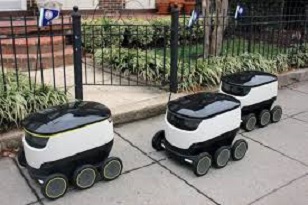
So you don’t think governments and robots go hand in hand? But they do. One state, or should I say commonwealth, proves it. Hence, you have Virginia robots: Knocking on your door.
Virginia is the first state allowing delivery robots to walk the streets. Furthermore, they’ll walk among humans, on their own power. Governor Terry McAuliffe signed the bill into law. But the law takes effect July 1, 2017. We can credit State Congressmen Ron Villanueva and State Senator Bill DeStaph, both from Virginia Beach, for pushing this law. We can also thank robotic company Starship Technologies for promoting this law.
However, Virginia robots must follow the law. Their speed limit is 10 miles per hour. They can carry up to 50 pounds. But these robots do have freedoms. Robots can only cross at crosswalks. That law applies to humans too. And you know how we are. When it comes between humans and robots, the robots have the right-a-way. Cities and towns can regulate these Virginia robots any way they please. Starship isn’t the only one pushing for these walking bots. Food delivery service app Grubhub, and online retail giant Amazon, sent letters saying this is a good idea. You know it’s not going to stop in Virginia.
Starship Technologies tests robots in Washington, DC and Northern California. Furthermore, Idaho and Florida debate walking robots being allowed to deliver goods. Also, other companies want to. So this could be the newest tech trend. It doesn’t surprise me. Yes, our IT support?industry is changing. But is if for the better? Yes, it could boost the delivery industry. And it could get your food there faster. However, there are worries. Any computer repair expert can tell you technology can go horribly wrong. So can these robots. And what about the social and economic ramifications? Already, they replace fast food workers with robots. Will these robots do the same to food delivery workers? If a robot knocks on your door, would you answer?
Feb 23, 2017 | Computer technology
Technology is our future. Guess what? Children are also our future. So how do we maximize this potential? Sony might have the answer. Coding kids: Sony inspires the next generation.
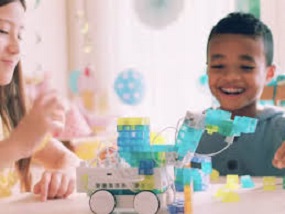
Sony’s new toy is Koov. These are Lego-style blocks. But these blocks teach kids about computer coding. Hence, these blocks could train them into coding kids. Consequently, this all came from Sony Global Education. Koov also teaches kids how to make robots. Unlike Lego blocks, Koov blocks have sensors. These sensors come alive, guiding them as kids craft their creation. When these coding kids finish, they connect their model to a computer. Afterwards, kids use codes to make these structures move around and come to life.
These blocks can build anything, from animals to trucks. When coded, these structures do everything, from clap to chew to ride around. Sony isn’t the first company to create toys for coding kids. But Sony’s toys might be the most effective. Koov won a Good Design Gold Award. Now, they’re using Koov to educate poor and refugee children on coding. This is a global effort. But if your coding kids want Koov, it will cost a bit. In the US, a Koov kit will run about $325. An advance kit will run about $440.
But if you ask me, that’s a good investment for children. Many devices and games cost just as much, if not more. And ask yourself, “How is this going to benefit my child’s future?” In many cases, they probably won’t. But you can know Koov will. This isn’t a promotion. But I’m happy to see a toy on the market that will inspire the next generation of IT service and computer repair. Look at the crises of American education, especially in computer technology. And our whole future depends on computer technology. In fact, many workers fear their jobs will be threatened by robots in the near future. Let’s prepare the next generation now. And Sony Koov helps do that. I’d like to see Koov used in schools all over the US, especially in low-income neighborhoods. Would you buy your child a Sony Koov?

Feb 22, 2017 | Computer technology, Software
The IT service industry can be a funny thing. When Windows 10 came out in July 2015, they promised us no Windows 11, 12, 13, or any Windows number. Windows 10 was it. But they didn’t say anything about updates. This is Microsoft’s new update: Introducing Redstone 3.
Microsoft’s new update is the fourth update since July 2015. In November 2015, we had November Update. Then, in August 2016, Microsoft gave us Anniversary Update. In April 2017, they’re going to give us Creators Update. But let’s keep the focus on Redstone 3. Some say the release date will be later in 2017. But even then, nobody knows the exact date. Microsoft confirmed the release
The star of Redstone 3 will perhaps be My People. Here, you can have people on your phone lists without having them in your live account. For example, it’s great to have your Mom in your live account. But do you really want the landlord there? This is great for Windows smartphones. Then there is Neon. Neon should boost Hololens and Hologrophic programs. There’s also Microsoft Home Hub. Home Hub will be Microsoft’s answer to Amazon’s Alexa and Google’s Home. That’s about all we know of Redstone 3. There’s a lot of stuff that we don’t. So I guess we’ll find out.
Here in our Boston computer service shop, we sometimes debate about how good the Microsoft’s new update is and how good they all are. Anniversary Update gave us Windows Inc. Windows Hello helps us log in a lot faster than the old password format. And in this era of increased VR, Anniversary did a good job improving 3D support. Well, that’s the way I look at it. Some people don’t agree. Others say the upgrades have been mediocre at best. I gotta disagree with that. I think the updates have been good, so far. And they kept their word about not adding another Windows…so far. What do you think Redstone 3 will bring? And will it be any good?

Feb 18, 2017 | Computer technology, Security, Wireless
So do you remember that one movie? The one where your TV spied on you and shared your conversations with the government and others? But wait: This is really happening to Samsung TV owners! So here’s a warning to Samsung TV owners: don’t talk too loud!
In fact, Samsung itself confirms it and issues the warning. They actually told customers their smart TV can pick up on every word they say. Therefore, they warn Samsung TV owners not to talk about personal or incriminating things. ?Their own TV’s voice activation feature can share the information with Samsung, the government, your employer, your family/friends, your church, your kids’ schools, anybody!
Samsung even talked about how the voice activation feature works. The Samsung TV owner uses this feature. Then the feature gives voice data to a third party. Again, keep in mind that third party could be anything or anyone. This happens after somebody activates a certain command. However, you can disable voice recognition. Just do so on the settings menu. Also, you can disconnect your Samsung TV from WiFi. Yes, you’ll be watching TV 1990s style. But to me, it’s worth it to keep your privacy and sanity in tact. A Samsung spokesperson insists they take privacy very seriously. The jury is still out on that one.
This is the third severe foul up Samsung had in six months. In September-October, Samsung’s Galaxy Note 7 phones exploded on customers, literally. It was so bad us in Boston can’t fix it with our screen replacement. Then, their washing machines literally blew up on customers. These two mishaps costs Samsung billions of dollars. And now this. This is the last thing Samsung needs right now! And wait until privacy rights activists get a hold of this. Don’t you think they’re going to raise cain over your TV spying on you? How much can one corporation take?
