Aug 1, 2017 | Computer technology, General
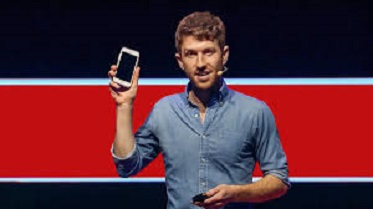
Tristan Harris is a rising star not only in the tech world, but on the public speaking stage. He gives TED talks?and goes on TV. He also warns of what technology can lead to. Let’s look at the attention economy, technology, and Tristan Harris.
Harris explains the attention economy as a race to build attention. For example, the more attention you get, the better off you are. He says there are three major tech companies that build attention: Google, Facebook and Apple. In order to get Facebook likes, you need to get people’s attention. When things get shared the most, it is bound to get people’s attention. If you want You Tube subscribers, then you need to get people’s attention.
Harris talks about the 2016 election, and how Trump used the attention economy to win. Look at how some of his shocking tweets got attention. But he’s not the only one. There are celebrities like Amber Rose. Amber Rose doesn’t sing, act, rap, dance, tell jokes, write books, run for office, teach, or anything like this. In fact, she got famous by getting people’s attention, and uses technology to do so. She does this by saying shocking things, wearing shocking clothes, and dating other celebs. I’m not necessarily picking on Rose. Over the years, how many celebrities made themselves famous by using the attention economy, and used technology to do it?
But Tristan Harris offers solutions. One is to recognize this problem and take responsibility. You see fake news. Then it’s your responsibility to avoid it, and tell others this is fake news. I find myself doing that with celebrity death hoaxes. Yesterday, I found myself doing that at our Boston computer service shop. The second thing to do for tech companies like Google, Facebook and Apple to recognize the human mind. Even adult, highly educated minds are like sponges. Sponges will digest whatever people and things put in them. So he calls on Silicon Valley to be more careful of what they feed our brains. Basically, Harris says it’s a team effort. I slightly disagree. It’s an individual choice to decide what gets your attention. If we, not Silicon Valley, dominated the attention economy, and decided what got our attention, wouldn’t Silicon Valley, Hollywood, and Washington get the message?

Jul 31, 2017 | News
Lately, Russian President Vladimir Putin tightens Internet restrictions. How does he do this? So he signs laws stopping proxy services. This includes the VPN (virtual private networks). Then he included the end of anonymous use of instant messages.
Putin signed these bills into law July 29. They also say they need these laws to fight crime, terrorism and extremism. But critics disagree. In fact, critics say he’s doing this to fight his political opponents. These anti-Internet laws take effect on November 1, 2017. But keep in mind Putin is up for re-election in March 2018.
Under these new laws, ISPs must block VPNs and other proxy services. They also tell messenger apps to give phone numbers and identify all their users. Furthermore, operators can restrict access if they’re downloading illegal activities according to Russian law. Because here is what happens. Russian travelers leave the country. Then they use aliases in their instant messaging. They can get anything they want. It’s happening. Recently, they convicted a blogger for hate speech. This blogger often criticizes religion. One time, he put up a You Tube video of him playing Pokemon Go in church. He know that would upset quite a few people. But is it enough to get 3 1/2 years probation? Is it enough to call it extremism?
In my eyes, no it is not. Putin tightens Internet restrictions; he is playing a dangerous game. I don’t know if he’s doing this for political moves. Or maybe he’s doing this to really keep his country safe. But when you use IT support to limit people’s freedom, and to mess up their privacy, it’s never a good thing. And whose to say the real criminals won’t try something else after this? So it’s the innocent that will suffer. And that is no way to win an election. Will Putin keep that in mind for March 2018?

Jul 29, 2017 | Computer technology, Smartphone
Do you remember the 2002 movie Minority Report, starring Tom Cruise? If you don’t, then here it is. Taking place in the 2050s, they arrested you before you even did anything. Because artificial intelligence predicted their crimes. But can this happen in real life? Can AI predict crimes? China thinks so.
So China wants to use artificial intelligence to help them solve crimes. That sounds good, right? But China wants to help the police solve crimes before they happen. They also want to catch the bad guys even before they have the opportunities to become bad guys. The Chinese police are all for it.
China also has an ally in Cloud Walk, a facial recognition tech firm. They make software that gathers data on the whereabouts and doings of people. For example, if the person goes somewhere shady, Cloud walk assumes the person is more likely to be a criminal. They can also use?algorithms and crowd analysis to study what they deem as ‘suspicious patterns and activities’. Furthermore, they want to use personal re-identification software. That matches a person’s real ID, even if they moved to a new town. Or even if they try to change their identity. It’s also a part of what they call body recognition.
This opens the door to so many problems, in IT service, in law enforcement, and especially for society. This is going to cause everything from profiling to police brutality to false arrests. For example, someone who goes into a bar might just want a drink, not to start a fight. When someone goes to a gun shop, that doesn’t mean they’re planning to start a killing spree. Plus, one again, you’re taking jobs out of human hands and putting them in robots. Can AI predict crimes? Or will a lot of innocent people be imprisoned, or worse?

Jul 28, 2017 | General
Amazon Jeff Bezos is the richest man in the world. So this happened yesterday. But all it took was a one percent increase in stocks. So obviously, this was years in the making.
Bezos now passes another tech legend, Microsoft founder Bill Gates. He held the richest man in the world title for years. According to Forbes magazine, the Amazon leader is worth 90.6 billion dollars. Meanwhile, Bill Gates is worth an even $90 billion. Also in just the last year alone, Amazon’s stock shares increased over 40%. Would you like some Amazon stocks? Then you better get generous. Because as of today, they cost $1,009 a share.
But that doesn’t stop Bezos. He owns 81 million shares. And that’s only 17% of the company. Plus, it helps that Amazon seems bent on controlling every aspect of our lives. Yes, they started as an online store and delivery service. But now they own the Washington Post, one of America’s most trusted newspapers. Their cloud services made them over $12 billion in revenue last year. His Amazon Echo controls 71% of the voice assistant game. They’re even into media and entertainment. They have streaming video service. They even produce movies like and TV shows like Transparent.
And lets’ not forget our food and grocery. Amazon Fresh delivers groceries. But that’s not enough. They also purchased Whole Foods. There’s an old saying: Those who control the food control the power. But there’s another way to look at this. For the last quarter century, the richest person in the world has been in some kind of IT support or computer repair. In fact, year after year, the majority of the world’s richest men are involved in tech. This is what makes me proud to be in computer technology. But you don’t need world domination to do so! Amazon Jeff Bezos is part of this revolution. And it shows no signs of slowing down. Who in tech will be the next richest man in the world?

Jul 27, 2017 | Smartphone
The year 2016 was probably the worst in Samsung’s history. Because their new smartphones burned up, their washing machines exploded, and they lost billions in dollars and respect. They even arrested one Samsung leader. But their 2017 looks very bright. Samsung’s comeback is in full swing.
So Samsung just came out of the best quarter ever. For example, their net profits were almost ten billion dollars in Q2 2017 alone. That’s almost double from Q2 2016. That is also a Samsung quarterly record. The old one was 9.3 billion dollars. That was set in 2012, at the height of the smartphone rise. Samsung’s comeback can thank Samsung Galaxy 8. Not only are sales strong, but came at the right time.
Then, Samsung’s comeback helped them stand up to competitors again. In fact, Samsung beat Apple in Q2 2017. Keep in mind Apple is about to launch iPhone’s 10th anniversary smartphone. Samsung stocks are also doing better. In fact, their trades are almost at all-time highs. Furthermore, Samsung’s software and hardware plays a role in this recovery. Their memory chips and flexible displays. For many years, they invested billions in semiconductor technology to make smartphones run better. Now, it’s finally paying off.
But Samsung shouldn’t pop the champagne yet. I don’t think they are. First of all, their leader, Lee Jae-youg, is still facing charges. The trial starts soon. How will it play out? Then there’s the next few months. In September, they expect Apple to release their newest smartphone. Then the real test will begin. How will Galaxy 8 stand up to Apple’s 10th anniversary phone? In the next few months, we’re heading into the busiest shopping seasons of the year. The back to school season and the Christmas shopping season. How will Samsung do then. I’m happy Samsung is coming back. But how long will it last? Will it stand the test of time? It’s a great comeback for any body in IT support. But will this comeback be in full swing?
