
Aug 7, 2017 | Uncategorized
I talk about cyber crimes a lot. That’s because they go on a lot. There’s hacking, ID theft, stealing, sextortion. But what about kidnapping. That also goes on, as it did in this deep web kidnapping case.
But first, let’s talk about what deep web is. It’s a website network search engines can’t find. They use encryption to hide their true nature. Most of their true nature isn’t good: drugs, human trafficking, selling IDs, trading weapons, even terrorism. So let’s go to the crime. Some guys lured 20-year-old British model Chloe Ayling to Milan, Italy. They acted like professional photographers and promised her the big break.
But instead, they drugged her. Then they beat her, threw her in a suitcase like luggage, and locked her in a car trunk. Furthermore, they drove her to a rural small home in near Turin, Italy. They held the woman hostage for six days. Then, they extorted Ayling’s authentic model agency to give them $300,000. If they didn’t, then the kidnappers would sell her into sexual slavery. However, one of the kidnappers must have had a change of heart. Because on day 6, July 17, he released Ayling and took her to the British embassy. This kidnapper is?Lukasz Herba, a fellow Brit. He got arrested for kidnapping and extortion. They still look for Herba’s accomplishes.
Yes, there is good on the Internet. But there is also unspeakable evil. I don’t know what prompted Herba to end Ayling’s ordeal. I’m glad he took the high road and did. Oh, he should still do time for this crime, but at least he freed Ayling. Apparently, Herba and his guys belonged to a deep web group called Black Death. They named this dark web group after the 14th century plague that nearly wiped out Europe. That’s telling. But please, be careful of who you associate with over the web, and other places. I’m definitely not blaming the victim here. But the rest of us need to learn a lesson from Chloe Ayling’s near tragedy. What can those of us in computer repair do keep ourselves and loved ones safe?

Aug 5, 2017 | Uncategorized
Apple plans to release their next batch of smartwatches. So what? This may be different because this smartphone could depend less on the iPhone. This could very well be the iWatch breakthrough.
That’s because this upcoming brand of Apple watches will connect straight to cellular networks. Or so they say. Now, the iWatch needs an iPhone to do just about anything except tell time. But this new batch has LTE chips. The chips will let you do things like play music and send messages without your iPhone. That’s the iWatch breakthrough. Intel Corp. will sponsor the LTE chips. They’ve been trying to hook up with Apple for a long time. And this could be that break Intel Corp. is looking for.
Apple is in negations with cell phone carriers, well, the major ones. They’re talking to US and European leaders. Rumors have it the major US carriers, like AT&T, Verizon, Sprint and T-Mobile are on board. So Apple wants these watches out to the public sometime in 2017. But because of ongoing talks with cell phone carriers, and other tech issues, we may be waiting until 2018. For example, some Apple leaders worry about battery life in this new device. But Apple leaders are excited about this iWatch breakthrough, saying this could change the game again.
Because the competition is sure changing the game. Fitbit and Xiaomi are the leaders in the smartwatch race because they always sell innovative watches. But the iWatch isn’t exactly slipping, either. Apple’s watches’ profits rose 50% last year. However, you know they yearn to be number one. This iWatch breakthrough can make it happen. Imagine not needing your smartphone to do just about everything. But they’re right about the battery life. Don’t release this thing until you can give us more battery life. How would you like it if you didn’t need it, but had to recharge every hour?

Aug 4, 2017 | News
Yesterday, I talked about the WannaCry virus being a huge threat to 2107 technology. But thanks to Marcus Hutchins, the threat slowed. That’s because he found a ‘kill switch’ that stopped the malware. However, he’s now in trouble with the the law. They arrested this WannaCry hero.
They arrested him on…you guessed it…cyber crimes. The FBI claims he helped in malicious software that targets bank accounts. The US Justice Dept. indicted him on accusations that he created and spread Kronos, banking malware, from 2014-15. This malware spreads through emails; it also gets online banking passwords, giving criminals access to your money. The arrest took place in Las Vegas.
Then Hutchins and a co-defendant appeared in court. His defender made it clear Hutchins has a clean criminal record. He used his fifth amendment rights and will remain behind bars until a hearing on Friday. But immediately, others are coming to his aid. Hutchins’ mother is obviously upset. She says her son spends so much time fighting this evil. So how can he take part in it at the same time? A friend expressed his worry and swears Hutchins is innocent. However, his co-defendant advertised some malware to an underground website back in July. That underground website no longer functions.
Hutchins was in Vegas for a Def Con hacking conference. It was the last day. So he was on his way to the airport to fly back to England when they got him. The case is ongoing. I don’t think Hutchins himself did anything. At best, he chose some bad friends. The choices of those friends got him in serious trouble. But is something else happening to this WannaCry hero? I mean, he did pretty much stop the threat. The WannaCry hero stopped the threat no government or major corporation could stop. I know this sounds like conspiracy theory, but is that’s what’s going on here? Is this a case of, “No good deed goes unpunished”?

Aug 3, 2017 | Security
So I read this interesting chart. What are your greatest fears? ISIS and other terrorist groups came in at number one. Then came climate change. But the third has to do with a huge tech threat: cyberattacks. Cyber crimes are a major fear.
And this is a global fear, not just a US one. In fact, 51% of people surveyed said cyber crimes are a major threat to humanity. In some countries, it’s higher. For example, in Japan, it’s the biggest fear. And in Germany, United Kingdom, it’s the second biggest fear. But what about here in the USA? Cyber attacks are the second biggest fear in this country as well.
Well, look at the number of major global attacks in just 2017 alone. The most infamous was WannaCry. Here, hackers hold entire systems hostage until they got hundreds of thousands of dollars worth of Bitcoin. I’ll never forget how it messed up the UK’s hospital system, to the point people couldn’t even get life-saving surgery. Then came Petya, a month later. This cyber attack hit world wide, from US big pharma to Russian oil. They hit Ukraine so hard it almost brought that country to it’s knees. Other major hacks include Wikileaks CIA Vault 7, Cloudbleed, and France’s Macron campaign.
But I notice a couple of things. Russia and China did not take part in the survey. I find this interesting because many believe Russia and China play a huge part in these cyber crimes. North Korea plays a major, major part in cyber crimes, but they’re not in the survey for obvious reasons. So yes, cyber attacks are a huge concern in the US. We hear that concern in our Boston computer service shop. Silicon Valley and Washington need to hear us. But it seems like they’re too busy fighting each other. We have a real enemy and concern to fight here. Are they listening? Does either side even care?
Aug 2, 2017 | Computer technology
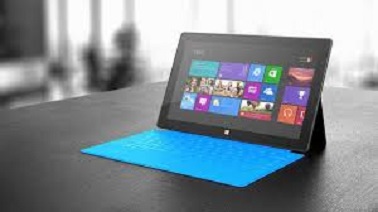
Today, Microsoft introduces their Microsoft Surface Plus program. It’s a new payment plan for Microsoft Surface customers for Surface customers, personal and business. So let’s look at Microsoft Surface PC: New payment line and luring tool.
So the program begins at 9am Pacific time. They present it as a flexible finance program for anybody using Surface. But you can only get it at Microsoft stores, physical and online. In fact, when you buy a Surface desktop and/or laptop, you can get a 2-year-payment plan at 0% interest. Also, every 18 months, you can trade in your old Surface for the newest one. Hopefully, you don’t have to wait in those long line for hours.
This goes for all things Surface. Furthermore, you get a 30-day return guarantee and a year’s worth of free tech support. Obviously, so long as that tech support comes from Microsoft. Yes, this program includes businesses and schools. In fact, they can get the 55-inch Surface Hub for $8.25 a month. The Surface Hub is very popular in business conferences and classrooms. But so are Apple Mac products and Droid facilities. So in addition to this generous offer, they get the Office 365 suite.
The timing is very interesting, and good. It’s back-to-school season (I know many kids, and many teachers, don’t want to hear that). This is the second busiest retail time of the year, next to the Christmas shopping season. Here in our Boston computer service shop neighborhood, moving trucks are here daily. That’s the sign of the upcoming academic year. Microsoft wants a piece of those profits. That’s a smart move on Microsoft’s part. Because Microsoft makes up less than 5% of the smartphone market. And between you and me, their smartphones haven’t been that good. When I give gifts, people even say to me, “Not a Microsoft phone or tablet.” Will Microsoft Surface Plus turn that around?
