
Aug 12, 2017 | internet
Nobody is immune to the hostile social-political climate that is 2017 America. No, nobody in computer repair, nobody in Silicon Valley. But Google is finding this out the hard way. Because one blog cost engineer James Damore his job. It also started a Silicon Valley war of ideas. Google political war: Silicon Valley in the crossfire.
So this is how it started. Damore wrote a blog they call the ‘anti-diversity manifesto’. He wrote why he is against Google’s programs to hire more women and minorities. He lost his job over this. However, this is the beginning of the story. Conservatives and Trump supports from everywhere are coming to Damore’s defense. Some are even declaring a cyber war on what they see as censorship against ?conservative ideas.
For example, Gab CEO Andrew Torba said this incident, and others, is a declaration of war. Then there’s Chuck Johnson. He worked on Trump’s transition team and runs conservative funding site WeSearchr. He plans to fight Silicon Valley until they, “change or go under”. There’s going to be a March on Google next Saturday. But?Mike Cernovich, an outspoken right wing conservative, plans to counter it. He and his followers even vowed to chain himself to offices if their views are censored.
But as for me, I disagree with Damore’s blog. We do need programs to increase diversity in Silicon Valley. The statistics are alarming. However, I understand why conservatives are concerned. I notice how they demonize ‘alternative media’ while praise mainstream media. There’s a reason people turn to alternative media. Because only six mega corporations own 90% of mainstream media sites. And when they have that much power, then of course they can push agendas rather than give facts. Many are sick and tired of it. That’s why they turn to alternative sites. Plus, the Constitution gives them free speech. If you don’t like it, turn it off. I don’t think they should fire Damore, either. I think this was an opportunity to talk about diversity. But they threw that away. Who will win this Google political war?
Aug 11, 2017 | Computer technology
There will be no Windows 11. I think most people in IT support know that by now. But that means Windows 10 needs to keep improving, if they want to keep existing. So this is where Microsoft Windows 10 Workstations comes in.
Maybe I should say Microsoft Windows 10 for Workstations. Because they’re revealing this OS today, specifically for Workstations. Also, they’re aiming it for server grade PC hardware and true power users. Furthermore, this Windows 10 will help machines with high amounts of RAM and logical processors. Microsoft is also making other to support business PC software. Because imagine running a business on mediocre software. Just don’t do it.
First of all, the ReFS (Resilient File System) can better fight data corruption and other ills. Then, they’ll support more memory modules. This means faster read and write speeds and files will still be in place. Speaking of files, there will be faster support for Microsoft Windows 10 Workstations. And last, but certainly not least, they will expand hardware support for this new system. I will try to say this without getting too technical. But this Windows 10 can support more CPU’s, processors, and ram terabytes. Keep in mind they’re just revealing Microsoft Windows 10 Workstations. They plan on releasing it sometime in fall 2017. So far, we don’t know the date.
Obviously, businesses use Microsoft as well as more personal systems. But does Microsoft cater to the business as well as they should? Ask some people in our Boston computer service shop. Many will tell you no. And some others will tell you that’s why they use Apple software. So this is a huge step in Microsoft’s direction. They realize they’re not the only candy store in town. So now they’re doing something about it? But is it enough? Will businesses use it? How will Microsoft Windows 10 Workstations play out in the future?

Aug 10, 2017 | Smartphone
It is amazing how accessible the smartphone is now. Because just five years ago, or over, the smartphone was only for the rich or middle class. But now, you can get a smartphone for as little as $20. T-Mobile knows this. It’s the T-Mobile cheap phone and on demand program.
Today, T-Mobile releases the T-Mobile Android Revvy. So you have a choice. You could buy it up front for $125. Or you could lease it for as little as $5 a month. However, as one spokesperson joked, this phone helps you keep up with the Jones’, not the Kardashians. But look at the price? What do you expect?
Well, one can expect a 5.5 inch screen, 13 megapixel camera, and Media Tek MT6738 processor. The Revy runs on Android Nougat. Smartphone critics boast the 3,000mAh battery. Because it may not keep you going and going, but it’s sufficient enough. There is also 32 GB of storage. So you may not have $130 to pay right away? You’re in luck, thanks to the the T-Mobile cheap phone’s On Demand Program. This program also includes other T-Mobile cheap phones. But those will run you seven or eight dollars a month. So the Android Revvy ?is about the cheapest you can get, well, from T-Mobile.
First of all, I applaud T-Mobile for making this move. I say this because in our Boston computer service shop, we see quite a few cheaper smart phones. In fact, I have one myself. You see, not everybody wants to wait in line for hours and pay $700 for the next big thing. Some of us don’t get our kicks that way. So for some, this phone would be fine. I’m not the only one. Many people, from all economy levels, would rather have a basic smartphone than the next big thing. Phone companies like T-Mobile and AT&T realize this and they’re taking advantage of this market. As well they should. Would you purchase a T-Mobile cheap phone?

Aug 9, 2017 | Entertainment
It finally happened. Because you knew Disney couldn’t share the goods for that long. This has to be one of the craziest moves in ? But now, Disney and Netflix part ways.
So the deal began in 2012, but it really didn’t take off until last year. However, by 2019, Netflix will lose all rights to show all Disney movies and TV shows. This includes all ABC shows, because Disney now owns ABC. Also, Disney announced it’s own streaming service, which should be ready by 2019. Yes, this includes all Star Wars movies, because Disney owns Star Wars now. If you’re an ESPN fan, this will affect you too, because Disney owns ESPN. Next year, Disney will create a streaming network for ESPN. So I guess that means no more ’30 for 30′ shows on Netflix.
Disney’s upcoming streaming service will use BAMTech, a digital media company Disney already owns shares in. ?But I almost forgot…today, Disney intends to own 75% of BAMTech. Talk about perfect timing. Disney is already the hardest company to stream movies from. For example, you have to purchase a movie, not rent it. And you know Disney’s streaming will be successful. Because they own Disney, ESPN, Star Wars, Marvel, ABC Productions, and…well, you get my drift. Now where does this leave Netflix?
It leaves them in quite a hole. That means Netflix are going to miss out on a lot of entertainment. However, Netflix executives assure the public that Disney and Netflix will work together. For example, they have an ongoing deal with Marvel. Forgive my cynicism, but I don’t see this happening. Look at Disney’s track record. A few years ago, when Disney’s first cartoon, Steamboat Willie, ?was about to go to public domain. But it never will. Because Disney moved Heaven and Earth to make sure that never happens. Disney is never going to lose any money, or share in any profits, if they can help. They don’t mind buying companies out, but they won’t dare share the spoils. Look at how many companies Disney owns. Disney and Netflix part ways. How will Neflix bounce back?
Aug 8, 2017 | Computer technology, Smartphone
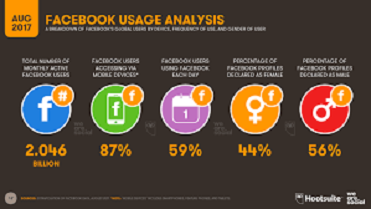
They social media population reaches three million people. So you may ask, “What’s the big deal”? Well, the global population stands at 7.52 billion. So when you break it down, around 40% of the world’s population regularly connects to social media.
But that’s not all. Over half the world’s population use the Internet daily. Then, take into account over 2/3 of the global population has smartphones. However, if you take the US alone, 83% of us has smartphones. In fact, I know people who swore they would never get one. But today, even they have a smartphone, and social media apps to go with it. There’s no escape anymore. I don’t think too many people want to escape.
Who are the social media winners? Facebook is the biggest one, because they lead the social media lead by a fairly big margin. Facebook alone has over 2 billion accounts. So more than a quarter of the global population uses Facebook. A good second winner is You Tube. Some people in our Boston computer service shop watch You Tube more than network TV. ?Coming in third is What’sApp. They have 1.2 billion accounts. Instagram is holding it’s own with 700 million.
But who are the social media population losers? One loser is Twitter. Of all the major social media companies in this poll, Twitter came in ninth place. They have 328 million accounts. That many sound good to some people, but remember when Twitter was supposed to be the next big thing? Then add the scandals, the layoffs, the bullying, and a certain US President who can’t put Twitter down. More people are turning Twitter off. Not even the NFL can help their matters. Some social platforms, like Uber and Airbnb, are not on the list, yet. But the way they keep growing, they will be. What do you think of this list? I hear people say smartphones and social media are destroying this generation. Are they right?
