Mar 28, 2017 | Smartphone
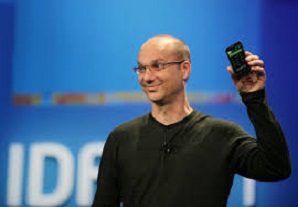
Here’s a trivia question for you. Who invented the Android? If you say Andy Rubin, then you win. But Andy Rubin is ready to re-enter the smartphone game. Android inventor releases new smartphone.
So some time ago, Android inventor Andy Rubin left his own creation. Then, he started Essential, a rival smartphone company. They tested their first phone yesterday. I guess it came out well. Because Rubin tweeted, “I’m really excited about how this is shaping up. Eager to put it in more people’s hands.” But too bad he’s not telling us much else.
However, the rumor mill is churning. Some sources claim it has edge-to-edge screening that covers the whole phone. Few, if any phones, have that. Samsung and Apple are trying to do that for their upcoming editions. Is Rubin’s tweet suggesting the Essential phone closer than we think? I say this because he said he wants to put it in more people’s hand. Big emphasis on the word more. That tells me some people may already have it. Furthermore, look at the Android inventor’s optimism. It wouldn’t surprise me if Rubin held a press conference in the very near future…I mean days or even weeks.
Should Samsung and Apple be nervous? I would. Don’t underestimate Rubin or Essential. The man created one of the most successful smartphones of all-time. This is great for us smartphone consumers. Competition is always good for any business. Why should Apple, Samsung, and Android have all the fun? It’s good for anybody in screen replacement and computer repair and other services. If and when something goes wrong, they’re coming to us. I doubt Essential will be ready for Galaxy S8 in April. But what about the Apple iPhone 8? That does come out until September. Hence, Essential could be out right on time to compete against Apple. Lots of people I know are fed up with Apple. Will disgruntal Apple customer fall in Essential’s arms? Also, what will Essential’s prices be? How will Essential do?
Mar 27, 2017 | Smartphone, Software
Since it’s creation, Facebook Messenger took off in use and popularity. Hence, on my personal page, 80% of my Facebook friends use Messenger. But could that change soon? Will Facebook Messenger matter after April 2017?
I ask this because of the sources I read. They say Facebook considers quitting the Windows Phone 8.1 version of Messenger. In fact, they believe Zuckerberg plans to slowly kill Messenger’s support on Windows phones. But wait. There’s more. They also believe older Facebook Messenger apps aren’t what they used to be. And this is on Android and Apple phones. But let’s focus back on Windows 8.1 phones.
According to an Italian tech news website, Facebook will stop supporting Messenger on Windows 8.1 phones. What does that mean? That means if you have this smartphone, then ?Messenger will be as good as Windows XP. That means no good at all. ?Also, these phone owners are already getting email warnings. The warnings tell them what’s coming and that it’s coming soon. The support will start at the end of March. They give two ways to avoid the shock of unsupported Messenger. One is to upgrade your software to Windows 10. Or, they can buy a smartphone that has the latest software.
Also, they suggest Android and Apple users have the latest software, if they want to have Facebook Messenger. Already, customers bring their phones to our Boston computer service shop with these concerns. We tell them what I’m telling you. Make sure you have the latest Messenger app. Plus, when support for the old systems go, it’s not coming back. But if you continue using the old support, you’re opening yourself up. You open yourself up to viruses, malware, and goodness knows what else. When you do, Facebook, Windows, and others won’t support you. Yes, we at Geek Choice specialize in laptops fixed, but why wait that long?

Mar 26, 2017 | internet, News
Most of you know about the terror attack in London last week. A man plows his car into a group of people on Westminster Bridge. Then, he stabbed people when he got out of the car. Four people died. Also, the attack injured dozens more. Police had to shoot and kill the suspect. But now, authorities say he used Whats App right before he killed. And lawmakers are not happy. What’s App used in London Terrorist attacks.
They’re not happy because Whats App uses end-to-end encryption. This prevents law agencies from reading messages without the user’s approval or knowledge. British Home Secretary Amber Rudd condemned What’s App. She said this kind of encryption is ‘completely unacceptable’. Secretary Rudd also hinted these apps could be a hiding place for terrorists. Furthermore, Rudd called on tech companies to prevent and fight social media publicity that inspires extremism. She says this because some believe the suspect eventually became radical. Other terrorist may have inspired him. But this isn’t the first beef between law enforcement and IT service companies. Remember the fight between Apple and the FBI? Apple didn’t help the FBI unlock a terrorist suspect’s phone. The fighting between them continues to this day.
Okay some terrorist used Whats App. But think of the billions who use Whats App for more positive things. They use it to plan work and meetings. Some also use it to tell family members, “I love you”. While others use Whats App to plan community events, charities, and youth activities to keep them off the streets. But I guess we should scrutinize that too, huh? It almost seems that some British lawmakers are using this tragedy as an excuse. They use this as an excuse to trample on all our privacy rights. And if we allowed governments to do this, then wouldn’t the terrorists win?
p.s. Please remind me to move George Orwell’s 1984 to the non-fiction part of my bookshelf.
Mar 25, 2017 | General
For years, I discuss the lack of diversity in IT service and IT support and other tech fields. But one HBU (historically black university) works to change that. So is Google. Let’s see how Google and Howard University encourages more diversity.
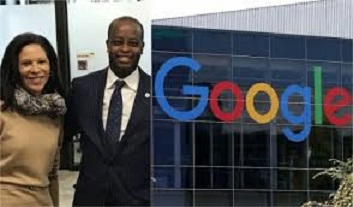
Google and Howard University partner to build a leaning campus on Google’s headquarters. Hence, they will call this campus Howard West. Their target is black engineering and computer science majors. But first, they will have to apply. They expect to start with around 30 students this summer. However, they want over 700 to be in the program by 2022. Howard West students will study for three months. Also, private donors will cover their Silicon Valley expenses.
But that’s not all. This program will expand to other HBU’s. Google and Howard hope this new school will help more Blacks get jobs in tech. Furthermore, Howard University’s president hopes this school prepares hundreds of Black computer scientists for the global tech force. Google knows it has to do something. Blacks only make up 2% of Google’s roster. Also, one 1 in 100 Google engineers are black. But Google isn’t the only company struggling with diversity. Just about every Silicon Valley corporation lacks diversity.
But at least Google and Howard are trying to do something about it. I applaud their efforts. Studies prove that companies with more diverse work forces do better than homogeneous companies do. They create better goods, services, and yes, even computer repair (I thought I would sneak that one in). Also, more diverse groups are better at making decisions and solving problems. Google and Howard seem to get it. Well, maybe I’m giving Google too much credit too early. Maybe I’ll wait until more the Google roster is a lot more than 2% black. What is this? Is this 1957 or 2017? Well, this is a start. Will it get the results? And the next question, will other tech companies and HBU’s follow Google and Howard in their footsteps?
Mar 24, 2017 | scam, Security
How much do you know about cyber security? If you’re like most Americans, then not much. But in this world of constant hacking and espionage, that needs to change. Americans and cyber security: We must do better.
So the Pew Research Center came up with a quiz. This quiz tested what Americans know about online security. Apparently, it’s not much. There were ten questions. ?Consequently, of those who took the tests, 58% got more than half the test wrong. Another 15% got just half the quiz right. So that’s nearly 3/4 of Americans who got 50 or below. Only 1% got all 10 right, and 3% got 9 of 10 right.
The quiz covered numerous issues: password security, phishing, encryption, Wi-fi safety, and ransomware. As we can expect, those between ages 18-29 did the best. But those over 65 did the worst. However, the education gap really shows. Those who have a college degree did better than those without a high school diploma or GED. But there is some good that came out of the results. The majority of them picked the strongest password as the best password. Thankfully, very few picked 12345 as the best password. But of the ones most got wrong, they deal with VPN’s (virtual private networks and identity authenticity. These are critical to Americans and cyber security.
Yes, we are making progress. I say that because years back, many would choose a password like abc or 12345. But we in computer repair need to do better teaching our customers about cyber security. There’s a reason they don’t know. It’s because we don’t tell them. At our?Boston computer service shop, we’re discussing running courses about Americans and cyber security, just to keep the public informed. ?I guess what I’m trying to say is, knowledge is power. And we in the tech industry need to better educate ourselves. Then, we need to pass that knowledge on and educate our people. The cyber crooks are getting smarter every day. When it comes to Americans and cyber security, shouldn’t we?
