Feb 10, 2016 | Computer technology
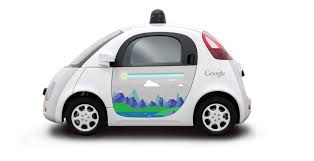
The self-driving Google car has been talked about several times on this website. Like all cars, it must be approved by the federal government before it hits one US street, highway, freeway, avenue, drive, road boulevard or parkway. Google just got a letter bringing their revolutionary car one step closer to that approval.
That letter came from the National Highway Traffic Safety Agency (NHTSA). The letter confirmed the computer driving the self-driving car can legally be the driver (sorry if that sounds confusing). Here is that letter in it’s entirety. I should warn you, reading War and Peace in Russian is easier to understand. ?The current fleet is still being tested at Google headquarters in Mountain Valley, CA. California law restricts them to maximum speed of 25 MPH. The state law also requires a human driver be present at all testings in case something goes wrong. However, there are some guidelines in the NHTSA’s letter. The letter stated that brake pedals need to be accessible to the driver. But since the computer is the driver, then the brake is accessible through electronic means. Therefore, they comply with this rule. The letter shows some conflicts about rear view mirrors. Unlike human driven cars, the Google car has no need for rear view mirrors. It has a full sensor array, so they can skip that rule.
This is where tensions may come between regular and Google cars. I am glad the US government is making sure Google has some accountability. But the fact they can already skip one rule might throw things into whack. What about other car parts humans might need but Google doesn’t? Now let’s say Google goes out on roads all over America, then the world. How do car manufacturers adjust? How will consumers adjust? This car is coming along nicely, and we can’t delay this conversation any longer. Is America ready for the Google self-driving car?

Feb 9, 2016 | Computer technology, internet, scam, Security
Do you know what today is? Yes, it’s Fat Tuesday/Mardi Gras. Yes, it’s voting day in New Hampshire. But it’s also Safer Internet Day.
Safer Internet Day began in 2002 and is celebrated every 2nd Tuesday in February. It’s now observed in 120 countries. It was first observed to help keep children and teens safe online. But over the years, issues like hacking and identity theft became so prevalent the day takes on another meaning. That meaning is keeping you safe from hackers, malware, cyber criminals, even national agencies and world governments. Safer Internet Day is observed by giving tips to keep you and your family safe. We at Geek Choice honor that tradition.
Be careful of what you post and the pictures you upload to social media. Don’t give out your too much information or let the pictures become too risque. Hackers have been known get risque photos and threaten to blast them globally if they don’t get what they want. They’ll use your posts against you too. I’ve read stories where social media posts have gotten people fired, arrested, and even worse.
Change your passwords and change them often. Don’t use easy passwords either. Use passwords that you and only you would know like the name of your elementary school, your first car, or first pet, and the year these things happened (it’s always good to mix alphabetical and numerical signs together).
Get and update anti-virus software. With free anti-virus services like Avast, there’s no excuse not to.
If an email or social media post sounds too good to be true, it probably is. If you get one saying something like, “We have money waiting for you. But we need some information…”, don’t give in. Too many people had been had.
If someone calls you and claim they’re from a legit corporation, like Microsoft , and say you need to pay to get a virus removed, or need your credit card information, don’t do it! Some scammers have put up viruses, then call you claiming to be a Microsoft rep and demand money. Microsoft doesn’t operate like that. If a virus is holding your computer hostage, call Geek Choice.
Parents, monitor your children and teenagers’ computer activities. They’re too many cyberbullies, pedophiles, trolls, con-artists, even terrorists out there to be too relaxed about your kid’s online safety. Talk with your kids and warn them about the dangers out there. Remember, you’re their parent, not their friend. What other tips would you offer to keep innocent people safe online?

Feb 8, 2016 | Entertainment, internet
Another Super Bowl has come and gone. The ads have come and gone. But this year’s ads won’t be as memorable, according to the hashtags.
Hashtags were in 45% of Super Bowl ads, compared to 50% last year. Twitter and Facebook led the social media way, though neither were mentioned that much. A website called MarketingLand counted 60 different ads between the first kickoff and the end of the game (pre-game festivities weren’t counted). Of those 60, 27 had hashtags, 21 had their ad’s website, 3 had their Twitter and 3 had their Facebook posts. This is the lowest count since MarketLand started conducting such research in 2012. That year, only 12% ads had hashtags of them. Of course, four years ago, many of us were still trying to figure this social media thing out. Movies went heavy on the social media. The main movies advertised were Jungle Book, Independence Day Resurgence, and X-Men Apocalypse. They had at least one hashtag, URL, or social media symbol. Another movie, Jason Bourne of the Bourne Identity franchise had none of those. In fact, the majority had none of the those. The rest only had one: either a hashtag, URL, or social media siting. Only one ad, T-Mobile, had a hashtag, URL and social media siting.
So are hashtags a trend in commercial that is fading? I don’t know. But I know this year’s Super Bowl commercials left a lot to be desired. Look at the Doritos commercial. Are they going to convince me Doritos are so good they will make a pregnant woman give birth early? What a joke. And don’t even get me started on those prescription drug commercials they had. Haven’t the pharmaceutical companies saturated and invaded the advertising market enough? Maybe social media companies were just ashamed to be a part of that. I was ashamed at looking at some of those commercials. Is the ad hashtag trend winding down? Or were the Super Bowl commercials just that bad?

Feb 7, 2016 | internet
Is it just me, or is getting decent sleep a thing of the past? Some even boast proudly, “I’ll sleep when I’m dead!” Is Facebook contributing to this trend?
Researchers of a study done by University of California-Irvine seem to think so. They linked lack of sleep to browsing social media sites like Facebook. Researchers monitored the sleep and social media habits of 76 UC-Irvine students. They monitored the students’ computer/smart device use. Researchers studied how often the students texted and used social media apps. Students did surveys in the morning and at night on their sleep. The research studied sleep debt, the difference between the amount of sleep needed and the amount actually gotten. The study proved what most people know all along: Not enough sleep leads to people being distracted easier, essentially saying Blame Facebook. Their attention especially goes to the app screen and social media site. One researcher said,??If you?re being distracted, what do you do? You go to Facebook. It?s lightweight, it?s easy, and you?re tired.? This isn’t the first time a like between social media and no sleep has been proven. Another study? proved teens who text with lights off get less sleep and worse grades than those who text with lights on.
All this study proves what common sense should be teaching us. How many times have you found yourself not sleeping at night? You see what people talk about on Facebook or Twitter. You watch You Tube or Netflix. You Snapchat a friend or throw some selfies on Instagram. Next thing you know, it’s an hour or two before you have to wake up. You started the night getting less sleep. You start the next day getting almost none. Do you know how many times I’ve seen a Facebook post saying, “Who else is awake?” Shouldn’t we turn off the computer/smartphone and get a good night sleep for a change? Do you Blame Facebook for your lack of sleep?

Feb 6, 2016 | Entertainment, internet
Twitter is another company that’s growing up. Late in 2015, they’ve announced changes to make the social media conglomerate even better. According to BuzzFeed, Twitter could introduce an algorithmic timeline sometime in February 2016.
So that nobody gets confused, an algorithmic timeline is very different than a chronological one. The algorithmic timeline will put tweets in the order it thinks people want to see. For instance, it’s Super Bowl weekend. So if someone tweeted about the Super Bowl yesterday, you may see that in your Twitter feed before you see a tweet about what someone had for lunch an hour ago. We don’t know if the algorithmic timeline will be optional or required. This June 2015 article argues this could elevate Twitter’s popular content. Since becoming the new CEO in October 2015, Jack Dorsey has sought out new ways to revolutionize Twitter. Since October 2015, the company replaced term favorites with likes. There’s also talk of ending the 140 character Tweet limit. I don’t know if that would be shortened or expanded. But Twitter’s algorithmic timeline has already been tested among some Twitter markets. Now, it looks like it’s about to expand to all. Twitter leaders and spokespersons decline to comment.
But Twitter followers and consumers are commenting on Twitter’s algorithmic timeline. Most aren’t happy with this potential change. One person said she should be able to control what’s on her feed, not have Twitter control it for her. Another person believes this is going to ruin Twitter. A meteorologist complained this would be a huge problem, especially if a severe weather warning comes up. One man said this is a just another way Twitter will let celebrity tweets go in front of others, and silence regular people. In fact, I haven’t read any comments or postings saying the algorithmic timeline is a good idea. Twitter, listen to your consumers. Without your consumers, there would be no Twitter. The people don’t want this sort of timeline. Some even suggest it could be the beginning of the end of Twitter. So why is Twitter so bent on forcing something the consumers don’t want?

Feb 5, 2016 | Computer technology, Wireless
When you think of Nintendo, what do you think of? You probably think of video games, Super Mario Brothers, Wii, Zelda, Game Boy, etc. Do you think of a sleep tracking device?
In 2014, Nintendo planned to get into the very competitive fitness/sleep tracker movement. The plan was to give you this device only the way Nintendo can. This mystery device was going to be released sometime in March 2016. Note the key word in that last sentence…WAS. Nintendo president Tatsumi Kimishima said this Quality of Life device is not only delayed, but delayed indefinitely. But Nintendo’s plan was to go beyond the traditional smartwatch, health tracker, or other wearable technology versions. With Quality of Life, it would know when you’re sleeping. It would process your data, and give you suggestions when you seek them. For example, if you weren’t getting enough sleep, Quality of Life would tell you to eat better, lower your stress level, quit smoking, or give other health advice. The late Satoru Iwata, Nintendo’s last president, showed great confidence in Quality of Life in 2014, when it was in it’s newborn stages. Iwata showed great excitement about visualizing sleep plans. And to Nintendo’s defense, they had reasons to be optimistic. Their first health based product, Wii Fit, sold over 40 million copies by January 2016.
But this isn’t Wii Fit. This is Quality of Life. This is, or should I say this was, Nintendo’s version of wearable technology. Wearable technology is one of the most competitive tech gadgets around today. In the last couple weeks, I’ve talked about wearable technology. So why did Nintendo suspend Quality of Life? Did they not think it was good enough for the extremely competitive market? If they’re going to continue on with this device, they need to be different and stand out. I would suggest find a way to incorporate some of the beloved Nintendo characters in this device. Or is it a good idea for Nintendo to be competing in the sleep tracking game at all?

Feb 4, 2016 | Entertainment, internet
Believe it or not, even techies are interested in the Super Bowl (at least most of the ones I associate with). Did you really think it’s?all about Star Trek and Doctor Who with us? It’s not. So for the big American sports holiday coming up, here are some tech guides and tidbits.
First off, it’s going to be in Santa Clara, CA. That’s in the heart of Silicon Valley. The Super Bowl venue this year is Levi’s Stadium. That’s the most technology sound venue in the US. They’re expected to serve 1,200 Wi-Fi access points and the consumption of 16TB of mobile data. But you’re not going to Santa Clara. Most of us aren’t. You’re in luck. You can stream the game for free, thanks to CBSSports.com. There’s no need for a cable subscription, a username, a password, or anything of that kind. Yep, you can have Super Bowl 50 on your desktop, laptop or tablet free of charge. You’ll even see all the anticipated commercials. Smartphone viewing will only be available through Verizon and the NFL Mobile App. Get your social media on at Twitter’s @SuperBowl. There’s no telling who you might be debating with. Ever hear of Comedy Central’s Kay and Peele? You’ll know them by this Sunday. They’ll be providing unofficial commentary. It’s unofficial because obviously, it’s not backed by the NFL.
The Super Bowl is growing up, especially in technical circles. Even all the commercials will be streaming; only a fraction of them did last year. Do you think it was a coincidence the Silicon Valley’s Levi Stadium was chosen to host Super Bowl 50? I think not. The Super Bowl of pro wrestling, WWE’s Wrestlemania, was held there in March 2015. That was no coincidence either. It’s a brilliant move to get America’s biggest sporting events as tech savvy as possible. Expect this trend to continue in all sports. Will Super Bowl 50 give Silicon Valley the boost it needs?

Feb 3, 2016 | internet
Are they sure the economy is doing better? Walmart shuts down franchises. I was in Florida last month and walked by 3 businesses within three blocks that were there last year and gone this year. Now, one of the Internet’s most respected institutions is on a massive layoff spree.
Yahoo is expected to cut 15% of it’s work force. That includes approximately 9,000 employees and 1,000 contractors. This is part of an aggressive plan for the company to simplify itself. They’re closing five major offices overseas. Yahoo expects this move to save them over $400 million. The news is hitting Yahoo’s stock as well. They lost nearly two percent. The irony here is that stocks briefly went up when the phrase, “strategic alternative” hit the floor. Some tech insiders speculate a potential corporate buyer altogether. Yahoo CEO Marissa Meyer expresses optimism. She stated, “Today, we’re announcing a strategic plan that we strongly believe will enable us to accelerate Yahoo’s transformation”. This transformation includes trimming down some services and consolidating others, like their Digital Magazines. There’s talk about getting rid of Yahoo Games and Yahoo Smart TV. Yahoo Screen went bye-bye in December. Since Yahoo has decreased in some global markets, it’s going to focus on potentially profitable ones, like the US, UK, Canada and Taiwan. In fact, the offices closing are in countries like Brazil, Spain and Mexico.
Yahoo’s problems are the dubious gifts that just keep on giving. Shareholders and other Yahoo leaders are leaving Mayer’s tenure. It almost seems like Google/Alphabet has stolen all of Yahoo’s thunder. But two things about this disturb me, make that three. Nearly 10,000 jobs will be gone. That means 10,000 people, livelihoods, households and families will be on the line now. The second is Yahoo’s trimming or shutting down of services. Could they not compete with the other big players, especially in the smart TV game? The third is the speculation some have of it’s…ahem…’strategic alternative’. I hope it isn’t, but could this be a code word for buyout or merger?
Feb 2, 2016 | Computer technology
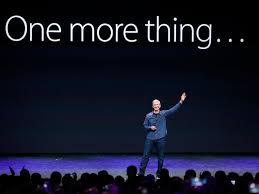
Are you an lover of all things Apple? Do you wait in line at all hours of the night for the big thing from Apple (and if you do, then why!?)? Then mark the week of March 14th on your calendar.
Experts and insiders believe this is the week Apple will unveil new products such as the iPhone 5se, iPad Air 3, and Apple Watch products. Some say the specific date will be March 15th, but that could still change. It’s almost certain it will be the week of March 14. One new product many look forward to is the 4-inch iPhone called iPhone 5se. It’s supposed to have the A9 Chip, Apple Pay, and slightly curved edges. The iPhone 5se will run you $450 for 16GB. The iPad Air 3 is expected to be the first 9.7 inch iPad upgrade since iPad Air 2 was launched back in October 2014. New features should include better speakers and a Smart Connector. Rumor has it a smaller Smart Keyboard will accompany the iPad Air 3. The cost of the iPad Air 3, so far, is unannounced. Sources say the upcoming batch of iWatch products will focus on new bands. We’re talking about new colors, and new bands like Sports bands and Hermes bands. The price on these new watches are also unknown.
I’m sure millions will be tuning in. So will I. For Apple’s sake, I hope this press conference goes will. I just read an article where Google/Alphabet is about to surpass Apple as the top company in America today. ?In the past, sometimes Apple gets it right. But there have been times where Apple has fallen way short. They really need to step up their A game in the smart watch market. It’s been written before, this market is getting more and more competitive every day. Don’t forget Apple might surprise us as well. What do you expect from Apple’s week of March 14th press conference?

Feb 1, 2016 | Entertainment
I saw an interesting commercial. In this commercial was a clip of legendary TV comedian Jackie Gleason promoting the first Super Bowl in 1967. This footage was in black and white. Black and white TV was how most Americans watched the Super Bowl in 1967.
But in 2016, most Americans will be watching the Super Bowl on high-definition TV. One NPD Group study says 1 in 18 Americans want to upgrade their TV just for Super Bowl 50. In the competing cities, Denver and Charlotte, the stats will be several times higher. The most popular, not to mention expensive choice is the LG E6 OLED 4K Smart TV. It’s 65 inches, razor thin, has outstanding HDR color, and has the new LG webOS 3.0 Smart TV platform. This high-def TV will cost you around $7,000. Looking for something cheaper? You can get the Vazio M Series. It still has all the high-def quality you’re looking for, but for as low as $549, and that’s for the 43 inch model. If you want the best sound available, it’s suggested you get the Sony X930C. It’s been praised for it’s fluid speakers, high-resolution audio, and surround sound speakers. This 65-inch high def TV will run you anywhere between $2,800-$3,800. It was built for PlayStation gaming, but obviously, can be used for the big game.
There are far more options to choose from, but according to TV experts, these are some of the top options. Things have changed since my parents and grandparents gathered around the old black and white TV. Things have changed since me and my friends gathered around the old big, bulky color television. I’m glad we have options, but I think the best option is the Vazio M Series. It’s seems like the only affordable option, when you look at the top options. You could get financing and/or people could take a collection to raise thousands on a super expensive TV. Can’t you just take care of that with a Vazio M Series? Would you get a brand new high def TV just for one game?
