
Jun 1, 2016 | internet
What’s the most important website/social media outlet today for retail? Is it Ebay? Is it Amazon? Is it Walmart.com (I hope not!)? Let’s see how Facebook and the retail game are answering, and changing, that question.
Retailers like Best Buy, Macy’s JC Penney’s, and others have been struggling lately. For the last couple of years, they’ve endured profit loss and falling stocks. They’ve had to shut down stores and lay off employees. Part of that’s due to an economic recovery that really wasn’t. But part of it’s due to online retail like Amazon. Part of it is because of Facebook, which commands at least an hour of our time each day. Since more Americans spend more time on Facebook, why not shop there? Over 15 million businesses have an official Facebook page. Imagine potential consumers spending hours on that app, then sharing it on their page. Their bots and ads communicate through the Facebook Messenger app. This kind of promotion brings big businesses for companies. Facebook promotion can come from nowhere. We can partially thank Facebook video for that. You know Star Wars Chewbacca masks have been flying off the shelves since Candice ‘Chewbacca Mom’ Payne’s Facebook video. That video has over 156 million views and still counting. Retailers like Kohl’s use that video, and Payne’s Facebook charisma, to bring in sales.
Facebook and the retail game shows you the new era we’re in. No longer can businesses depend on glossy newspaper ads, a smooth voice radio ad, or a funny TV ad and think they’re going to be successful. That’s so 20th century. A good social media campaign is critical if you want to compete in today’s market. Facebook is perhaps the best way to do so. Millions of people use it and use it often. Gone are the days of in and out shopping as well. People want to be entertained when they shop. Is Facebook contributing to that as well?
May 31, 2016 | Uncategorized
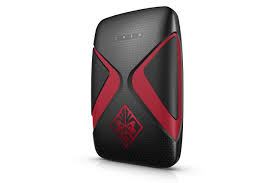
Yes…the title is right. Computer maker Hewlett Packard is introducing the virtual reality backpack.
This new piece of VR is built by their gaming Omen Innovation Team. It’s called the HP VR PC Pack Hardware Development Kit. It’s aim to to get you in virtual reality without tripping over cords. As of right now, not just any consumer can get this VR development kit. You have to apply and get approval on HP’s website. But if you get this kit, you’ll get a lightweight PC you can carry on your back. The kit comes with a headset that plugs into the kit. The pack runs on two high output batteries that lasts an hour a pop. The kit will give you a warning when your batteries are dying, and you simply replace them with new ones. When you’re changing batteries, the PC has an on board battery to keep from shutting down. While using the VR headset, Windows is available. Alongside the VR headset, this kit comes with a wireless mouse, keyboard and monitor. Even with these added features, they’re trying to keep this product under ten pounds. I can’t stress enough, the HP VR PC Pack Hardware Development Kit is not for sale and it’s not for consumers…not yet at least.
That’s why I can’t report on a price…not yet at least. They’re looking for interested developers that will help them better the system. Hopefully, these developers can improve the battery life and keep the kit under ten pounds. Hopefully, they can come up with a cooler name. If they are eventually going to sale this thing, I doubt the HP VR PC Hardware Development Kit is going to convince people to run to the stores. But this is a good concept and a good start. It does need work before it can be put out for consumer market. What else can developers do to make this kit better? How much would you pay for a VR PC?

May 30, 2016 | networking, News
As many of you know, Iran is one of the most isolated and censored nations in the world. Under strict sharia law, the people can’t enjoy many of the freedoms we Americans take for granted. This includes technology and social media.
The Iranian government blocks social media platforms like Facebook, Twitter and You Tube. In recent years, more people have been using global software to access them. Maybe that’s why Iran’s government is making their move. Effective May 29, their government demands messaging apps to turn in the very citizens that use them. A data server will collect the names of the users. Immediately, people are calling foul. People say this new rule violates their privacy rights. The foreign messaging apps have a year to comply with the Iran’s Supreme Council on Cyberspace’s demands. This council is hand picked, member by member, by Ayatollah Ali Khamenei. Instant messaging service app Telegram is particularly in the bulls eye. Recently, this app has 20 million members. So basically, 1/4 of Iranians are connected to Telegram. Since November 2015, Iran policeman have arrested many Telegram administrators for promoting ‘immoral conduct’. Telegram users aren’t fooled. One user tweeted, “Telegram’s data centers are to be moved inside the country so they can delete what they want and arrest who they want.”
I think the only reason the Ayatollah’s Supreme Council even came up with this law is to go after Telegram and the technological freedom it gives people. For years, the Iranian people have been crying out for freedom. The powers that be don’t like it a bit. When Telegram administrators are getting arrested for ‘immorality’, you can best believe they’re not sharing pornographic websites. These administrators are leading to charge to break the yoke of censorship. The Iran Supreme Council on Cyberspace strikes back. But with the people’s will as strong as it is, I doubt they will prevail. What do you think Telegram’s next move will be?
We at Geek Choice would like to wish everyone a happy Memorial Day. We say thank you to those who fought for our freedoms. We remember those who never made it home.
May 29, 2016 | General
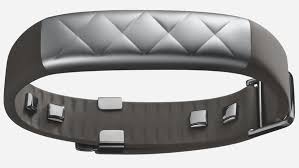
Jawbone, a major player in fitness tracking production for well over a decade, has announced it will stop making UP fitness trackers. Not only that, but inventory will be sold to a third party company, whomever that may be. It seems like Jawbone is washing their hands of the UP fitness tracker altogether.
Due to incredibly low revenue numbers, Jawbone ceases to make UP2, UP3, and UP4 fitness products. The sales numbers were so disappointing that they’re not even going to try to sale the rest to consumers. Instead, they’re selling the rest to a third party retailer for a price so low they may as well be giving them away. They had to do this just to stay in business. We don’t even know if Jawbone will ever even attempt to make UP fitness trackers again. Nobody from Jawbone wants to talk about it. Yes, consumers can still buy the UP tracker. But Jawbone won’t be the one selling it to you. Third parties will. Jawbone will also discontinue it’s Bluetooth speakers. They’re looking for a new third party seller for those too. Despite this major setback, Jawbone raised $165 million in January 2016. Jawbone wants to dedicate that money to build clinical fitness trackers. My question is: If Jawbone is having a hard time selling UP trackers, what makes me want a clinical tracker?
That’s the dilemma. Jawbone had a good start. But recently, as in the last several years, they haven’t been able to compete with Fitbit and Apple’s wearable technology products. There may not be anymore Jawbone had they not raised $165 million in capitol. If I were Jawbone, I would invest it in promoting the products I have and doing whatever it takes to sale the UP products before I even think about moving to something else. Why do I want what they’re making if they can’t even sale what they have?

May 28, 2016 | News, youtube
Guess where the majority of American adults get most of their news from? You guessed, it, social media sites.
According to the Pew Research Center, 62% of Americans get news on social media. That’s up from 49% back in 2012. In fact, one out of five say they often get their news from social media. Reddit and Facebook lead the charge. Nearly 70% of Reddit users say they get their news there, while 66% of Facebook users get their news there. Twitter came in third with 59%. The surprising statistic is You Tube. Of all You Tube subscribers, only 21% say they get their news there. That’s surprising to me because there are many, many alternative news sites and sources on You Tube. There’s quite a bit of overlap here as well. More than a fourth of Americans get their news from two social media sites. And 10% say they get their news from three or more social media outlets. Adults age 30-49 are the most likely to use social media for news, while those over 65 are less likely.
This is why Facebook needs to be careful with us and we need to be careful with Facebook. Facebook needs to do a better job letting news from all political sides get a fair shot at being broadcast. And we need to do a better job discerning what’s real and what’s not. There have been many, many hoaxes over the years, from joke news to celebrity death hoaxes. Yes, there’s more social media than there was four years ago, so it’s easier to use this as a credible news source. But I think people are sick and tired of mainstream media. Did you know over 90% of all mainstream media is owned by six or five corporations? Social media allows people to see real news from other people’s perspective. Personally, I’m a fan of You Tube alternative news sites. Maybe that’s why I’m surprised You Tube doesn’t rank higher here. What is your favorite social media sites to get news?
May 27, 2016 | Computer technology, Software
Have you ever owned a 360-degree camera before? Have you ever made your own? ?If you have, then you know the high maintenance software and equipment it requires. There might be an easier way.
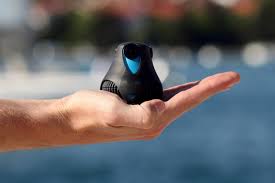
The good people at Giroptic introduce their 360cam. It includes everything you need to take 36o-degree photos and videos, and you don’t have to add anymore software. It can fit into the palm of your hand. It has three lenses, one on each side, but none underneath. A 360-degree camera may seem complicated and intimidating, but this one doesn’t seem to be. It has one power button. The other button controls the camera’s modes, like video, photo, burst and time-lapse. It shows you the camera’s battery life and camera mode. It has lock in technology for your security and protection. It coincides with the Giroptic 360cam app, which can be downloaded on Apple and Android smartphones. There, you can easily share your photos on Facebook, You Tube and other social media sites. It’s definitely waterproof. I saw a cool demonstration of a man taking videos literally in a wishing well. Not only didn’t it short circuit, it got great views of the city while it was underwater! The Giroptic 360cam will cost you at least $500.
So is the Giroptic camera a good buy? It depends on the individual. If you’re going to spend $500, or more, on this, then you’d better use it regularly and take care of it…regularly. Fortunately, this camera is easier to take care of than if you built one yourself, then had to pay for the sophisticated software. Plus, a 360-degree camera can take pictures and videos like nobody else. If you can get a photo of an entire city spinning around without, and do so underwater, then do so! Just be ready to invest time, money and energy. Is Giroptic 360 camera the right investment for you?

May 26, 2016 | General
The middle class is shrinking in the USA. This isn’t a conspiracy theory. Statistics prove this as a sad fact. Silicon Valley, America’s tech hub, is no exception.
The Silicon Valley consists of San Francisco, Santa Clara and San Mateo ?counties. It’s home to Facebook, Google, Apple, Yahoo, and dozens of other tech corporations. During the Great Recession of the late 2000s, Silicon Valley was one of the few regions of America that remained profitable. Unfortunately, it came at an unfair costs. Today, these three counties have one of the biggest economic gaps in the country. In 1989, Silicon Valley’s top 1% owned 13.3% of county income. By 2013, Silicon Valley’s top 1% owned 28.3% of all county income. In 1989, the number of middle class households in Silicon Valley were 56%. By 2013, the number of middle class households in Silicon Valley was 45%. In San Francisco, the top 1% earns 43 times that of the 99%. Low income households are doing worse. While Silicon Valley’s one percent boomed in the 2010s, the low income worker’s situation was at stagnant as ever. And with rising housing expenses, and poor public transit in much of the area, it gets harder and harder for the low and middle class to improve their financial situation. The good news, and only good news, is Silicon Valley has enough to invest in affordable and reasonable housing, transportation and good jobs. But will they?
They need to. A thriving middle class and healthy working class are paramount for any town, county, state, region or nation to succeed. If this gap widens, the work pool will likely be forced out of Silicon Valley. If the super rich has everything and the 99% have nothing, that region is setting itself up for failure. Let’s not forget our history. Some Silicon Valley leaders agree. Budget Center executive Chris?Hoene says, “We don?t want to turn around 25 years now and wonder why Silicon Valley didn?t turn out to continue being the engine of growth it had been.? They have great potential and tools to turn this crises around. Will they?

May 25, 2016 | Entertainment
In March 2016, former pro wrestler Terry Boella, better known to wrestling fans as Hulk Hogan, won a $140 million lawsuit against online media firm Gawker Media. This lawsuit started when Gawker allegedly extorted Hogan over a sex tape release. Now, anonymous sources are saying one Silicon Valley maverick financially supported Hogan’s cause.
That maverick is PayPal co-founder, Facebook backer and Founders Fund creator Peter Thiel. Theil’s people stay silent about these rumors. But Peter Thiel is a well known First Amendment advocate. And this case violated Hogan’s rights in vile ways. But it wasn’t just the First Amendment or his admiration for Hogan that allegedly made Thiel champion Hogan’s cause. According to a Forbes magazine article, Gawker tried to oust him back in 2007. Two years later, Thiel said Gawker Media and their franchises (like the now defunct Valleywag Silicon Valley publication), “… had the psychology of terrorists.” Even Gawker founder Nick Denton hinted Theil’s hatred of Gawker probably contributed to him paying Hogan’s legal fees in this lawsuit. Valleywag had a reputation for exposing lifestyles in Silicon Valley, the very opposite of what this multi-billionaire believes in.
Maybe the saying is true…an enemy of the enemy can make a really good friend. I’ve even seen pictures of Thiel speaking on Hogan’s behalf. But I think something even deeper is happening. I grew up in the ‘Hulkamania’ era. I remember when Hulk Hogan was an American hero for us kids. But in the last 10 years, it hasn’t been the case. Think of what this man has endured: a bitter divorce, a son in jail, a sex tape scandal, this lawsuit, a racial scandal that got him permanently barred from WWE, the very company he helped turn into a global powerhouse. Hogan could use a friend right now. From the looks of it, Thiel is that friend. I hope this potential friendship goes beyond this lawsuit. I hope Thiel’s positive influence can help Hogan get on the comeback trail. What do you think of this new partnership?

May 24, 2016 | youtube
Everyone is talking about Chewbacca mask lady Candace Payne’s You Tube video. I see why her video is such a big hit. But there’s one You Tube video that might even outdo Candace Payne’s.
This one has to do with a swimming pool and dry ice. Dry ice is usually used for food storage and preservation, fighting mosquitoes, removing floor tile, even make your own root beer. Famous You Tube video producer Crazy Russian Hacker conducted an experiment. He put 30 pounds of dry ice in a cooler. With gloves on, he crushed the dry ice. After almost dropping and spilling it, he dumps it in his backyard swimming pool. The pool bubbles up like a jacuzzi and there is a foggy mist covering the pool. Crazy Russian Hacker himself describes it as, “It looks like a volcano underwater.” He admits it was a windy day, and that might have added to the effect. In scientific terms, when dry ice hits the water, the water turned the solid into a gas. I would have love to seen him at least put his foot in the water, but that didn’t happen. Crazy Russian Hacker is known for his unconventional experiments, from food hacks to science discoveries. The man even offers tips to survive a zombie apocalypse.
And this one was a huge hit. As of this writing, Crazy Russian Hacker’s dry ice pool experiment has nearly seven million views in four days! That’s even more views than Candace Payne has. Then again, Crazy Russian Hacker has nearly 7.4 million subscribers. And dry ice experiments have been done on You Tube before, but never got this many hits or publicity. Plus, I learned other things, both from his channel and about dry ice. I had no idea dry ice could be used for so many issues. What are your favorite You Tube channels to learn from?

May 23, 2016 | Computer technology
Can technology hijack our minds? Facebook has com under scrutiny for allegedly ignoring conservative articles. We’ve heard many, many allegations of government agencies and tech corporations spying on everything we do on computer based products. So this sort of question needs to be asked.
A blogger named Tristan Harris tries to tackle this question. He believes technology can hijack our minds and lists different ways it can be done. One way Harris believes technology controls our minds is through limited choices. He used Yelp as an example. When friends want to go out, you type ‘restaurant’ or ‘club’. But it’s the list of places they want you to go to. Harris talks about the ‘slot machine effect‘. Are you aware the average person checks their smartphone 150 times a day? That’s to see if what notifications we get on an hourly basis. The slot machine is the most profitable gambling tool in any casino. That’s because it’s easy to play and you play over and over. You’re afraid to stop playing because the next spin could be ‘the big win’. That draws me Harris’ next argument: the fear we’re going to miss something. We’re more glued to our devices than ever before because we might miss that important email. We want to see who accepted our Facebook friend request. We look forward to that next You Tube video or Netflix release. What’s the next video game going to be? We don’t want to miss anything.
And that’s how technology hijacks our mind. They’re nine other points Harris makes here. I don’t agree with all of it, but he made valid arguments. But I do notice a pattern on certain hotel sights. When I try to book for a certain city and certain neighborhood, I’m given only certain hotels, often the more posh and expensive ones. But when I Google for more budget hotels, I often find a bunch that the hotel websites don’t have. These are the ones I’m looking for. What’s up with that? Can technology really hijack our minds?
