
Apr 2, 2017 | Uncategorized
Cookies aren’t the biggest threat to your computer or device. But they can be annoying. Not only that, they can compromise your privacy. So, do you want to say goodbye cookies? Well, your friendly Boston computer service shop is here to do that (they sent me to write this article). Goodbye cookies: Delete cookies from web browsers.
But first, I should explain what cookies are. They’re small data files that track online activity. Sounds evasive, doesn’t it? Then that’s why you want to get rid of them. Google Chrome is the most popular web browser out there today. So here’s how you do it there. Click on ‘Menu’ in the upper right hand corner. Then, click ‘Settings’. After that, click ‘Show advanced settings’, then ‘content settings’. It will shock you what this will reveal. From there, click on, ‘all cookies and site data…”. Then, you can either delete certain files one at or time. You can also delete them all by clicking, ‘remove all’.
Firefox is also a popular web browser. You can say goodbye cookies with them as well. Start with the ‘tools’ menu. From there, select ‘options’, then ‘privacy’, then ‘history’, then click, ‘use custom setting for history’. This will show you your browsing history. If you want to delete cookies, click on ‘show cookies’. It will show you a list of cookies you built up over time. Like with Chrome, you can either delete one at a time, or delete all of them with one swoop.
Most of us in the computer repair business know how important your privacy is. We also know how fleeting it is, and how many threats there are to it. So deleting cookies is just one way to do that. Other web browsers have other methods to say goodbye cookies. Feel free to use them. Isn’t saying goodbye cookies just one battle in fighting the war against privacy invasion?

Apr 1, 2017 | General
Several days ago, I reported congress passing a law that would kill Internet privacy. Many don’t like this. But some others take action, or threaten to. Then there’s Max Temkin. He’s the founder of party game, ‘Cards Against Humanity’. He threatened to reveal all of Washington’s dirty little secrets. So could someone expose Congress Web history?
But he doesn’t want to stop there. Temkin also talked about buying the browser history of every Congressman. Then, he publishes it. He put this up on social media this week. Hence, as you can imagine, the response was quick and plenty. Furthermore, he urged people to the Electronic Frontier Foundation. They fight for online privacy rights.
This comes in the wake of Congress voting to repeal laws protecting online privacy. After the vote, Temkin took to Twitter. One can feel his frustration. Yes, this move upset a lot of people. But few talk about buying Congresses’ records. ?Someone started a Go Fund Me page. But I doubt Temkin is behind this page. However, this Go Fund Me page is raising cash to buy Congress web history. So far, they raised $160,000. The original goal was $10,000. Yes, there are a lot of upset folks out there.
But Temkin cautions people about Go Fund Me pages raising money to buy records. However, if someone can obtain these records, he won’t hesitate to publish them. That’s the last thing Congress wants, especially in this volatile political climate. Trust me. The last thing anybody wants to do is upset a IT support leader or computer repair worker. Don’t tick off anybody that high up in tech as Temkin is. If the cause fits the situation, they will expose you, especially if you’re doing wrong. And this bill is wrong. I don’t know is selling and publishing records is the right way to go about it. But I’m certainly don’t condemn it. So let’s suppose they do get and release Congress web history. Would that be wrong? Or would they get a taste of their own medicine?

Mar 31, 2017 | Computer technology
Tech billionaire Elon Musk does it all in the IT support world. He founded PayPal. Then he founded SpaceX and Tesla; he’s still the CEO of both. But his next venture boggles my mind, and it might consume my mind, literally. Elon Musk wants your brain and soul.
So, earlier this week, Musk announced his support for Neuralink. That’s a company that puts tech devices in peoples’ brain. At least they want to, because the company is still in it’s early stage. They also want to be players in the AI (artificial intelligence) game. Hence, Neuralink thinks these devices will help us keep up with AI technology. That is, if they can get them in our brain.
Elon Musk seems passionate about merging AI and human intelligence. Recently, he lectured a crowd in Dubai, UAE. He told them a merge between human and AI intelligence will come over time. Furthermore, he continues the conversation on Twitter. They talk about neural lace. That’s a brain-computer thing they can ‘allegedly’ use to improve the human brain. As of March 31, 2017, we only see this in TV, movies, or read about it in novels. At best, they have electric implants. They help with brain disorders like Parkinson’s or Alzheimer’s. But even that’s rare, because of the high cost, and the dangerous risks.
So why is Elon Musk doing this? Furthermore, why is Neuralink investing so much time and money in this? Yes, we can say, “This will help with brain diseases. Maybe this kind of technology will even lead us to a cure.” But that’s best case scenario. What’s the worst? Musk and Nuralink have their way, the worst could happen. Our minds would no longer be our own. Also, our souls will no longer be our own. Therefore, the computer will control our every move 24/7. In fact, we’re so dependent on technology now that it’s getting like that already. So we don’t need chips in our brains to control our every move. You don’t think it can happen? Twenty years ago, did you see Facebook and You Tube other social media happening?
Mar 30, 2017 | Smartphone
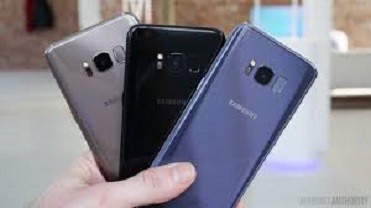
It’s the final countdown. As for Samsung, this might be. Because Samsung Galaxy 8 begins pre-orders today. They also release their phone on April 21. This had better be good, after what Samsung went through. It’s the Samsung Galaxy 8 countdown: Failure no option.
So it looks good. The S8 has a 5.8 inch OLED screen. Furthermore, the S8 Plus has a 6.2 inch OLED screen. The screen is also curvier and covers almost the whole phone. Galaxy 8 US phones have the?Qualcomm Snapdragon 835 Octa processor. Then there’s the S8 camera. In the front, it has an 8.1 megapixel auto focus. And in the rear of the camera, it has a 12-megapixel OIS.
But wait. There’s more to the Samsung Galaxy 8 countdown. Meet Samsung’s Galaxy 8’s virtual assistant, Bixby. Bixby helps you use your phone directly. So it looks like Siri will have some competition. Also, like Alexa, Bixby can turn off your TV and lights. Then there is Bixby Home. Bixby Home can give you the news, literally. Samsung Galaxy 8 US phones will come in black, grey and silver. Other features include Samsung Pay, wireless charging, and IP68 water and dust resistance. It also has Bluetooth 5.0. That means you can stream two devices. I don’t know what the exact cost is, but brace yourself. They expect it to run for at least $720.
However, let’s get the elephant out of the room. That’s the battery. That’s what caused last year’s fiasco. You remember. That’s when Samsung Galaxy 7 burned and exploded, causing injury to customers and embarrassment and lawsuits to Samsung. And there’s no screen replacement, no computer repair, no anything that can help matters with that. ?The S8 has the 3,000 mAH. The S8 Plus has a little more. That’s the same thing the S7 had. But Samsung assures us they tested the battery chemistry. They say not only is it safe, but the battery lasts longer. Forget long lasting battery. Is it safe? That’s Samsung’s dilemma right now. Will the Samsung Galaxy 8 countdown be the comeback they need? Or will it sink their sales and reputation even further?

Mar 29, 2017 | internet, Security
Should I buy a tombstone saying: Internet privacy: 1994-2016 RIP? Should I buy it now or later? I ask this because Congress voted to repeal consumer privacy rights on the Internet. So, Internet privacy dies: Congress killed it.
The US House vote was 215-205 to. This vote helps overturn former President Obama’s FCC rules. Those rules say ISP’s (Internet service providers) require consumer’s permission before they use certain information. This includes finances, health, and info about their kids. But that protection is in danger now. But wait. It gets worse. Last week, the Senate voted 50-48 against you and me and in favor of Comcast, Verizon, and the big boys. And this is how Internet privacy dies.
The White House said ISP’s still need ‘opt-in’ permission. That’s when ISP’s give you the option of sharing your information. But here’s the problem with that. Websites don’t need to ‘opt-in’ with anybody. That’s because websites are less restricted, thanks to the FTC (Federal Trade Commission). FCC Chariman?Ajit Pai praised the decision. But he assured we would stay have protection for our privacy. Then you have privacy rights groups like the ACLU (American Civil Liberties Union). One leader said ISP’s shouldn’t buy or sell our information without consumers’ approval. Of course, Comcast and other major ISP companies aren’t talking.
I like what?Michael Capuano said. He’s a Democrat Congressman from Massachusetts. You know, home to our Boston computer service shop. Online, he bought underwear. Why should the government, or anyone else, have to know about the underwear he bought? Some may say, “But what about the terrorists?” What about the cyber criminals?” I get their concern. But what about the welfare and privacy of the 99 1/2 percent who aren’t doing these things? What about our children? Why should you know where our kids go to school, or what activities they do after school? How come the government wants to know where I bought what and from who? How come ISP’s and other corporations want to know what I look at online?
Mar 28, 2017 | Smartphone
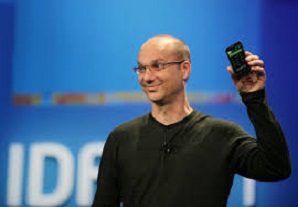
Here’s a trivia question for you. Who invented the Android? If you say Andy Rubin, then you win. But Andy Rubin is ready to re-enter the smartphone game. Android inventor releases new smartphone.
So some time ago, Android inventor Andy Rubin left his own creation. Then, he started Essential, a rival smartphone company. They tested their first phone yesterday. I guess it came out well. Because Rubin tweeted, “I’m really excited about how this is shaping up. Eager to put it in more people’s hands.” But too bad he’s not telling us much else.
However, the rumor mill is churning. Some sources claim it has edge-to-edge screening that covers the whole phone. Few, if any phones, have that. Samsung and Apple are trying to do that for their upcoming editions. Is Rubin’s tweet suggesting the Essential phone closer than we think? I say this because he said he wants to put it in more people’s hand. Big emphasis on the word more. That tells me some people may already have it. Furthermore, look at the Android inventor’s optimism. It wouldn’t surprise me if Rubin held a press conference in the very near future…I mean days or even weeks.
Should Samsung and Apple be nervous? I would. Don’t underestimate Rubin or Essential. The man created one of the most successful smartphones of all-time. This is great for us smartphone consumers. Competition is always good for any business. Why should Apple, Samsung, and Android have all the fun? It’s good for anybody in screen replacement and computer repair and other services. If and when something goes wrong, they’re coming to us. I doubt Essential will be ready for Galaxy S8 in April. But what about the Apple iPhone 8? That does come out until September. Hence, Essential could be out right on time to compete against Apple. Lots of people I know are fed up with Apple. Will disgruntal Apple customer fall in Essential’s arms? Also, what will Essential’s prices be? How will Essential do?
Mar 27, 2017 | Smartphone, Software
Since it’s creation, Facebook Messenger took off in use and popularity. Hence, on my personal page, 80% of my Facebook friends use Messenger. But could that change soon? Will Facebook Messenger matter after April 2017?
I ask this because of the sources I read. They say Facebook considers quitting the Windows Phone 8.1 version of Messenger. In fact, they believe Zuckerberg plans to slowly kill Messenger’s support on Windows phones. But wait. There’s more. They also believe older Facebook Messenger apps aren’t what they used to be. And this is on Android and Apple phones. But let’s focus back on Windows 8.1 phones.
According to an Italian tech news website, Facebook will stop supporting Messenger on Windows 8.1 phones. What does that mean? That means if you have this smartphone, then ?Messenger will be as good as Windows XP. That means no good at all. ?Also, these phone owners are already getting email warnings. The warnings tell them what’s coming and that it’s coming soon. The support will start at the end of March. They give two ways to avoid the shock of unsupported Messenger. One is to upgrade your software to Windows 10. Or, they can buy a smartphone that has the latest software.
Also, they suggest Android and Apple users have the latest software, if they want to have Facebook Messenger. Already, customers bring their phones to our Boston computer service shop with these concerns. We tell them what I’m telling you. Make sure you have the latest Messenger app. Plus, when support for the old systems go, it’s not coming back. But if you continue using the old support, you’re opening yourself up. You open yourself up to viruses, malware, and goodness knows what else. When you do, Facebook, Windows, and others won’t support you. Yes, we at Geek Choice specialize in laptops fixed, but why wait that long?

Mar 26, 2017 | internet, News
Most of you know about the terror attack in London last week. A man plows his car into a group of people on Westminster Bridge. Then, he stabbed people when he got out of the car. Four people died. Also, the attack injured dozens more. Police had to shoot and kill the suspect. But now, authorities say he used Whats App right before he killed. And lawmakers are not happy. What’s App used in London Terrorist attacks.
They’re not happy because Whats App uses end-to-end encryption. This prevents law agencies from reading messages without the user’s approval or knowledge. British Home Secretary Amber Rudd condemned What’s App. She said this kind of encryption is ‘completely unacceptable’. Secretary Rudd also hinted these apps could be a hiding place for terrorists. Furthermore, Rudd called on tech companies to prevent and fight social media publicity that inspires extremism. She says this because some believe the suspect eventually became radical. Other terrorist may have inspired him. But this isn’t the first beef between law enforcement and IT service companies. Remember the fight between Apple and the FBI? Apple didn’t help the FBI unlock a terrorist suspect’s phone. The fighting between them continues to this day.
Okay some terrorist used Whats App. But think of the billions who use Whats App for more positive things. They use it to plan work and meetings. Some also use it to tell family members, “I love you”. While others use Whats App to plan community events, charities, and youth activities to keep them off the streets. But I guess we should scrutinize that too, huh? It almost seems that some British lawmakers are using this tragedy as an excuse. They use this as an excuse to trample on all our privacy rights. And if we allowed governments to do this, then wouldn’t the terrorists win?
p.s. Please remind me to move George Orwell’s 1984 to the non-fiction part of my bookshelf.
Mar 25, 2017 | General
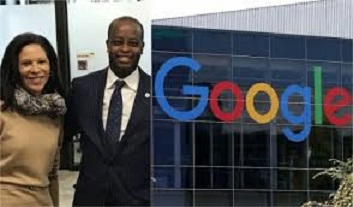
For years, I discuss the lack of diversity in IT service and IT support and other tech fields. But one HBU (historically black university) works to change that. So is Google. Let’s see how Google and Howard University encourages more diversity.
Google and Howard University partner to build a leaning campus on Google’s headquarters. Hence, they will call this campus Howard West. Their target is black engineering and computer science majors. But first, they will have to apply. They expect to start with around 30 students this summer. However, they want over 700 to be in the program by 2022. Howard West students will study for three months. Also, private donors will cover their Silicon Valley expenses.
But that’s not all. This program will expand to other HBU’s. Google and Howard hope this new school will help more Blacks get jobs in tech. Furthermore, Howard University’s president hopes this school prepares hundreds of Black computer scientists for the global tech force. Google knows it has to do something. Blacks only make up 2% of Google’s roster. Also, one 1 in 100 Google engineers are black. But Google isn’t the only company struggling with diversity. Just about every Silicon Valley corporation lacks diversity.
But at least Google and Howard are trying to do something about it. I applaud their efforts. Studies prove that companies with more diverse work forces do better than homogeneous companies do. They create better goods, services, and yes, even computer repair (I thought I would sneak that one in). Also, more diverse groups are better at making decisions and solving problems. Google and Howard seem to get it. Well, maybe I’m giving Google too much credit too early. Maybe I’ll wait until more the Google roster is a lot more than 2% black. What is this? Is this 1957 or 2017? Well, this is a start. Will it get the results? And the next question, will other tech companies and HBU’s follow Google and Howard in their footsteps?

Mar 24, 2017 | scam, Security
How much do you know about cyber security? If you’re like most Americans, then not much. But in this world of constant hacking and espionage, that needs to change. Americans and cyber security: We must do better.
So the Pew Research Center came up with a quiz. This quiz tested what Americans know about online security. Apparently, it’s not much. There were ten questions. ?Consequently, of those who took the tests, 58% got more than half the test wrong. Another 15% got just half the quiz right. So that’s nearly 3/4 of Americans who got 50 or below. Only 1% got all 10 right, and 3% got 9 of 10 right.
The quiz covered numerous issues: password security, phishing, encryption, Wi-fi safety, and ransomware. As we can expect, those between ages 18-29 did the best. But those over 65 did the worst. However, the education gap really shows. Those who have a college degree did better than those without a high school diploma or GED. But there is some good that came out of the results. The majority of them picked the strongest password as the best password. Thankfully, very few picked 12345 as the best password. But of the ones most got wrong, they deal with VPN’s (virtual private networks and identity authenticity. These are critical to Americans and cyber security.
Yes, we are making progress. I say that because years back, many would choose a password like abc or 12345. But we in computer repair need to do better teaching our customers about cyber security. There’s a reason they don’t know. It’s because we don’t tell them. At our?Boston computer service shop, we’re discussing running courses about Americans and cyber security, just to keep the public informed. ?I guess what I’m trying to say is, knowledge is power. And we in the tech industry need to better educate ourselves. Then, we need to pass that knowledge on and educate our people. The cyber crooks are getting smarter every day. When it comes to Americans and cyber security, shouldn’t we?
