
Jun 10, 2013 | General, Wireless
Now it’s almost time for Waze?to be bought?by Google. Waze is an Israeli based navigation and traffic?app. The purchase will probably be announced and finalized during this week.
As much as $1.3 billion dollars are expected to change hands because of this buy out. Some fear Google will significantly alter or cancel the app altogether. Apparently, they have nothing to worry about. Waze is expected to run as it always has. Though Waze has 47 million users, less than a third are active. This app is known for it’s pristine accuracy. It’s being constantly updated as users are driving. Ironically, Apple made a bid for Waze.
Keeping Waze independent is the best thing Google can do. This app has tens of millions of users around the world, and it praised for running smoothly. Why ruin a good thing? Plus, with Google’s backing, instead of changing Waze, it can expand it. This is a great opportunity to increase active users and users in general. If they can do that, then both companies will get stronger. I can’t believe Apple made a bid for them. I kind of wish they had. It would have saved Apple from one of the most embarrassing blunders, Apple maps, in tech history. But how long will Waze remain independent?
Jun 9, 2013 | News, Security
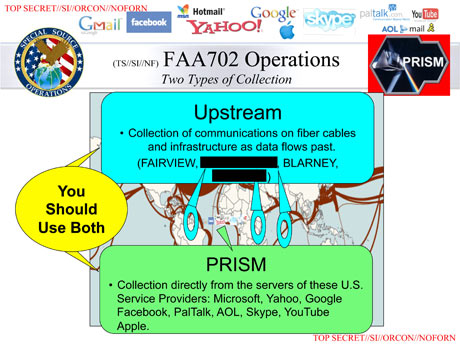
Now that the cat’s out of the bag, I talked a little bit about PRISM and what I could mean. Now, the heat has been turned up so high government officials are talking about PRISM and clearing up misconceptions, or at least trying to.
They’re telling us what is not: some data?mining system. They don’t go around yanking data from servers.?They say PRISM is a computer system that ‘facilitates’ foreign intelligence collected from services providers. They insist it’s only done under court supervision. In fact, the US Director of National Intelligence James Clapper is so tired of the news reports he felt compelled to release an official statement?. What they’re basically saying is that PRISM does exist, but it’s being blown out of the proportion. Major computer companies, like Google?denied their part in any government data gathering program and deny any privacy infringement.
I’m glad someone in government is talking. I don’t think is because he wants too. The media and the people demand answers. The demand has been so great now they have no choice but to talk. Whether Mr. Clapper’s statement is accurate, that remains to be seen. But it’s a start. What more would you like to hear about PRISM?
Jun 8, 2013 | News, Security, Uncategorized
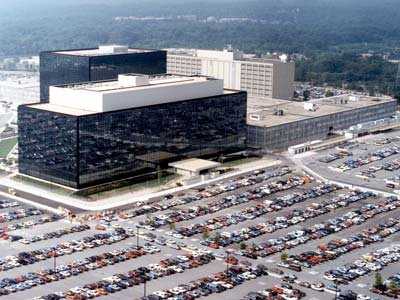
The Pandora’s box is opening. Just days ago, we learned Verizon, under the federal government’s orders, have been gathering data without the consumer’s knowledge or permission. We then learned other major phone companies doing the same thing. Now, we learn online companies may?have dabbled in this for years.
According to the NY Times, government officials wanted Silicon Valley to make it easy to get data on consumers. In fact, companies like Google and Yahoo and other major online powerhouses were required to share data under the Foreign Intelligent Surveillance Act. All these companies denied giving the government full access to servers, but said they complied with federal orders to the best of their ability.
Then there’s the talk of PRISM. According to one whistleblower, they can watch your ideas as you type. I wouldn’t go that far, but PRISM is definitely worth learning about. At least online companies did put up a fight, only going so far. Twitter certainly didn’t make it easy. But I think we all need to be careful of what we post, even what we email. You never know who might be watching, literally. Earlier this week on karaoke, I sang Rockwell’s 1984 hit “Somebody’s Watching Me”. This song is more timely now than it was 29 years ago. Are we heading toward a new normal?

Jun 7, 2013 | Entertainment
Last week, I covered my favorite tech savvy movies of the 21st century. Let’s see what the last century brought us.
10. Scanners: This 1981 film covers a security systems corporation hiring scanners to read people’s thoughts. The ConSec scanner’s head exploding just added that morbid extra.
9. The Computer that Wore Tennis Shoes: Never heard of this 1969 classic? Due to a glitch, Kurt Russell’s brain turns to a computer. But check out what a computer looked like in the late ’60s!
8. Office Space: Ever have one of those ‘I’m mad as heck!’ moments? In 1999, these?software firm workers have those moments. Remember the scene where they smash a computer out in the dessert?
7. Metropolis: This 1927 silent film perhaps gave birth to all sci-fi/tech movies. Set in 2026, people are divided into the thinkers and workers. Check out the tech savvy in this film; it’s decades ahead of it’s time.
6. War Games: In 1983, with the Cold War on everyone’s minds, and home video games on the rise, this movie turns a?fun game into a save the world struggle for all humanity! Look at the home computers we used back then. It was nominated for 3 Oscars.
5. Bladerunner: In 1982, this movie was set in 2019 L.A. Check out how computers are used to communicate and identify. The Bladerunner is to hunt down non-humans. With all the talk of trans humanism, is this film?eerily prophetic?
4. Star Wars: Let’s focus on the 1977 original. It had everything from robots to mind control and characters that are household names. I don’t need to write any further, because the name Star Wars speaks for itself.
3. Tron: Wow, the ’80s were a good time for tech movies. In this one, Kevin Flynn breaks into a computer system and finds himself in the system. This 1982 movie was revolutionary for it’s 3D effects and digital backgrounds, very new at the time.
2. Matrix: Again, this 1999 mega-hit speaks for itself. Are you taking the blue pill or red pill?
1. 2001: A Space Odyssey: It had everything a tech geek could want. Released in 1968, it had artificial intelligence, space travel, the future, and a?talking computer. Anyone notice that if you take HAL and move up each letter, you get IBM? Just saying.
There’s my list. I can’t wait to read yours.

Jun 6, 2013 | News, Security
Are you a Verizon user? If so, and if you haven’t heard already, listen up. Verizon, under court order, was forced to give away countless telephone data to the National Security Agency.
This current administration required Verizon to turn in all calls, without the permission of Verizon users, on an ongoing daily basis, whether users were?suspected of doing anything wrong or not.?The Foreign Intelligence Surveillance Court gave the?order to the FBI on April 25.?Phone numbers, call locations, and call times were recorded and turned in. The content of calls were not. If that’s supposed to make me feel better, nice try. Of course, the NSA, FISA, FBI, or Verizon has nothing to say. It’s not known if Verizon is the only major phone company made to give such an order, but I doubt it.
This is just wrong on so many levels. First off, our US Constitution forbids anyone to be searched in this matter without a warrant. Does our Constitution mean anything anymore? If they’re recording our phone info, how much farther can and will they go? Will they round us up just because they say something we don’t like. It’s not paranoia, it’s happened before. Look at all the 20th century dictator regimes. Plus, the United States of America is supposed to be an open free society. How open and free is our society if I’m looking over my shoulder every time I pick up my cell phone, wondering who is listening and what if I say the wrong thing? Am I overreacting or looking at this the wrong way?

Jun 5, 2013 | General, News
When I think of Amazon, I think of books and Kindles. I think of bookstores, or what used to be bookstores before Amazon Kindle got so big. I think of reading books on my Kindle at airports and other places. How did groceries get in the midst?
Well, Amazon is going in the online grocery business. It’s been years in the making. It’s called Amazon Fresh. Since the late 2000s, in Seattle, they’ve been delivering eggs, fruit and meat products. Within the next week, Amazon Fresh plans to expend to San Francisco and LA and if they’re successful there, Amazon Fresh will move to 20 other major cities in 2014. But while the online grocery business has skyrocketed lately, competition is fierce. They have Kroger, Wal-Mart and Safeway, just to name a few. To tell you the truth, we don’t even know if the Seattle venture was that successful. Amazon Fresh is keeping a tight lid on the results.
I’m pretty pessimistic about this one. First off, the competition is just too steep. Personally, I would like to see someone knock Wal-Mart off, and if Amazon Fresh can do it, more power to them. But I don’t see that happening. It’s hard to even make a profit in the grocery business, much less the online grocery business. I know the online grocery business will cater to some demographics. But some of us actually like to go in the store, get the products with our own hands and get out. From the lines I see at the check out counter, I’m not the only one. Will you be logging on to Amazon Fresh when it comes to a city near you?

Jun 4, 2013 | internet, News
Since 2007, Zynga has provided gaming services for Apple and Android products?and social media sites. They pride themselves on bringing people together through gaming. Now, they’re being known for a dubious honor: downsizing.
Zynga is set to lay off over 500 people. For major corporations, that may not sound like much. But for this gaming service, that’s one in six of it’s work force! They’re expected to shut down offices in LA, New York and Dallas. Of course, their international offices in China and India will remain open. Their activity on Nasdaq stopped for a time. Sources say Zynga didn’t anticipate how quickly the rise of it’s mobile business would be, or how quick the decline it’s web business would be. They even shut down games that weren’t doing well.
This is an example of what happens to businesses that can’t keep up with technological trends. As quickly as they are happening, I guess this can serve as a lesson for companies everywhere. But I’m wondering if this is an overreaction. I’ve read reports that they’re doing these lay-offs to refocus toward mobile, not because they’re filing for bankruptcy.?I don’t see why they have to cut so many jobs to do that.?I noticed they’re cutting just American offices and not the foreign ones, so that raises my eyebrows. One?of my favorite games is Farm Ville,?so I hope Zynga can get it together. How do you think?Zynga will fair out from this crises?

Jun 3, 2013 | Entertainment, News, Wireless
There has been a push for an Apple based radio station for many months. It should’ve been on the air?by now. But now, Apple is re-starting talks with record companies for proper licensing. If successful, they can reveal their radio plans next week.
The beef has been with music publishers and record companies who push for higher royalties and other payments. Despite these disagreements, Apple seems very optimistic to unveil iRadio at a San Francisco conference mid-June. They have a reason to be optimistic. Apple has signed deals with Universal Music Group, Warner Music Group, and is in talks with Sony Music Group. There’s still work to be done, but a lot of progress has been made.
Apple radio is expected to be free for the consumer and paid for solely by advertisers. But that’s not the only issue. Look at what iRadio’s competition would be: Pandora is one of them. They have 70 million users, hardly any of them are paying customers. Spotify and Clear Channel Communications, now well established, are also tough competitors. But some publishers see at least financial gain from iRadio. While Pandora pays four percent of revenue to song publishers, they want Apple to pay?10 percent of their revenue.
I’m starting to smell a rat here. They expect iRadio to pay more than twice as much in publishing rights as their competitors do? No wonder why talks have been so slow. No wonder why Apple is negotiating with some musicians over the proper rights. Yes, I know Apple?is a multi-billion dollar company that can afford?to shell out that dough, but by this point, so can Pandora. If this iRadio?deal is going to?go far, they need to make it somewhat equal. If one company is being charged four percent revenue, don’t ask Apple?to pay?anymore than say, five or six percent. Let’s keep the game fair. If iRadio came out today, would you switch?
Jun 2, 2013 | News, Security
There’s been a lot of news about Chinese espionage and hacking into US institutions. It’s been a huge concern for our security. In July 2013, there will be talks between the two nations to ease tensions, tensions caused by Chinese hackers getting and selling corporate and government secrets, among other cybercrimes.
This summit will be held in Rancho Mirage, CA and will be attended by U.S. President Barack Obama and Chinese President Xi Jinping.?Officials warn us not to get our hopes up. This?isn’t expected to?stop Chinese hacking or espionage, but some regulations?need to be set.?According to one?official, ?”It is a serious issue that cannot simply be swatted away with talking points?. But recently, hackers have stolen information about fighter jets and pipelines. But the Chinese government insists it too is a victim.
I’m glad this summit is happening. China is the fastest growing economy in the world. In fact, I read China bought U.S. food company Smithfield Farms for billions of?dollars. So no one can deny how tight the US/China relationship is. Technology wise, many of our products and smartphones are made there, and many of the consumers are Chinese. Plus, issues that affect both countries will be addressed, like North Korea. But the main thing is finding a way to stop cyber attacks on both nations before they become devastating. Heaven forbid a cyber attack hit our electric grid, oil, or food supply, or other avenues we take for granted for our mere survival. What do you think of this summit and will it help curb the tide of cyber?espionage?

Jun 1, 2013 | Computer technology, News
In the 2002 movie Minority Report, one of the cool features was facial recognition. Now, it seems to be a reality. Google glass is doing something about this dilemma. They refuse to approve a facial?recognition app until privacy?protections are in place.
Facial recognition is a?huge concern. What if you end up giving?more info than you want to, or that info gets in the?wrong hands??They’ve told users and applicants who hope to be approved for Google Glass not to use cameras and microphones for identifying others. This comes in the wake of a congressional hearing Google had over privacy issues. Though facial recognition has been Google’s dream, they seem to be slowly backing away from it. They’re reaching out to third parties but will little success. But until further notice, this app is nothing but a memory.
And I say good for Google! But I also say good for the people. Because of people like you and me raising concern for?privacy issues, Congress had no choice but to take notice. And they did. Now, Google has no choice but to take notice. And they are. But we have to keep the pressure up.?Obviously, I love technology, and I look forward to where it’s going to take us next. But there are?social?issues?that need to be tackled?as well. Do you think this is a good move on Google Glass’ part?
