
Jan 4, 2014 | Entertainment, internet
In 2001, the first iPod was sold. In 2003, Apple first opened the iTunes store. Ever since, it’s been the premier way of getting music. Is that changing?
It turns out 2013 was the first year that digital music sold less than the year before. Digital albums fell only 0.1%, but digital tracks fell 5.7%. In fact, albums sales in general declined in 2013. The only music avenue that saw an increase was the old vinyl record. The top selling songs were Robin Thicke’s?”Blurred Lines” and Macklemore’s “Thrift Shop”. There’s an elephant in the wall executives need to address whether they want to or not: the growing popularity of streaming. ?These subscription services slowly but surely ate up digital music services.
At the risk of giving my?away my age here, I?have a suggestion for all in the music?industry: Start making better music! You know what sorry?shape the music game is in when?Time magazine picks Miley Cyrus as one of the?top 10 Persons of theYear. It seems like every other song is the boom boom of techno/house or some?gangster rapper bragging about his?money, jewelry, women, cars and?guns, or some pop tart?glorifying the party lifestyle. Those things are okay, but not every song all the time!?How about some creativity?and originality? Or how about songs that mean something, like artist used to do back in the 1960s and ’70s?
How do you think the music industry should address the digital music decline?
Jan 3, 2014 | Computer technology
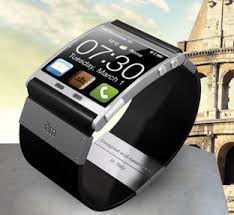
No, I’m not quoting some R. Kelly song. But 2014 is hyped up to be the year of wearable technology. And in Las Vegas, there is a conference coming up called Consumer Electronics Show to promote and celebrate that.
Before you ask, Google Glass is expected to be a part of the lineup. In fact, just about every company peddling smart eyewear, smart wrist wear and activity trackers will probably show up. They’re going to have a whole section called Wrist Revolution to celebrate smart wrist wear alone. Fitbit will be representing. They’ll show consumers how they can keep up with heart rates and burned calories with the magic of wearable technology. Then there’s Voyce. That’s an electronic dog collar that allegedly monitors and shows insight to Fido’s behavior.
Experts say that by 2018, wearable technology will increase twelve times over. By 2018, it’s expected to be a near $20 billion a year business. I’ll believe it when I see it. I’m still weary about privacy issues, especially wear smart glasses. I know I’m not the only one with these concerns. Then there are the companies that are dragging their feet with their next product. And the fact that right now, products like Google Glass cost $1,500 a pop, and you have to jump through hoops to get them. Will a conference like this get people enthusiastic about wearable technology? Or will it be a total bust?

Jan 2, 2014 | News, Security
It’s only the second day of the new year and things are off to a flying start. Already, we have a breaking hacking and surveillance story going hand in hand.
Social media sites Skype, Twitter and Facebook were hacked into. A group called Syrian Electronic Army claimed responsibility. They’re calling for an end to spying, in the wake of Edward Snowden’s revelations of 2013. It’s reported no user information is at risk. But the SEA (Syrian Electronic Army) is not subtle or shy in voicing their intentions. One Skype blog from them says, “Stop Spying on People!” This isn’t the first time the SEA made their appearance known.
As most of you know, there is a bloody and deadly civil war going on in Syria with no end in sight. The SEA openly supports embattled Syrian President Bashar al-Assad. Throughout 2013, they’ve hacked into New York Times, British Broadcasting Company (BBC), Financial Times, New York Stock Exchange and Twitter. But this is the first time they’ve addressed the spying controversy. Which makes me think. I agree with their stance on ‘stop spying’. But I’m skeptical of their motives. They could be using this subject to win people over in order to gain support for their cause. Al-Assad has allegedly done some terrible things (from what I’ve been hearing, the rebel fighters aren’t any better). So I need to be real careful before I pat these guys on the back for speaking what so many Americans are feeling. Is the SEA really sincere in their speaking out against government surveillance?
Jan 1, 2014 | Entertainment, Security
Are you a Snapchat user? You may or may not want to sit down to this one.
It’s been reported hackers broke into 4.6 million Snapchat accounts, getting ?usernames and phone numbers. But all things aren’t what they seem, well, not this time. It’s also reported hackers exploited the database to raise awareness of Snapchat’s security weaknesses. Despite this little awareness lesson, the concern is these numbers and usernames could get into the wrong hands. In December 2013 (wow it feels strange to say that) an Australian security watchdog reported that two exploits in Snapchat’s data could give hackers easy access to consumer info. Info like aliases and phone numbers could be collected through Apple and Android devices.
First off, it’s good to be updated on such things. It can be scary to talk about, but isn’t it better to be in the know than to find out about hacking the hard way? I can even have respect for those who were trying to raise awareness of Snapchat’s problems. I just hope that’s all they were doing. And it this was a drill, it needs to be done to make crystal sure nobody’s accounts gets compromised or put at risk. Do you think this alleged hacking was an awareness test or were the motives more sinister?
Have a safe, prosperous and blessed New Year, everybody!!
Dec 31, 2013 | Computer technology, Security
How does the NSA have enough money and manpower to go on it’s spying spree in an economy like this? How do they find the skills to watch everyone’s every move? Well I tell you one thing…they don’t just get them from the street.
Jacob Applebaum is the author of a ?Der Spiegel article that ?was the first to expose the NSA playbook. At a conference in Hamburg, Germany last week, he talked about his findings. The talked of world elite hackers using pre-packaged exploits to break into Apple devices and others communicating through GSM. He says they can use devices than can hijack someone’s WiFi up to 8 miles. ?Yes, the devices these hacker elitist use are mostly transported by van. But don’t be surprised if they’re soon transported by drone. They may be doing this already.
Should this surprise anyone? I wish I had more info and where and how these hackers were getting employed, but unfortunately, I don’t. I have a few speculations. But I’m almost there…almost at the point where I say let them do what they’re going to do anyway. I’m still opposed to these tactics, and the others that have been exposed. Truly I am. But what in the world can we do about it?
Dec 30, 2013 | News, Security
The United States and Russia has hardly agreed on anything this year. There’s Edward Snowden. There are international conflicts. Now there’s this.
Last week, President Obama signed a bill killing Russia’s plans to build monitor systems on US soil. They’re supposed to be about six of them. Russia says this will help improve GPS systems around the world, particularly Russia’s Global Positioning Network. But many in congress, especially House Republicans who put the killing of this plan into motion, fear Russia may have more sinister motions. Many in Congress are cynical Russia would use this plan to spy, or something even worse. To show how bad tensions are, nobody is returning anybody’s phone calls between the two nations.
I’m glad Congress took a stand against this. Hasn’t there been enough spying in the US and around the world this year? Due to the Edward Snowden scandal and Syrian conflict, among other issues, US and Russia aren’t best friends these days. What if they were allowed to put their GPS systems on our soil? What if they got access to everything we were saying or doing? Worst yet, what if they got access to military or government secrets? Am I being paranoid?
Dec 29, 2013 | Computer technology, General
I tell you one thing it wasn’t in the technology world, and that was boring. Often, tech based stories have dominated the mainstream, from the NSA revelations to the Bitcoin boom. But was it a successful one?
Some critics will answer no. That’s simply because certain Samsung and Apple products didn’t live up to the promised hype, or so they say. Add ?problems with new products like Apple’s fingerprint problems and certain Xbox one games being seriously delayed. Some say progress has slowed down this year. Some still complain Apple has been dropping the apple since Steve Jobs passed back in 2011.
I must respectfully disagree with these assessments. So 2013 wasn’t the most tech revolutionary year of our lifetime. But a lot of good came out of it. Now, thanks to Apple, one can get a decent computer phone for under $100. Xbox made a huge comeback and upgrade for a six year period. And about those delayed games: when they do come out, for the most part, it will be worth the wait. And it wouldn’t surprise me that by this time in 2014, Bitcoin will be a household name. And what about the wristwatch now being released? Who would have predicted that a few years back? I think 2013 has seen a great deal in tech advancement. It may not be as fast as everyone wants it, but we’re still going forward, not backward. Have we become so spoiled by rapid tech advancement that we panic at even a hint of a slowdown?
Dec 28, 2013 | internet, networking
At one point, parents were worried about their mid to older teenagers getting on Facebook. Now they might be worried about them not logging onto the social media site.
According to one study done in Europe, teens between 15-18 are leaving Facebook by the multitudes. Guess what the reason is? Because their parents and other adults are sending them friend request. One social scientist calls Facebook ‘dead and buried’ as far as this demographic is concerned. The fact that Facebook is getting popular among adult demographics isn’t helping matters. The ‘big brother’ or privacy issue ?and recent bullying tragedies also play a factor.
It’s a age old story. Once something becomes cool with the older folk, it’s popularity with the younger folk go out the window. But I want to address the privacy issue. More teens are becoming aware what they post on Facebook and other social media sites could haunt them for life. There are plenty stories of people getting fired, not being hired, or even getting arrested, for things they say and do online, no matter how funny, sexy or innocent it might seem at the time. I think that’s why many teens are opting not to go on Facebook period. What is the cause of this Facebook slide?
Dec 27, 2013 | Entertainment
He’s the CEO of ?one the greatest online shopping ?companies of all time. He now owns the Washington Posts. He wants to use drones to deliver packages. He attended the exclusive, infamous Bilderberg conference. Is Jeff Bezos having the best 2013 ever?
According to his Amazon, 2013 was their best holiday shopping season ever. The website made over 38 million sales on Cyber Monday alone. It’s program Amazon Prime, which can be obtained for $79 a year, reached 20 million members.In fact, Amazon Prime was so popular they had to turn applicants away just to ensure quality of existing members. Free shipping was one of the factors. In one week in December 2013, Amazon Prime gained one million plus members.
I just hope for Bezos’ sake that free shipping paid off. I hope everybody got their gifts on time in one setting. There’s been a lot of talk of people’s gifts not getting shipped properly. But the way his and Amazon’s year is going, I wouldn’t be surprised if Amazon got 100% delivery. Of course, the year of Bezos didn’t come without controversy. The drones delivery ended in disaster, but of course he’s going to keep at it. And what was Bezos doing at a Bilderberg conference; I heard a lot of suspect things about Bilberbergs. What else has this guru done this year?
Dec 26, 2013 | networking, Security
Over the years, few things on the Internet have caused more security, or more stress, than the password. So many to remember. So many guidelines. But do these things do more harm or good?
These days, the majority of passwords will make you choose at least one uppercase letter, one lowercase letter and one digit. Most have to be at least eight digits/letters long. Some will make you change your password every 30 days. Some people use software like Lastpass.com to manage and control their passwords. And then there are the life questions: Who was your first teacher? What street did you grow up on? What was your first car? What’s your mother’s maiden name?
Do these make us safer? I and many others think they do. I can tell you one thing not to do: give all your accounts the same password. I read one article where one guy had his life ruined when doing that. Many years ago, strange things were coming to my email. This was my first experience of being hacked, and I was advised to change my password immediately. There were no more hacks after that. So to avoid confusion and headache, I would advise a password management website like Last Pass to help you manage your accounts. Do all these password policies keep you safe or are they just a royal pain?
