May 6, 2014 | Computer technology
By now, we know about Google Glass. While this device is super difficult and expensive to get, they’re adding another component.
This is where Google Wallet comes in. If tests go right, Glass users will be able to send money to their friends just be commanding the Glass, through their voice, to ‘send money’. This isn’t science fiction. If this application passes the tests, it will be available to all Glass users sooner than later. To get Wallet, Glass users have to install it through Google’s corporate network. After they set it up, they can send money from Glass.
Here’s how it would work: You and your friends are going out enjoying a day or night out. It’s your turn to pay your share of the bill. Your friend with the Google Glass says ‘send money’ and you get the money, with the swipe through the interface.? This service is by no means free. For every Wallet transaction, Google will take a fee of either 2.9 percent, or 30 cents, whichever is higher. You can’t make this stuff up. I wonder will it even pass testing. If it does, will Glass users be interested, which are already in small percentage? And when, or should I say if, Google Glass go mainstream, will the mainstream public be interested? Or is Google Wallet, through Glass,? destined to flop?
May 5, 2014 | Computer technology
In the early 1960s, very few Americans, even college educated people,used a computer. But as early as 1964, Dartmouth College professors John Kemeny and Thomas Kurtz knew computer literacy would one day be a necessity.
That’s why they formed BASIC, Beginners All-Purpose Symbolic Instruction Code, as a language set to teach people about computer programming. It was a success at Dartmouth, then spread to other schools. When home computers took off in the late 1970s and early ’80s, BASIC was used? to help launch that revolution. After that, computers became so popular and easy to use that BASIC wasn’t really needed. But back in 1964, Keneny and Kurtz introduced the language code to their Dartmouth class. This all male class was one of the few handful of Americans learning about computers (at that time, Dartmouth was all male).
I’ve always found computer history fascinating, and learning how far we’ve come in technology is why. Fifty years ago, BASIC only had 14 commands. It took another two years before it could accept alphanumeric codes. That’s laughable to us in the 2010s, but in the ’60s, this was radical. It must have caught on fast because by 1967, 80% of Dartmouth’s student body, learned computer science through BASIC. A decade later, a little known company named Microsoft adapted BASIC. What ever happened to that company Microsoft?

May 4, 2014 | internet
There are some who think the mega social media site Twitter has seen it’s prime and heading for it’s twilight. An article in Atlantic gave Twitter a eulogy. But should they?
Well, Twitter stocks have fallen tremendously since January 2014. In one 24 hour period last week, stocks fell over 12 percent. The numbers I’ve looked at projected the percentage of people joining Twitter in 2014 will be far lower than in any other year. The Atlantic article points out the followers they do have aren’t as active as they once were. I’ve heard people say the only time Twitter makes noise is when a major story or stunt comes out, like the infamous Oscar selfie (which turned out to be scripted as an advertising ploy) or the NBA scandal involving former LA Clippers owner Donald Sterling.
But don’t go making funeral plans for Twitter just yet. Twitter just acquired MoPub, a mobile advertising site expected to give them advertising power. Thanks to MoPub, Twitter will probably reach several times the amount of followers it already has. They’re whispers that in the near future, Twitter will be a news platform, even for non-Twitter subscribers. The way mainstream media is today, I think a lot of people will welcome that. So do you think Twitter is really dying? Or is it just evolving?
May 3, 2014 | General, Law Blog
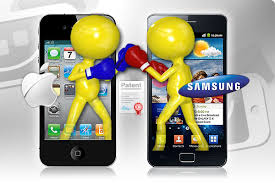
For quite a while, cell phone giants Apple and Samsung have battled in the courtroom over patent rights. Now the verdict is in.
According to this verdict, Samsung infringed on two Apple patents. Apple was awarded almost $120 million. This jury also ruled Apple had violated a Samsung patent. However, Apple’s violation was declared unwillful and Samsung was awarded only $158,000. I say only because, hey, compared to 120 million, this is pocket change. Two of the patents in question were the 647 quick links patent and the 721 slide-to-unlock patent. The jury, led by an IBM executive, took 3 days to deliberate. Despite Apple seeking over two billion dollars in damage, Apple was satisfied with the ruling. They told the media, ?We are grateful to the jury and the court for their service. Today?s ruling reinforces what courts around the world have already found: That Samsung willfully stole our ideas and copied our products.”
Something tells me this isn’t over. Something tells me Samsung is going to appeal this ruling. In fact, this is shaping up to be one of the biggest rivalries in corporate American history. This ranks up there with Pepsi vs Coke, McDonald’s vs. Burger King, or General Motors vs Ford.? What do you think the next chapter of this saga will be?
May 2, 2014 | News
Remember when the Edward Snowden scandal broke out last year? We found out the NSA spied on our devices and computers. It’s the gift that keeps on giving.
At first, it looked like major tech corporations from Apple to Yahoo were in cahoots with the NSA to take our info. Then reports came out saying they were ordered into it. Now, these tech giants are denying demands for public online data. This increasing defiance gives many Americans the fuel they need to fight criminal investigations and potentially trumped up charges. Apple, Microsoft, Google, Yahoo and Facebook are changing policies to inform us about government data seizures during and before they happen. Of course, many agencies disagree with these new policies. The US Justice Department says all these polices will do is hinder criminal investigations and make victims even more vulnerable.
On the surface, I’m happy these tech giants are making this step. I’m glad to know they’re stepping up for the little guy and are responding to the public outcry in this way. There’s still the eternal optimist in me that says they’re taking this stand because they’re standing with the people. But the cynic in me wonders if they’re doing it because they’re trying to distance from the NSA for their own financial security. But either way, I’m glad they’re making this move. Do you think this struggle between tech corporations and gov’t entities is over?

May 1, 2014 | Computer Repair, Wireless
Fitness trackers are becoming all the rage, mostly for adults. Now, kids as young as four can get in on the latest technological craze.
Leap Frog, a leader in child education technology, is releasing Leap Band in August 2014, and is the first Kid Fitness Tracker. This wristband will run you $40, and this health tracker is for children ages 4 to 7. It gives children exercise and dance commands, and rewards their totaled physical activity by giving them virtual pets. Parents can monitor their kid’s activity through an app or website. This comes at a time when wearable technology may or may not be the next big thing.
The word ‘tracking’ is the concerning word for me, especially when it comes to children this age. They should not be subjected to having their private info handed over to advertisers, corporations, government agencies or anybody else. Thankfully, there are laws virtually forbidding data collection for anyone under 13. So the only ones doing the tracking will be the parent/guardian. But Leap Frog isn’t the only tracking device for kids. Flip is a device where parents can track their kids every move. I have mixed feelings about Flip. I understand why this would be appealing to parents. But to put tracking devices on kids just to see where they are is just creepy to me and borderline infringes on right to privacy. At least Leap Band encourages physical activity and tracking is very limited. Do you think kid tracking devices will be of help or of hindrance?
Apr 30, 2014 | Entertainment, General
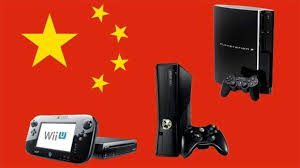
Late in 2013, the XBox One made it’s debut in America and took the nation by storm. The XBox One craze spreads to one of the fastest rising economies in the world.
The video game franchise and their partner BesTV New Media will launch XBox One in China. It’s expected to make it’s debut in September 2014. BesTV is a mega? home entertainment technology entity based in Shanghai, China and it will lead the way in bringing this video game. This is a great feat, and an important one. China is perhaps the fastest growing gaming nation in the world today. In 2013, the gaming industry in China made over $13 billion. That’s a 38% increase from 2012. Even game producers and developers are stepping up their skills.
Not only that, a third of the Chinese population are into gaming. China has a population of over 1.3 billion. You do the math. So it makes me ask: Why wasn’t XBox One released in China when it was released in the US and others last November? I read an article saying China the second biggest economy in the world. It would make sense to have their release date in November. Think about how much XBox One could have made if this popular gaming system was sold 5 months early. Would it make better business sense to have technology products be released to all nations on the same day?
Apr 29, 2014 | Entertainment
For quite some time, Yahoo has been trying to compete with Google in the video streaming game. This summer, they’re stepping it up.
Starting in July, a new Yahoo online channel will host live concert shows. Live Nation, one of America’s biggest music promoters, will back it. Major corporations, like Kellogg’s are expected to sponsor it. In addition to concerts, you’ll see interviews and after party coverage. It’s not known who will perform these daily shows. But you can expect a wide range of genres and musicians, form A-list celebrities to bands playing on your local bar venues. This is just a part of Yahoo’s streaming initiative. They’re producing original comedies such as The Other Space and Sin City Saints.
Google is still leading the online video streaming game, but Yahoo is gaining ground in a hurry. In February 2014, what streaming videos they have got 459 views, that’s a 39% increase from February 2014. So they’re serious about this source of revenue. Now I’m not a concert or music promoter by any means. But if I were them, and if I have major corporate money backing me, I’d get the biggest names I can find to start with. Since the premier is in July, why not start out with a mega summer concert premier? Put some music legends and today’s favorites on the same stage, names that most will rush to see. After you got your base down, invite smaller acts to perform on Yahoo. I’m sure they will jump at the chance of that exposure, so long as you don’t interfere with their creative freedom. That’s something else: let the artist be themselves! If people like it, they’ll support it. If they don’t, it’s not worth having them on anyway Who do you hope to see on Yahoo/Live Nation’s concert shows?

Apr 28, 2014 | Security, Software
Just weeks after they cut off support for Windows XP, Microsoft is facing a hacking threat, and XP won’t be protected.
Software company Fire Eye Inc. discovered a ‘zero day’ threat. This means before Microsoft discovered the venerability, the hackers already struck. Now, they’re fighting a bug that could exploit Internet Explorer. In fact, according to Fire Eye, a hacker group is using this bug to target US and military and financial institutions. Their cause is called, “Operation Clandestine Fox’. As Microsoft works ceaselessly to fix this bug, it’s advised we disable Adobe Flash, because the hacking can’t take place without it.
But it doesn’t matter what Windows XP users do. That’s because XP users won’t receive support against this bug. So basically, if XP’ers get hit by Operation Clandestine Fox, tough luck. So that’s touch luck for nearly a quarter of all PC users because they’re still on Windows XP. If that’s you, then what are you waiting on? Just think, it would have switched by now, you would have probably been protected by now. We hate to say we told you so, but we’re telling you so. And after this threat is cleared, what about the next one? You’re living in a fairy tale world if you don’t think there will be a next one. So to my Windows XP’ers: What’s it going to take to get you to upgrade?
Apr 27, 2014 | Computer technology, Wireless
Many technological experts said the tablet and iPad were going to be the greatest thing to the computer world since the Internet. How’s that working out?
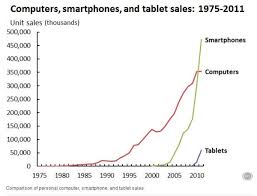
According to charts I’ve seen, iPad revenue has been stagnant since late 2011, while iPhone revenue continues to soar. The selling price of iPads have dwindled to around $500 on average. That average was $650 four years ago. Their quarterly sales have been considerably lower than? iPhones are. It’s not just iPads. All across the board, from Amazon to Motorola, tablet sales are lower than they were a year ago. So what’s going on here?
I think the tablet/iPad is caught between a rock and a hard place. On one hand, one can go to their PC and surf the net. While going out, one can take their laptop for use. I see it in coffee houses everywhere, and other public facilities. On the other hand, look at how big smartphones have gotten (I mean that in popularity). You can just easily reach in your pocket for your phone (I have an iPod touch) and it will serve you even better than a tablet will. It’s not easy being a tablet. Would you buy one?
