
Jul 14, 2014 | Computer technology, General, Wireless
Several of my blogs lately have been about the upcoming technological phenom called the smartwatch. All the tech giants, Apple, Samsung, Google and others are getting involved. But is anybody buying it?
But according to some surveys and reports, the smart watch may not be the next big thing. One survey by Accenture said fewer than half would purchase this device. At best, 20 million smart watches will be sold in 2014. That may sound like a lot, but compared to phones, tablets and other devices, it’s really not. Last year, some watches sold so little that they had to be pulled off of shelves.
But wait: isn’t this supposed to be the next technological revolution? Some argue that anything you can do on these watches you can do with a cell phone device. Some say they’re too bulky and ugly and since you need a computer device to go along with them anyway, why bother? You know, I remember when mobile and smartphones got extremely popular, digital watches decreased. Is this a way to bring back watch revenue? If so, watches will have to go above and beyond, like accept and process payments wherever you go. That’s right…smartphones do that already. They’re doing well in the Silicon Valley area, but what will it take for the smart watch to cross into mainstream? Will it take cooler apps? Will it take lower prices? Will it take a slick marketing campaign? Who wants a smartwatch at all?
Jul 13, 2014 | News, Security
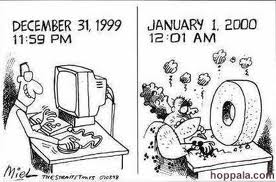
In 1999, there was a belief that a bug called Y2K was going to send the world into apocalyptic anarchy. When the clock struck January 1, 2000, some thought Y2K was going to make computers go January 1, 1900, causing a global technological meltdown. That was then.
And 15 years later, this bug is rearing it’s head again. In Pennsylvania, over 14,000 men received notices claiming they must register for selective service, a potential military draft. These men were born in the 1890s, and all are deceased, so their families are the ones who got the notices. But even if some were alive, they would be in their 110s, obviously way too old to participate in any military service. The mistake was on the part of Pennsylvania’s Department of Public Transportation and Selective Service. Those notices were to go to young men born between 1993 and 1997. But because someone chose the wrong century, they went to the deceased men. Selective Service, who issued the notices, didn’t catch the mistake immediately because of the two digit code to indicate the year of birth (for example, someone born 2/1/95 meant someone born in 1995, not 1895).
I’m glad the mistake was caught and quickly corrected. But that’s exactly what people were afraid of back in 1999. When the century changed, documents dating, say, 3/1/00 were going be interpreted by computers as 3/1/1900 instead of 3/1/2000. Ever wonder what life would be like if Y2K really did run rampant as it was feared to?
Jul 12, 2014 | Computer technology, Uncategorized
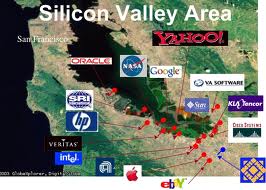
The greater San Francisco/Oakland area is known as Silicon Valley because of the many technological and computer headquarters there, from Apple to Facebook. Could that be changing?
The Bay Area has some of the highest cost of living expenses in the US. The real estate crunch isn’t helping matters much either. Competition for the top jobs is fierce. That’s why some smaller computer tech companies are abandoning the Silicon Valley dream and taking their talents elsewhere.? Hubert Thieblot, CEO of Curse, moved his company to Huntsville, Alabama, a major NASA hub. It was a controversial, but very profitable move for them. Daily Booth co-founder Jon Wheatley moved to St. Louis. In an article, he complained about San Francisco’s overwhelming rent cost.
This is by no means any disrespect or insult to Silicon Valley or that area. We all owe greater San Francisco a huge debt for housing some of the greatest companies and technological minds of all-time. That being said, they’re not the only candy store in town. There are many areas in our nation, and world in that matter, that are just ripe for technology success. Huntsville has more doctorate degree holders per square mile than any US city. Raleigh-Durham, NC is a huge hotbed for science and technology. So is Boston-Cambridge, MA. And you don’t have to pay $2,800 a month for a one-bedroom apartment. What technological gems are in a neighborhood near you?

Jul 11, 2014 | Security, Uncategorized
In March 2014, Chinese hackers infiltrated computer networks run by a US government agency called Office of Personal Management. It’s who was targeted is what makes this concerning.
The Office of Personal Management holds info on federal employees. These hackers targeted applicants for top-secret security clearances and their foreign contracts list, previous jobs and other aspects of personal information. The Dept. of Homeland Security confirmed the hacking. Officials traced the attacks to China, but it’s unclear whether the hackers were civilians or within the Chinese government. What’s crazier is to learn that hackers try to break into agencies almost daily, but rarely succeed. This time, apparently they did.
And this isn’t the first time. Last month, a Chinese group called People’s Liberation Army Unit 61398 were charged with corporate theft (of secrets and information). This group, and some others, have been accused of past infiltrations. The issue of hacking has been a hot button issue between the US and China. But what concerns me is the frequency of these attempts. One in a while is one thing, but every day is scary. We should be very grateful that these attacks are rarely successful. I’d like to see that turned into not successful at all. Keep in mind how fast China is advancing technologically. Is this what’s behind the attacks? Or is something way darker going on?
Jul 10, 2014 | Backup, Computer technology, News
Ever hear the phrase, “Anything you can do I can do better”? Google is taking that to the clouds.
On Wednesday, July 9, 2014, Google revealed a deal offering customers two terabytes of free cloud storage for up to a year. To get this free Google Cloud Platform storage, customers need to install cloud software from Panzura. Never heard of Panzura? They’re one of Google’s partners that specializes in cloud gateway software. Until yesterday, they charged for this service, but under these circumstances, they’re offering it for free.
If you need help setting up Panzura and want to give it a try, Geek Choice can help you set everything up right in the comfort of your home!
This is a direct and blatant challenge to rivals like Amazon Web Services and Microsoft Azure. They both also offer free and generous file storage to their customers. There’s one more catch to this Google free cloud storage: you can only access it from one location. If you need a second or third or other locations, and in this busy world who doesn’t, it will cost you. This is just the latest push of free cloud and storage services between these mega-conglomerates some are calling ‘cloud wars’. Google already gives free 15GB of free storage to drive customers, while Microsoft increased it’s storage limit to 1TB for Office 365. Think of what this will do for Panzura, a relatively unknown company new in the technological spotlight. How will Amazon and Microsoft respond? Will they even respond?? Of these three online conglomerates, who will win the cloud wars?
Jul 9, 2014 | Computer technology, Wireless
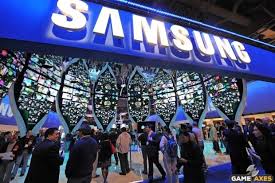
Later in 2014, Samsung will be releasing a virtual reality device. It’s going to be called Gear VR. This device will be introduced alongside the anticipated Galaxy Note 4.
Instead of using headsets, Samsung’s virtual reality will let the user link in a Galaxy device into Gear VR. The VR will process the smartphone’s power to track head motion. Also, their AMOLED display technology will be used to ensure a quality, unforgettable virtual reality trip. A head band and padded cushion should make Gear VR easy and comfortable to wear. There’s a see through button which connects to the smartphone’s rear camera The consumer will have a feed with the outside world. This way, the user won’t have to take the device off and put it on again and again. This button helps navigate through the users’ interface.
I wonder how much this will cost. Since Samsung is developing the hardware alone, so hopefully that will control the cost. Something tells me this isn’t going to be your 1980s virtual reality. Sounds like they’re making preparations for 21st century virtual reality. But I was struck by one thing: you can only use Samusng devices for the Gear VR. How would the VR do if all devices were allowed? How do you think the Gear VR will be a success or flop?

Jul 8, 2014 | Computer Repair, General
When you hear the word geek, you associate it now with computer repair. Most people believe that if you have geek in your name, your primarily focused on consumer computer repair. Geek Choice however, not only services the consumer, but also focuses on small business computer help.
Geek Choice has a variety of solutions and support for small businesses, including but not limited to: small business computer network setup, small business computer backup and small business computer consulting. Now let’s focus on those three items. First, there’s small business computer network setup. Geek Choice has technicians with the focus in small business computer network solutions from a small network of 2-3 PCs to a network of 30. Geek Choice will help set the network up to run as efficiently as possible. Secondly, there’s small business computer backup. Geek Choice understands the importance of your data. The real question is do you? Most businesses that do not have any sort of backup system do not realize how important data is until it’s gone. Geek Choice has partnered with Carbonite which has a perfect solution for your backup needs. Finally, there’s small business computer consulting. Geek Choice does not just repair computers and setup networks but we also consult and sell new machines, printers and network equipment to help redesign a current or start a brand new office from the ground up.
Geek Choice small business support services works with all types of businesses and lately has had a focus on law firm IT solutions. And we would be happy to speak to any law firms looking for a change in their IT or start up firms looking for that right fit.

Jul 7, 2014 | Computer technology, internet
Over the past decade or so, Google has been known for searching, maps, video streaming and other things. Amazon has risen from an online book dealer to an online everything, including groceries. Google’s getting ideas.
Sources are saying Google is setting up over $500 million for expansion. Executives don’t deny the ambition. These investments include building fleets of delivery trucks, and a network to pack and deliver goods to shoppers. Many speculate Google wants a piece of the $600 billion a year grocery business. They’re also doing extensive research to study and even influence online shoppers. Look at Google Wallet and Google Checkout and compare that to Amazon. Amazon has it’s own warehouses; Google sends it’s orders to nearby retail stores. In New York, San Francisco and Los Angeles, there’s a Google website where shoppers can from grocery stores and other retailers. These retailers include grocery chain Whole Foods and mega-store Costco.
I like how Google is setting this up compared to Amazon. Amazon seems to be competing with these companies. Google is working with competitors and developing alliances. But you thought I didn’t like mergers, right? This isn’t a merger. This is cooperation between companies to get produce and services to shoppers. Amazon’s system skips this part and goes right from the client to the consumer. I prefer Google’s way because you have a better idea where your food or good is coming from and it builds relationship between companies. If Amazon and Google went head to head in the shopping realm, who would you choose?

Jul 6, 2014 | News, Security
What’s the big deal about the NSA controversy? Why keep bringing it up? They’re just targeting foreign terrorist and enemies, right? Well…
According to an article in the Washington Post, one of the most respected newspapers in the world, reports ordinary American citizens were far more likely to have their data checked by the NSA than potential terrorists. In fact, 90 percent of those emails and others data intercepted were not those of the intended target. To their credit, some info caught by the organization has led to arrests of some very bad men, like Umar Patek. He was suspected of plotting the 2002 bombing in Bali, Indonesia. But many others files intercepted have more to with trivial things, like politics, religion, love relationships and even peoples’ deepest hopes and dreams.
This is what I and many people were afraid of. Okay, so it caught some terrorists, and we should all be glad for that part. But it seems like for every one or two terrorists caught, hundreds of innocent people’s privacy are being tampered with. What do someone deep relationship have to do with catching people who want to harm us? Meanwhile, the real psychopaths continue to plot our harm. So is this surveillance program even worth it at all?

Jul 5, 2014 | Backup, General
What if you were called and told your health insurance company dropped you? What’s the reason they dropped you? They got your credit card purchases and due to those purchases, they want nothing to do with you.
It’s not very far-fetched. Carolinas HealthCare, based in Charlotte, NC, is using consumer data on two million people, without their knowledge or permission, to identify high risk patients. They get the data from brokers who deal in public health records and even credit card purchases. For example, say they find fast food and junk food purchases through your credit/debit card statement, thanks to some data broker. You’re automatically a target for obesity. They find that bar tab on your card. You’re targeted for everything from cirrhosis to depression. The scenarios go on and on.
I understand why some people say this could be a good thing. Doctors and nurses would know your habits even before your first visit. They could know what to treat you for. They can even encourage lifestyle changes before you get too sick. In a just world, that would be true. Let’s face it: this isn’t a just world. First off, data brokers and health care providers shouldn’t be digging dirt on anybody until they have the knowledge and approval of the people. Second, this just tramples on privacy rights. And I think this will worsen doctor-patient relationships. This is going to create mistrust to the point where the patient won’t even want to see the doctor anymore. And you know health providers will probably look at this and reject clients because of ‘too many bad habits’. Do you think this data collection will catch on with other health providers?
